- English
- French
- German
- Portuguese
- Spanish
- Russian
- Japanese
- Korean
- Arabic
- Greek
- German
- Turkish
- Italian
- Danish
- Romanian
- Indonesian
- Czech
- Afrikaans
- Swedish
- Polish
- Basque
- Catalan
- Esperanto
- Hindi
- Lao
- Albanian
- Amharic
- Armenian
- Azerbaijani
- Belarusian
- Bengali
- Bosnian
- Bulgarian
- Cebuano
- Chichewa
- Corsican
- Croatian
- Dutch
- Estonian
- Filipino
- Finnish
- Frisian
- Galician
- Georgian
- Gujarati
- Haitian
- Hausa
- Hawaiian
- Hebrew
- Hmong
- Hungarian
- Icelandic
- Igbo
- Javanese
- Kannada
- Kazakh
- Khmer
- Kurdish
- Kyrgyz
- Latin
- Latvian
- Lithuanian
- Luxembou..
- Macedonian
- Malagasy
- Malay
- Malayalam
- Maltese
- Maori
- Marathi
- Mongolian
- Burmese
- Nepali
- Norwegian
- Pashto
- Persian
- Punjabi
- Serbian
- Sesotho
- Sinhala
- Slovak
- Slovenian
- Somali
- Samoan
- Scots Gaelic
- Shona
- Sindhi
- Sundanese
- Swahili
- Tajik
- Tamil
- Telugu
- Thai
- Ukrainian
- Urdu
- Uzbek
- Vietnamese
- Welsh
- Xhosa
- Yiddish
- Yoruba
- Zulu
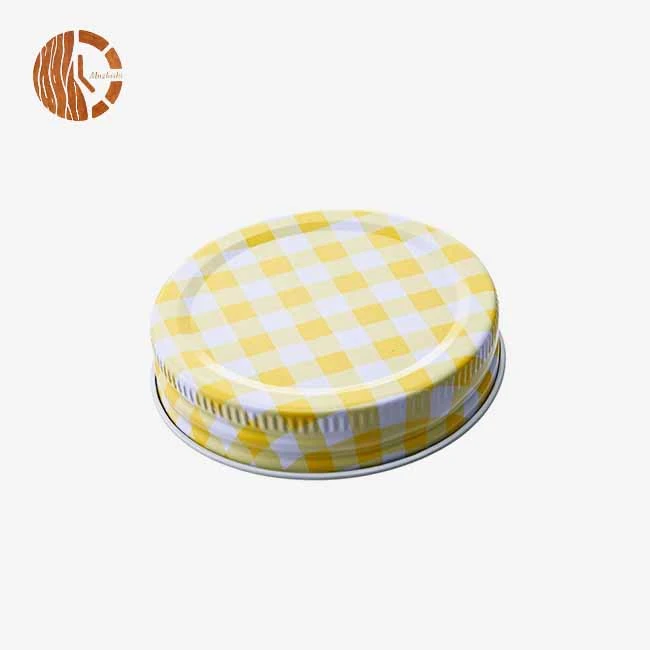
Rustic Checkered Metal Jar Lids
Capacity: Standard Regular/Wide-Mouth Mason Jar Fit (customizable sizes available)
Color: Orange-White Checkered, Yellow-White Checkered, Custom Colors & Patterns Available
Usage: Jams, Honey, Spices, Pickles, Homemade Sauces, Condiments, Home Canning, Food Storage
Customization capability: High-Resolution Printing, Embossing, Debossing, Color Coating, Hot Stamping, Custom Checkered/Pattern Designs, Logo, Text, Sizes, Colors, Finishes, etc
Packaging: As per customer requirements
Transportation method: As per customer requirements
Sample: Provided Freely
Rustic Checkered Metal Jar Lids for Food & Decor Packaging — Customizable Tinplate Closures with BPA-NI Coating
Rustic Checkered Metal Jar Lids from Xuzhou Muzhishi Crafts Co., Ltd. are made from food-grade tinplate, with an aluminum alloy option available. Material thickness ranges from 0.18 mm to 0.24 mm, providing solid rigidity and reliable torque resistance. Available in orange-white and yellow-white checkered patterns, they fit standard regular and wide-mouth mason jars and are suited for high-acidity foods, soy candles, and decorative packaging alike.


Technical Specifications
| Parameter | Details |
|---|---|
| Model Number | BA-CL-001 |
| Brand Name | Muzhishi |
| Material | Food-Grade Tinplate (Aluminum Alloy Available) |
| Capacity Fit | Regular/Wide-Mouth Mason Jars |
| Sealing Type | Airtight Seal with Silicone/PE Foam Gasket |
| Shape | Flat Round Cylinder |
| Pattern | Classic Checkered Plaid (Customizable) |
| Color Options | Orange-White, Yellow-White, Custom Colors |
| Surface Handling | Offset Printing, Matte/Glossy Finish, Embossing |
| Size | Customizable Diameter & Height |
| Place of Origin | Jiangsu, China |
| Sample Availability | Free Samples Provided |
| Sample Lead Time | 3–5 Days |
| Certifications | CE, FDA, SGS, LFGB |

Who We Serve
These checkered lids are used by artisans of food for jams, honey, pickles and home-made sauces. The rustic look works well for organic or handmade business identities. Internally, an internal epoxy-phenolic or organosol lacquer resists low pH situations, protecting vinegars and citrus-based goods on the interior.
These lids are used by candle makers as attractive tops for soy and beeswax candles. The metal surface is resistant to heat discolouration and the close fit helps preserve scent oils over time.
Event and wedding planners purchase flower arrangements and gift sets in bulk. The outer coating avoids rust spots in refrigerated or humid storage, preserving the visual attractiveness over the event cycle.

Key Product Features
Each lid is printed with food-grade, UV-cured inks and printed in high-precision offset lithography in a checkered print. The finish is coated in a clear top coat and all lots pass the MEK rub test for solvent resistance.
The interior lacquer (organosol or epoxy-phenolic) is selected for food-contact use. It will not degrade or leach into the product when exposed to low pH substances like vinegars and citrus ferments.
Each lid has a plastisol or silicone lining in PVC free and BPA-NI compliant formulations. This line generates the necessary vacuum seal for water bath canning and for sterilisation processing up to 250 degrees F (121 degrees C).
The outside protective varnish also limits the coefficient of friction on the lid surface, which reduces scuffing during high speed mechanical capping on automated manufacturing lines.
Manufacturing & Quality Assurance
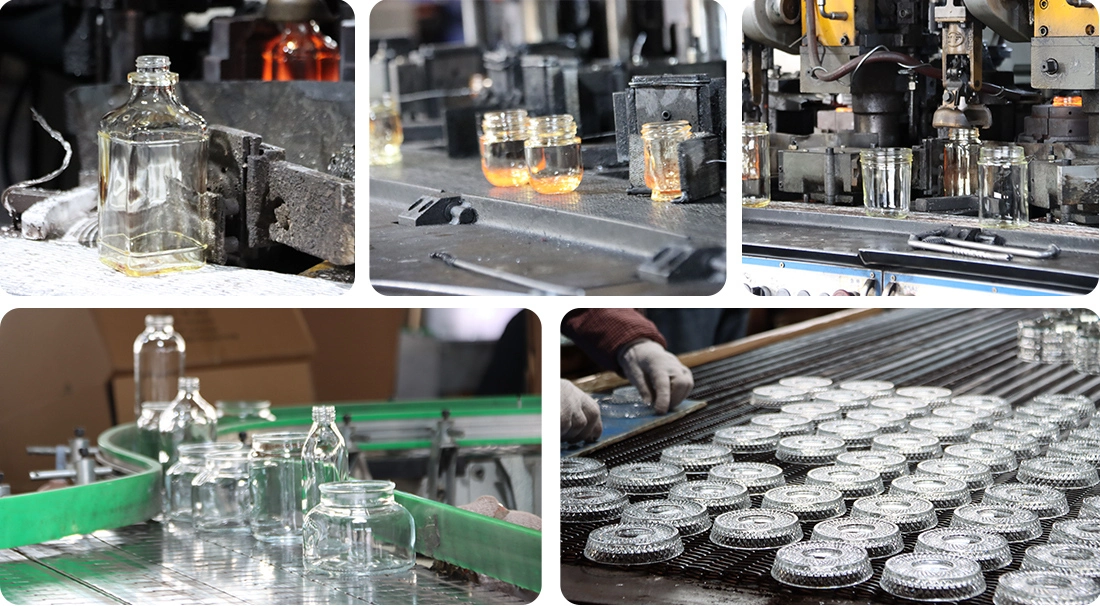
Muzhishi has been manufacturing tinplate and glass products since 2005. The facility operates 10 glass furnaces, each with 6 automated lines, with a stated capacity of up to 1 million units per day per furnace across its full product range.
Every batch of Rustic Checkered Metal Jar Lids goes through five standard quality checks before shipment.
Coating Adhesion — verified using the Cross-Hatch Tape Test (ASTM D3359) to confirm the checkered print will not peel during handling or storage.
Corrosion Resistance — tested through 24 to 96 hours of salt spray exposure (ASTM B117) to simulate long-term shelf performance in humid conditions.
Vacuum Retention — confirmed through pressure-drop testing to check that the plastisol liner holds its seal under thermal processing conditions.
Dimensional Accuracy — measured using digital calipers against 'E' and 'T' dimension specs, confirming compatibility with standard glass finishes such as 70G and 82 mm lug finishes.
Internal Coating Integrity — checked using the Enamel Rater test to detect microscopic pores in the lacquer layer that could allow metal migration into food.
Production Process
Step 1 — Material Preparation: Food-grade electrolytic tinplate coils are sourced and cut to the required blank size. Thickness is confirmed at 0.18 mm to 0.24 mm depending on lid size.
Step 2 — Internal Lacquer Application: Organosol or epoxy-phenolic lacquer is applied to the interior surface and cured. This layer protects food content from direct metal contact.
Step 3 — Offset Lithography Printing: The checkered pattern is printed using food-grade, UV-cured inks via high-precision offset lithography presses. Color registration is verified at this stage.
Step 4 — Over-Varnish Coating: A transparent protective varnish is applied over the printed surface. The MEK rub test is performed to confirm solvent resistance and adhesion.
Step 5 — Stamping and Forming: Blanks are stamped into the final lid shell shape. The curl, panel, and lug or thread geometry are formed in this step.
Step 6 — Liner Insertion: A plastisol or silicone liner is placed inside each lid shell. For canning-grade lids, high-temperature plastisol is used to support vacuum seal formation.
Step 7 — Quality Inspection: Each batch is tested for coating adhesion, corrosion resistance, vacuum retention, dimensional fit, and internal coating integrity before packing.
Step 8 — Packaging and Shipment: Lids are packed per customer requirements and shipped via sea, air, or multimodal transport with full export documentation included.

FAQ
Q: Are these lids bpa free?
A: The inside coatings are BPA-NI (Non-Intent) materials, compliant with the FDA and EFSA food safety rules for direct food contact.
Q: Can these lids be used for water bath canning?
A: Sure. The high temperature plastisol liner is formulated to provide the vacuum seal necessary in thermal processing and is compatible with standard water bath canning procedures.
Q: Will the checkered pattern scratch during automatic capping?
A: The hard-finish protective varnish and controlled coefficient of friction on the outer surface reduce scuffing during high-speed mechanical capping on commercial lines.
Q: How can I keep lids so the cut edge doesn't rust?
A: The surface is covered but the edge of the cut is bare metal. For long-term tinplate integrity, keep lids in a dry environment and do not use abrasive cleaning products.
Q: Can I use these lids for acidic foods?
A: Yes. The organosol or epoxy-phenolic internal lacquer is chosen for its resistance to low pH items such as vinegars, citrus ferments and pickled commodities.
Q: How do I make it mine?
A: Available in logo, text, colours, sizes and surface treatment. Embossing, debossing, hot stamping and full bespoke pattern designs are available. Sample lead time is 3-5 days.

Contact Us
To request a sample or discuss your Rustic Checkered Metal Jar Lids order requirements, reach out to us at long@muzhishi.com. We look forward to hearing from you.


Our customers’ satisfaction speaks for our quality — contact us to experience the same reliable service.