- English
- French
- German
- Portuguese
- Spanish
- Russian
- Japanese
- Korean
- Arabic
- Greek
- German
- Turkish
- Italian
- Danish
- Romanian
- Indonesian
- Czech
- Afrikaans
- Swedish
- Polish
- Basque
- Catalan
- Esperanto
- Hindi
- Lao
- Albanian
- Amharic
- Armenian
- Azerbaijani
- Belarusian
- Bengali
- Bosnian
- Bulgarian
- Cebuano
- Chichewa
- Corsican
- Croatian
- Dutch
- Estonian
- Filipino
- Finnish
- Frisian
- Galician
- Georgian
- Gujarati
- Haitian
- Hausa
- Hawaiian
- Hebrew
- Hmong
- Hungarian
- Icelandic
- Igbo
- Javanese
- Kannada
- Kazakh
- Khmer
- Kurdish
- Kyrgyz
- Latin
- Latvian
- Lithuanian
- Luxembou..
- Macedonian
- Malagasy
- Malay
- Malayalam
- Maltese
- Maori
- Marathi
- Mongolian
- Burmese
- Nepali
- Norwegian
- Pashto
- Persian
- Punjabi
- Serbian
- Sesotho
- Sinhala
- Slovak
- Slovenian
- Somali
- Samoan
- Scots Gaelic
- Shona
- Sindhi
- Sundanese
- Swahili
- Tajik
- Tamil
- Telugu
- Thai
- Ukrainian
- Urdu
- Uzbek
- Vietnamese
- Welsh
- Xhosa
- Yiddish
- Yoruba
- Zulu
Comparison of Glass Vs. Plastic Mason Jar Drinking Glasses
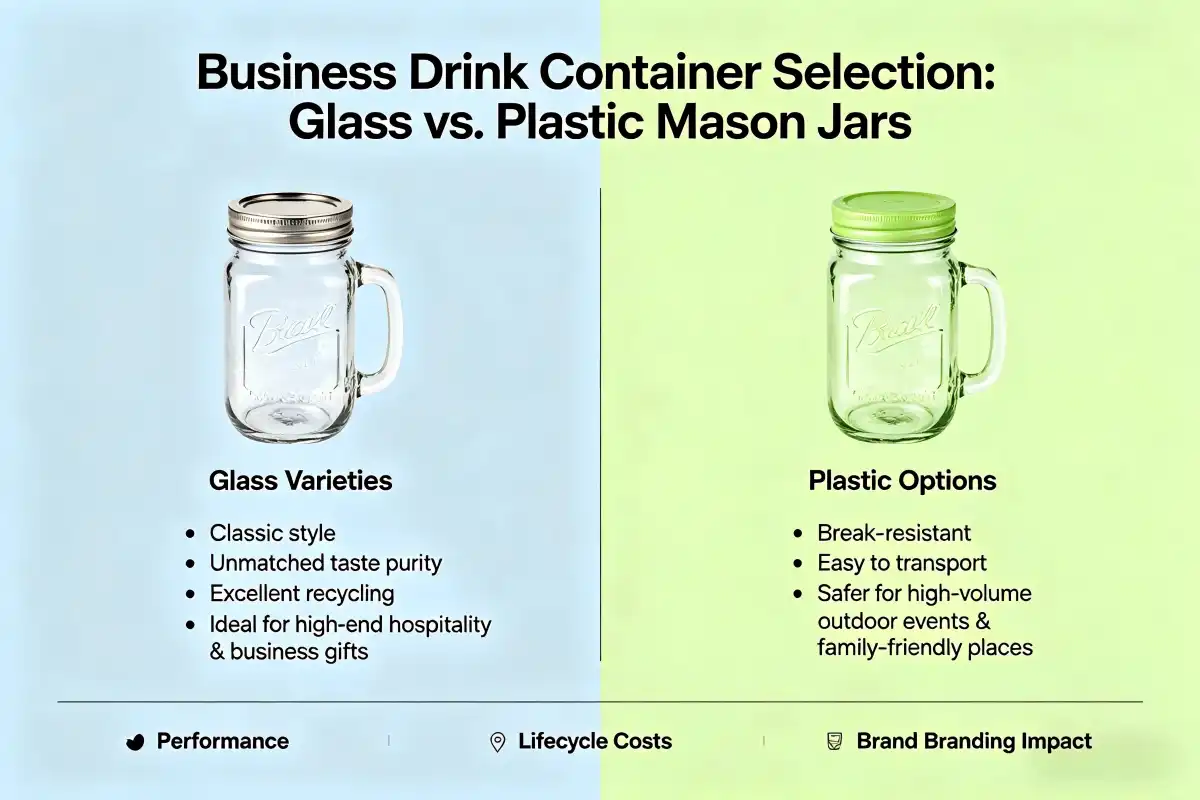
When looking for drink containers for business use, picking between glass and plastic mason jar drinking glasses is a smart choice that goes beyond how they look at first. Glass varieties offer classic style, unmatched taste purity, and excellent recycling, which makes them perfect for high-end hospitality settings and business gifts. Plastic options are safer for high-volume outdoor events and family-friendly places because they don't break easily and are easy to move around. The two products are meant to do the same thing, but their performance, lifecycle costs, and effects on brand branding are very different. When procurement workers understand these differences, they can choose products that meet business needs, meet sustainability goals, and meet customer experience goals.
Understanding Mason Jar Drinking Glasses: Glass vs. Plastic
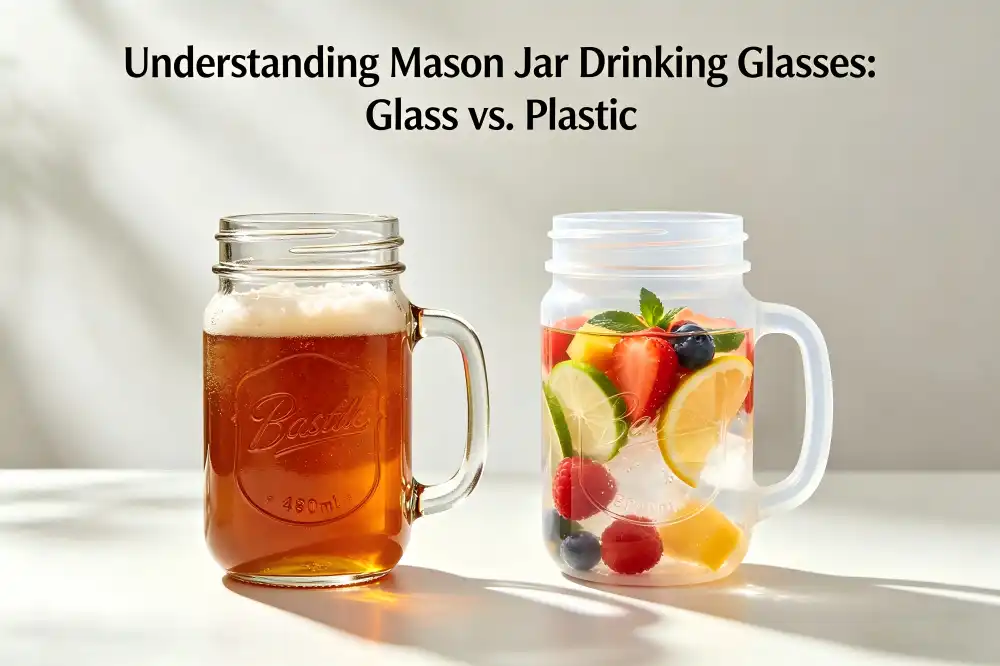
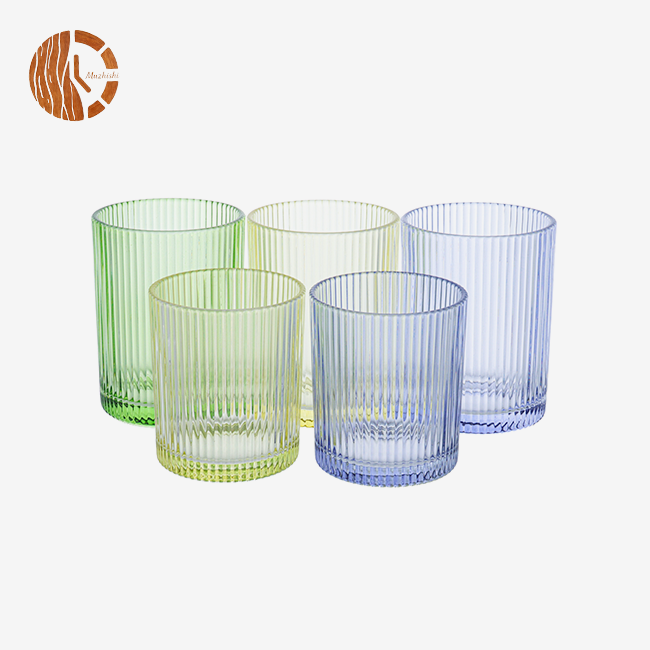
Choosing between glass and plastic mason jar drinking glasses depends on the type of material used and what it will be used for. Traditional glass jars are made from lead-free soda-lime glass, which is known for not absorbing flavors because it is chemically neutral. Our 480ml glass model is a great example of this type. Its 13.3cm height and 10.6cm width make it easy to hold. The clear design shows off the color of the drink beautifully, whether it's the brown tones of craft beer or the bright colors of fruit-infused water.
Plastic versions are usually made of BPA-free polycarbonate or Tritan copolyester, which is designed to look like glass while cutting weight by a huge amount. These options weigh 40–60% less than glass alternatives, which saves a lot of money on shipping and makes them easier to handle. It is especially important to think about weight when outfitting big hotel groups or event sites that need hundreds of units.
Material Composition and Certifications
Some types of glass go through strict melting processes that get rid of internal stress points. These processes meet FDA 21 CFR 177.1520 standards for materials that can come into touch with food. Our production follows EU Regulation 10/2011, which makes sure that there is no lead or cadmium at all. Different kinds of plastic need to be checked for BPA-free certification and Tritan accuracy, because lower-quality plastics can leak chemicals when they are exposed to acidic drinks or direct sunlight for a long time.
Capacity and Design Variations
Standard quantities for both types of material range from 350ml to 500ml, with 480ml being the best size for bar service and specialty drinks. Screw-caps for glass models are compatible with 70G450 thread ends, which means that any lid can be used with any model. The width of the mouth is usually between 5.5 cm and 6.0 cm, which lets you use reusable straws and easily load ice cubes.
Industry Applications by Material Type
Home decor stores like glass versions because they look good on show and go with the rustic-chic style trend. The material's heavy weight gives the impression of quality, which is why premium price tactics are acceptable. Laser etching makes lasting, high-resolution designs that can't be copied on plastic surfaces, so gift companies prefer to engrave on glass. With our hot stamping and inside printing services, we can turn plain jars into classy business gifts that people will actually use and show off.
On the other hand, plastic versions are most common in outdoor catering areas where legal worries about breaking are more important than aesthetic concerns. Festival managers like that there is less chance of injuries when they can serve big groups of people in open spaces. Poolside bars and restaurants can only use plastic because safety rules say glass shouldn't be near water features.
Performance Comparison: Durability, Safety & Usability
To figure out how durable mason jar drinking glasses are, you have to look at both its disastrous failure resistance and its long-term degradation trends. Glass is very hard to scratch, and our thick-walled design keeps the crystal clear quality even after hundreds of cycles in an industrial dishwasher. The non-porous surface doesn't soak up any leftover flavors or smells from the drinks, so every serve tastes just the way it was meant to. Our goods have been tested to make sure they can handle temperature differences of up to 42°C without cracking. This means they can be safely moved from freezers to ambient service settings.
The main weakness is resistance to collision. Even though our low center-of-gravity design makes it less likely that things will fall over, glass can still break when it hits a hard surface. Because of this limitation, careful handling rules and enough breakage stocks must be built into the stocking planning process. Premium restaurants are okay with this trade-off because they know that serving drinks in glasses makes them seem more valuable, which helps them charge more.
Impact Resistance and Safety Profiles
Plastic options are very resistant to impact and can handle being dropped from a normal table height onto ground. This durability is very helpful in busy cafeterias and outdoor BBQ areas where things are often dropped by mistake. Because the material is flexible, it takes impact energy instead of breaking. This means that there are no risks of injuries from sharp edges, which is good for event planners who are worried about responsibility.
But plastic surfaces get cloudy over time when they are put in the washing over and over again because of micro-abrasion and chemical reactions with cleansers. High-temperature sanitization processes speed up this breakdown, lowering the operating life to 6 to 18 months in food service settings with a lot of food. When properly kept, glass stays clear forever, and it often lasts longer than building repairs.
Hygiene and Cleaning Considerations
Because they can be sterilized at high temperatures, glass surfaces are better for hygiene. Our goods can handle temperatures in industrial dishwashers that are higher than 80°C, which kills bacteria without breaking down the materials. The smooth, non-porous finish stops biofilm from forming, which is important for healthcare center cafeterias and approved food businesses that care about cleanliness.
Plastic models need to be cleaned with care so that the surface doesn't get scratched, which gives bacteria a place to live. Lower-quality plastics get cloudy over time, which makes them look bad and makes customers think the manufacturer doesn't take care of them properly. If procurement teams want to choose non-glass options, they should mention Tritan or a similar high-quality plastic.
Usability Across Service Environments
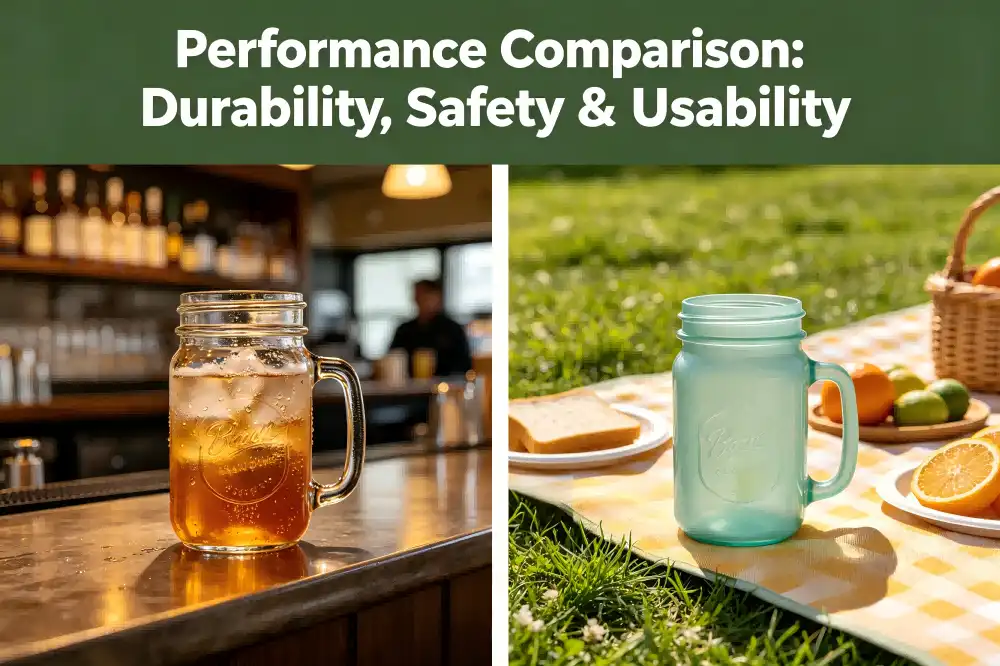
When it comes to bars, glass is the best way to show cocktails because the weight and condensation beads make the drink look more expensive. Natural shielding is provided by the material's thermal mass, which keeps cold drinks at the right temperature for longer amounts of time. Bartenders like the stable base that won't fall over when they're in a hurry to get ready.
Plastic is easy to handle and doesn't weigh much, which is good for quick-service places where staff need to do a lot of repetitive jobs. The lower regularity of replacing broken parts makes inventory management easier and gets rid of the need to record safety incidents. Drive-through restaurants sometimes use plastic for orders to go, but environmental worries are making this less common.
Cost Analysis and Procurement Considerations
The initial prices of buying mason drinking glasses are only one part of figuring out the total cost of ownership. Glass goods usually have higher unit prices because they are made with better raw materials and with more precision. Our partnerships with glass manufacturers in Xuzhou cut the cost of materials by 10 to 15 percent, which lets us offer reasonable prices while still keeping high quality standards. We have an edge over suppliers from farther away who have to pay more for shipping because of this area advantage.
Plastic options are cheaper to start using, which makes them appealing to businesses and cost-optimization projects that are on a tight budget. The lighter weight saves a lot on freight costs, especially for foreign shipping where heavier items are penalized by volumetric weight estimates. It's much easier to load containers this way—logistics teams can pack 30–40% more plastic units per crate than glass units of the same size.
Long-Term Return on Investment
The costs of replacing glass are completely changed by how long it lasts. Our thick-walled construction can survive years of daily industrial use, with breakage rates of less than 2% per year when the right handling methods are used. This means that businesses that value quality over quick cost savings will get more value in the long run. If you take care of your glass jar, it can hold thousands of drinks over the course of its useful life.
Because plastic breaks down over time, it needs to be replaced at regular intervals. This means that people have to keep buying things, which costs money over many years. Venues that serve more than 200 people every day should plan to change all of their plastic inventory every 12 to 18 months to keep up with standards for look. Glass only needs to be replaced when it breaks, which makes long-term planning a lot easier and lowers the costs of buying administration.
Customization and Branding Capabilities
Our full range of customization services meet the branding needs of a wide range of B2B customers. Screen printing makes images that are bright and multicolored, perfect for advertising campaigns and holiday items. When you hot stamp, you can add beautiful shiny finishes that make business gifts look more expensive. Inside engraving creates complex depth effects that can be seen through clear glass, making labeled things that people will remember forever.
With these decorating choices, glasses that are meant to be used can become powerful marketing tools. Wedding planners have jars engraved with the names of the couple and the times of the event. These beloved keepsakes get shared on social media and lead to more business. Corporate clients order branded glass sets as gifts for executives, taking advantage of the fact that good glassware is seen as very valuable.
There are some technical issues with decorating plastic—surface treatments don't always last as long or have as much visual depth as they can on glass surfaces. Pad printing and thermal transfer are good ways to put your name on basic items, but they can't match the high-end look that hot stamping and engraving provide.

Environmental Impact and Sustainability Advantages
As corporate responsibility pledges go beyond simple "greenwashing," sustainability factors for mason jar drinking glasses become more important in purchasing decisions. Glass is clearly the best material for the world because it can be recycled over and over again without losing any of its quality. Our goods don't use any new materials made from oil. Instead, they use silica sand supplies that are easy to find. During the manufacturing process, trash streams that can be recycled go back into the production loop.
When something is no longer useful, it can be thrown away without harming the environment. For example, if recycling facilities aren't available, empty glass jars will slowly turn into harmless sand through natural aging processes. This harmless degradation route gets rid of the worries about microplastic waste that come with plastic replacements. Coastal hospitality places and restaurant groups that care about the environment know that choosing glass is a useful way to support messages about ocean conservation.
Carbon Footprint Considerations
Transportation pollutants are glass's biggest environmental problem. The bulk of the material makes it use more shipping fuel than plastic options, which means that more carbon is released per unit during distribution. For customers in the Asia-Pacific region, our central position in Xuzhou eases this worry. For North American exports, combined container shipping makes things run more smoothly.
Lifecycle analysis studies constantly show that glass is better for the environment when the production, use, and waste steps are all taken into account. Compared to plastic alternatives that need to be changed often, the longer operating lifespan has a hugely positive effect on the environment. High-end restaurants use glassware as real proof of their commitment to the environment and use this sustainability story as part of their brand storytelling.
Circular Economy Integration
Through established recycling systems, glass goods fit right into models for the circular economy. Glass can be recycled into new containers by all municipal gathering systems. This creates closed-loop material flows that save resources. Our products have large amounts of recycled content while still performing like goods made from raw materials.
Recycling plastic has problems with both technology and making the business work. True circularity is hard to achieve because of problems with contamination, mixed plastic garbage streams, and polymer qualities that are lost after reprocessing. Many "recycling" schemes for plastic end up sending the materials to be downcycled or burned instead of going through real bottle-to-bottle recycling loops.
Practical Buying Guide: Choosing the Right Mason Jar Drinking Glasses for Your Business
The first step in making a procurement plan for mason jar drinking glasses is to clearly define business priorities and customer experience goals. Premium restaurants that focus on craft beverage programs should use glass more often for better display and to send a message about sustainability. Choosing the right material supports the idea of quality and supports high prices that help businesses make more money.
High-volume casual eating chains with a lot of different types of customers and quick turnover might use a mix of glass and plastic for outdoor service and kids' menus. This mixed method improves safety, reduces costs, and builds brand awareness in various business settings.
Volume Requirements and Inventory Planning
Our open minimum order amounts and quick production times make it easy to buy things in bulk. We give away samples for free so that purchasing teams can try them out before committing to large sales. Our sample shipping time of 3–5 days speeds up the decision-making process. This is especially helpful when starting seasonal campaigns or opening new places on a tight schedule.
To set the right par levels, you need to think about how much is used every day, how long the dishwasher cycles, and how often things are likely to break. When you figure out how much glass to keep on hand, you should include 15 to 20 percent extra in case something breaks. Our constant production quality and precise measurements make sure that when you order more stock months or years after your first buy, it fits in perfectly.
Supplier Evaluation Criteria
More than just product quality, choosing trusted partners also means looking at how well they handle transportation and how quickly they respond to customer service requests. Our self-operated import-export licenses and full-service document preparation make doing business across borders easier. We provide all the paperwork needed for customs clearance, such as business invoices, packing lists, and certificates of origin that are specific to the needs of the target country.
With twenty years of knowledge in the field, we can predict buying problems and take steps to avoid them before they happen. Our specialized account management plan gives you a single point of contact who knows your needs and keeps institutional knowledge up to date even when you place more orders. With this personalized method, you don't have to repeat your specs for each transaction, which can be annoying.
Negotiating Favorable Terms
By buying in bulk, you should be able to get better prices and more open payment options. Our competitive situation is based on real cost savings from integrating our local supply chain, not on lowering the quality of our products. We talk openly about the factors that affect final quotes, such as the cost of materials, the difficulty of customization, and transportation issues.
When you build long-term partnerships with customers, you can often get them special benefits like priority production scheduling, specialized inventory reserves, and faster shipping choices. We value relationships that span across multiple projects and product categories. We invest in the success of our customers by providing quick help and always improving our skills.
Conclusion
When it comes down to it, the choice between glass and plastic mason jar drinking glasses comes down to how each company balances cost, sturdiness, sustainability, and brand image. Glass works great in high-end uses where brand values and customer standards are met by environmental responsibility, pure flavor, and good looks. Our 480ml lead-free glass mason jars are the best in this area because they are very clear, can be customized in a lot of ways, and have been used in businesses for a long time. Plastic options are useful in some situations where something needs to be shatter-proof and easy to handle, but they don't last as long and are worse for the environment. Both materials may be carefully used in different service settings by procurement strategies that are very advanced. Success requires partnering with experienced providers who can offer full customization, reliable transportation, and helpful customer service throughout the entire relationship.
FAQ
Are glass mason jar drinking glasses dishwasher-safe for commercial use?
Our glass goods can handle the high temperatures and harsh detergents of industrial dishwashers for hundreds of rounds without losing their clarity. The annealed design gets rid of internal stress spots that cause the material to break too soon. We suggest using low-phosphate cleansers so that surface film doesn't build up after a while of use.
How do breakage rates compare between glass and plastic in restaurant settings?
When treated properly, 1 to 3 percent of glass breaks every year in controlled eating areas with trained staff. Plastic almost never fails completely, but it does break down over time through cloudiness and surface damage, so in high-volume uses it needs to be replaced every 12 to 18 months.
What customization options work best for corporate branding on drinkware?
Screen printing makes logos that are bright and multicolored, which can be used on promotional items. Hot stamping and inside engraving, on the other hand, make high-end presents for senior gifts and high-end retail items. Our experts in customization will suggest ways to do things based on your unique business goals, quantity needs, and budget.
Partner with Muzhishi: Your Trusted Mason Jar Drinking Glasses Supplier
Xuzhou Muzhishi Crafts Co., Ltd. has been making mason jar drinking glasses for twenty years and can help you with your buying needs. Custom design, precise production, and seamless global shipping support are just a few of the many things we can do for challenging B2B apps. We make high-quality 480ml glass mason jar drinking glasses that can be fully customized. You can add your logo or text using hot stamping or engraving, and we can also offer personalized packing options that will help your brand stand out. Local supply agreements lower the cost of raw materials while keeping high quality standards that are proven by thorough testing for thermal shock and accuracy in measurements. As a well-known company that makes mason jar drinking glasses, we offer free samples, personalized account management, and quick help, with answer times of less than 24 hours for questions. Get in touch with our team at long@muzhishi.com to talk about your unique needs and get personalized quotes that show how committed we are to the success of your purchase.
References
1. Anderson, J. (2021). Commercial Glassware Selection: Durability and Cost Analysis for Foodservice Operations. Hospitality Procurement Quarterly.
2. Chen, M. & Roberts, K. (2022). Sustainable Packaging Materials in the Beverage Industry: Lifecycle Assessment of Glass versus Plastic Containers. Journal of Environmental Management.
3. Foster, D. (2020). Material Science in Commercial Drinkware: Thermal Properties and Hygiene Standards. Food Safety and Quality Assurance Review.
4. Martinez, S. (2023). B2B Procurement Strategies for Hospitality Supplies: Quality, Cost, and Supplier Relationship Management. Supply Chain Management Today.
5. Thompson, L. & Wu, H. (2022). Customization Technologies in Glass Manufacturing: Applications for Branding and Corporate Gifting. Industrial Design and Production Methods.
6. Wilson, P. (2021). Circular Economy Principles in Commercial Foodservice: Material Selection and Waste Reduction Strategies. Sustainable Business Practices Journal.

Our customers’ satisfaction speaks for our quality — contact us to experience the same reliable service.