- English
- French
- German
- Portuguese
- Spanish
- Russian
- Japanese
- Korean
- Arabic
- Greek
- German
- Turkish
- Italian
- Danish
- Romanian
- Indonesian
- Czech
- Afrikaans
- Swedish
- Polish
- Basque
- Catalan
- Esperanto
- Hindi
- Lao
- Albanian
- Amharic
- Armenian
- Azerbaijani
- Belarusian
- Bengali
- Bosnian
- Bulgarian
- Cebuano
- Chichewa
- Corsican
- Croatian
- Dutch
- Estonian
- Filipino
- Finnish
- Frisian
- Galician
- Georgian
- Gujarati
- Haitian
- Hausa
- Hawaiian
- Hebrew
- Hmong
- Hungarian
- Icelandic
- Igbo
- Javanese
- Kannada
- Kazakh
- Khmer
- Kurdish
- Kyrgyz
- Latin
- Latvian
- Lithuanian
- Luxembou..
- Macedonian
- Malagasy
- Malay
- Malayalam
- Maltese
- Maori
- Marathi
- Mongolian
- Burmese
- Nepali
- Norwegian
- Pashto
- Persian
- Punjabi
- Serbian
- Sesotho
- Sinhala
- Slovak
- Slovenian
- Somali
- Samoan
- Scots Gaelic
- Shona
- Sindhi
- Sundanese
- Swahili
- Tajik
- Tamil
- Telugu
- Thai
- Ukrainian
- Urdu
- Uzbek
- Vietnamese
- Welsh
- Xhosa
- Yiddish
- Yoruba
- Zulu
Everything You Should Know About Round Honey Jars
When looking for ways to package honey goods, round honey jars are the most reliable way to keep the quality while making them look their best. These special cylinder-shaped glass cases are great at keeping food fresh because they have airtight seals that stop oxidation and moisture from getting in. When products get stuck in angular containers, they can't get out, but the seamless interior curvature lets all of the products get out. For high-speed filling lines and global delivery networks, the 500ml capacity meets the standards for retail shelving in major markets. It also gives the structure the strength it needs.
Understanding Round Honey Jars: Features, Benefits, and Materials
What Makes Cylindrical Honey Containers Essential for B2B Operations?
The geometry of cylindrical glass jars delivers measurable advantages in commercial honey packaging. At Muzhishi, our 500ml models feature 9.9cm diameter specifications optimized for consumer handling comfort while maintaining the 45-60 psi vertical load capacity required for warehouse stacking. The transparent food-grade glass composition allows immediate visual product verification—an essential quality control factor for category managers evaluating inventory integrity.
The smooth internal walls eliminate nucleation sites that accelerate crystallization, extending shelf-ready presentation periods. This technical feature reduces product loss and customer complaints related to texture changes. Our manufacturing process maintains wall thickness regularity within ±0.5mm tolerance, preventing the thermal stress fractures common in inconsistent glass production.

Glass Versus Plastic: Material Selection Impact on Product Strategy
Material choice directly influences brand positioning and operational costs. Glass containers maintain complete chemical inertness, never absorbing flavors or leaching compounds into acidic honey environments (pH 3.2-4.5). This compliance with California Prop 65 and EU standards protects your brand reputation in regulated markets.
Plastic alternatives offer lighter shipping weights but sacrifice the premium perception glass provides. Our glass models withstand thermal shock testing with 42°C differential exposure, enabling hot-fill processes up to 88°C for specialized preservation techniques. The optical clarity of low-iron glass formulations showcases product color variations—critical for premium Manuka or infused honey differentiation.
Capacity and Sizing Considerations for Diverse Market Segments
The 500ml capacity serves multiple distribution channels effectively. Retail environments benefit from the 9.7cm height that fits standard shelf configurations without requiring special displays. Corporate gift suppliers appreciate the substantial presentation weight of 98.6g, which conveys quality in premium packaging assemblies.
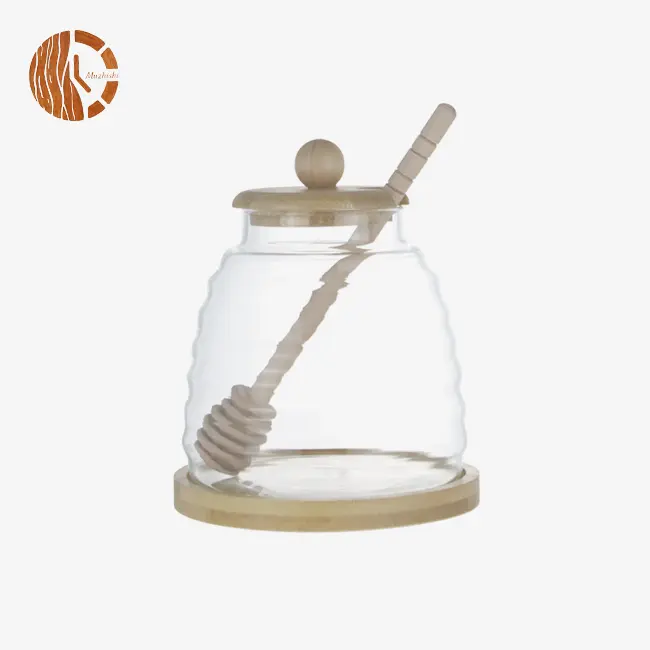
Wedding planners and event companies leverage this size for favors and centerpiece elements, where the knob-topped wooden lid adds rustic elegance. Hospitality buyers use these containers for breakfast buffet service, where the wide mouth facilitates easy access while maintaining sanitary presentation standards throughout service periods.
Round Honey Jars vs. Other Shapes: Making the Right Packaging Choice
Geometric Advantages in Production and Distribution
Round honey jars integrate seamlessly into automated filling systems, achieving 200+ units per minute throughput without jamming incidents that plague square alternatives. The 360-degree symmetry of round honey jars eliminates labeling alignment challenges—your brand graphics apply consistently regardless of rotational positioning during application.
Palletization efficiency improves through uniform stacking patterns. Our round designs achieve optimal density in shipping containers, reducing per-unit freight costs by 8-12% compared to hexagonal shapes that create void spaces. The aerodynamic profile minimizes turbulence stress during transport, protecting product integrity through distribution networks.
Lid Technology and Preservation Performance
Closure systems determine preservation effectiveness. Our knob-topped wooden lids combine aesthetic appeal with functional sealing when paired with food-grade plastisol liners. The continuous thread finish ensures consistent torque application across high-speed capping equipment, maintaining hermetic seals that prevent fermentation during extended storage periods.
Alternative lug closures offer tamper-evidence features preferred by regulatory-compliant operations. We customize closure specifications to match your specific moisture barrier requirements, selecting liner compounds optimized for your honey's water content profile. This precision prevents "honey creep"—the capillary seepage that creates unsightly residue and compromises perceived quality.
Brand Differentiation Through Material Innovation
Leading honey brands differentiate through strategic packaging choices. Organic producers select glass to reinforce environmental messaging, emphasizing recyclability and reuse potential. Artisan operations employ frosted finishes that create sophisticated shelf presence while protecting light-sensitive varietals from photodegradation.
We observe increasing adoption of inside engraving techniques that embed brand elements directly into glass substrates. This permanent branding withstands dishwasher cycles, encouraging consumer reuse—a sustainability narrative that resonates with environmentally conscious demographics. Hot stamping applications deliver metallic accents that signal premium positioning without additional label costs.
Procurement Guide: How to Choose and Purchase Round Honey Jars for Your Business?
Defining Your Sourcing Requirements
Successful procurement begins with clear specification definition. Volume commitments influence unit economics significantly—our bulk ordering structures deliver cost reductions reaching 15-18% at quantities exceeding 10,000 units. Budget allocation must account for customization investments including screen printing setup fees and specialized lid tooling.
Branding needs determine customization complexity. Simple label application supports rapid market testing, while permanent surface treatments require longer lead times but deliver superior brand protection. We provide free samples within 3-5 days, allowing physical evaluation before production commitments.
Supplier Evaluation Metrics That Matter
Quality standards verification protects your brand reputation. Our ISO 9001 certification demonstrates systematic process control, while polarized light testing confirms proper annealing that prevents spontaneous breakage. Dimensional precision affects filling equipment compatibility—laser measurement protocols ensure neck finish tolerances that match your capping machinery specifications.
Pricing structures should reflect total landed cost, not merely unit prices. We maintain transparent quotations including customs documentation, inspection coordination, and freight forwarding services. Our 20 years of export experience enables accurate lead time projections, preventing stockout situations that disrupt retail replenishment schedules.
Certification portfolios indicate market access capabilities. Our compliance documentation supports entry into regulated territories, eliminating the customs delays that plague operations working with inexperienced suppliers. After-sales response commitments under 24 hours protect your operations from extended downtime during quality investigations.
Customization Capabilities That Enhance Market Performance
Surface treatment options transform standard containers into distinctive brand assets. Frosting creates tactile differentiation that stands out in crowded retail environments, while hot stamping applies metallic accents that photograph beautifully for social media marketing campaigns. Screen printing delivers vibrant color application directly on glass surfaces, eliminating label inventory management complexity.
Our full-spectrum color capabilities for honey jar extend beyond standard transparent offerings. Amber glass honey jar protects light-sensitive honey varieties, while colored options support product line differentiation strategies. Packaging customization for honey jar includes branded outer cartons that arrive retail-ready, reducing warehouse handling requirements.
The customization process benefits from dedicated account management. Your assigned representative coordinates design approval, production scheduling, and quality verification throughout manufacturing cycles. This single point of contact eliminates communication gaps that create delays in multi-stakeholder procurement environments.
Innovative Packaging & Usage Ideas for Round Honey Jars
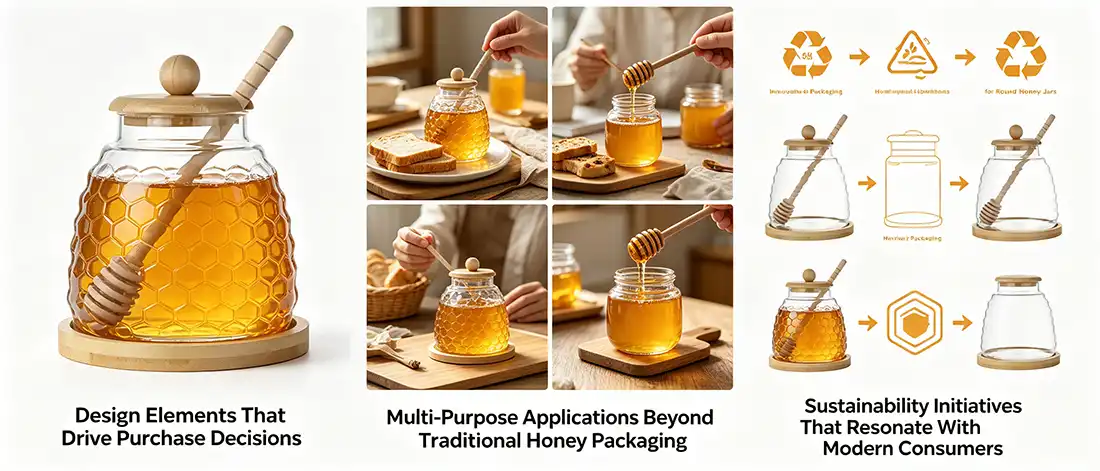
Design Elements That Drive Purchase Decisions
Label design significantly influences consumer selection behavior. Wraparound graphics maximize branding real estate, while transparent window sections showcase product color variations that communicate flavor profiles. We observe successful brands incorporating QR codes that link to origin stories, strengthening emotional connections that drive premium pricing acceptance.
Seasonal presentation variations extend product relevance throughout annual cycles. Holiday-themed heat transfer printing converts standard inventory into gift-appropriate packaging without permanent tooling investments. This flexibility supports limited-edition releases that create urgency in e-commerce channels.
Multi-Purpose Applications Beyond Traditional Honey Packaging
The versatile design accommodates diverse viscous products. Artisan jam producers appreciate the wide mouth that simplifies chunky fruit filling, while nut butter manufacturers leverage the structural integrity that withstands high-torque mixing during production. Coffee roasters use these containers for premium whole bean presentation, where the airtight seal preserves aromatic compounds.
Restaurant operations repurpose containers for portioned yogurt service, individual salad dressings, and signature spice blends. The professional appearance supports premium pricing strategies while the dishwasher-safe construction reduces operational costs. Hospitality designers incorporate empty containers as votive holders and floral arranging vessels, extending brand visibility beyond initial product consumption.
Sustainability Initiatives That Resonate With Modern Consumers
Reusability messaging converts packaging costs into marketing investments. Simple removal of adhesive labels transforms used containers into kitchen storage solutions for pantry staples, craft supplies, and bathroom organization. We provide guidance on label adhesive selection that balances shelf presentation security with consumer removal ease.
The inherent recyclability of glass supports circular economy positioning. Educational messaging about infinite recyclability without quality degradation differentiates glass from plastic alternatives that degrade through recycling processes. This environmental narrative particularly resonates with millennial and Gen Z demographics who prioritize sustainability in purchase decisions.
Market Trends and Future Outlook for Round Honey Jars in B2B Procurement
Emerging Design Innovations Reshaping Industry Standards
Material science advances introduce enhanced performance characteristics. Lightweight glass formulations reduce shipping costs while maintaining structural integrity through improved annealing processes. Surface coating technologies create hydrophobic finishes that prevent residue adhesion, improving consumer experience and encouraging complete product consumption.
Smart packaging integration represents the next differentiation frontier. NFC chips embedded in closures enable authentication verification that protects against counterfeiting while providing supply chain visibility. Temperature-sensitive inks indicate proper storage conditions, reducing liability concerns for temperature-sensitive honey varietals.
Sustainability Pressures Driving Procurement Evolution
Corporate sustainability commitments increasingly influence packaging decisions. Procurement teams face mandates to reduce packaging weight, increase recycled content, and demonstrate end-of-life recyclability. Our manufacturing partnerships prioritize cullet integration, incorporating post-consumer glass that reduces embodied energy without compromising product safety.
Carbon footprint transparency becomes a supplier selection criterion. We provide lifecycle assessment data quantifying environmental impact from raw material extraction through distribution networks. This documentation supports your corporate reporting requirements under emerging environmental disclosure regulations.
Digital Customization Technologies Enabling Rapid Market Response
Digital printing for honey jar eliminates traditional setup costs, enabling economically viable short runs for market testing and regional customization. Brands can deploy location-specific graphics, seasonal variations, and personalized messaging on honey jar without inventory risk. This agility supports the rapid product iteration necessary in competitive e-commerce environments for honey jar.
Direct-to-glass UV printing achieves photographic quality reproduction with superior abrasion resistance compared to label alternatives. The technology supports variable data printing for serialization, traceability, and anti-counterfeiting applications increasingly required in premium product segments.
Conclusion
Selecting appropriate honey packaging solutions requires balancing preservation performance, brand presentation, and operational efficiency. Glass cylindrical containers deliver measurable advantages in product protection, consumer appeal, and supply chain compatibility. Our 500ml models incorporate design refinements developed through two decades of manufacturing experience, including the dimensional precision and quality consistency that protect your brand reputation. The customization flexibility supports diverse market positioning strategies while maintaining the structural integrity essential for global distribution networks. Your procurement success depends on partnering with suppliers who understand both technical requirements and market dynamics.
FAQ
What material delivers optimal performance for bulk honey jar procurement?
Food-grade glass provides superior preservation characteristics through complete chemical inertness and impermeability to oxygen and moisture. The material prevents flavor absorption and compound leaching that affects product integrity during extended storage periods. Glass withstands thermal processing requirements while delivering the premium visual presentation that supports higher retail pricing. Our manufacturing standards include thermal shock testing and dimensional verification ensuring consistent performance across production batches.
Can round containers accommodate comprehensive branding customization?
Customization capabilities extend across multiple application methods including hot stamping, frosting, inside engraving, and screen printing. We coordinate logo integration, color matching, and specialized finishes tailored to your brand guidelines. The cylindrical geometry provides consistent label application surfaces that showcase graphics effectively from all viewing angles. Sample development allows visual confirmation before production commitments, ensuring final products meet your market positioning objectives precisely.
How do closure systems affect honey preservation and shelf life?
Airtight sealing prevents moisture exchange and oxidation that degrades honey quality. Our lid specifications include food-grade liner compounds selected based on honey viscosity and moisture content. The continuous thread finish ensures consistent torque application during automated capping operations, maintaining hermetic seals throughout distribution and retail display periods. Proper closure selection extends shelf-stable presentation by preventing crystallization acceleration and fermentation in high-moisture varietals.
Partner With Muzhishi for Your Glass Honey Jar Requirements
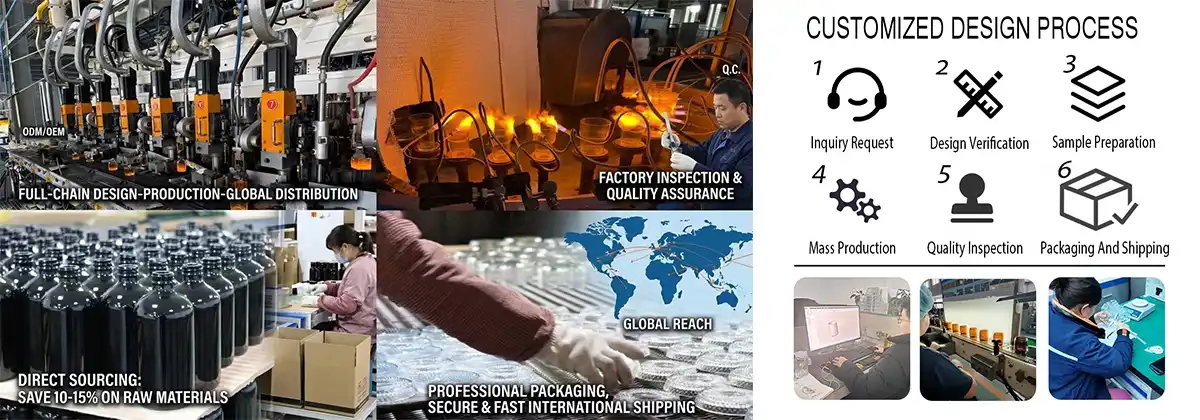
Xuzhou Muzhishi Crafts Co., Ltd. brings specialized expertise in glass container manufacturing serving B2B procurement needs across global markets. Our comprehensive capabilities encompass design consultation, rapid sampling, volume production, and complete export coordination. As an established round honey jars supplier, we maintain quality standards through ISO 9001-certified processes while delivering competitive pricing through optimized supply chain partnerships. Our dedicated account management ensures personalized attention throughout your procurement cycle, from specification definition through delivery confirmation. Contact our team at long@muzhishi.com to discuss your specific requirements and receive complimentary samples demonstrating our manufacturing quality. Visit mzsglass.com to explore our complete product portfolio and initiate your sourcing evaluation today.
References
1. Anderson, M. (2022). Glass Packaging Technology and Applications in Food Preservation. Industrial Materials Press.
2. Chen, L. & Roberts, K. (2023). Sustainable Packaging Solutions for the Modern Food Industry. Environmental Commerce Publishers.
3. Davidson, P. (2021). The Complete Guide to Commercial Honey Production and Marketing. Agricultural Business Journal.
4. Jenkins, R. (2023). B2B Procurement Strategies for Packaging Materials. Supply Chain Management Institute.
5. Thompson, S. & Williams, G. (2022). Material Science in Food Contact Applications: Safety and Performance. Food Safety Technical Publications.
6. Warren, J. (2024). Packaging Design Trends Influencing Consumer Purchase Behavior. Retail Marketing Research Group.

Our customers’ satisfaction speaks for our quality — contact us to experience the same reliable service.