- English
- French
- German
- Portuguese
- Spanish
- Russian
- Japanese
- Korean
- Arabic
- Greek
- German
- Turkish
- Italian
- Danish
- Romanian
- Indonesian
- Czech
- Afrikaans
- Swedish
- Polish
- Basque
- Catalan
- Esperanto
- Hindi
- Lao
- Albanian
- Amharic
- Armenian
- Azerbaijani
- Belarusian
- Bengali
- Bosnian
- Bulgarian
- Cebuano
- Chichewa
- Corsican
- Croatian
- Dutch
- Estonian
- Filipino
- Finnish
- Frisian
- Galician
- Georgian
- Gujarati
- Haitian
- Hausa
- Hawaiian
- Hebrew
- Hmong
- Hungarian
- Icelandic
- Igbo
- Javanese
- Kannada
- Kazakh
- Khmer
- Kurdish
- Kyrgyz
- Latin
- Latvian
- Lithuanian
- Luxembou..
- Macedonian
- Malagasy
- Malay
- Malayalam
- Maltese
- Maori
- Marathi
- Mongolian
- Burmese
- Nepali
- Norwegian
- Pashto
- Persian
- Punjabi
- Serbian
- Sesotho
- Sinhala
- Slovak
- Slovenian
- Somali
- Samoan
- Scots Gaelic
- Shona
- Sindhi
- Sundanese
- Swahili
- Tajik
- Tamil
- Telugu
- Thai
- Ukrainian
- Urdu
- Uzbek
- Vietnamese
- Welsh
- Xhosa
- Yiddish
- Yoruba
- Zulu
Fashionable Fascination: Customized Nail Polish Bottles
When it comes to makeup, the box says a lot before the customer even opens the cap. Customised clear glass nail polish bottle options have become the best way for brands to package their products when they want to look good and work well. These clear cases are the clearest of their kind, so customers can see the colour pigments clearly. They also have better chemical protection, which keeps the formula's purity. As the cosmetics industry puts more value on eco-friendliness and high-end appearance, glass bottles have become necessary tools for brands that want to stand out in busy stores and online markets.
Understanding Clear Glass Nail Polish Bottles: Benefits and Uses
The choice of packing materials has a big effect on the success of a product in many ways. Glass packaging has kept its high status in the beauty business because it has natural qualities that plastic replacements just can't match. A high-quality clear glass nail polish bottle offers properties that ensure formula longevity.
Why Glass Outperforms Plastic in Nail Polish Packaging
Glass packing completely stops air and moisture from getting inside, which has a direct effect on how long the formula lasts and how stable it is. Because glass is chemically neutral, it doesn't react with volatile organic substances like ethyl acetate and butyl acetate that are found in nail polish. This compatibility makes sure that the viscosity and performance properties of your carefully made goods stay the same over time. Plastic containers, on the other hand, often let tiny amounts of gas exchange happen, which can change the structure of the formula and speed up the breakdown process. Due to its high clarity, high-quality glass has a refractive index that shows colours correctly, without the distortion that can happen with plastics. Customers are more likely to trust the product because it looks real, which lowers the number of returns in e-commerce deals.
Environmental Advantages That Matter to Modern Buyers
Sustainability used to be just a marketing buzzword, but now it's a real buying factor for environmentally conscious customers and business procurement teams. Glass bottles can be recycled over and over again without losing any of their quality. This supports circular economy models that brands that are on the cutting edge of business. Glass can be sterilised and used again and again, unlike single-use plastics that pollute the environment. This makes the product more useful while lowering trash. Companies that sell gifts and home decor are looking for suppliers that offer eco-friendly packaging choices that are in line with their business social responsibility goals. Broken glass packing is less likely to be thrown away during shipping and storage because it is more durable. This saves money on costs and helps the environment at the same time.
Practical Applications Across Diverse Market Segments
Glass boxes that can be customised can be used for a wide range of products and business types. Gel polishes used in salons need to be packed in a way that keeps the oligomers that are needed for drying safe from UV light. Specialised nail treatments, like cuticle oils with added vitamin E and plant extracts, benefit from glass transparency, which lets customers see how the ingredients are mixed and how clear the product is. Travel-sized forms with 3ml and 5ml capacities are allowed by TSA rules and give brands the chance to make sample sets and limited-edition releases. Event planners use these containers as party and wedding favours by decorating the bottles with themed items that guests love and keep as keepsakes. The clean, professional look of glass packing improves how people think of a brand in hotel settings, where attention to detail affects how guests feel and leads to good reviews that encourage people to book again.
How to Choose the Perfect Clear Glass Nail Polish Bottle for Your Business?
A lot of technical and business factors need to be carefully considered when making procurement choices. By understanding these factors, buyers can make sure that the skills of suppliers meet their unique business needs. Finding the right clear glass nail polish bottle is a balance of aesthetics and logistics.
Assessing Capacity Requirements and Design Specifications
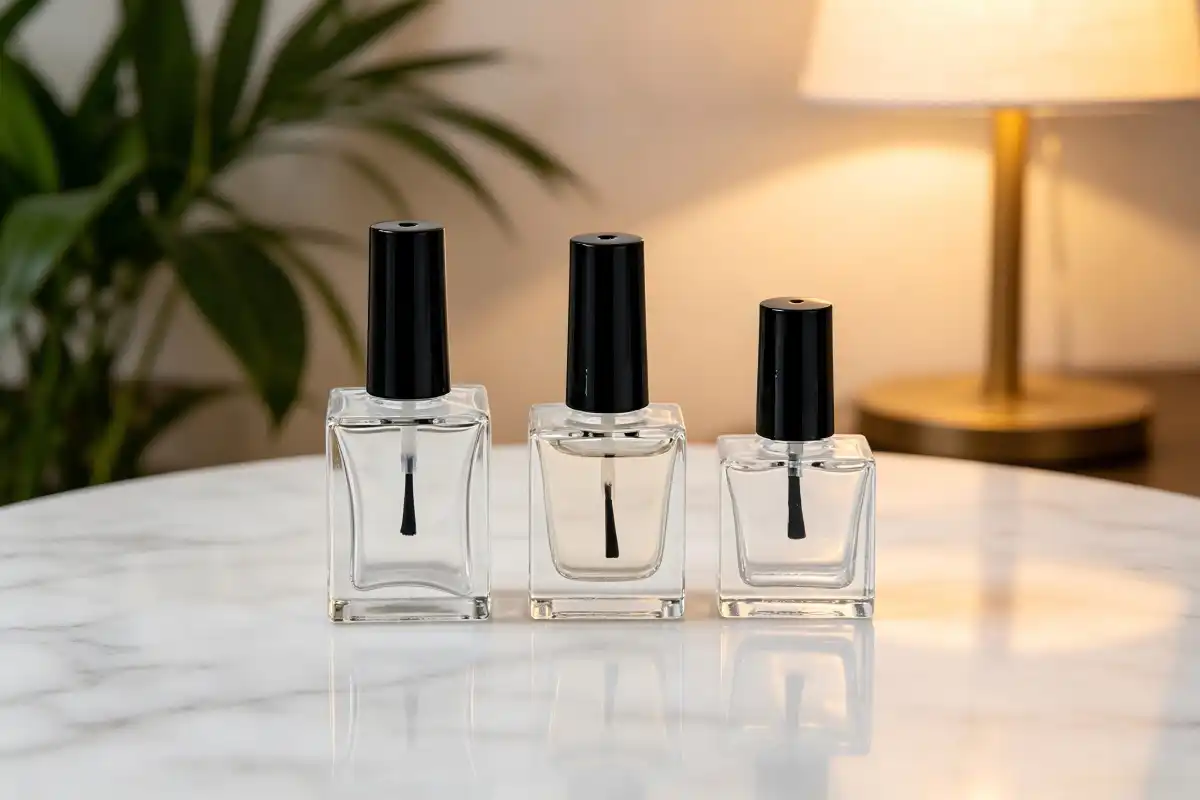
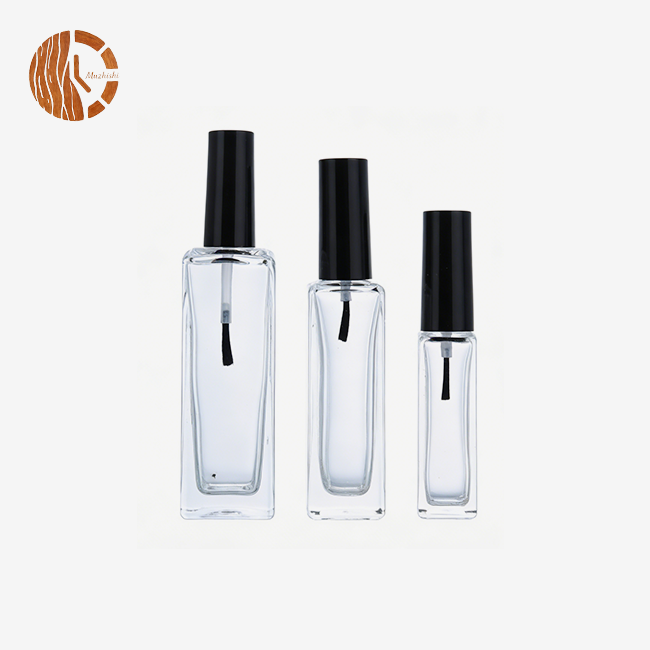
The choice of volume relies on how the product is positioned and what the target market wants. The 10ml size is the standard for store nail polish lines. It holds enough product and is small enough to fit in a purse. Smaller sizes (5ml and 3ml) are available for samples, marketing campaigns, and high-end speciality recipes that need concentrated active ingredients that cost more. The shape of a bottle affects both how it looks and how well it works. Cylindrical shapes are classic and look beautiful, and their bottoms are stable so they don't tip over while being used. The width and height numbers have a direct effect on how the shelf looks and how easy it is to hold. Different sizes of models like CP-N-001, CP-N-002, and CP-N-003 show how different shapes can create unique looks while keeping standard neck finishes that work with brush kits and cap systems.
Evaluating Glass Quality and Manufacturing Standards
Glass doesn't all have the same properties. High-quality soda-lime glass is very clear and doesn't change temperature easily, so it can handle the temperature changes that happen during foreign shipping without losing its strength. When walls are all the same width, usually between 1.5 mm and 3 mm, stress fractures don't happen during high-speed filling operations or rough handling in delivery networks. Where the glass comes from is very important because production regions with well-established quality control methods ensure uniform performance from batch to batch. Over many years, Xuzhou in Jiangsu province has become known for its high-quality glasswork. This is due in large part to the area's well-developed supply chain facilities and expert technical knowledge. Bottles that weigh between 14.5g and 20.6g have walls that are thick enough to last and not too thick so that shipping costs are low.
Supplier Credentials and Customization Capabilities
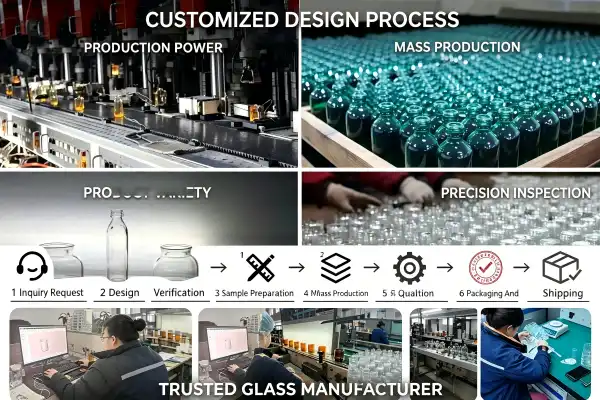
For partnerships to work, providers need to know both how to make things and how the market works. Companies that offer ODM/OEM services help with everything, from coming up with the first idea to increasing production. With sample response times of 3–5 days for rapid prototyping, buyers can check how the package looks and how it works before committing to full production runs. Customisation choices should include more than just putting a name on something. They should also include more complex surface processes like frosting, hot pressing, inside engraving, and screen printing. Standard bottles are turned into branded items that show quality and attention to detail with these decorating methods. If a supplier has self-operated import and export rights, it makes foreign deals easier because the supplier handles customs paperwork, inspection processes, and logistics planning, which would normally be the job of procurement teams. Minimum order amounts must be in line with inventory management strategies. This way, buyers can weigh the savings they get from buying in bulk against the costs of storing the goods and the uncertainty of predicting demand.
A North American gift company recently teamed up with a maker that offers full customisation services to make nail polish bottles that are only available during certain times of the year. The supplier's ability to use frosted finishes and custom labelling to make unique packaging that made the bottles 34% more visible on store shelves than the old stock bottles directly led to better holiday sales and better brand recognition among target consumers.
Comparing Clear Glass Nail Polish Bottles with Alternatives
To make strategic choices about packing, you need to know the relative benefits of the different materials you can use. Each option comes with its own set of trade-offs that affect how the brand is positioned and how well the business runs. The clear glass nail polish bottle remains the industry gold standard for performance.
Glass Versus Plastic: Performance and Perception Analysis
The fact that plastic bottles are light helps keep shipping costs down, but this benefit comes with some big drawbacks. Because plastic is porous, solvents can evaporate, which makes nail polish recipes gradually thicker, which makes customers unhappy and leads to bad reviews. Another worry is chemical leaching, which happens when plasticisers and additives move into products and change the chemistry of the mixture. This can make quality-conscious customers question the safety of the products. Because glass is solid and doesn't let anything through, these risks are completely eliminated by glass packing. The feel of glass expresses a high-end image that supports higher prices. This is especially important for brands that want to attract picky customers who connect good packing with good products. Glass bottles stand out more on store shelves because of their weight and clarity, which conveys a sense of heft and sincerity that light plastic bottles can't match.
Clear Glass Compared to Frosted and Colored Options
While frosted and coloured glass are different in terms of how they look, clear bottles are better for applying nail paint. Colour clarity is still very important to customers when they're buying something because they need to be able to correctly judge shades before committing. Clear bottles let you see everything clearly, which makes people less likely to hesitate to buy and more likely to return items. However, frosted finishes create a sophisticated, high-end look that works well for high-end product lines where brand mystery is more important than practical sight issues. When you mix clear base materials with selective frosting, you get hybrid designs that are a good balance between being clear and having artistic interest. This kind of partial obscuration can be used to draw attention to branding elements while still letting you see the colours.
Innovative Design Trends Enhancing Brand Identity
Modern package innovation goes beyond just choosing the right container and includes cutting-edge ways to decorate it. Inside etching makes three-dimensional brand lines that can be seen through clear glass. This makes the product impossible to fake and fights fraud in high-value categories. Heat transfer printing makes it possible to print accurate graphics and colour effects that aren't possible with traditional screen printing. This helps with seasonal collections and collaborative releases that need visually compelling stories. Square bottle shapes keep them from rolling around while they're being used, and they also make the best use of shelf space, which addresses real issues and improves the user experience. These design factors show that carefully thought-out package development creates competitive benefits that go beyond just keeping products safe and help tell the story of a brand and make customers happy.
Procurement and Ordering Insights: How to Source Customized Clear Glass Nail Polish Bottles
To do foreign buying right, you need to plan ahead and evaluate suppliers carefully. Knowing the best ways to buy things saves investments and makes sure that the supply chain works reliably. Securing a reliable clear glass nail polish bottle manufacturer is critical for long-term growth.
Identifying Reliable Manufacturing Partners
The first step in verifying a supplier is to look at their operational experience and production ability. Manufacturers who have been in the business for 20 years show steadiness and technical knowledge that their younger rivals don't have. Integrated sites that do both production and decoration make it easier to coordinate and keep an eye on quality, which can happen when different vendors work on the same package. Geographic concentration in well-established industrial areas gives companies access to specialised sources of raw materials and pools of skilled workers that help keep quality standards high. When suppliers have long-term relationships with factories that make glass sheets and packaging materials, they can get better prices and be given priority during times when supplies are limited. This helps procurement teams get competitive quotes and dependable delivery dates.
Negotiating Terms and Leveraging Customization Services
Negotiations that work well match the need to control costs with the need to ensure quality and the need for flexibility. Minimum order amounts usually show the level of production efficiency at which setup costs are spread out over a sufficient number of units. Buyers should find out if MOQs apply per design version or to mixed sales as a whole. This difference has a big effect on how brands that offer multiple product lines plan their inventory. When figuring out lead times, you need to take into account how complicated the customisation is. For example, normal bottles ship faster than units that need to be decorated in multiple steps. Payment terms and quality inspection standards protect both parties by setting clear acceptance criteria that stop arguments over personal opinions about how something looks. Value-added services like custom packaging box design and label printing combine points of contact in the supply chain. This lowers the administrative workload and creates consistent unpacking experiences that improve brand impressions.
Logistics Considerations and Risk Mitigation Strategies
International shipping adds new factors that can be planned for and handled with care. Glass items are kept safe during multi-modal shipping that includes container ships, rail transfers, and last-mile delivery when they are properly packaged with the right padding materials. Suppliers who know how to export make complete paperwork packages that include business invoices, packing lists, and certificates of origin that are tailored to the needs of the target country. This speeds up customs clearing and avoids costly delays. Insurance transfers risk during travel, and consolidation tactics group packages to get the most out of each container and lower the cost of freight per unit. Buyers should set up quality inspection processes that include both factory checks before shipping and inspections after getting goods. This way, problems are found before the products reach customers, where fixing them becomes much more difficult and expensive.
Future Trends and Innovations in Clear Glass Nail Polish Bottles
Changes in industries mirror larger changes in society, such as a greater focus on sustainability and the merging of technology. Businesses can predict what the market will want and stay competitive by keeping up with new trends in the clear glass nail polish bottle market.
Sustainability Driving Material Innovation
Packaging requirements in the makeup industry are becoming more and more affected by environmental factors. Lightweighting programmes make glass thinner without affecting the structure's strength. This cuts down on the amount of raw materials needed and the amount of pollution released during shipping each unit. Using post-consumer recovered glass makes closed-loop systems where bottles go back to being made instead of ending up in a dump. People who care about the environment are more likely to buy concentrate refills that can be used to fill up reusable glass containers. This creates ongoing income opportunities and cuts packaging waste by up to 70% compared to single-use options. Millennials and Gen Zers are especially interested in these sustainability efforts because their buying habits are shaped by their environmental values and they actively look for brands that show a real commitment to being environmentally responsible.
Smart Packaging and Technologies for Authentication
As technology advances, new features are added to packing that make it more useful than just a container. Caps with near-field communication tags allow smartphone interactions that send app lessons, product authentication checks, and personalised marketing content straight to customers. Labels with QR codes can take customers to augmented reality experiences where they can see nail polish colours on virtual hand models before they buy them. This makes people less hesitant to buy things online where actual samples aren't possible. Anti-counterfeiting measures like holographic labels and traceable serial numbers protect brand equity in markets where copycat products threaten sales and reputation. This is especially important for premium lines, where fakes hurt customer trust by using lower-quality formulas while pretending to be real brands.
Market Data Revealing Consumer Preferences
A recent study of the cosmetics industry found that 68% of buyers think about the quality of the package when deciding how they feel about a brand. Glass materials are strongly linked to premium placement. Over the past three years, the independent nail polish brand segment has grown by 43%. This is because businesses are trying to stand out by making formulas and packages that are different from others. Because of this growth, there are possibilities for glass bottle suppliers that offer flexible minimum order numbers and quick customisation services that can work with smaller production runs that are common for independent brands. Consumer studies show that people are becoming more interested in environmentally friendly packing. In fact, 74% of those surveyed were willing to pay a small extra for goods made with recyclable materials and refillable systems. All of these trends show that there is a strong need for custom glass packing options that are both aesthetically pleasing and good for the environment.
Conclusion
Customised clear glass nail polish bottles are smart investments that help position a brand and provide important practical benefits for maintaining product integrity. Glass packing is better at resisting chemicals, being clear, and being environmentally friendly, which are all important factors for procurement workers in a wide range of market niches. The right package choice affects how customers see a product, how efficiently it works, and how it affects the environment. This is true for both small, independent brands releasing signature collections and large, well-known companies handling global delivery networks. With its full range of manufacturing services, fast prototyping options, and combined shipping support, Muzhishi offers complete turnkey solutions that make foreign buying easier while maintaining quality across all production batches.
FAQ
How do I properly clean and refill glass nail polish bottles?
To keep the recipe from getting contaminated, cleaning must be done completely without using any solvents. Rinse bottles well with acetone or isopropyl alcohol, then rinse them with warm water. Let the bottles dry in the air without caps on to let all the liquid evaporate. Placing things upside down on absorbent surfaces speeds up the drying process and keeps dust from building up. Before refilling, check the sides of the bottles for any leftover pigment. Even small amounts can change the colours of the new recipe.
What minimum order quantities should I expect from customization suppliers?
Minimum order numbers change depending on how complicated the decoration is and how quickly the product can be made. For standard clear bottles, the minimum order quantity is usually between 5,000 and 10,000 units. For more complex customisations that use multiple painting methods, the minimum order quantity may rise to 15,000 to 20,000 units. Suppliers sometimes offer mixed-design flexibility, which means that total order amounts meet minimums even when spread across multiple types. This helps brands that have a wide range of products.
Why choose glass over plastic for environmental considerations?
Plastic can only be recycled a certain number of times, but glass can be recycled over and over again without breaking down. The inert makeup gets rid of worries about chemical leaks that come with plastic packaging, which is good for both protecting the environment and people's health. Durability lets you reuse a product more than once, which extends its life and has a much smaller effect on the world each time than single-use options.
Partner with Muzhishi for Premium Clear Glass Nail Polish Bottle Solutions
Xuzhou Muzhishi Crafts Co., Ltd. has been making glass products for 20 years and can help brands that want unique packaging that makes their products look better and keeps the recipe safe. Our full ODM/OEM services help customers from the first design ideas to mass production, and the quick sample return of 3–5 days lets them make an informed choice. Standard containers can be turned into unique items that show quality and attention to detail through advanced surface treatment options like hot stamping, frosting, and inside lettering. Email our team at long@muzhishi.com to talk about your needs with account managers who have experience and know how to prioritise B2B buying. If you need clear glass nail polish bottles for salon-grade gel formulas or special collections for seasonal campaigns, Muzhishi can help. They have reliable production partnerships that are backed up by integrated operations and helpful customer service that puts your success first.
References
"Sustainable Packaging in the Cosmetics Industry: Materials, Trends, and Consumer Perspectives," Journal of Cleaner Production, 2022, Volume 341.
Thompson, R. and Martinez, S., "Glass Versus Plastic Packaging: A Comparative Life Cycle Assessment for Personal Care Products," Environmental Science & Policy, 2021, Volume 118, pp. 45-58.
"The Global Nail Polish Market: Size, Trends, and Forecast 2023-2028," Allied Market Research, Portland, 2023.
Chen, L., "Chemical Compatibility of Packaging Materials with Volatile Organic Compounds in Cosmetic Formulations," International Journal of Cosmetic Science, 2020, Volume 42, Issue 5, pp. 467-479.
"Consumer Preferences and Purchasing Behavior in Premium Beauty Packaging," Beauty Packaging Magazine Annual Report, 2023.
Wilson, K., "Innovation in Cosmetic Container Design: From Functionality to Brand Identity," Packaging Technology and Science, 2022, Volume 35, Issue 8, pp. 621-635.

Our customers’ satisfaction speaks for our quality — contact us to experience the same reliable service.