- English
- French
- German
- Portuguese
- Spanish
- Russian
- Japanese
- Korean
- Arabic
- Greek
- German
- Turkish
- Italian
- Danish
- Romanian
- Indonesian
- Czech
- Afrikaans
- Swedish
- Polish
- Basque
- Catalan
- Esperanto
- Hindi
- Lao
- Albanian
- Amharic
- Armenian
- Azerbaijani
- Belarusian
- Bengali
- Bosnian
- Bulgarian
- Cebuano
- Chichewa
- Corsican
- Croatian
- Dutch
- Estonian
- Filipino
- Finnish
- Frisian
- Galician
- Georgian
- Gujarati
- Haitian
- Hausa
- Hawaiian
- Hebrew
- Hmong
- Hungarian
- Icelandic
- Igbo
- Javanese
- Kannada
- Kazakh
- Khmer
- Kurdish
- Kyrgyz
- Latin
- Latvian
- Lithuanian
- Luxembou..
- Macedonian
- Malagasy
- Malay
- Malayalam
- Maltese
- Maori
- Marathi
- Mongolian
- Burmese
- Nepali
- Norwegian
- Pashto
- Persian
- Punjabi
- Serbian
- Sesotho
- Sinhala
- Slovak
- Slovenian
- Somali
- Samoan
- Scots Gaelic
- Shona
- Sindhi
- Sundanese
- Swahili
- Tajik
- Tamil
- Telugu
- Thai
- Ukrainian
- Urdu
- Uzbek
- Vietnamese
- Welsh
- Xhosa
- Yiddish
- Yoruba
- Zulu
Honey Jar Glasses: The Perfect Solution for Honey Storage
When looking for high-end packaging for honey goods, the container has a big effect on how the brand is positioned, how well the product stays fresh, and how customers see the brand. In recent years, the Hexagon Honey Jar Glass has become a great option because it blends great functionality with good looks. This six-sided glass jar is great for storage because it makes the best use of wall space and improves the way things look. Because they are made of food-grade soda-lime glass, these containers keep honey's natural flavor, nutritional value, and golden brightness without letting chemicals mix with them. This specialized glass storage option meets strict industry standards and creates memorable brand experiences, whether you're packaging handmade honey for small markets or running large-scale commercial operations.
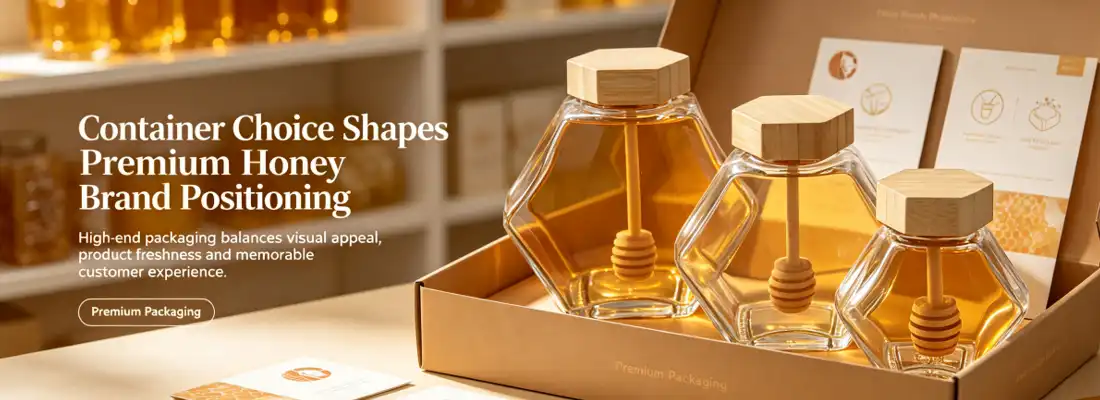
Understanding Hexagon Honey Jar Glass: Dimensions, Material, and Design Benefits
Capacity Options Tailored to Market Demands
Choosing the right jar size has a direct effect on managing inventory, shipping costs, and customer happiness. There are three common capacity options: 100ml, 250ml, and 400ml. Each is made to meet the needs of a different market group. When it comes to sample programs, hotel services, and gift basket contents, the 100ml size works great. The best size for retail honey sales is a 250ml jar in the middle, which strikes a good balance between controlling the amount eaten and the product's value. The 400ml volume is good for people who buy in bulk and for the way most families in North America drink.
Brands can carefully divide their product lines into groups based on these differences in dimensions. A small-scale honey maker might put expensive, hard-to-find types in 100ml jars and put regular honey in 400ml containers to sell in bulk. The exact measurements, which range from 7.3 by 7.9 cm to 11.1 by 11.9 cm, make sure that they can be used with normal store shelving and automated filling equipment that is used in business packing.
Material Quality and Food Safety Compliance
The makeup of glass directly affects how safe and long-lasting a product is. The right amounts of silica, sodium oxide, and calcium oxide are found in high-quality soda-lime glass. This makes the surface non-porous, which stops water from getting in and germs from growing. This inert substance keeps flavors from mixing, which is very important when keeping honey that has mild flower notes or regional characteristics.
A Hexagon Honey Jar Glass complies with Title 21 CFR 177.1520 of the FDA and EU Regulation 10/2011 for food-contact materials. The material is lead- and BPA-free, ensuring it is fully safe for use across international markets. It can withstand temperatures up to 42°C, making it suitable for hot-fill applications such as creamed honey or flavored honey. A wall thickness of approximately 2 mm provides structural stability during pallet storage and long-distance transportation. Independent laboratory testing confirms that the glass can withstand over 400 kg of vertical load, which is essential for warehouse stacking systems.
Hexagonal Design Advantages for B2B Operations
The six-sided shape is useful for solving problems that round objects can't handle well. If something is transported on a flat surface, it won't roll around, which lowers the risk of damage and insurance claims. This steadiness is very helpful when sending goods by sea, where moving containers can cause a lot of product loss. When compared to cylindrical jars, the tessellating form allows for tighter packing density, which raises the unit count per shipping box by about 15%.
Hexagonal shapes are very useful for retail marketing. The angular surfaces bend light in beautiful ways, making shows that stand out and get people's attention. Each flat panel has the perfect amount of room for putting on a label, so you can brand it from any angle without having to worry about the labels twisting or the glue failing, which can happen on curved surfaces. Automated labeling systems are more accurate on flat surfaces, which cuts down on waste and downtime on the production line.
The geometric shape is also better for your body. People find it easier to hold on to the edges of jars than smooth round ones. This is especially true when their hands are sticky from using honey. This practical feature helps users have good experiences that make them want to buy again.
How to Maintain and Label Hexagon Honey Jar Glass for Optimal Use
Cleaning and Sanitization Protocols
Maintaining jars properly makes them last longer and makes sure they meet safety standards. Commercial dishwashers that use alkaline soaps at 60 to 70°C can get rid of honey residue without breaking the glass. If you don't use rough scrubbers, you won't scratch the surface, which could let bacteria grow or weaken the structure. Water that is heated to at least 82°C should be used in the rinse cycle to get rid of any soap residue that could change the taste of the honey.
For tasks that need to be sterilized, 15 minutes of steam treatment at 121°C makes something clean enough for medicinal use. This method works well for organic honey makers who want to get certified or for businesses that are located in places with strict rules about food safety. As part of the inspection process, chips or cracks in the seal should be looked for. Damaged jars let water in, which helps fermentation.
Strategic Labeling Techniques
The hexagonal form has six different labeling areas that can be used to tell creative brand stories. On the front panels, you'll usually find the names of the products and their main selling points. On the side panels, you'll find origin stories, varietal traits, or pledges to sustainability. Text about nutrition and regulations fits easily on the other surfaces and doesn't get in the way of the main branding.
Pressure-sensitive stickers stick well to glass, but shrink sleeves are more secure and cover the pictures all the way around. Direct printing methods, such as screen printing or hot stamping, make lasting labels that can handle the wetness that is common in kitchens. Inside printing is a great way for high-end honey brands to stand out because it keeps the labels from wearing off and gives the honey a unique look.
Sustainability and Recycling Integration
The average rate of reusing glass in the US is about 31%, but there are big differences between regions. Teaching people the right way to recycle improves the number of people who do it and aligns brands with environmental ideals. Labels that clearly say "100% recyclable glass" back messages about sustainability that appeal to people who care about the environment.
Closed-loop methods let manufacturers make sure that returned jars are inspected, cleaned, and refilled. This method lowers the cost of raw materials and appeals to people who want to minimize trash. When brands advertise refill programs, they can often charge more and keep customers for longer. Institutional buyers value a company's social responsibility credentials that are strengthened by working with local recycling programs and keeping track of its environmental impact through lifecycle studies.
Comparing Hexagon Honey Jar Glass Options: Quality, Durability, and Cost Insights
Glass versus Plastic: Material Performance Analysis
While plastic containers are cheaper to buy and lighter to ship, glass vessels work better in all important ways. Glass will always be honey-clear, but plastic turns yellow from UV light over time. Because glass is impermeable, flavors don't move around, so the tiny taste notes that make premium honey unique are kept. Glass packing is thought to be of higher quality by customers, which is why it costs 20–30% more than plastic wrapping of the same goods.
Another important factor is how airtight something is. When metal caps with plastisol plates are put on top of glass jars, a hermetic seal is made that stops moisture from leaking out. Because honey is hygroscopic, even a small rise in moisture can cause fermentation, which changes the taste and appearance of the honey. Plastic cases rarely get the same level of seal integrity, especially after being opened and closed many times.
When it comes to durability, glass is better for stationary storage, while plastic is better at withstanding drops. The choice depends on how the product is sold. For example, direct-to-consumer shipping might favor plastic, while stable shelves in stores would favor glass. A lot of high-end brands use glass for their stores and plastic for their bulk food service packages, where cost is more important than sight.
Bulk Purchasing Dynamics and Pricing Strategies
For standard patterns, the minimum order quantity is usually between 5,000 and 10,000 units. For unique colors or embossing, the minimum order quantity is higher. There are different levels of volume deals, with price cuts happening at 10,000, 25,000, and 50,000 units. Negotiating yearly contracts with expected amounts gets you better prices than buying on the spot and makes sure you always have a supply.
A Hexagon Honey Jar Glass is significantly influenced in total acquisition cost by its unit price and logistics expenses. Ocean freight typically takes 6 to 8 weeks to arrive but is far more cost-effective than air freight for large-volume orders. Smart buyers balance inventory holding costs against freight savings and often maintain safety stock to support production schedules while leveraging lower-cost sea shipping. Consolidating Hexagon Honey Jar Glass packaging with other product lines also maximizes container utilization and reduces per-unit transportation costs.

Understanding how prices vary by area can help you make the best decisions about what to buy. Suppliers who are close to where the raw materials come from or who have vertical integration can save you money. However, a full cost analysis must take into account things like quality control, how well communication works, and help after the sale. This is where experienced sellers can charge a little more because they make things run more smoothly.
Specialty Features and Compliance Considerations
Using tamper-evident bands on more advanced lid designs meets food safety rules and builds trust with customers. Childproof locks are required by the Consumer Product Safety Commission for items that kids might be able to get to. These features come at extra cost, but they protect you from liability and make sure you follow the rules that are necessary for store sales.
Changes in glass thickness affect both how long it lasts and how much it costs. Walls that are 2.0 mm thick are fine for most uses, but 2.5 mm glass is stronger for big items or places where people handle them roughly. On the other hand, lightweight glass lowers shipping costs but needs to be handled carefully. The cost-performance mix is best when the weight of the glass is matched to how it will be distributed.
More and more, eco-certifications like Cradle to Cradle or B Corporation standing affect how things are bought. Environmental certificates are often required by corporate buyers, which makes them competitive differentiators. Brands that care about the environment will like premium placement that comes with proof of recycled glass material or carbon-neutral manufacturing.
Procurement Guide for Hexagon Honey Jar Glass: Smooth Purchasing and Logistics
Evaluating Supplier Credibility
Checking a supplier's skills can help avoid mistakes and shipping problems that cost a lot of money. Ask for standards like ISO 9001 for food safety and ISO 22000 for quality control. Suppliers who have FDA registration numbers show that they are committed to following the rules for the U.S. market. Third-party audit reports from companies like SGS or Bureau Veritas give unbiased opinions on quality.
Verification of production ability makes sure that providers can grow with the business. When you can, visit factories and look at the state of the equipment, the skill level of the workers, and the quality control methods used. Suppliers with more than one production line show that they can handle broken equipment that might cause orders to be late. Credit companies' checks on a company's financial health lower the risk of a disruption in the supply chain.
The level of communication often shows how well a team will do. Responding suppliers who give clear technical specs and output schedules and take the initiative to solve problems boost trust. Being able to speak more than one language and understanding other cultures makes deals go more smoothly, especially when dealing with customization details or quality issues.
Customization and Branding Solutions
Standard jars can be turned into unique business assets with the help of full customization options. Metallic foils in gold, silver, or unique colors can be applied by hot printing, giving the product a high-end look on the shelf. Frosting methods make beautiful matte finishes that spread light in a beautiful way and give different textures. Inside etching makes a logo that won't wear off, which is great for programs that use refillable jars.
A Hexagon Honey Jar Glass can be decorated using screen printing to produce bright, high-saturation, multi-color designs with excellent durability. This method is ideal for brands that need to reproduce detailed artwork or complex graphic elements. Digital printing, on the other hand, enables short production runs with variable data, supporting limited editions or localized customization without high setup costs. Discussing decoration options for a Hexagon Honey Jar Glass early in the planning stage ensures technical feasibility and helps keep the project within budget.
Shipping damage rates and how the package looks in stores are both affected by packaging design in a big way. Custom boxes with dividers keep jars safe while they're being shipped and make unloading easier at stores. Hexagonal point-of-purchase displays make the most of store space and urge people to buy things on the spot. Suppliers who offer integrated packing services make handling easier and make sure that all of the parts work with each other's designs.
International Logistics and Risk Mitigation
Managing foreign shipping of glass takes a lot of special knowledge. Breakage rates can be kept below 1% by using corrugated dividers and edge guards for proper padding. Patterns for palletising should spread weight out properly and make the best use of container cubes. Corner guards and stretch wrapping keep loads safe while they are being moved and keep them from moving while they are being shipped across the ocean.
Correct customs paperwork keeps processing times from being too long. Commercial bills need to include HS numbers (for glass containers, these are usually 7010.90), the place of origin, and correct prices. Trade deals allow favorable duty rates to be used with certificates of origin. In most places, food contact statements are enough to meet the standards of the import authority. These problems are handled by experienced goods forwarders, but suppliers can be held more accountable if they understand what is needed.
Insurance should cover both the cost of replacing and the costs of business loss. Marine cargo insurance covers damage or loss that happens while in transit, and warehouse-to-warehouse coverage protects the whole supply chain. Keeping track of the state of the package when it is received protects your claim rights in case of damage.
Trusted Hexagon Honey Jar Glass Brands and Suppliers: Who to Partner With
Supplier Landscape in North American and European Markets
There are many types of suppliers in the glass packaging business, and they serve a wide range of market groups. Multinational companies with a lot of production capacity and well-established logistics networks are good for names that need millions of pieces every year. Regional experts offer freedom and a high level of customization, making them perfect for craft makers who want unique packaging. Trading companies bring together smaller manufacturers to give a wider range of goods at low prices, but they may not be able to keep an eye on the manufacturing process as closely.
Xuzhou, Jiangsu, has become a major center for making glass by blending traditional skills with modern production methods. Because their supply lines are linked and their equipment is specialized, suppliers from this area usually have good prices. Finding partners that meet specific needs is easier when you look at individual sellers instead of making broad area statements.
Professional sellers can be told apart from shady ones by their certifications. Look for businesses that have B2B platform identification badges, which show that their documents are real and their business is legitimate. Specifications alone can't tell you much about how reliable, consistent, and quick the service is. Customer reviews and case studies can.
Building Strategic Supplier Relationships
Long-term partnerships that work well combine cost concerns with practical dependability. Before committing to large numbers, initial orders should be used to test how well the provider does in terms of quality, speed, and communication. As trust grows, slowly raising order amounts lowers risk and shows growth potential that encourages suppliers to invest in the relationship.
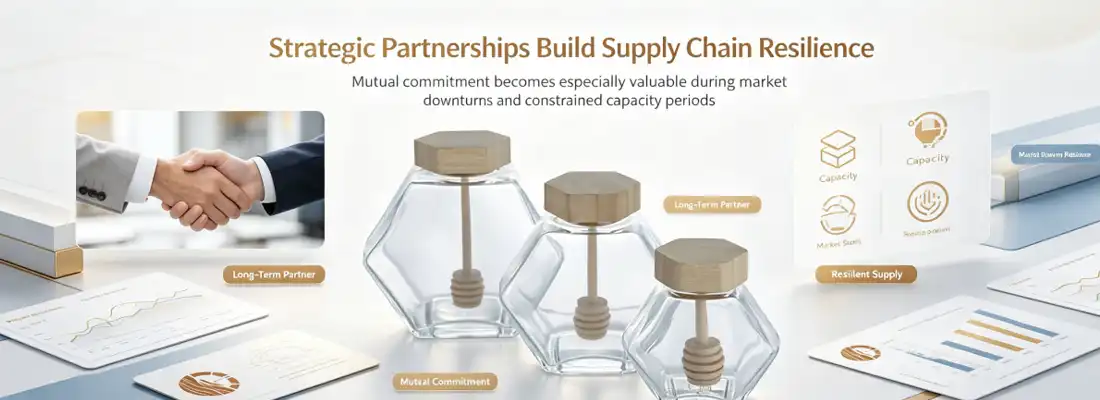
A Hexagon Honey Jar Glass supply program requires ongoing alignment as business needs evolve. Regular quarterly business reviews that discuss forecast adjustments, quality metrics, and continuous improvement initiatives help strengthen long-term supplier relationships. Sharing market intelligence enables suppliers to identify emerging trends and develop more relevant product solutions. When suppliers of Hexagon Honey Jar Glass are treated as strategic partners rather than transactional vendors, mutual commitment is strengthened, which becomes especially valuable during market downturns or periods of constrained capacity.
Metrics for performance should keep track of failure rates, on-time delivery, and how quickly problems are fixed. Recognizing good work by getting more business or public praise strengthens the behavior you want to see more of. Dealing with problems quickly and properly keeps people accountable and keeps relationships friendly, which is important for long-term success.
Real-World Success Stories
A Vermont company that makes specialty honey teamed up with a glass source that could engrave on the inside of the jars, making unique jars that became associated with their brand. The lasting logo got rid of the need for labels and supported their message of sustainability. Within eighteen months, sales went up by 40%, in part because of unique packing that made the product seem more expensive.
A foreign company that buys honey merged its suppliers, cutting the number of partners it works with from five to two key ones. This focus made it possible to get savings for buying in bulk and made quality control easier. One partner gave standard jars for value lines, and another gave expensive varieties in custom-embossed cases. The simplified supply chain cut the costs of buying things by 25% and made it easier to keep track of stockpiles.
For a Fortune 500 client's Christmas program, a business gifting company made hexagonal jars with their names on them. The supplier oversaw the design, production, and direct shipping to 200 office sites. This shows that professional glass suppliers are different from basic makers because they can provide a wide range of services.
Conclusion
When choosing the right way to store honey, you need to think about how it looks, how well it works, and how much it will cost. Hexagon Honey Jar Glass provides on all of these fronts, giving products a unique look on the shelf, better product preservation, and practical benefits that make the investment worthwhile. The six-sided geometry makes shipping as efficient as possible while also making unique brand experiences that make people want to buy more. Glass protects the purity of the product and appeals to quality-conscious buyers who are willing to pay more for real packing. To make a purchase go smoothly, you need to carefully evaluate suppliers, customize products strategically, and plan processes that keep fragile goods safe during international shipping. Brands that spend money on premium glass packing are better able to stand out in markets where uniqueness and perceived quality are key to success.
FAQ
1. Do hexagonal glass jars maintain airtight seals for long-term honey storage?
Do Hexagon Honey Jar Glasses keep their sealed lids long enough to store honey for a long time? Hermetic seals are created by high-quality hexagonal honey jar glass and properly fitting lids, preserving honey for a very long time. The best closing is achieved with metal twist-off lids that have plastisol cores. When the lid is put on, the lining material melts and molds to the rim of the jar, sealing out air. This seal stops water from getting in, which would otherwise lead to fermentation. Because glass isn't porous, it stops gas exchange, which keeps honey's wetness content at the right amount. Regularly checking the lids makes sure that the protection lasts, but jars that are kept properly will stay intact for years.
2. What are typical minimum order quantities for bulk purchases?
For stock patterns with clear glass, the standard MOQ is between 5,000 and 10,000 units. Due to setup costs and production changeovers, custom colors, stamping, or ornaments usually need higher minimums, usually between 15,000 and 25,000 units. Some sellers let you test their products before committing to large production runs by sending you 100 to 500 units as samples. Talking about expected numbers early on helps sellers suggest ordering plans that balance the cost of stock with the cost per unit.
3. Can I customize jars with company logos and branded packaging?
There are many ways to customize something, such as hot stamping, frosting, inside embossing, and screen printing for adding names and other brand elements. Label-ready jars can use either pressure-sensitive labels or shrink-sleeve labels with full-color pictures. Custom package options include everything from branded boxes to displays at the point of sale that are made to fit your exact marketing needs. Suppliers usually help with design, making sure that the idea is technically possible and has the best visual effect. Customization times depend on how complicated the job is. For example, easy labeling takes two weeks, while embossed or individually decorated jars take six weeks.
Partner with Muzhishi for Your Hexagon Honey Jar Glass Supplier Needs
Xuzhou Muzhishi Crafts has been making glass for twenty years and can help you with your honey packing problems. Our full ODM/OEM services take care of everything, from the first design ideas to global delivery, making sure that your vision is carried out smoothly. We can meet the needs of your business, no matter what size it is, because we have the production capacity to handle both small runs and big orders. Rapid prototyping lets you get models in three to five days, which shortens the time it takes to build a product. Our self-operated import and export services make customs processing and paperwork easier, which takes away some of the practical problems that come up when you need to buy things from other countries. Competitive prices come from having good ties with providers of raw materials and production methods that have been fine-tuned over twenty years. Quality assurance procedures, such as checking the dimensions, testing the wall thickness, and making sure the food safety rules are followed, make sure that goods meet strict international standards. Our dedicated account management gives you personalized help throughout the whole buying process, making sure that you can communicate clearly and quickly solve any problems that come up. Email our team at long@muzhishi.com to talk about your unique needs and find out how our Hexagon Honey Jar Glass solutions can help you place your brand more effectively while also improving the efficiency of your operations.
References
1. Anderson, M. (2021). Glass Packaging Technology and Applications in Food Preservation. Food Science Publishers.
2. Bennett, R. & Thompson, K. (2022). Sustainable Packaging Solutions for Specialty Food Products. Green Business Press.
3. Chen, L. (2020). Modern Glass Manufacturing: Materials, Processes, and Quality Control. Industrial Technology Publications.
4. Morrison, J. (2023). The Strategic Role of Packaging in Brand Differentiation. Marketing Innovations Journal.
5. Peterson, S. (2022). B2B Procurement Strategies for International Supply Chains. Global Trade Institute.
6. Williams, D. & Foster, A. (2021). Food Safety Standards and Compliance in Packaging Materials. Regulatory Affairs Press.

Our customers’ satisfaction speaks for our quality — contact us to experience the same reliable service.