- English
- French
- German
- Portuguese
- Spanish
- Russian
- Japanese
- Korean
- Arabic
- Greek
- German
- Turkish
- Italian
- Danish
- Romanian
- Indonesian
- Czech
- Afrikaans
- Swedish
- Polish
- Basque
- Catalan
- Esperanto
- Hindi
- Lao
- Albanian
- Amharic
- Armenian
- Azerbaijani
- Belarusian
- Bengali
- Bosnian
- Bulgarian
- Cebuano
- Chichewa
- Corsican
- Croatian
- Dutch
- Estonian
- Filipino
- Finnish
- Frisian
- Galician
- Georgian
- Gujarati
- Haitian
- Hausa
- Hawaiian
- Hebrew
- Hmong
- Hungarian
- Icelandic
- Igbo
- Javanese
- Kannada
- Kazakh
- Khmer
- Kurdish
- Kyrgyz
- Latin
- Latvian
- Lithuanian
- Luxembou..
- Macedonian
- Malagasy
- Malay
- Malayalam
- Maltese
- Maori
- Marathi
- Mongolian
- Burmese
- Nepali
- Norwegian
- Pashto
- Persian
- Punjabi
- Serbian
- Sesotho
- Sinhala
- Slovak
- Slovenian
- Somali
- Samoan
- Scots Gaelic
- Shona
- Sindhi
- Sundanese
- Swahili
- Tajik
- Tamil
- Telugu
- Thai
- Ukrainian
- Urdu
- Uzbek
- Vietnamese
- Welsh
- Xhosa
- Yiddish
- Yoruba
- Zulu
How to Choose the Best Plant Mist Sprayer for Garden Plant Watering
The ideal plant mist sprayer for garden plant watering is one that fits the plant, the job, and your schedule. Pick a fine, even mist for seedlings and cuttings, a bottle size that's easy to hold when it's full, a seal that can handle the liquid, and a body that can handle shipping and daily use. Before you order, test a sample. Spray quality and resistance to leaks are best seen when they are used, not when they are photographed. Stores and growers care just as much about the supplier's test records and packaging as they do about the bottle itself. I list each factor below in the order that I check it. send inquiry
Define Your Plant-Misting Application Before Comparing Products
Start With the Plant and Its Growth Stage
Seedlings and cuttings that haven't grown roots yet need soft water. Fine droplets slow the loss of water from leaves in mist propagation until roots form. This method is explained in Plant Propagation: Principles and Practices (2011). Tropical foliage plants, like orchids and ferns, can handle a light mist to remove dust and moisture. It's not necessary to spray succulents with water, and water that pools around the crown can cause it to rot. I think you should write down a list of your plants, their stages of growth, and how often you want to spray them each week before you look at any bottles. That short note quickly filters out nozzles that aren't right.
Compare Indoor, Nursery, and Retail Uses
When a bottle is on a shelf, it looks good and doesn't leak in a home or office setting. A propagation room looks for output that can be repeated hundreds of times. Clear branding and packaging that can stand up to being handled are important for a retail display. The table shows how I match each setting to a spray priority.
| Setting | Main spray need | Bottle priority |
|---|---|---|
| Propagation room | Soft, even fine mist | Consistent output |
| Indoor plant care | Low overspray | Leak resistance, appearance |
| Retail shelf | Clean presentation | Branding, packaging |
First use this table as a filter, and then use samples to make sure you made the right choice.
Plan for Wholesale, Private Label, and Export Needs
The sourcing plan is equally as crucial as the plant when you are buying to sell. Lead times vary, so if you want stock models, custom logo or both, you need to make up your mind early. Before you receive an estimate, be sure to check out the numerous label alternatives, carton design, export paperwork and minimum order quantities. Muzhishi can work with both OEM and ODM firms, confirming designs with technical drawings in one business day. Samples take three to five days to make, so early tests are short. Delays at peak times harm the most, therefore provide the supplier your schedule as soon as possible.
Evaluate Spray Pattern, Nozzle Performance, and Mechanism
Judge Droplet Size and Spray Pattern
What the spray does is based on the size of the drops. A fine mist spreads out evenly, while coarse droplets splash on the ground and run off of leaves and waste. For ferns, orchids, and seedlings, I want a soft, even cloud that doesn't spit at the beginning of the stroke. Also, make sure you test the bottle when it's half full, since the output often changes when the liquid level drops. Muzhishi checks the evenness of the spray pattern by using laser diffraction to look at the distribution of droplet sizes for the plant mist sprayer for garden plant watering. This helps find uneven streams before they are shipped.
Check Nozzle Aperture and Foliar Coverage
This is controlled by the nozzle's opening. The Muzhishi CP-L-013 has an aperture that is precisely milled to be between 0.3 mm and 0.5 mm wide. It was made to make a consistent ultra-fine mist. When you use liquid micronutrients, it's important to cover the area well because dissolved nutrients enter plants through the leaf surface, according to a review published in Critical Reviews in Plant Sciences in 2009. Both the top and bottom of the leaves should be wetted by a good nozzle pattern, without heavy dripping. A small hole can get clogged with minerals, so wash it with clean water after each use.
Compare Manual and Powered Mechanisms
Sprayers with a manual pump are small and medium-sized jobs that can be done with them. They are light, portable, and easy to clean. The CP-L-013 works from 1.5 to 3.0 bar, and the handle spreads out the pressure on your hands so that you don't get tired after long sessions. Battery-powered models make repetitive tasks easier, but they make more noise, need to be charged, and have more parts that can break. Continuous-spray bottles don't need to be pumped as often, but they're better for bigger jobs than small retail bottles. No matter what you choose, hold it with one hand while it's full, because using it over and over again will make your grip hurt within minutes.
Select Capacity and Compare Bottle Materials
Match Capacity to Workload
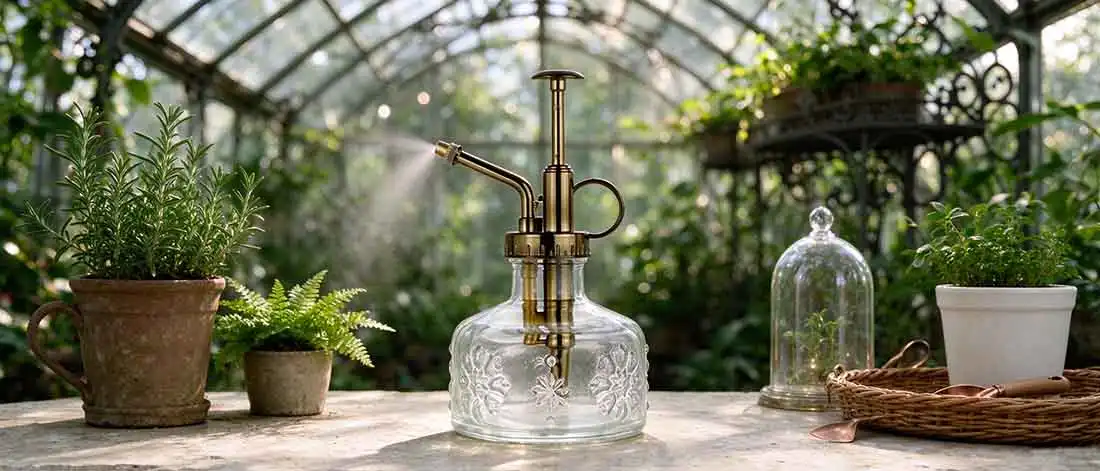
Capacity should change based on how often you spray and how far you have to walk to get more. For houseplants, terrariums, bonsai, seedlings, and store demos, a 200 ml bottle works well because it is small and easy to handle. Larger tanks make it easier to refill them in greenhouses, but they weigh more when they're full. There are 9 cm of height, 7.7 cm of diameter, and 198.8 g of weight to the CP-L-013. Muzhishi also lets distributors make custom sizes, so they can offer more than one capacity to meet the needs of both home and business buyers.
Compare Plastic and Glass Bottles
Plastics like PET, HDPE, and PP are light and don't break easily, so they are good for shipping large amounts of stuff outside. Glass has a high-end look, makes it easy to see the level of the liquid inside, and feels solid on store shelves, but it needs to be protected during shipping. The trade-offs are shown in the table.
| Factor | Plastic | Glass |
|---|---|---|
| Weight | Lighter | Heavier |
| Transit handling | Tolerates drops | Needs careful packing |
| Shelf appearance | Functional | Premium |
For everyday use inside, I choose glass, and for rough use outside, I choose plastic.
Check Glass Safety and Shipping Strength
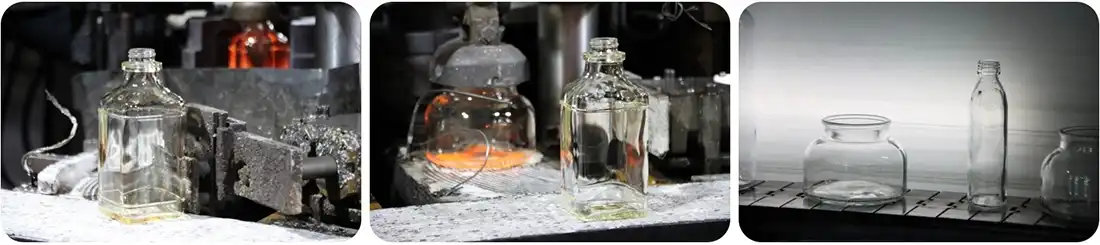
The best glass is made from high-quality materials. The CP-L-013 body is made by Muzhishi from lead-free glass, and the bottle is approved by the LFGB for use with water and non-toxic horticultural fluids. Regulation (EC) No 1935/2004 (2004) says that materials that come into contact with food must not transfer harmful amounts of their ingredients. This is why buyers ask for test documents. Each bottle body is annealed at the factory to relieve stress inside it, and as part of the quality control process, a standard 1.2-meter drop test on concrete is done. You tell us what you need, so we can talk about the best way to package things for shipping by sea or air. People are right to worry about glass breaking, so ask any supplier how they test and pack glass.
Check Durability, Sealing, and Maintenance
Inspect Every Part, Not Just the Bottle
Most of the time, the pump, gasket, neck, or cap are where leaks begin, not the glass. Check the cap seal, thread fit, and length of the dip tube. Muzhishi checks that the pressure stays in for at least 30 minutes without leaking and that the mechanism can be used 5,000 to 10,000 times without the spring breaking. Ask any supplier for records that are the same. Take a sample to your desk, fill it up, and then tip it over a paper towel. Pump it several times to look for drips. These two checks tell you more about how long the pump will last than any picture of the product.
Confirm Seal Compatibility With Liquids
The seal material determines how long the pump lasts if your customers use oil-based organic sprays or liquid fertilizers. EPDM seals are used on the CP-L-013, which are good for liquid fertilizers and organic solutions that are based on oil. EPDM or Viton seals are used on Muzhishi's pump assemblies for the plant mist sprayer for garden plant watering. To see if the seals swell or break down, the team puts them in horticultural oils and fertilizer solutions. Foliar feeding doesn't replace root feeding, so make sure the sprayer you use fits the liquid you plan to use. Before putting out a new line, I always test my own formula on a small amount.
Clean the Sprayer and Avoid Common Mistakes
After each use of fertilizer or foliar spray, rinse the reservoir and flush the pump with clean water. Let the parts dry before putting them away. The residue turns into crystals and blocks the fine nozzles. If the bottle sprays a stream instead of a mist, soak the nozzle in a mixture of bleach and clean water. People often make the mistake of buying something based only on how it looks, not checking to see if the seals work with it, or not testing samples in real life. Fungal problems can happen if leaves stay wet for a long time, so mist plants in the morning and let them breathe. The 2012 book Greenhouse Operation and Management goes into great detail about controlling diseases and humidity.
Build a Buying Checklist and Choose a Supplier
Score Products With a Simple Checklist
A checklist helps people make fair choices. List the spray pattern, consistency of the nozzle, capacity, compatibility with seals, resistance to leaks, comfort of the grip, ease of cleaning, packaging, and total cost to land. Each item should be weighed based on the type of buyer it is for. For example, growers want consistent output and less work, while retailers want better packaging, stable supplies, and lower defect rates. Compare and score two or three samples next to each other, and write down each score. If you only look at the unit price, you might miss out on costs like shipping, damage, and returns. Compare all of these costs before choosing a winner.
Verify Supplier Capacity and Testing
Sources should give you facts. Since 2005, the Xuzhou Muzhishi Crafts Co., Ltd. in Jiangsu has been making crafts and glass items. Its factory has 10 glass furnaces, and each one can hold 150 tons of glass. Each furnace has 6 automated production lines. The business can bring goods into and out of the country on its own, handles customs paperwork, and makes commercial invoices, packing lists, and certificates of origin. It keeps common materials on hand to cut down on delivery times, and it responds to customer service requests within 24 hours. Check each supplier you're thinking about to see if they offer traceability, batch consistency, and the ability to reorder.
Review Customization and CP-L-013 Specifications
Buyers of private labels can ask for logos, colors, labels, bottle types, sizes, and packing boxes. They can also ask for hot stamping, gold stamping, screen printing, or engraving on the inside. There are also liquid soap, lotion, hand wash, and skin toner on the bottle, so it can be used for both garden and home lines. With free samples, you can try before you buy. The table shows the most important facts about CP-L-013.
| Item | Detail |
|---|---|
| Model | CP-L-013 |
| Material | Lead-free glass |
| Capacity | 200 ml |
| Size | 9 cm high, 7.7 cm diameter |
| Weight | 198.8 g |
| Color | Transparent or custom |
| Certifications | CE, FDA, SGS, LFGB |
Tell your team about these things before you compare quotes.
Conclusion
The plant, the job, and the environment are the first considerations when selecting a plant mist sprayer for garden plant watering. Seedlings and cuttings need a fine, even mist, while succulents need small doses that are targeted. Misting should never be used instead of watering the roots. Performance is then affected by the nozzle's opening, mechanism, capacity, and the material of the bottle. Glass is better for high-end indoor use, while plastic is better for rough outdoor work. How long a sprayer lasts with oils and fertilizers depends on how well it is cleaned, how well the seal works, and how long the pressure stays in. A scored checklist, tested samples, and checked supplier records are better ways to compare than looking at the product or its price per unit. The best choice sprays evenly, doesn't leak, and gets there whole.
FAQ
How often should I mist my plants?
The species, humidity, airflow, temperature, and growing medium all play a role. Light misting may be good for tropical plants, but it only makes the air more humid for a short time. As an extra, use it and keep the roots moist.
Is a fine mist bottle better than a regular spray bottle?
If you have seedlings, orchids, or ferns, yes. Less splash and runoff happen with a fine nozzle. For general outdoor spraying, a bigger or wider pattern might work better.
Can I use a glass bottle for fertilizer sprays?
Yes, as long as the seals work with the liquid. EPDM seals on the CP-L-013 work with both liquid fertilizers and organic solutions that are based on oil. Every time you use it, rinse it off, and try out your own recipe first.
Why does my sprayer shoot a stream instead of a mist?
A buildup of minerals in the nozzle is usually to blame this. Rinse the nozzle with clean water and vinegar, and then test it again.
Request Samples of Muzhishi's Plant Mist Sprayer for Garden Plant Watering
As a plant mist sprayer for garden plant watering manufacturer in Jiangsu, Muzhishi offers free samples in 3 to 5 days, OEM and ODM customization, and account managers who work directly with customers. If you want to know more about our branding options, plant types, daily usage, and capacity, you can email long@muzhishi.com or go to mzsglass.com. Our team helps with exporting documents and responds to questions within 24 hours of a sale.
References
1. Plant Propagation: Principles and Practices, Pearson, 2011
2. Uptake of Hydrophilic Solutes Through Plant Leaves: Current State of Knowledge and Perspectives of Foliar Fertilization, Critical Reviews in Plant Sciences, 2009
3. Greenhouse Operation and Management, Pearson, 2012
4. Plant Physiology and Development, Sinauer Associates, 2015
5. Regulation (EC) No 1935/2004 on Materials and Articles Intended to Come into Contact with Food, European Parliament and Council, 2004
6. Greenhouse: Advanced Technology for Protected Horticulture, CRC Press, 1998


Our customers’ satisfaction speaks for our quality — contact us to experience the same reliable service.