- English
- French
- German
- Portuguese
- Spanish
- Russian
- Japanese
- Korean
- Arabic
- Greek
- German
- Turkish
- Italian
- Danish
- Romanian
- Indonesian
- Czech
- Afrikaans
- Swedish
- Polish
- Basque
- Catalan
- Esperanto
- Hindi
- Lao
- Albanian
- Amharic
- Armenian
- Azerbaijani
- Belarusian
- Bengali
- Bosnian
- Bulgarian
- Cebuano
- Chichewa
- Corsican
- Croatian
- Dutch
- Estonian
- Filipino
- Finnish
- Frisian
- Galician
- Georgian
- Gujarati
- Haitian
- Hausa
- Hawaiian
- Hebrew
- Hmong
- Hungarian
- Icelandic
- Igbo
- Javanese
- Kannada
- Kazakh
- Khmer
- Kurdish
- Kyrgyz
- Latin
- Latvian
- Lithuanian
- Luxembou..
- Macedonian
- Malagasy
- Malay
- Malayalam
- Maltese
- Maori
- Marathi
- Mongolian
- Burmese
- Nepali
- Norwegian
- Pashto
- Persian
- Punjabi
- Serbian
- Sesotho
- Sinhala
- Slovak
- Slovenian
- Somali
- Samoan
- Scots Gaelic
- Shona
- Sindhi
- Sundanese
- Swahili
- Tajik
- Tamil
- Telugu
- Thai
- Ukrainian
- Urdu
- Uzbek
- Vietnamese
- Welsh
- Xhosa
- Yiddish
- Yoruba
- Zulu
How to Choose the Right Packaging Bottles for Essential Oils & Serums
Use the formula to help you select the proper bottles for your essential oils and serums. That's when you choose the correct glass, lid, and dropper for the risk. Light, oxygen and leaks can damage actives and sensitive oils (vitamin C and retinol). For these formulations, a gold gourd essential oil serum dropper bottle works wonderfully. Its PVD gold covering blocks 99% of UV radiation from 200 nm to 400 nm, and its precision pipette delivers out drips of 0.1 ml to 0.5 ml. This tutorial will show you how to compare shape, dropper, finish and source before you place an order. send inquiry

Start With Your Formula, Materials, and Protection Needs
Define the Formula Before the Bottle Look
Essential oils, face serums and oil mixtures vary in thickness, volatility and light sensitivity. Vitamin C stability is affected by circumstances of the formulation, as discussed in a 2001 publication in Dermatologic Surgery and other research on topical L-ascorbic acid. It was observed in 2005 in the International Journal of Environmental Research and Public Health that natural retinoids break down when they are exposed to UV light. First, I always ask clients three things. Should the formula be dosed drop by drop or with a full pipette? How much does it mind light and air? Which danger is the more important: leakage, evaporation, contamination, or giving the wrong dose? The replies clearly forth the needs for the bottle before any design discussion.
Compare Glass, Plastic, and Combined Systems
Serums and essential oils are often in glass since they don't react with chemicals and look fancy. Vinyl is lighter and won't break as easily, but you have to try it out first with oils, solvents and active ingredients. This is covered in great length in Tisserand and Young's Essential Oil Safety (2014). Terpene-rich oils (such as limonene) degrade with time. Our gold gourd bottle is manufactured with a borosilicate glass and screw on plastic lid. Bottles can be constructed of glass, plastic or steel and be ball-shaped. I suppose you should try out the full method using your real formula. Bottle, pipette, bulb, cap, coating and box are included.
Match Packaging to Protection and U.S. Compliance
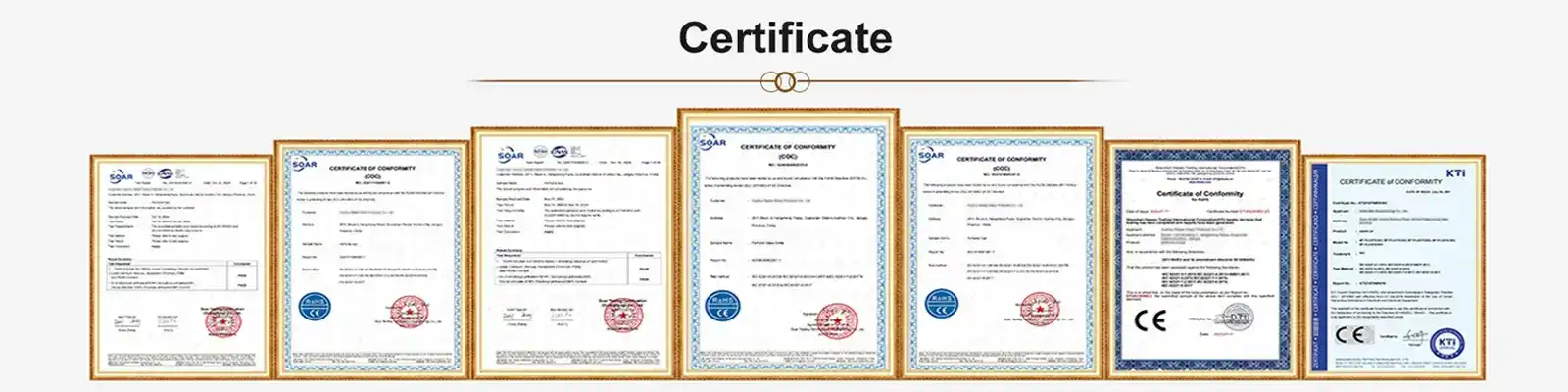
The packaging must protect the formula during storage, shipment and use. First of all it is very sensitive to light, oxygen, moisture and temperature. Then you can select clear glass, amber glass, coated glass or opaque glass. Ask for compatibility testing for things like cracking, swelling, discoloration, odor transfer, and leaking. In the U.S. market, the Modernization of Cosmetics Regulation Act of 2022 increases the FDA's oversight, so get ready with material declarations and traceability records. ISO 22716 guidelines for good manufacturing practice for cosmetics are useful when you are auditing a supplier. We have CE, FDA, SGS and LFGB certifications on file for our bottle, but I would recommend you verify which apply to your formula.
Choose the Right Bottle Shape, Capacity, and Dropper System
Why Shape Matters for Shelf Impact and Grip?
A gourd shape makes a brand easy to spot on store shelves, in photos on-line and in gift sets. The wider the grip area, the more securely it can be held by spa workers even when their hands are oily or wet. This shape also enables the pipette to have a higher effective suction height. Thus there is less product left in the bottom than in a normal cylinder. Round bottles are still the most common bottle shape for packing and labeling, so check the height, diameter, shoulder profile and label area first. The design of a good essential oil bottle must be recognizable as a brand and be a usable daily object.
Pick a Capacity and Neck Finish That Fit Your Line
A medicine's capacity should match its dose, length of treatment, sales channel, and price point on the shelf. Smaller sizes are better for trial kits and strong actives, while larger sizes are better for professionals and refills. Here are the specs I talk about most often.
| Item | Detail |
|---|---|
| Material | Borosilicate glass |
| Capacities | 10 ml, 20 ml, 30 ml, 50 ml, 100 ml |
| Neck finish | GL18/DIN18 |
| Cap | Plastic, screw closure |
| Cap colors | Gold, silver, white, black, custom |
| Ball types | Glass, steel, plastic |
| Model number | CP-E-009 |
The GL18/DIN18 neck works with most automated filling machines. The stronger base keeps the levelness below 0.5 mm for the essential oil bottle design.
Test the Dropper and Pipette System
The dropper controls how much is used, how much leaks, and how the customer first sees the product. With our pipette and narrow neck, we can deliver between 0.1 ml and 0.5 ml per drop. We measure ten drops in a row to make sure the variation stays within ±5%. For pickup, the length, bore, design of the bulb, and viscosity of the formula all change. Use your real formula to test both single drops and full-pipette delivery. We have NBR bulbs that have been swell-tested with oils that are high in limonene and silicone bulbs for formulas that are sensitive or very pure. After a lot of open and close cycles and simulations of temperature and transport, do the test again.
Compare Gold Finishes, Coatings, and Decoration Options
PVD Gold Versus Other Gold Looks
Paint, foil, printing, or finishes that look like electroplating can all give something gold. A PVD finish is different because vacuum metallization puts a thin, even layer of metal on the outside of the glass. For photosensitive actives, that's important. It blocks 99% of UV light from 200 nm to 400 nm, which includes UVB (280–315 nm) and UVA (315–400 nm). Amber glass is still a common way to block light, but instead of judging by color alone, I suggest asking any supplier for spectrophotometer data. There is a PVD coating on the outside and a protective lacquer on the inside so that the formula doesn't come into contact with metal ions.
Check Adhesion, Hardness, and Leak Performance
A lot of people worry about coating peeling, so I want you to see our standard batch checks.
| Test | What it checks |
|---|---|
| Cross-hatch tape test | Coating adhesion, no peeling or flaking |
| Vacuum leakage, −0.05 MPa for 30 minutes | Seal integrity |
| Ten-drop measurement | Drop volume variance within ±5% |
| Immersion at 40 °C for 4 weeks | Bulb swelling or degradation |
| Spectrophotometry | UV opacity at the 99% threshold |
The surface hardness of the coating is above 2H, which makes it less likely to get scratched on conveyor belts. As a general rule, ASTM D3359 is used to test how well tape sticks, so ask any supplier which method they use.
Select Decoration and Branding Methods
You can make it your own by hot stamping, screen printing, engraving on the inside, adding stickers or labels, or making your own outer boxes. Hot stamping gives something a metallic look, and screen printing works well for artwork with many colors. Caps can be gold or silver, white, black, or a color you choose. Gold tones change in different lights and on different types of surfaces, like glass, plastic, and cardboard. That's why you should always sign off on a real sample along with the cap, label, and box. Our sample lead time is 3–5 days, so your team has time to look at the color and print quality before committing to a full run.
Compare Packaging Solutions and Plan Your Procurement
Match the Bottle Format to the Commercial Goal
Not every program can work with every format. This is how I compare the well-known choices.
| Format | Best for | Watch for |
|---|---|---|
| Gold gourd PVD dropper bottle | Shelf impact, photosensitive actives | Shape must fit filling and packing lines |
| Amber glass dropper bottle | Basic light reduction | Less visual distinction |
| Standard round glass bottle | Simple labeling and packing | Less brand recognition |
| Plastic dropper bottle | Light weight, travel use | Oil and active compatibility |
When pilot brands first start out, they may use stock packaging. However, established brands and private-label buyers usually need to decorate and get more of the product. Think about how each essential oil bottle design choice protects the formula, how much to use, how it looks, the minimum order quantity, how well it ships, and the total landed cost.
Qualify the Supplier Before You Commit
A reputable supplier will back up what they say with what they do, not just words. Xuzhou Muzhishi Crafts Co., Ltd. has been engaged in glass packaging since 2005 in Xuzhou, Jiangsu. We have 10 glass furnaces, each equipped with 6 automatic manufacturing lines. We also offer ODM/OEM service, dedicated account manager and 24 hours response for after-sales questions. Inspection Forming Annealing Coating Dropper Assembly Forming. Discuss with each supplier. You should also ask for export paperwork like a packing list, a commercial invoice and a certificate of origin. We have long-term ties with glass and packaging material producers in Xuzhou which enable us maintain common items in stock and cut down delivery times.
Follow a Clear Sampling and Production Workflow
Controlled workflow reduces risk. Talk about the formula kind, the capacity, the finish and the market you want to reach. If you go through the drawings, a sample can be approved in 3-5 days. Make sure it works with your formula, make sure the quote is right and sign off on a pre-production sample. Once the sample is approved it takes roughly 30 days to create the complete batch. In the sample stage, decide on the logo, size, color, kind of bottle, label and packing box. These decisions can effect lead time and the demand for additional tools. You can ship via sea, air or a combination of the two. When you make a new order then keep the golden sample and negotiate the regulations of color tolerances and inspection.
Use a Final Checklist Before You Place an Order
Run Through the Technical Checks
Before you proceed, check the technical fit. Verify the formulation type, sensitivity to light and oxygen, concentration, volume, neck finish, compatibility with pipettes, leak resistance and robustness during travel. We perform this with an immersion test over a few weeks at 40 °C to see if the bulb will function with your oils. Ensure that the gold coating adheres well, that the interior lacquer alternative is compatible with your formula, and that the closure remains secure even after multiple usage. Even if the bottle seems fine, if it doesn't pass these tests it will need to be returned back and rectified. The technical stage is the entry to your order.
Confirm Branding and Commercial Terms
Branding inspections include consistency of gold tones, logo placement, durability of embellishments and approval of physical proof. Commercial checks include items like minimum order quantity, tooling, decoration costs, lead time, payment conditions, export containers and the option to reorder. Have these things in writing. The packaging is made to your demands, including export boxes and inside protection. Unit pricing rarely reflects the total cost of a packaging program, thus it is best to consider formula preservation, dispensing performance, brand value and manufacturing efficiency all together.
Know Who Benefits Most From a Gold Gourd Dropper Bottle
It is also used by skin care businesses for serums with vitamin C and retinol because light is the major factor that might make them unstable. Spa and aromatherapy practitioners prefer the solid grip when wet. Importers and wholesalers are pleased with the reinforced glass wall and hermetic dropper seal while delivering goods over long distances. OEM and private-label buyers prefer that they can do whatever they want. These groups prove why a high end essential oil bottle design has to be a whole: not just a beautiful shape but robust glass, compatible parts, consistent decorating and a reliable supply.
Conclusion
The first consideration in determining how to package essential oils and serums is the formula's susceptibility to air, light and leaking. The glass is first examined for quality, next for shape, size, dropper, finish and supplier. And glass is still the most useful base, but the bottle, pipette, bulb, cap, coating and carton all have to be tested to see that they operate with each other. The gold gourd essential oil serum dropper bottle is composed of borosilicate glass, has a PVD gold coating which blocks 99% of UV light from 200 nm to 400 nm and has a pipette which can give out 0.1 ml to 0.5 ml oil every drop. Tests for adhesion, leak tightness, drop volume and compatibility check the performance. Clear workflow and physical samples reduce risk. You should pick the one that best combines safety, correct dosage, brand familiarity and reliable supply.
FAQ
Is a gold gourd bottle suitable for vitamin C and retinol serums?
Here, light is the main danger that it can protect. From 200 nm to 400 nm, the PVD gold coating blocks 99% of UV light. Heat and oxygen can still make something unstable, so test your own recipe in both the full bottle and the dropper system.
Which capacities and dropper parts are available?
It can hold 10 ml, 20 ml, 30 ml, 50 ml, or 100 ml. The NBR or silicone used for bulbs is one type. The glass, steel, or plastic used for balls is another. Silicone works well with very pure formulas and NBR works well with citrus oils.
Does the gold coating touch my formula?
The PVD coating is on the glass's outside. You can choose to use an internal protective lacquer so that the formula doesn't come into contact with metal ions. It is harder than 2H on the surface.
Can I get samples before ordering?
Yes. You can get samples for free, and the lead time for samples is 3–5 days. Once the sample is approved, it takes about 30 days to make the whole batch. Shipping and packaging are done the way you want.
Request Samples to Choose the Right Packaging Bottles for Essential Oils & Serums
A one-on-one account manager, free samples, and ODM/OEM service are all provided by the gold gourd essential oil serum dropper bottle manufacturer Muzhishi. Example lead time is three to five days, and replies after the sale come in twenty-four hours. Send the type of formula, how much it holds, and the finish to long@muzhishi.com, and we'll help you find a bottle and pipette that work together. For more information, go to mzsglass.com.
References
1. Dermatologic Surgery, 2001. "Topical L-ascorbic acid: percutaneous absorption studies."
2. International Journal of Environmental Research and Public Health, 2005. "Photodecomposition and Phototoxicity of Natural Retinoids."
3. Tisserand and Young, Essential Oil Safety (Elsevier), 2014.
4. U.S. Food and Drug Administration, Modernization of Cosmetics Regulation Act of 2022 (MoCRA), 2022.
5. International Organization for Standardization, ISO 22716: Cosmetics — Good Manufacturing Practices (GMP), 2007.
6. ASTM International, ASTM D3359: Standard Test Methods for Measuring Adhesion by Tape Test, 2017.

Our customers’ satisfaction speaks for our quality — contact us to experience the same reliable service.