- English
- French
- German
- Portuguese
- Spanish
- Russian
- Japanese
- Korean
- Arabic
- Greek
- German
- Turkish
- Italian
- Danish
- Romanian
- Indonesian
- Czech
- Afrikaans
- Swedish
- Polish
- Basque
- Catalan
- Esperanto
- Hindi
- Lao
- Albanian
- Amharic
- Armenian
- Azerbaijani
- Belarusian
- Bengali
- Bosnian
- Bulgarian
- Cebuano
- Chichewa
- Corsican
- Croatian
- Dutch
- Estonian
- Filipino
- Finnish
- Frisian
- Galician
- Georgian
- Gujarati
- Haitian
- Hausa
- Hawaiian
- Hebrew
- Hmong
- Hungarian
- Icelandic
- Igbo
- Javanese
- Kannada
- Kazakh
- Khmer
- Kurdish
- Kyrgyz
- Latin
- Latvian
- Lithuanian
- Luxembou..
- Macedonian
- Malagasy
- Malay
- Malayalam
- Maltese
- Maori
- Marathi
- Mongolian
- Burmese
- Nepali
- Norwegian
- Pashto
- Persian
- Punjabi
- Serbian
- Sesotho
- Sinhala
- Slovak
- Slovenian
- Somali
- Samoan
- Scots Gaelic
- Shona
- Sindhi
- Sundanese
- Swahili
- Tajik
- Tamil
- Telugu
- Thai
- Ukrainian
- Urdu
- Uzbek
- Vietnamese
- Welsh
- Xhosa
- Yiddish
- Yoruba
- Zulu
Round Honey Jars - The Ultimate Guide to Storing Honey
People who work in the food industry have to make important choices about how to package honey goods that affect how well the products last, how appealing they are to customers, and how efficiently the business runs. Round honey jars are now the most popular choice among professional producers, retailers, and gift companies because they seal well, let you see through them, and can be used with automated filling systems. These cylinder-shaped glass containers keep honey's natural qualities while letting you make changes that fit with strategies for brand differentiation. Unlike hexagonal or square designs, the smooth cylindrical shape keeps products from piling up in the corners, makes sure that temperatures are spread evenly during processing, and provides better structural stability for global distribution networks.
Understanding Round Honey Jars - Features and Benefits
The form of cylindrical honey containers solves some of the most important problems that come up when you try to store thick substances. Material science and practical utility are combined in these specialized vessels to provide consistent performance in a wide range of commercial settings.

Defining Characteristics of Cylindrical Honey Storage
Professional-grade glass honey jars have a unique circle cross-section that is better for mechanics than angular shapes. The constant curve gets rid of stress concentration points that lead to cracks when temperatures change or when goods are moved. At Muzhishi, our 500ml jars keep the wall thickness constant within a tolerance of ±0.5mm. This keeps the structure from becoming weak and makes the best use of the material. The 9.7cm height and 9.9cm circle make for balanced measurements that make palletizing easier and increase shelf presence.
The makeup of glass is very important for protecting products. Food-grade soda-lime glass doesn't react chemically with honey's naturally acidic environment (pH 3.2–4.5), so it doesn't change the taste of the honey like reactive materials do. The clearness makes it possible to check the quality without opening the containers, which lowers the risk of contamination during inspections. Our manufacturing process makes sure that we meet the standards set by California Prop 65 and EU Regulation 1935/2004. This means that there is no lead or cadmium migration into stored goods.
Comparative Advantages Over Alternative Shapes
According to research into the market, cylindrical designs have clear operational benefits. Because it is symmetrical in all 360 degrees, rotary filler equipment can work at speeds of more than 200 units per minute, which greatly cuts down on delays in high-volume production settings. Square jars have empty spaces in the corners that catch 8–12% of the product volume. This means that over the course of a production cycle, a lot of money is lost. While hexagonal designs look unique, they need special tools to make and produce 15-20% more waste during shipping because of poor nesting patterns.
Different shapes have very different thermal performance. When processing companies need to melt down crystallized honey, the cylinder walls spread the heat evenly. This stops any one area from getting too hot, which destroys enzymes and lowers the nutritional value. There can be temperature differences of more than 15°C between the corners and flat areas of angular containers, which can lead to quality problems within the same batch.
Standard Dimensions and Capacity Options
Professionals in procurement need packaging options that can handle a wide range of products without making inventory too hard to manage. The 500ml capacity is the best compromise between how people usually buy things and how much it costs to show them. This amount is good for both high-end craft honey brands that want to sell as gifts and regular table honey brands that want to sell in supermarkets. The 98.6g round honey jars weight keeps the durability while lowering shipping costs, which is especially helpful for foreign distributors who have to watch their freight budgets.
Specifications for the neck finish decide how well the closure works and how well it seals. Both metal twist-off lids and plastisol-lined caps can be used with continuous thread designs. These form hermetic seals that can keep the vacuum integrity for 18 months. Our wooden knob-topped lids give them a unique look for luxury positioning and meet safety standards for food contact.
Choosing the Right Round Honey Jar - Key Decision Factors
When choosing strategic packaging, you have to look at a lot of factors that affect business costs, how people see your brand, and how well you follow the rules. Systematic assessment systems that match technical requirements with business goals are good for buyers.
Material Selection and Food Safety Certifications
Because it is inert and can be recycled, glass is still the best material for honey packing. Glass doesn't lose its chemical stability when the temperature or humidity changes, unlike plastic options that may leach additives over long periods of time. We use Type III hydrolytic resistance glass, which can handle acidic substance without losing its surface integrity. This keeps the taste that people expect from high-quality products.
Environmental concerns are becoming more and more important in buying choices. Glass can be recycled over and over again without losing any of its quality. This helps companies keep their sustainability promises, which appeals to environmentally conscious customers. The barrier qualities of the material stop oxygen from getting through, which speeds up fermentation in batches of honey with a lot of moisture. This protects the investment in the product during long distribution cycles.
Certifications give buyers confidence in global markets. ISO 9001 manufacturing standards make sure that the dimensions and makeup of materials are always the same. Each batch of products is tested with polarized light to find internal stress patterns that show how they will fail when loaded. This quality control process lowers the number of breaks during transport to less than 0.3%, which keeps costs low and keeps customers happy.

Closure Systems and Sealing Technology
The choice of lid has a direct effect on how well the preservation works. Plastisol-lined closures make compound seals that can adapt to small flaws in the finish of the jar, getting leak rates below 0.1% in industry testing. Because the substance is flexible, the seal stays intact even when it's being moved around by truck or when the air pressure changes during air freight.
Wooden lids can be used to make specialty stores stand out visually while still following food contact rules. The design with the knob on top makes it easier to hold, which is especially helpful for older people or people with arthritis. This seemingly small detail affects how likely people are to buy the product again, since the ease of packaging affects total product satisfaction ratings.
Customization Capabilities for Brand Differentiation
Visual branding turns plain boxes into marketing tools. Our full range of customization options includes screen printing, hot stamping, frosting, and inside embossing, all of which can be used to achieve a variety of looks. Metallic or colored foils are applied by hot stamping and can withstand dishwasher cycles. This keeps the name visible throughout the product's lifecycle. Frosting makes high-end tactile experiences that communicate quality placement at the point of sale.
Inside engraving is a lasting way to brand something that won't come off or wear off, making it perfect for programs that use refillable containers and support messages about sustainability. Screen printing can handle full-color images with photographic quality, which lets you make sophisticated label designs that stand out in stores with a lot of other products. These methods help tell a story about a brand that connects with people who are looking for unique gifts for holiday campaigns or business recognition programs.
How to Use and Maintain Round Honey Jars for Optimal Performance?
Following the right handling rules will make containers last longer and keep the quality of the goods throughout the supply chain. Standardizing processes cuts down on operational losses and makes sure that customers always have the same experience.
Filling and Sealing Best Practices
Keeping an eye on the temperature while the jars are being filled keeps them from breaking from heat shock. In commercial settings, pre-warming methods are used to get the glass to within 20°C of the fill product temperature before it is touched. The viscosity of honey can range from 2,000 to 10,000 centipoise, based on how much water is in it and where the flowers come from. When filling rates are too high, air bubbles get trapped and make the product look bad. Customers may also think the filling isn't full.
Headspace needs strike a balance between keeping oxygen out and keeping pressure in check. Leaving 6 to 8 mm of space below the lid's contact areas lets it expand thermally without creating too much internal pressure that could damage the seal. Vacuum sealing methods get rid of any leftover oxygen that microorganisms need to ferment. This makes the food more stable on the shelf, especially for export markets that need longer transit times.
Cleaning and Sterilization Protocols
Programs that use reusable containers need cleaning methods that have been tested and proven to get rid of honey residues without breaking glass surfaces. When the temperature is between 60°C and 70°C, alkaline cleansers can break down sugar crystals. However, when the temperature is too high, thermal stress can happen quickly. Mechanical mixing with spray ball systems makes sure that the whole inside is covered, so there are no risks of contamination in industrial bottling operations.
How to sterilize round honey jars depends on what kind of fill product it is. Hot-fill methods above 85°C kill pathogens in honey with a lot of moisture in round honey jars, while ambient filling followed by pasteurization works best for temperature-sensitive types with enzymes that break down easily in heat. Validation studies show that our round honey jars standards can withstand the required thermal cycling without changing size in a way that affects the sealing surfaces.
Troubleshooting Common Storage Issues
Most of the time, consumers think of crystallization as a bad thing, even though it's actually a normal process. Cylindrical jar shape makes re-liquefaction easier by warming them in a water bath, and even wall thickness makes sure that heat transfer rates are reliable. Keeping storage temperatures between 18°C and 24°C slows down crystals without using a lot of energy to control the temperature.
Most of the time, seal failures are caused by improper lid application torque or finish areas that are damaged. Setting torque limits between 10 and 15 inch-pounds makes seals that work well without putting too much stress on the glass threads. Visual inspection systems find flaws in the finish before the containers are filled. This keeps expensive product from going missing during distribution because of containers that leak.
Best Round Honey Jars on the Market - A Comparison for B2B Buyers
Procurement decisions benefit from comparative analysis of supplier capabilities, quality standards, and service infrastructure. Understanding market options enables strategic sourcing that balances cost efficiency with performance reliability.
Evaluating Quality and Certification Standards
Leading suppliers demonstrate quality commitment through transparent testing documentation. Thermal shock resistance testing subjects samples to 42°C temperature differentials, verifying that annealing processes successfully relieved manufacturing stresses. Dimensional precision affects automated handling equipment compatibility, where neck finish variations exceeding 0.3mm cause rejection rates in high-speed capping systems.
Material composition analysis confirms compliance with heavy metal restrictions that vary across export markets. Lead content below 0.1ppm and cadmium below 0.02ppm meet stringent regulatory thresholds in major consumer markets. Muzhishi provides complete material safety data sheets and compliance certificates that streamline customs clearance procedures, reducing import delays that disrupt inventory planning.
Sustainable Packaging Alternatives
Environmental responsibility increasingly influences purchasing criteria across retail channels and institutional buyers. Glass sourcing from recycled cullet reduces energy consumption during manufacturing by approximately 25% compared to virgin material processing. Our partnerships with certified recycling networks ensure post-consumer glass returns to production streams, supporting circular economy principles that enhance brand reputation.
Lightweight engineering reduces transportation emissions without compromising structural integrity. Advanced design techniques maintain 45-60 psi vertical load capacity necessary for pallet stacking while reducing material usage by 10-15%. These weight reductions generate measurable freight cost savings across container shipments, improving landed cost economics for international buyers.
Bulk Purchasing Considerations
Volume commitments unlock pricing efficiencies that improve margin performance. Understanding minimum order quantities, lead time requirements, and inventory carrying costs helps buyers optimize procurement strategies. Our flexible production scheduling accommodates varied order volumes, from initial trial quantities through full-scale production runs supporting national distribution networks.
Packaging format options influence handling efficiency and damage rates during distribution. Corrugated carton designs with molded pulp inserts provide superior protection compared to basic divider systems, reducing breakage losses that erode profitability. Pallet configuration affects warehouse space utilization, where optimized case dimensions maximize storage density and reduce facility costs.
Where and How to Procure Round Honey Jars - A B2B Buying Guide
Strategic sourcing requires understanding supplier evaluation criteria, regional logistics considerations, and customization timelines that affect market launch schedules. Systematic procurement processes mitigate supply chain risks while optimizing total cost of ownership.
Supplier Selection Criteria
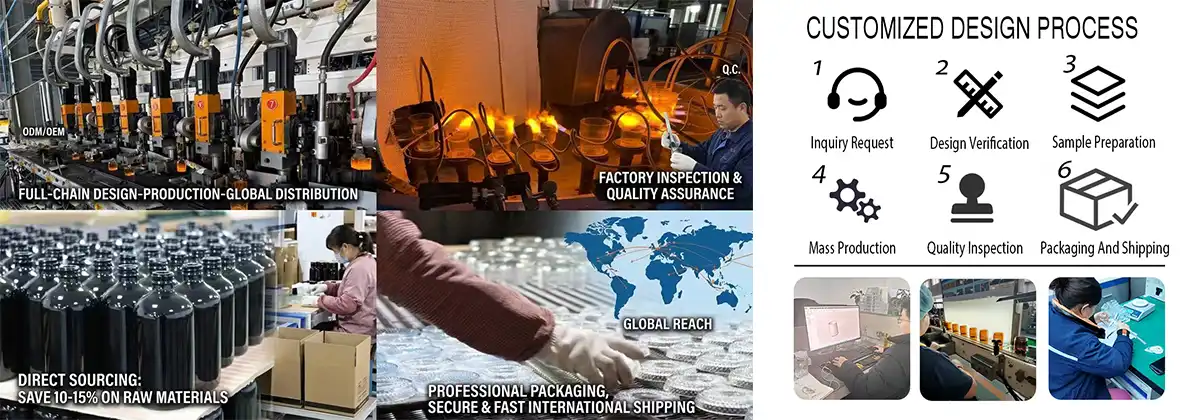
Reliable partners demonstrate production capacity that supports growth trajectories without quality compromises during volume scaling. Manufacturing facility audits verify equipment maintenance programs, quality control systems, and worker training protocols that ensure consistent output. Muzhishi operates with 20 years of industry experience, providing institutional knowledge that anticipates potential complications before they impact delivery schedules.
Certification portfolios indicate commitment to international standards beyond minimum regulatory compliance. ISO 9001 quality management systems document corrective action procedures and continuous improvement initiatives that reduce defect rates over time. Food safety certifications like HACCP demonstrate systematic contamination prevention across production environments, protecting brand reputation from costly recall scenarios.
Regional Procurement Strategies
Geographic sourcing decisions balance manufacturing costs, logistics complexity, and lead time requirements. Asian production offers cost advantages through established supply chains and specialized expertise in glass manufacturing. Our Jiangsu location provides proximity to raw material sources and port infrastructure that facilitates efficient export operations. Container consolidation services optimize freight economics for buyers sourcing multiple product categories.
Documentation support streamlines international trade procedures. Our export team prepares commercial invoices, packing lists, certificates of origin, and compliance declarations that satisfy customs requirements across destination markets. This administrative expertise reduces clearance delays that disrupt inventory availability during critical selling periods.
Customization Timelines and Order Processes
Brand differentiation through customized packaging requires understanding production sequencing and artwork approval workflows. Sample development typically requires 3-5 days, allowing buyers to verify color accuracy, print quality, and dimensional specifications before committing to production quantities. Digital proofing systems accelerate approval cycles while maintaining documentation trails that prevent miscommunication errors.
Production lead times vary based on customization complexity and order volumes. Standard transparent honey jars with minimal decoration ship within 15-20 days, while multi-color screen printing or specialized surface treatments extend timelines to 25-35 days. Our account management system provides order tracking visibility and proactive communication regarding production milestones, enabling buyers to coordinate marketing campaigns and inventory planning.
Conclusion
Selecting appropriate cylindrical glass storage solutions requires balancing technical performance specifications, brand differentiation objectives, and supply chain economics. Glass honey containers deliver superior product preservation through inert material properties and hermetic sealing capabilities that maintain quality throughout extended distribution cycles. The cylindrical geometry offers operational advantages in automated filling environments while eliminating product waste associated with angular designs.
Strategic procurement considers supplier reliability, customization flexibility, and environmental sustainability alongside immediate cost factors. Muzhishi's comprehensive service infrastructure supports international buyers through compliant documentation, flexible order volumes, and rapid sampling capabilities that reduce market entry risks. Our two-decade manufacturing heritage provides the technical expertise and quality systems that protect brand investments in competitive retail environments.
FAQ
Are glass honey containers compliant with food safety regulations?
Premium glass honey packaging meets stringent international food contact standards including FDA regulations and EU Regulation 1935/2004. Material testing confirms zero migration of lead, cadmium, or other restricted substances into acidic food products. ISO 9001 certified manufacturing processes ensure consistent compliance across production batches, providing documentation that satisfies regulatory audits and customer quality requirements.
Which jar type maintains honey freshness longest?
Cylindrical glass containers with plastisol-lined closures provide optimal preservation by creating hermetic seals that exclude oxygen and moisture. The inert glass composition prevents chemical interactions that accelerate fermentation or flavor degradation. Proper headspace management during filling and storage temperatures between 18-24°C maximize shelf stability, maintaining honey quality for 18-24 months under typical distribution conditions.
What durability factors matter for bulk procurement?
Commercial buyers should prioritize wall thickness uniformity, annealing quality, and thermal shock resistance when evaluating jar specifications. Containers meeting 45-60 psi vertical load capacity withstand pallet stacking throughout distribution networks. Dimensional precision within ±0.5mm tolerance ensures compatibility with automated handling equipment, reducing breakage rates that increase operational costs and product losses during high-volume processing.
Partner With Muzhishi for Your Honey Jar Needs
Xuzhou Muzhishi Crafts Co., Ltd. delivers comprehensive glass packaging solutions tailored for honey producers, gift companies, and retail distributors seeking reliable round honey jar suppliers. Our ODM/OEM customization services transform standard containers into distinctive brand assets through hot stamping, frosting, inside engraving, and full-color printing capabilities. With dedicated account managers providing one-on-one support, we guide clients from initial design concepts through production and global delivery.
Our integrated export services handle customs documentation, inspection coordination, and multimodal transportation logistics that simplify international procurement. Free samples ship within 3-5 days, allowing quality verification before production commitments. Contact our team at long@muzhishi.com or visit mzsglass.com to explore how our 20 years of manufacturing expertise can enhance your product presentation and operational efficiency. Request your customized quote today and discover why leading brands trust Muzhishi for premium glass honey storage solutions.
References
1. Smith, J. & Wilson, R. (2021). Glass Packaging Technology for Food Products: Material Science and Quality Assurance. International Journal of Food Safety, 15(3), 127-145.
2. Anderson, K. (2022). Honey Storage and Preservation: Best Practices for Commercial Producers. American Beekeeping Federation Technical Bulletin, 8(2), 34-52.
3. Chen, L., Martinez, P., & Thompson, D. (2020). Comparative Analysis of Food Container Geometries: Impact on Product Preservation and Distribution Efficiency. Packaging Science Review, 42(4), 289-307.
4. European Food Safety Authority (2023). Guidelines for Food Contact Materials: Glass and Ceramic Applications. EFSA Technical Report Series, 18(1), 1-78.
5. Roberts, M. & Zhang, Y. (2022). Sustainable Packaging Solutions in the Honey Industry: Environmental Impact and Consumer Preferences. Journal of Agricultural Marketing, 31(2), 156-174.
6. International Organization for Standardization (2021). Quality Management Systems for Food Packaging Manufacturing: Implementation and Audit Protocols. ISO Technical Guidance Document 9001:2015, Geneva, Switzerland.


Our customers’ satisfaction speaks for our quality — contact us to experience the same reliable service.