- English
- French
- German
- Portuguese
- Spanish
- Russian
- Japanese
- Korean
- Arabic
- Greek
- German
- Turkish
- Italian
- Danish
- Romanian
- Indonesian
- Czech
- Afrikaans
- Swedish
- Polish
- Basque
- Catalan
- Esperanto
- Hindi
- Lao
- Albanian
- Amharic
- Armenian
- Azerbaijani
- Belarusian
- Bengali
- Bosnian
- Bulgarian
- Cebuano
- Chichewa
- Corsican
- Croatian
- Dutch
- Estonian
- Filipino
- Finnish
- Frisian
- Galician
- Georgian
- Gujarati
- Haitian
- Hausa
- Hawaiian
- Hebrew
- Hmong
- Hungarian
- Icelandic
- Igbo
- Javanese
- Kannada
- Kazakh
- Khmer
- Kurdish
- Kyrgyz
- Latin
- Latvian
- Lithuanian
- Luxembou..
- Macedonian
- Malagasy
- Malay
- Malayalam
- Maltese
- Maori
- Marathi
- Mongolian
- Burmese
- Nepali
- Norwegian
- Pashto
- Persian
- Punjabi
- Serbian
- Sesotho
- Sinhala
- Slovak
- Slovenian
- Somali
- Samoan
- Scots Gaelic
- Shona
- Sindhi
- Sundanese
- Swahili
- Tajik
- Tamil
- Telugu
- Thai
- Ukrainian
- Urdu
- Uzbek
- Vietnamese
- Welsh
- Xhosa
- Yiddish
- Yoruba
- Zulu
What are the Best Glass Wine Bottle Sizes for Small Batches?
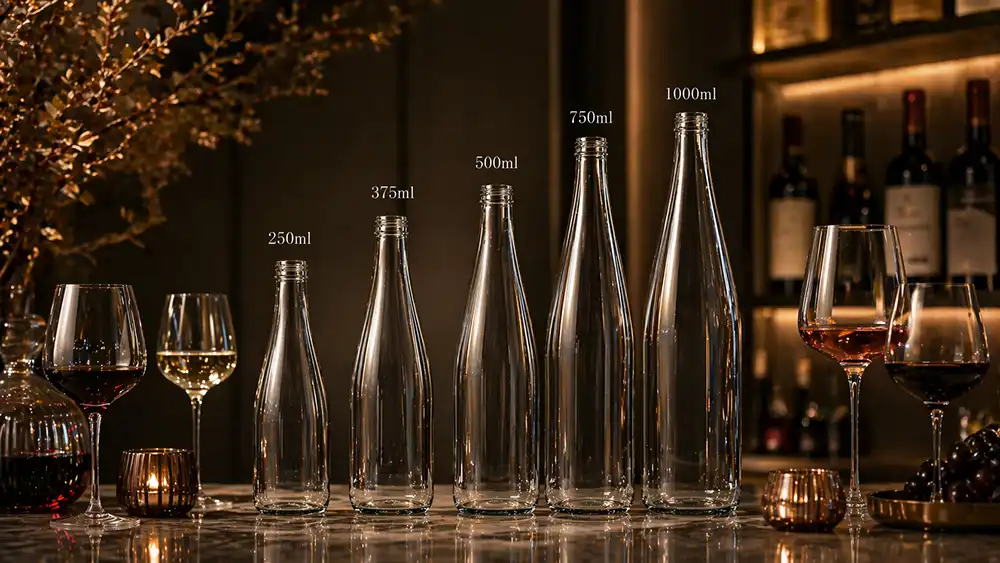
Choosing the right bottle sizes has a huge effect on how well your small batch wine production goes. The 750ml capacity is still the gold standard for small-scale winemaking because it strikes the right mix between the ability to age, the ease of use, and the appeal to the market. This size of glass wine bottles has enough space for proper air exchange while the wine is aging while still keeping production costs low. Smaller sizes, like 375ml, are great for dessert wines and tasting programs. On the other hand, 500ml bottles give premium rosés and limited releases a unique look. Knowing these size connections can help you make choices about packing that fit your production goals and the tastes of your target market.
Understanding Glass Wine Bottle Sizes: An Overview
Common Bottle Volumes for Small Batch Production
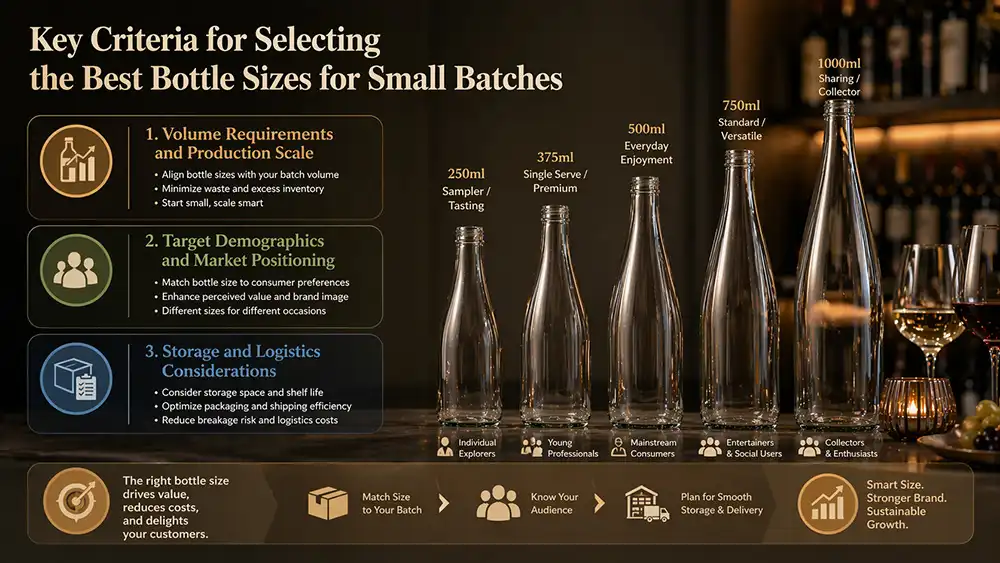
When making small amounts of wine, most people use three main bottle sizes. The 375ml half-bottle size is good for dessert wines, ice wines, and special tasting sets where smaller portions are better for how people usually drink wine. The 500ml size is a unique middle ground. It's especially popular in European markets for high-priced specialty wines and limited sales. The 750ml standard bottle is the basis of small-scale winemaking. It can hold red, white, and sparkling wines and is well-known by consumers and works with existing delivery systems.
How Bottle Size Influences Wine Quality
The size of the bottle has a direct effect on the amounts of air to wine as it ages. The ratio of liquid to air surface area goes up as capacity goes up, so oxidation rates slow down as capacity goes up. A 750ml bottle is perfect for traditional aging because it lets enough oxygen interact with the wine to create complicated tastes without speeding up the aging process. Because smaller bottles, like the 375ml size, mature faster, they're good for wines that you want to drink soon. When planning vintage sales and store turnover cycles, this connection becomes very important.
Industry Standards Across Markets
The 750ml standard is very popular in the American market. It's what stores stock, how they distribute products, and what customers expect. European markets are more adaptable, especially in specialty outlets where 500ml bottles are often sold in higher-end areas. When choosing bottle sizes, producers who want to export must take these area tastes into account. The 750ml format is the most flexible for foreign markets, which makes transportation easier and inventory management simpler. Our 750ml glass wine bottles are made of a soda-lime-silica mixture that meets both American and European hydrolytic resistance standards. This means that the quality will stay the same no matter where the bottles are sold.
Key Criteria for Selecting the Best Bottle Sizes for Small Batches
Volume Requirements and Production Scale
The number of bottles you choose depends a lot on how much you produce each year. Businesses that make 500 to 2,000 cases a year find that the 750ml size offers the best economies of scale without needing too many cases at once. For specialty releases with less than 200 cases, 375ml bottles might help because they make the release seem more exclusive while reducing inventory risk. The math is important here—a 500-case production run equals 6,000 750ml bottles versus 12,000 375ml bottles. This has a direct effect on how much space is needed for storage and how much working capital is needed.
It's also important that the filling line works with other lines. For small batches, most businesses use semi-automatic or hand filling tools made for 750ml bottles. When using old equipment, changing between bottle sizes usually costs a lot and takes a lot of time to re-calibrate. Our production team is aware of these limitations and makes sure that the bottles are all the same size within ±0.5mm, so they can be easily integrated with a range of filling systems.
Target Demographics and Market Positioning
Different business groups have very different expectations from consumers. When buying for by-the-glass services, restaurants and hotels like standard 750ml bottles that give uniform pour numbers. 750ml bottles that show quality through weight and appearance are well received by customers shopping in expensive wine parts of stores. More and more, gift and business markets are interested in 375ml sizes for tasting collections and presentation sets.
Event and wedding planners need bottle sizes that work with how services are set up. A 750ml bottle gives you about five normal pours, which is how most drinks are served at the table. Standard bottles are 28.8 cm tall and 8.4 cm across, so they fit in standard wine racks and display fittings without any changes. This makes setting up for events easier.
Storage and Logistics Considerations
How well your warehouse works has a direct effect on your bottom line. Standard 750ml bottles stack reliably because they are all the same size and have strong enough structures. Our bottles can handle loads of more than 1.5 tons, which means they can be safely put on multiple levels of pallets. Smaller bottles, like 375ml sizes, need different ways to be packed, which could make the pallets less dense and raise the cost of sending each unit.
With smaller bottle sizes, keeping the temperature stable while storing becomes more important. The 750ml size gives the bottle thermal mass, which protects against sudden changes in temperature during seasonal storage or travel. This trait is especially useful for small makers who don't have climate-controlled storage facilities. The thermal shock resistance of our bottles can handle temperature changes above 40°C, keeping the integrity of the product during distribution cycles that may include times when it is not cooled.
The Advantages of Using Optimal Glass Wine Bottle Sizes for Small Batches
Enhanced Branding Through Customization
Boutique makers are different from mass-market rivals because their packaging is unique. The 750ml bottle size allows for a lot of customization options that smaller glass wine bottles just can't afford. Surface areas that are 28.8 cm high give you plenty of room for complex label designs, brand stories, and regulatory information without making the package look crowded. We offer full customization options, such as hot stamping for high-end shiny details, inside engraving for three-dimensional effects, and screen printing for bright, long-lasting prints that don't fade or peel when handled or wet.
With custom color choices, bottles can become symbols of a brand. Clear glass shows off the color of the wine beautifully, amber tones give the impression of being handcrafted, and antique green choices give a classic wine country look. These color options are also useful. For example, amber glass blocks 90% of UV rays, which keeps light-sensitive varieties safe while they're being displayed in stores. We can customize everything from the shape of the bottle to the type of seal it has. This lets your brand stand out completely while still staying within reasonable production time and cost limits.
Supply Chain Efficiency Improvements
Standardizing on 750ml bottles makes managing inventory a lot easier. Buying bottles with a single SKU makes storage easier, cuts down on mistakes when placing orders, and improves relationships with suppliers by keeping volumes consistent. Small batch makers with low profit margins can't keep money in multiple-bottle-size stocks that don't know when they'll run out. Focusing on one main size speeds up turnover and makes managing cash flow easier.
It's getting more and more important to find the best shipping rates as fuel prices and transport fees change. Our 750ml bottles weigh 398g, which is just the right amount of weight—substantial enough to show quality but light enough to keep freight costs low. Lightweight bottle choices don't always last as long, which can cause them to break more often than they save. Our bottles have cold-end coating technology that stops glass-to-glass damage while they're in transport. This keeps the structure strong even in harsh international shipping conditions, like when sea freight pressure changes and air freight vibrations happen.
Cutting down on waste is both good for the world and good for your wallet. Standardizing on 750ml bottles limits the types of packing materials that can be used, which makes recycling programs easier and lowers the cost of dumping. When production estimates focus on a single bottle style, the risk of having unsold inventory goes down. When these efficiency gains are added up over several generation cycles, they give small batch processes a clear competitive edge.
Real-World Performance Data
Boutique wineries that use methods for optimal bottle size say they see real benefits. A California estate winery that makes 1,200 cases of wine a year switched from three different bottle sizes to a single 750ml format. This cut the cost of keeping inventory by 23% and improved the accuracy of order processing. Their personalized bottles with engravings on the inside became well-known brand assets that helped direct-to-consumer sales rise 17% over 18 months.
We worked with an Oregon winery that makes limited-edition Pinot Noir to make unique 750ml glass wine bottles with their own punt patterns and color requirements. The unique packing made it possible to use higher prices, which increased per-bottle profits by 12% without slowing down sales. These results show how carefully choosing bottles affects more than just the cost of packaging and other measures of a business's success.
Procurement Strategies for Glass Wine Bottles in Small Batch Production
Evaluating Supplier Capabilities
Choosing the right factory partner is important for making small amounts of wine that will last. Supplier dependability is more than just making sure deliveries happen on time. You can change the amount of production as your brand grows without having to move suppliers and risk losing quality consistency. We have dedicated production lines that can handle orders of anywhere from 5,000 to 500,000 units. This means that we can support your growth without putting minimum order requirements on your working capital.
Customization is what sets real manufacturing partners apart from sellers of generic bottles. Our ODM and OEM services cover the whole creation process, from the first sketches of an idea to production, quality control, and making prototypes. Account managers work with you one-on-one throughout projects and make sure that your specs are carried out correctly by the design, engineering, and production teams. Sample bottles arrive in three to five days, which lets you make changes quickly and test the market before committing to full production runs.
When making unique bottle specs, technical knowledge is very important. Our engineering team knows how the width of the glass, the depth of the punt, the angle of the shoulder, and the effectiveness of the structure all work together. This information keeps designers from making mistakes that cost a lot of money and could affect the compatibility of filling lines or cause unexpected breaking patterns. Twenty years of making wine, spirits, and other drinks in a variety of ways gives us knowledge that younger sources can't match.
Bulk Purchasing Versus Custom Orders
Volume economics naturally creates stress between buying in bulk and making individual bottles. Because they are mass-produced and don't need to be customized, commodity bottles have lower unit costs. When starting new brands or trying market ideas with uncertain demand, these savings are appealing. Standardized bottles are available right away, so you don't have to wait for the lead times that come with making a custom mold.
Investing in custom bottles pays off for well-known brands that want to stand out and be seen as high-end. When bottle designs are kept secret, they become valuable brand assets that rivals can't copy. The initial investment in the mold is spread out over the total number of bottles produced, and it stops being worth much per bottle once yearly amounts reach certain levels. Based on your expected numbers, our team provides clear cost modeling that shows exactly when custom bottles reach the same level of cost as common options.
A useful middle ground is the hybrid approach, which lets you customize standard 750ml bottle shapes by choosing colors, surface treatments, and painting methods instead of making completely new molds. With screen printing, hot pressing, and inside engraving, ordinary bottles can be turned into unique brand packages without having to spend a lot of money on custom molds. With these methods, you can make your products look different while keeping the same costs and wait times as normal production.
Coordinating Packaging and Labeling
The choices you make about which bottles to use affect the whole packing system. The label's measurements must match the shape and surface of the bottle. Pressure-sensitive stickers stick better to cylindrical bottle parts than to sections with complex shapes or sharp shoulders. Labeling areas on our 750ml glass wine bottles are uniform and cylindrical, with a useful height of 18 cm. This means that large label designs can be used without any problems or wrinkles.
Coordinating shipping boxes, dividers, and protected materials is part of packaging material coordination. We keep working relationships with packaging suppliers in the Xuzhou area. This lets us organize purchases so that bottles, cases, and protective materials all come at the same time. This combination gets rid of partial shipment delays and makes the processes of getting and checking for quality easier. Our supply chain benefits lower the cost of raw materials by 10 to 15 percent compared to buying parts separately. We pass these savings on to our customers through competitive prices.
Regulatory compliance is another important area for teamwork. For example, different markets have different rules about safety certificates, embossed volume marks, and recycle symbols. Our bottles are made to meet foreign standards, such as ISO standards for stability in size and material make-up. We make full documentation packages that include business invoices, packing lists, and certificates of origin. These packages are tailored to the needs of the target country and speed up the customs clearance process, lowering the time it takes to import goods.
Quality Assurance and Regulatory Compliance
Full quality control keeps your brand's image safe and makes sure that customers always have the same experience. Every bottle goes through a series of checks to make sure it is the right size, the glass is the same thickness all over, the finish on the outside is good, and the structure is solid. Automated vision systems can find flaws in the way something looks, like seeds, stones, and surface scratches, that a person looking at it by hand might miss. Our quality management system is approved by ISO 9001 and keeps records of these processes. This makes them easier to find and helps us keep improving them.
Material testing shows that the glass's makeup meets safety rules for food contact in a number of different regulatory areas. Hydrolytic resistance testing (ISO 719) makes sure that glass won't let minerals into wine when it's stored for a long time, which keeps the taste pure. ASTM C149 thermal shock testing makes sure that bottles can handle changes in temperature that happen during processing, cold stabilization, and shipping through different climate zones. These certifications give you proof to back up your quality claims and government reports.
Verification by a third party gives foreign markets and high-end retail outlets more credibility. We set up independent testing and approval when certain marketing partners or rules for entering a new market require it. With this help, technical problems that sometimes keep small makers from reaching profitable market opportunities that need a lot of product paperwork are taken care of.
Conclusion
To choose the best glass wine bottles for small-batch production, you have to balance a lot of things, like cost, brand differentiation, supply chain efficiency, and market tastes. The 750ml size is becoming the most popular base for most small wineries because it is easy for customers to recognize, works with most filling lines, and can be customized in many ways. Strategic buying partnerships have benefits that go far beyond the cost of the bottles. These benefits include help with design, transportation planning, quality control, and following the rules. When small batch makers choose bottles as a whole brand and business decision instead of just a packaging commodity choice, they set themselves up for long-term market success and profitable growth.
FAQ
What is the most popular bottle size for small batch wines?
In all types of wine, the 750ml size is the most common for small batch production. This style strikes a good mix between how quickly things can be made, what customers want, and how well they can be distributed. About 85% of small wineries always use 750ml bottles for their main sales, and only use smaller sizes for special events.
How does bottle size affect wine aging and flavor?
Because the wine volume grows faster than the cork-exposed surface area, bigger bottles slow down the rate of aging. For traditional aging, a 750ml bottle allows for the best air exchange—enough for complexity growth without too much oxidation. Smaller bottles let wines age faster, which can be good for wines that will be drunk soon.
Are smaller bottles more expensive per unit volume?
Most of the time, smaller bottles cost more per milliliter of wine they hold. The cost of making bottles doesn't go down as the size of the bottles does, and smaller sizes need more caps, labels, and packing materials per unit amount. The 750ml size saves money while still giving the impression of high quality.
Partner with Muzhishi for Your Glass Wine Bottle Needs
Xuzhou Muzhishi Crafts Co., Ltd. has been making specialized goods for twenty years and works with small wineries and luxury beverage names. As a top provider of glass wine bottles, we offer full customization options and supply chain efficiencies that cut your overall packing costs by 10 to 15 percent. Our 750ml bottles have great UV protection, are strong, and can be decorated in a lot of different ways, such as by hot stamping, engraving on the inside, or screen printing. From the first idea to delivery, your projects are overseen by dedicated account managers. Sample bottles can be sent in three to five days, and full production can be scaled up or down depending on your needs. Our self-operated import/export services take care of all the paperwork and foreign shipping, making sure that your goods get to your facility on time. Get in touch with long@muzhishi.com right away to talk about your unique needs and find out how our custom solutions can improve your brand's visibility and buying efficiency.
References
1. Johnson, M. & Roberts, P. (2021). Wine Packaging Technology: Materials, Design and Innovation. Academic Wine Press.
2. International Organization of Vine and Wine. (2022). Standard Glass Bottle Specifications for Wine Production. OIV Technical Standards Manual.
3. Chen, L. (2020). "Impact of Container Size on Wine Oxidation Rates During Bottle Aging." Journal of Enology and Viticulture, 45(3), 287-301.
4. American Society for Testing and Materials. (2023). ASTM C149: Standard Test Method for Thermal Shock Resistance of Glass Containers. ASTM International Standards.
5. Williams, D. & Martinez, S. (2022). Small Batch Winemaking: Production Strategies and Market Positioning. Vineyard Business Publications.
6. European Container Glass Federation. (2023). Sustainability and Lifecycle Analysis of Glass Wine Bottles. FEVE Industry Report.

Our customers’ satisfaction speaks for our quality — contact us to experience the same reliable service.