- English
- French
- German
- Portuguese
- Spanish
- Russian
- Japanese
- Korean
- Arabic
- Greek
- German
- Turkish
- Italian
- Danish
- Romanian
- Indonesian
- Czech
- Afrikaans
- Swedish
- Polish
- Basque
- Catalan
- Esperanto
- Hindi
- Lao
- Albanian
- Amharic
- Armenian
- Azerbaijani
- Belarusian
- Bengali
- Bosnian
- Bulgarian
- Cebuano
- Chichewa
- Corsican
- Croatian
- Dutch
- Estonian
- Filipino
- Finnish
- Frisian
- Galician
- Georgian
- Gujarati
- Haitian
- Hausa
- Hawaiian
- Hebrew
- Hmong
- Hungarian
- Icelandic
- Igbo
- Javanese
- Kannada
- Kazakh
- Khmer
- Kurdish
- Kyrgyz
- Latin
- Latvian
- Lithuanian
- Luxembou..
- Macedonian
- Malagasy
- Malay
- Malayalam
- Maltese
- Maori
- Marathi
- Mongolian
- Burmese
- Nepali
- Norwegian
- Pashto
- Persian
- Punjabi
- Serbian
- Sesotho
- Sinhala
- Slovak
- Slovenian
- Somali
- Samoan
- Scots Gaelic
- Shona
- Sindhi
- Sundanese
- Swahili
- Tajik
- Tamil
- Telugu
- Thai
- Ukrainian
- Urdu
- Uzbek
- Vietnamese
- Welsh
- Xhosa
- Yiddish
- Yoruba
- Zulu
What Can You Put in a Hanging Car Air Freshener Glass Bottle?
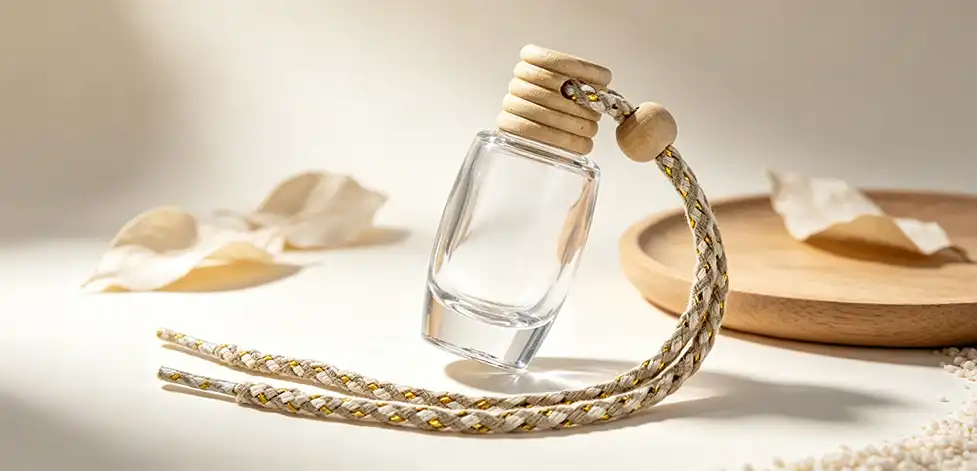
If you've ever wondered what to fill inside a hanging car air freshener glass bottle, the short answer is: more than you might expect. These compact glass vessels — available in 8ml and 10ml capacities — are engineered to hold essential oils, fragrance oil blends, and custom perfume formulations. Their chemically inert glass construction keeps every scent profile intact, making them a reliable choice for B2B buyers, OEM brands, gift suppliers, and retail chains seeking a premium, refillable aroma solution for vehicles and beyond.
Understanding How These Glass Diffuser Bottles Actually Work
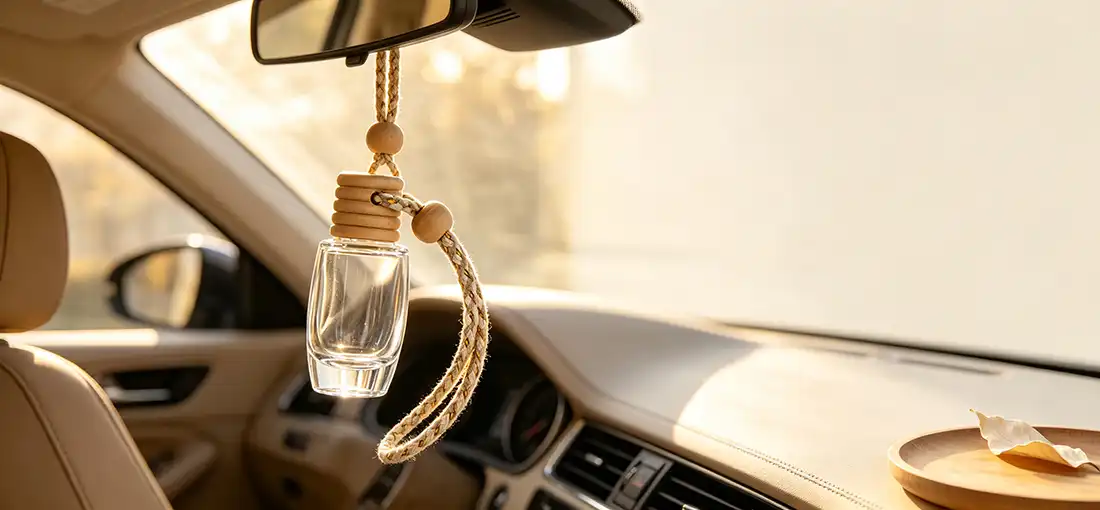
A passive condensation device is a hanging car air freshener glass bottle. Instead of using batteries or throwaway vent clips, this car diffuser uses capillary action through a porous wooden cap to slowly release scent molecules into the air inside the car. The managed evaporation rate of this mechanism is between 0.1ml and 0.3ml per day, which is in line with material science guidelines for diffusion systems made from wood.
Why Glass Outperforms Plastic in Scent Diffusion?
If you mix glass with essential oils like limonene (found in citrus oils) or linalool (found in lavender), the glass won't change chemically. Plastic cases, on the other hand, can let plasticizers into the fragrance, which can change both the safety and the smell. High-quality soda-lime glass also keeps its shape from -20°C to 80°C, which is very important for vehicles that are used in harsh weather. With walls that are all about 1.5 mm thick, these bottles won't break when you hit them while you're driving.
What Can You Put Inside? Key Fill Options for Glass Car Fresheners
How long the smell lasts, how safe it is for people, and how well it fits with your product positioning depend on the fill material you choose for the hanging car air freshener glass bottle. The best fill types are shown in the table below:
| Fill Type | Scent Longevity | Best For | Notes |
|---|---|---|---|
| Pure Essential Oils | 2–4 weeks | Wellness and high-end brands | Natural source, strong smell |
| Fragrance Oil Blends | 3–6 weeks | Selling and giving | Flexible prices and a lot of scents |
| Custom Perfume Formulations | Variable | OEM/Private Label | Detailed smell profiles for each brand |
| Reed Diffuser Base + Fragrance | 4–8 weeks | Fleet and hospitality | Less rapid melting |
In the market for high-end car items, essential oils are still the most-wanted fill material. In the U.S. market, lavender, eucalyptus, lemon, and sandalwood are some of the most reliable scents. The fact that they come from nature makes them a good fit for procurement teams' growing need for eco-friendly, non-toxic products.
Fragrance Oil Blends and Perfume Bases
Fragrance oils come in a wider range of scents and are easier for most people to afford. This makes them a good choice for holiday gift campaigns, retail chains, and event decorators. A common reed diffuser base, which is usually a mix of dipropylene glycol (DPG) and isopropyl myristate, makes evaporation last longer and lowers the risk of over-saturation in car trunks that are closed off. For OEM clients, putting together a branded scent base and a custom-labeled bottle makes a product that looks good on the shelf and is ready for the market.
Selecting Scents That Serve Diverse B2B Markets
Scent selection isn't just a matter of taste; it's also a matter of strategy for setting a brand apart and finding its place in the market for the hanging car air freshener glass bottle. Rose and jasmine are two floral notes that tend to do well in the gift and wedding markets. In hotel and rideshare settings, citrus and mint traits are liked because they give off a clean, neutral vibe. The luxury automotive aftermarket likes woody and amber blends, and olfactory branding helps create a high-end product experience.
Eco-Friendly and Non-Toxic Formulation Trends
When looking for fragrance filling, procurement teams all over the U.S. are referring to IFRA (International Fragrance Association) compliance and REACH approval more and more. Sustainable products made from plants not only lower legal risk, but they also appeal to customers who care about the environment. Putting certified organic essential oils in a frosted or UV-protective glass bottle makes a compelling and unique product line for brands that want to reach people who are interested in health or organic home decor.
Glass vs. Plastic: A Procurement Comparison
Knowing the differences between materials helps buying managers make choices for the hanging car air freshener glass bottle that meet quality standards and save money in the long run. The following comparison shows important factors for large buyers:
| Evaluation Factor | Glass Bottle | Plastic Bottle |
|---|---|---|
| Chemical Reactivity | “Inert” means it doesn't react with oils | Plasticizers may leak out |
| Temperature Resistance | -20°C to 80°C | Breaks down above 60°C |
| Scent Preservation | A high level of odor absorption | Low: soaks up leftover smells |
| Environmental Impact | Reusable and recyclable | One-time use, doesn't break down |
| Aesthetic Positioning | Premium, high-end | Standard, cheap |
| Customization Range | A lot (engraving, frosting, screen printing) | Limited |
When you're making a product line for high-end retail, corporate gifting, or hospitality settings, durability, safety, and brand recognition are the things that matter the most.
Best Practices for Bulk Procurement and Custom Orders
When you're looking for a lot of hanging car air freshener glass bottles, the two things that have the most impact on your bottom line are quality stability and managing wait times. When working with sellers of glass products, buying managers with a lot of experience always do these things:
- Check the MOQ flexibility early on: Reliable suppliers offer tiered MOQs that can accommodate both sample runs (3–5 days lead time) and high-volume production cycles without affecting the quality of the caps or the uniformity of the wall thickness.
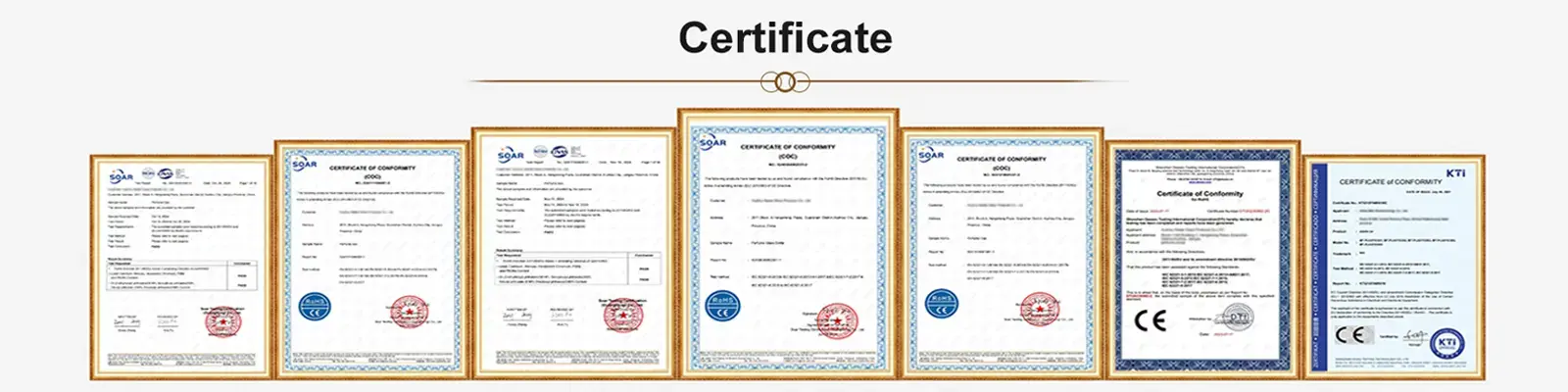
- Prioritize certifiable quality control: Before being shipped, every bottle must pass vacuum-chamber leakage testing, polariscope stress analysis, and cord tensile strength testing (minimum 5 kg load); these tests must be done for all products used in moving vehicles.
- Align customization with your brand identity: Surface treatments like hot stamping, frosting, inside carving, screen printing, and color variation aren't just for looks; they also show where your brand stands and explain high prices.
Together, these steps will cut down on product returns, protect your brand's image, and keep your supply chain flexible as demand changes with the seasons. When suppliers offer OEM/ODM services along with self-managed export logistics, such as providing customs clearance paperwork and legally required commercial invoices, it makes it easier for international buyers to buy from them.
Conclusion
There's a lot more to a hanging car air freshener glass bottle than meets the eye. It's a useful diffusion platform that can hold essential oils, fragrance blends, and custom perfume formulas. It can be used in many markets, from luxury car gifts to workplace branding and hospitality. The construction of glass guaranties chemical compatibility, scent integrity, and long-term durability that plastic alternatives can't match. This group of products is a great addition to any product portfolio for business-to-business buyers because it allows for a lot of flexibility, meets quality standards that can be checked, and can be made in larger or smaller quantities.
FAQ
How long does the fragrance last in a glass car diffuser bottle?
An 8ml bottle usually lasts 3 to 5 weeks, based on the temperature and air flow in the cabin. This is because it evaporates at a rate of 0.1ml to 0.3ml per day. A 10ml bottle makes that range even bigger, so it can be used in high-end gift sets where durability is a selling point.
Can all essential oil types be used in these bottles?
Glass doesn't react with chemicals and can be used with almost any type of essential oil, even citrus-based oils that can break down plastic or rubber parts. Internal stoppers made of LDPE or silicone make it easier for aggressive oil compounds to mix with the material.
Is UV exposure a concern for fragrance oils stored in clear glass?
Photosensitive oils can lose their color and change their smell when they are exposed to UV light. This risk can be reduced by choosing mirrored glass or UV-protective coatings, especially for items that will be exposed close to windshields.
What customization options are available for bulk orders?
Muzhishi offers custom sizing, hot stamping, frosting, inside engraving, screen printing, and unique packing. All of these options can be set up through a one-on-one account manager process.
What is the minimum sample lead time?
Samples are made at Muzhishi and can be sent for free if asked. The process takes three to five days.
Partner with Muzhishi for Premium Glass Car Freshener Solutions
Muzhishi gives serious buyers exactly what they want: a reliable hanging car air freshener glass bottle maker with 20 years of experience, full OEM/ODM customization, and export logistics that are handled by the company itself. Our 8ml and 10ml glass bottles are of the highest quality, and our account managers make sure that every large order fits with your brand's goals. You can email long@muzhishi.com or go to mzsglass.com to get a free sample and start your personalized sourcing consultation right away.
References
1. International Fragrance Association (IFRA). IFRA Standards for Fragrance Ingredients. IFRA, 2023.
2. Sell, C. S. The Chemistry of Fragrances: From Perfumer to Consumer. Royal Society of Chemistry, 2006.
3. Tisserand, R., & Young, R. Essential Oil Safety: A Guide for Health Care Professionals. Churchill Livingstone, 2014.
4. American Chemical Society. Chemical Interactions Between Essential Oils and Polymer Containers. Journal of Agricultural and Food Chemistry, 2018.
5. Grand View Research. Automotive Air Freshener Market Size, Share & Trends Analysis Report. Grand View Research, 2023.
6. European Chemicals Agency (ECHA). REACH Regulation: Guidance on Fragrance Substances in Consumer Products. ECHA, 2022.

Our customers’ satisfaction speaks for our quality — contact us to experience the same reliable service.