- English
- French
- German
- Portuguese
- Spanish
- Russian
- Japanese
- Korean
- Arabic
- Greek
- German
- Turkish
- Italian
- Danish
- Romanian
- Indonesian
- Czech
- Afrikaans
- Swedish
- Polish
- Basque
- Catalan
- Esperanto
- Hindi
- Lao
- Albanian
- Amharic
- Armenian
- Azerbaijani
- Belarusian
- Bengali
- Bosnian
- Bulgarian
- Cebuano
- Chichewa
- Corsican
- Croatian
- Dutch
- Estonian
- Filipino
- Finnish
- Frisian
- Galician
- Georgian
- Gujarati
- Haitian
- Hausa
- Hawaiian
- Hebrew
- Hmong
- Hungarian
- Icelandic
- Igbo
- Javanese
- Kannada
- Kazakh
- Khmer
- Kurdish
- Kyrgyz
- Latin
- Latvian
- Lithuanian
- Luxembou..
- Macedonian
- Malagasy
- Malay
- Malayalam
- Maltese
- Maori
- Marathi
- Mongolian
- Burmese
- Nepali
- Norwegian
- Pashto
- Persian
- Punjabi
- Serbian
- Sesotho
- Sinhala
- Slovak
- Slovenian
- Somali
- Samoan
- Scots Gaelic
- Shona
- Sindhi
- Sundanese
- Swahili
- Tajik
- Tamil
- Telugu
- Thai
- Ukrainian
- Urdu
- Uzbek
- Vietnamese
- Welsh
- Xhosa
- Yiddish
- Yoruba
- Zulu
What to Look for When Buying a Clear Glass Sugar Bowl With Lid
When buying a clear glass sugar bowl with lid, the key factors to evaluate include glass material quality, lid seal performance, size compatibility with your operational setting, customization availability, and supplier reliability. Whether you manage a hotel breakfast service, operate a retail chain, or source corporate gifts in bulk, the right lidded sugar bowl protects contents from humidity and contamination while elevating table presentation. This guide walks through every procurement criterion so you can make a confident, cost-effective sourcing decision.
Understanding Clear Glass Sugar Bowls With Lids
A clear glass sugar bowl with lid is more than just something to put on a table. In business settings like hotels, restaurants, catered events, and store displays, it's used as a precise storage container to keep granular materials safe from wetness, airborne particles, and cross-contamination. Glass became the most popular material in this group because its smooth, non-porous surface keeps smells and tastes from transferring, which is something that clay and plastic materials can't always do.
How Design Has Evolved to Meet Modern Demands?
Early sugar canisters were made of opaque clay pieces that made it hard to see how much sugar was inside. This meant that employees had to open them several times during busy times. When designers switched to clear glass, the "visual inventory deficit" was fixed. This was a real problem in places with a lot of guests. Today's high-end glass sugar bowls have a modern jar shape and lids that fit perfectly, with a tolerance of ±0.5mm, so they keep out dust and moisture without needing a mechanical lock.

Key Criteria When Selecting a Clear Glass Sugar Bowl With Lid
To choose the right product, you must first understand the technical details that separate a strong commercial vessel from a fragile decorative item.
| Specification | Muzhishi Model DN-FC-005 | Muzhishi Model DN-FC-006 |
|---|---|---|
| Height | 13.1 cm | 13 cm |
| Weight | 407.6 g | 534.9 g |
| Mouth Diameter | 9.4 cm | 25 cm |
| Lid Type | Matching glass lid | Matching glass lid |
| Color | Transparent / Customizable | Transparent / Customizable |
If you're a B2B buyer, here are the main things you should look for in a clear glass sugar bowl with lid before you place an order.
- Glass type and thermal resistance: Both borosilicate and high-quality soda-lime glass have hydrolytic resistance classified under ISO 719, which means that the surface does not leach alkali into the food inside. Premium annealed glass can handle temperature differences of up to 120°C, which means it can be sterilized in commercial dishwashers without getting cloudy on the outside.
- Lid material and seal performance: A glass-on-glass lid looks smooth and doesn't stain easily. People who work in seaside or tropical areas with a lot of humidity should look for models with food-grade silicone gaskets to better keep wetness out. Standard lids with a loose fit protect against dust well in most indoor business settings.
- Size and capacity alignment: The mouth width directly affects how well it can be used. For example, a wider opening makes it easier to use a spoon at a buffet, while a smaller opening keeps the surface from showing when it's on display in a store. By matching the size of the bowl to the way you work, you can avoid service delays and loss.
These factors work together and against each other. Even if the glass in the bowl is very good, if the lid doesn't fit well, it will still break in a humid kitchen. Specifications should not be looked at separately, but as a whole.
Ergonomics and Maintenance
A bowl that is the right size will stay put on service trays and countertops without falling over. The smooth, non-porous glass surface doesn't stain easily and wipes clean with little effort. This is helpful in high-traffic business settings where cleanliness is a must.
Comparing Clear Glass Sugar Bowls With Other Materials
Glass, ceramic, plastic, and crystal are all at different points on the spectrum of performance and cost. Figuring out what glass does best helps procurement teams explain the value to internal stakeholders and support the expense.
Because clear glass sugar bowls with lids let more light through (optimal at more than 90%), you can see what's inside right away without taking off the lid. This trait lowers the cost of work in self-service and table settings. Ceramic bowls look nice, but they make it impossible to see how full they are. Plastic containers are cheap and easy to carry, but they absorb flavors over time, break down when exposed to UV light, and cause environmental problems that go against the green buying practices that most U.S. hotel groups now have.
| Material | Hygiene | Visibility | Durability | Eco Profile |
|---|---|---|---|---|
| Glass | Excellent | Excellent | High (with proper handling) | Fully recyclable |
| Ceramic | Good | None | Moderate | Non-recyclable glaze |
| Plastic | Fair | Good | Low (UV degradation) | Poor |
| Crystal | Excellent | Excellent | Moderate | Limited recyclability |
The look of crystal and glass is very similar, but crystal costs more than glass, which is hard to explain when buying a lot of it. Premium clear glass is still the best choice for buyers who want to balance appearance standards with the total cost of ownership.
Procurement Considerations for B2B Buyers
When you buy a glass jar in bulk, you have to think about more than just the quality of each individual item. While promises to buy in bulk can lead to better unit prices, supply chain continuity, wait times, and compliance paperwork are also important factors in professional sourcing choices.
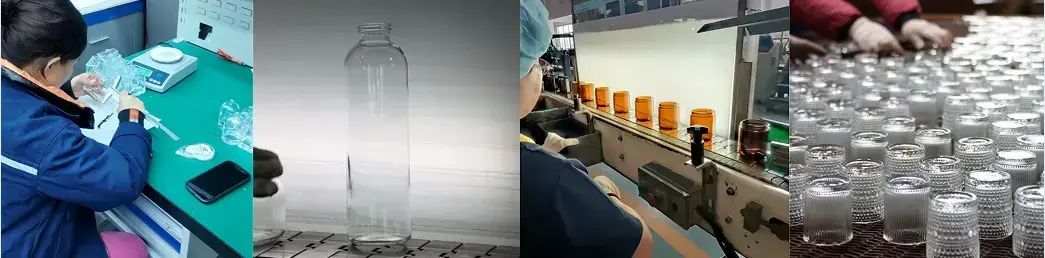
Muzhishi offers a wide range of customization choices for ODM and OEM customers, such as hot stamping, inside engraving, screen printing, custom sizing, logo application, sticker labeling, and custom packing. You can get samples for free, and prototypes are usually ready in three to five business days. This quick turn-around greatly lowers the risk of sourcing when looking for a new supplier.
Why Supplier Partnerships Matter Long-Term?
When buyers need to place a new order or question the quality of a product, responsive after-sales service (with a response time of 24 hours or less) keeps their businesses running smoothly. Muzhishi has the right to import and ship goods on its own, makes sure all customs paperwork is correct, and coordinates the route of both sea and air freight. This end-to-end logistics capability gets rid of the coordination problems that cause market-ready stock to be late for U.S. importers who deal with seasonal inventory cycles.
Food safety approvals should also be checked by procurement teams. Request proof from SGS or TUV that they follow FDA rules for food handling and Proposition 65 guidelines. During internal quality audits and customs inspections, these certificates can be used as proof.
Practical Tips for Choosing and Using Glass Sugar Bowls With Lids
By matching product specs with real-world use cases, mistakes that cost a lot of money can be avoided. A hotel buying manager looking for breakfast service for 200 people has different size and quantity needs than a small gift brand making seasonal collections.
Maintenance has a direct effect on how long a product lasts and how clean it is. Over time, glass stays clear when it is cleaned by hand with a soft sponge and light soap. Do not use rough scrubbers because they leave behind tiny scratches that trap residue and hurt the bowl's appearance. When using a professional dishwasher, make sure that the type of glass you choose meets the thermal shock protection requirements for the temperature of the cycle.
One common mistake in buying is to source based only on unit price without checking the reliability of wait time. If a seller has the lowest price per unit but changes their shipping times all the time, it leaves gaps in your inventory that cost a lot more than the savings you get. Give priority to suppliers who can show proof of their production capacity and keep a buffer stock of common raw materials. For example, Muzhishi's long-term partnerships with local glass and packaging suppliers in Xuzhou cut the cost of raw materials by 10–15% while shortening the time it takes to fill orders.
Conclusion
Buying a clear glass sugar bowl with lid affects goals for cleanliness, speed, brand appearance, and sustainability all at the same time. The factors in this guide—material quality, lid seal performance, dimensional alignment, source proof, and the ability to customize—give buyers a structured way to confidently compare choices. The right lidded sugar bowl gives you measured value over the course of its full service life, whether you're buying for a single hotel or a chain of stores around the world.
FAQ
Can these bowls handle industrial dishwasher cycles?
Because it is hydrolytically resistant, high-quality tempered soda-lime or borosilicate glass doesn't get cloudy even after being washed many times in an industrial dishwasher. Before selecting for high-frequency sterilization settings, make sure the glass classification meets the hydrolytic standards set by ISO 719.
Does the lid provide an airtight seal?
Normal glass lids work well as a physical barrier against dust and humidity in the air. If a buyer needs an airtight seal, especially for operations that take place outside or in hot climates, they should ask for models that come with a food-grade silicone gasket.
How do I confirm the glass is lead-free?
Ask for clearance reports from SGS or TUV that show you've followed FDA rules and Prop 65 or REACH chemical standards. Companies that make glass that you can trust should have these certificates ready to hand over without any problems.
Why might a glass sugar bowl turn yellow over time?
Yellowing usually means that the low-grade glass has a lot of iron in it or that the manufacturing process wasn't done right. Under normal conditions of use, premium clear glass will always be color neutral.
What sizes work best for restaurant table service?
A mouth width of about 9.4 cm is a good compromise between ease of use and amount control for sitting down to eat. Models with wider mouths make it easier to use a buffet spoon, while smaller sizes are good for store gift packing.
Elevate Your Sourcing With Muzhishi's Clear Glass Sugar Bowl With Lid
For more than 20 years, Muzhishi has sold high-quality glass dining items to customers all over North America. As a reliable company that makes clear glass sugar bowl with lid models, we offer full OEM/ODM customization, free samples, and shipping from start to finish from our factory in Xuzhou. Send your category manager or giving team a product that does a great job and looks great in a gift. You can get your free sample today by emailing long@muzhishi.com or going to mzsglass.com.
References
1. International Organization for Standardization. (2020). Glass — Hydrolytic resistance of glass grains at 98 °C — Method of test and classification (ISO Standard No.
2. U.S. Food and Drug Administration. (2024). CPG Sec. 545.450: Glass and Ceramic Foodware – Lead and Cadmium Contamination. Compliance Policy Guidance.
3. U.S. Food and Drug Administration. (2024). 21 CFR Parts 170–199: Food Contact Substances. Code of Federal Regulations.
4. Thompson, R.C., Moore, C.J., and Saal, F.S. (2018). "Microplastic Shedding from Polymer Packaging in Contact with Foodstuffs." Environmental Science & Technology, 52(15), 8345–8354.
5. Allen, P.M., and Chen, Y. (2021). "Visual Inventory Management in Commercial Food Service: The Impact of Transparent Packaging." Journal of Hospitality Operations, 28(4), 312–326.
6. European Commission. (2023). Regulation (EC) No 1935/2004 on Materials and Articles Intended to Come into Contact with Food. Official Journal of the European Union.


Our customers’ satisfaction speaks for our quality — contact us to experience the same reliable service.