- English
- French
- German
- Portuguese
- Spanish
- Russian
- Japanese
- Korean
- Arabic
- Greek
- German
- Turkish
- Italian
- Danish
- Romanian
- Indonesian
- Czech
- Afrikaans
- Swedish
- Polish
- Basque
- Catalan
- Esperanto
- Hindi
- Lao
- Albanian
- Amharic
- Armenian
- Azerbaijani
- Belarusian
- Bengali
- Bosnian
- Bulgarian
- Cebuano
- Chichewa
- Corsican
- Croatian
- Dutch
- Estonian
- Filipino
- Finnish
- Frisian
- Galician
- Georgian
- Gujarati
- Haitian
- Hausa
- Hawaiian
- Hebrew
- Hmong
- Hungarian
- Icelandic
- Igbo
- Javanese
- Kannada
- Kazakh
- Khmer
- Kurdish
- Kyrgyz
- Latin
- Latvian
- Lithuanian
- Luxembou..
- Macedonian
- Malagasy
- Malay
- Malayalam
- Maltese
- Maori
- Marathi
- Mongolian
- Burmese
- Nepali
- Norwegian
- Pashto
- Persian
- Punjabi
- Serbian
- Sesotho
- Sinhala
- Slovak
- Slovenian
- Somali
- Samoan
- Scots Gaelic
- Shona
- Sindhi
- Sundanese
- Swahili
- Tajik
- Tamil
- Telugu
- Thai
- Ukrainian
- Urdu
- Uzbek
- Vietnamese
- Welsh
- Xhosa
- Yiddish
- Yoruba
- Zulu
Why Choose Glass Rollers for Essential Oils?
When your brand's reputation rides on every drop of oil that reaches a customer's skin, packaging is never just packaging. Glass rollers for essential oils deliver the chemical inertness, UV protection, and leak-proof precision that plastic alternatives simply cannot match. For procurement managers sourcing roller bottles at scale—whether for aromatherapy blends, facial serums, or CBD wellness lines—choosing borosilicate glass roller bottles is a decision that protects product integrity, reduces customer complaints, and strengthens brand equity across every SKU in your catalog.

Understanding Glass Rollers for Essential Oils
A glass rollers for essential oils system looks very simple: it has a glass vial, a frame that tightens around the ball, and a cap. But the engineering behind each part determines whether your product arrives whole or causes a flood of one-star reviews about oils leaking.
The glass itself is what's important. Type I borosilicate glass is much more resistant to hydrolysis than regular soda-lime glass. This makes it the best material for chemically aggressive mixtures like frankincense, high-limonene citrus mixes, and medicinal concentrates that have not been reduced. Amber borosilicate blocks light with wavelengths below 450nm, which slows down photolysis and oxidation. For brands that market their ingredients as being powerful, UV filter is not just for looks; it serves a purpose.
What kind of roller ball you choose affects the end-user experience in ways that customers describe in reviews:
| Ball Material | Key Advantage | Best Application |
|---|---|---|
| Stainless Steel | Feels cool, and won't rust when exposed to acidic oils | Aromatherapy at pulse points and CBD roll-ons |
| Glass Ball | It has the smoothest rolling action and is completely inert. | Face serums and high-end perfume rollers |
| Plastic Ball | Cost-effective and light | Use on sensitive skin, large-scale selling |
The sensory package of glass bottles for essential oils is finished off with caps made of wood, metal, aluminum, or plastic in gold, silver, black, white, and custom colors. A matte black metal cap says "clinical precision," while a natural wood cap says "artisan wellness." At the shelf level, these features add up to make the brand's character.
Comparing Glass Rollers with Plastic Rollers and Other Alternatives
Cost is sometimes the only thing that procurement professionals use to decide between glass rollers for essential oils and plastic rollers. That comparison doesn't take into account how much a single leakage event costs in the long run.
When exposed to high amounts of terpenes, plastic housings break down. Limonene is found in oils from lemons, oranges, and bergamot. It attacks polyethylene and normal PP over time, making them weak, letting water in, and eventually breaking the seal. This is not a weakness of borosilicate glass. Its silica matrix is inert and doesn't react with terpenes, esters, or phenols, so your formulation will arrive chemically unaltered.
When it comes to durability, glass is better than other materials. The U.S. Environmental Protection Agency says that glass can be recycled over and over again without losing any of its quality. Retail partners and end consumers are looking more closely at DTC brands' ESG practices. Glass packaging helps companies meet their environmental goals in a way that single-use plastic can't.
Long-term cost per unit is often the part of the comparison that shocks buyers. The unit price of glass rollers for essential oils is a little higher, but the lower number of claims for damage during shipping, leaks, and unstable formulations usually makes up for that extra cost over the course of a yearly order cycle. Aromatherapy and skin care direct-to-consumer brands often refresh every three months, which makes that math more and more positive over time.
How to Use and Maintain Glass Rollers for Essential Oils?
Handling containers properly cuts down on waste and increases their useful life, which is important when managing co-packer relationships or running high-speed packing lines. When filling 10ml glass rollers for essential oils, accuracy is very important. Overfilling puts hydrostatic pressure on the roller ball housing, which raises the risk of leakage during flight, which is a known problem for TSA-approved travel sizes. This failure mode can't happen if the tank is filled to 90–95% capacity and the roller ball seats are checked to be flat before the cap is put on.
A proven cleaning method is important for businesses that fix up or reuse glass rollers for essential oils:
- Rinse it with 70% isopropyl alcohol and let it dry out completely before refilling.
- Check the roller ball case for tiny scratches that can catch dirt and make rolling less effective.
- Store cleaned vials upside down in a dust-free area to keep them from getting contaminated by air.
Controlling the temperature and light while the product is being stored protects both the container and the recipe. Roller bottles that are full should not be kept in direct sunlight or temperatures that are too high or too low. Light exposure is limited by amber glass, but photosensitive oils like lavender, rose otto, and neroli can last longer if they are stored in a safe environment.
Procurement Considerations for Glass Roller Bottles in Bulk
When going from approving a sample to placing quarterly production orders, there are more than just unit price criteria that suppliers must meet. The quality standards that buying teams should check before agreeing to volume are shown below in a table:
| Quality Test | Standard | Why It Matters |
|---|---|---|
| Vacuum Leakage Test | -0.05 to -0.08 MPa | Checks the integrity of the seal under transport pressure |
| Ball Removal Force | Using Newtons to measure | Stops spills and choking risks from happening by accident |
| Torque Testing | Removal of the cap vs. reserve balance | Allows for use without losing seal |
| Vertical Load Test | Pressure on the closing line resistance | Keeps automated filling equipment from breaking |
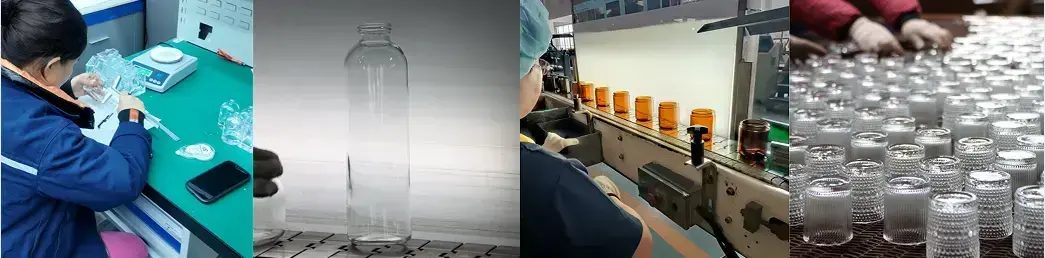
Commodity providers and key packaging partners are different in how much they customize. In just 3–5 days, Muzhishi can do a sample of hot stamping, screen printing, inside engraving, heat transfer printing, custom spraying, sticker or label application, and inside engraving. That flexibility is important for brands that have to handle a lot of different SKUs in 5ml, 10ml, and bigger sizes, as well as different cap colors.
Compliance paperwork should also be part of the evaluation of the supplier. Retail and direct-to-consumer (DTC) channels in North America must follow TSA rules for 10ml carry-on sizes, include safety documentation on cosmetic packaging, and have certificates of origin. Muzhishi's trade team puts together a full set of documents that are specific to the needs of each target market for customs processing for these glass rollers for essential oils.
Sustainability and Future Trends in Essential Oil Packaging
In 2023, the global market for essential oils was worth USD 11.67 billion. Direct-to-consumer (DTC) wellness brands grew at a very fast rate. Sustainability in packaging has gone from being a way to set a brand apart to something that millennials and Gen Z customers, who make up the core aromatherapy buyer group, expect.
Glass rollers for essential oils help reach the goals of the circular economy in ways that appeal to both retail buyers and end users. Premium beauty and wellness brands are moving in the direction of products that can be recycled over and over, don't shed microplastic, and work with refillable wellness ideas.
Some new trends that you should keep an eye on for future buying plans are:
- QR-coded labels that link to batch-specific quality badges and info on where ingredients come from are becoming more popular in the premium aromatherapy and CBD categories.
- Gemstone roller balls, like amethyst and rose quartz balls, are showing up in high-end skin care lines. They have cooling qualities and can also be used to rub the face with high pressure.
- Minimalist glass looks: Clear borosilicate with writing on the inside is replacing heavy decoration on the outside as brands try to create a professional, ingredient-focused visual identity.
These changes benefit suppliers who can do a lot of customization and have a reliable reorder system. These are the kinds of traits that make for a long-term package partnership rather than a transactional vendor relationship.
Conclusion
Glass rollers for essential oils are not common items to buy. They are a choice in the supply chain that affects the stability of the formulation, the experience of the customer, how the brand is seen, and the trustworthiness of reordering all at the same time. In the essential oil and aromatherapy category, bad reviews and supply chain problems are caused by specific types of failure. Borosilicate construction, amber UV protection, precision-engineered roller ball options, and leak-proof sealing architecture all work together to solve these problems. The right glass roller provider is more than just a source for procurement teams that have to deal with yearly reorder cycles and a wide range of different SKUs.
FAQ
Can glass roller vials handle high-limonene citrus oils without degradation?
Yes. Glass rollers for essential oils don't have any reactive surface chemistry, so it can't be damaged by limonene or other strong terpenes that break down polyethylene and regular plastic containers. One main reason formulators choose glass over plastic for citrus-forward mixes is that it doesn't react with chemicals.
What causes roller ball sticking, and how is it prevented?
The main reasons are high-viscosity crystallization and poor fitting stress. A 360-degree rotation test after filling makes sure the ball moved correctly before capping. Precision-engineered housings with ±0.05mm tolerances stop capillary leakage and make sure that all production batches have the same rolling action.
Are these roller bottles TSA-compliant for air travel?
The 10ml volume is the right amount for TSA carry-on drink rules. The dual-seal leak-proof screw cap can also handle changes in atmospheric pressure during transport, which stops the "weeping" or seepage that often happens with lower-grade closures at high altitudes.
What customization lead time should procurement teams plan for?
Sample production usually ends within 3–5 business days. This includes choosing the roller ball, cap material and color, and printing on the surface. After content fit is confirmed and small-batch trial approval, the full production schedule is made.
How does amber glass compare to frosted glass for UV protection?
Amber glass blocks wavelengths below 450nm, which is better at protecting photosensitive oils like myrrh and frankincense from breaking down. Frosted glass provides some security, but amber's spectral filter range is better for keeping formulations stable over time.
Request Samples or Bulk Pricing from Muzhishi
Since 2005, Muzhishi has provided high-quality glass packaging to health, aromatherapy, and skin care products around the world. As a reliable company that makes glass rollers for essential oils, we offer free trials, prototyping in 3–5 days, and a special route for established accounts to use in case of an emergency. To see our full selection of roller bottles and learn more about how they can be customized, email our team at long@muzhishi.com or go to mzsglass.com.

References
1. Müller, K., and Schmidt, R. (2021). "Chemical Resistance of Borosilicate Glass Versus Soda-Lime Glass in Essential Oil Storage Applications." Journal of Pharmaceutical Packaging Technology, 14(3), 45–58.
2. Chen, L.Y., Park, S.H., and Davis, M.A. (2022). "Photodegradation Kinetics of Terpene-Rich Formulations: The Role of Amber Glass UV Filtration." International Journal of Cosmetic Science, 44(2), 112–124.
3. U.S. Environmental Protection Agency. (2020). "Glass Recycling and Circular Economy Metrics for Packaging Materials." EPA Report No. 530-R-20-008, Washington, D.C.
4. Thompson, R.C., Moore, C.J., and Saal, F.S. (2018). "Microplastic Shedding from Polymer Packaging in Contact with Lipophilic Compounds." Environmental Science & Technology, 52(15), 8345–8354.
5. International Air Transport Association. (2023). "Carry-On Liquid Restrictions and Pressure-Induced Seal Failure in Roller Packaging." IATA Dangerous Goods Regulations, 64th Edition, Section 2.3.
6. Anderson, P.W., Roberts, T.H., and Nakamura, Y. (2020). "Leakage Mechanics in Roller Ball Closure Systems: A Torque-Seal Integrity Study." Packaging Technology and Science, 33(7), 267–280.

Our customers’ satisfaction speaks for our quality — contact us to experience the same reliable service.