- English
- French
- German
- Portuguese
- Spanish
- Russian
- Japanese
- Korean
- Arabic
- Greek
- German
- Turkish
- Italian
- Danish
- Romanian
- Indonesian
- Czech
- Afrikaans
- Swedish
- Polish
- Basque
- Catalan
- Esperanto
- Hindi
- Lao
- Albanian
- Amharic
- Armenian
- Azerbaijani
- Belarusian
- Bengali
- Bosnian
- Bulgarian
- Cebuano
- Chichewa
- Corsican
- Croatian
- Dutch
- Estonian
- Filipino
- Finnish
- Frisian
- Galician
- Georgian
- Gujarati
- Haitian
- Hausa
- Hawaiian
- Hebrew
- Hmong
- Hungarian
- Icelandic
- Igbo
- Javanese
- Kannada
- Kazakh
- Khmer
- Kurdish
- Kyrgyz
- Latin
- Latvian
- Lithuanian
- Luxembou..
- Macedonian
- Malagasy
- Malay
- Malayalam
- Maltese
- Maori
- Marathi
- Mongolian
- Burmese
- Nepali
- Norwegian
- Pashto
- Persian
- Punjabi
- Serbian
- Sesotho
- Sinhala
- Slovak
- Slovenian
- Somali
- Samoan
- Scots Gaelic
- Shona
- Sindhi
- Sundanese
- Swahili
- Tajik
- Tamil
- Telugu
- Thai
- Ukrainian
- Urdu
- Uzbek
- Vietnamese
- Welsh
- Xhosa
- Yiddish
- Yoruba
- Zulu
Why is a Soap Dispenser very important for a Bathroom?
A toilet that doesn't have a good soap dispenser is like a kitchen that doesn't have running water—it works, but it's missing something important. When there is a well-designed dispenser, washing your hands goes from being a messy job to an easy habit. In both homes and businesses, glass liquid soap dispenser has become the gold standard because they combine excellent cleanliness with a sophisticated look. While regular bar soap and thin plastic bottles hold germs and make the soap look bad, glass pitchers have a surface that is non-porous and easy to clean. This stops germs from growing and keeps the chemicals in premium soap recipes intact.
The Importance of Soap Dispensers in Modern Bathrooms
If you go into any high-end hotel or recently remodeled office building, you'll notice something that's always the same: dispensers that were carefully chosen to fit in with the general design. This isn't a coincidence. Facility managers in the hotel industry have realized that the simple soap container can be used for more than one important task.
Hygiene Standards in Commercial and Residential Spaces
Touchpoint pollution is still a big problem in bathrooms that get a lot of use. Handling traditional bar soap over and over again causes it to build up bacteria on the surface, creating a circle where the cleaner becomes a way for germs to spread. Dispensers get rid of this problem completely. Hygiene procedure studies show that the pump mechanism limits direct touch, which cuts down on cross-contamination by about 40% compared to bar soap that is used by everyone.
Glass types work especially well in places like hospitals and restaurants where cleaning must be proven during sanitation checks. The clear material lets you see how clean and full it is, and the non-porous surface stops germs from forming, which can happen with cheaper plastic options.
Why Glass Dispensers Outperform Plastic Alternatives
Material science shows that polymer-based and glass cases are very different from each other. When alkaline soaps are put into plastic bottles, the plastic slowly breaks down, letting phthalates and bisphenol chemicals into the liquid. Glass doesn't change chemically when the pH level changes from 3 to 13. This means that antibacterial agents and plant extracts stay effective without dangerous substances leaking out.
Another benefit is that it is stable at high temperatures. Glass can handle temperatures up to 120°C, which means it can be used in healthcare areas to follow proper cleaning procedures. Plastic bends at lower temperatures and can't be put through multiple sterilizer processes without losing its shape.
Brand Image and Guest Experience Enhancement
In the hotel business, procurement managers know that every little thing affects how much something is worth. Because they charge high prices, hotels can't give guests cheap plastic drinks. Attention to detail and concern for the environment are shown by glass dispensers, which are traits that modern customers like because they are evaluating brands based on their green promises more and more.
Customer happiness scores have gone up significantly at restaurant companies that put glass dispensers in the bathrooms. The weighted feel of a glass container with a smooth pump action unconsciously sends a message of quality, which affects how people think about the company outside of the bathroom.
Understanding Glass Liquid Soap Dispensers: Key Features and Maintenance
Putting together a good glass liquid soap dispenser is more complicated than just adding a pump to a bottle. Precision in manufacturing decides how long something lasts and how happy its users are with it after thousands of daily uses.
Material Composition and Manufacturing Standards
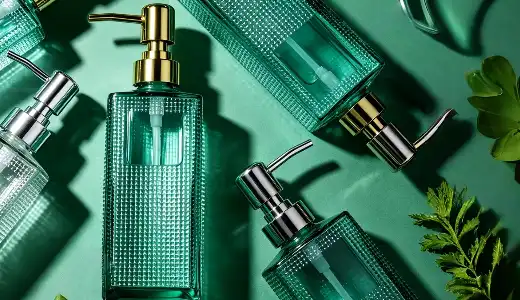
The Clear Glass Hand Soap Dispenser by Muzhishi is a great example of good engineering. It is made of high-quality soda-lime glass that is both clear and strong against impact. The 500ml volume (17.4cm height, 6.6cm circle) evenly distributes the 362.5g of weight, which is enough to keep it from tipping over but not too much to handle when refilling.
The most important part is the pump system. Tests show that commercial-grade pumps can be used over 50,000 times without breaking or leaking. They use stainless steel springs that don't rust in wet bathrooms. Thread precision on the 28/400 neck finish makes sure that the seal is airtight, which stops soap from evaporating and keeps the pump from getting clogged.
How the glass is made has a big effect on how long it lasts. When annealed glass is moved from one high temperature to another, it is cooled slowly so that any internal stresses are removed. This lowers the risk of breaking from thermal shock.
Environmental Advantages and Corporate Responsibility
Sustainability measures are becoming more and more important in buying choices. Glass is completely recyclable and doesn't lose its quality even after being processed over and over again. Over the course of five years, a single durable feeder will replace about 200 single-use plastic bottles, which is a big reduction in the amount of trash that ends up in landfills.
In addition to being recyclable, glass production has changed over time to leave less of a carbon footprint. When compared to older systems, modern boilers use 30% less energy, and closed-loop water systems use the fewest resources possible during production.
Companies that want to get LEED approval or become B Corporations find that switching to glass machines helps them meet environmental standards. Stakeholders care about how clear sustainability claims are. For example, glass has clear environmental benefits, while marketing for "biodegradable plastic" is less clear.
Maintenance Protocols for Longevity
With proper care, a service will last a lot longer. The smooth glass surface only needs to be cleaned with normal toilet cleaners on a regular basis. For serious cleaning every so often, you have to take the pump assembly apart and rinse both parts separately. The glass body can handle being put through the washing, but the pump mechanisms work better when they are flushed with warm water to keep soap residue from building up.
Refilling habits have an effect on success. Thickening up thick soap mixtures keeps the pump from getting too stressed, and making sure the container isn't too full lets air move around during the pumping action. When switching between types of soap, you need to rinse your hands well to keep the formulas from reacting and changing the texture or scent profiles.
Simple problems can be fixed with common repair steps. For example, food-grade silicone should be used to lubricate pumps that become stiff, and air locks can be fixed by priming the mechanism with several dry pumps before liquid contact.
Comparing Glass and Plastic Soap Dispensers for Procurement Decisions
People usually talk about buying things in terms of their budgets, but initial cost comparisons don't take into account the full value factor. Unit price study and total cost of ownership lead to different results.
Durability and Lifecycle Cost Analysis
In industrial settings, plastic liquid soap dispensers usually break after 18 to 24 months because the pump system breaks down, the threads come off, or the material gets cloudy. Replacement rounds mean that facilities teams that are in charge of multiple sites have to deal with ongoing costs and paperwork.
With regular upkeep, good glass pitchers will work well for 5 to 7 years. The higher initial investment is spread out over a longer working life, which lowers the ongoing costs. By the third year, facilities that manage 100 or more units have saved a lot of money because they no longer have to buy plastic over and over again.
Concerns about breaking often come up when glass is being evaluated. Modern designs use thick walls (at least 3mm) that can handle the normal hits that come with handling. Breakage rates in properly designed glass cases are usually less than 2% per year, which is reasonable when compared to the 100% replacement rate for plastic over the same time period.
Aesthetic Versatility and Design Options
Presentation visually impacts buying choices across all market groups. Glass can be designed in a lot of different ways, from being completely clear and simple to being decorated and personalized with different surface treatments.
Muzhishi lets you make a lot of changes, like hot stamping, silk screen printing, and interior carving that keeps the outside smooth. In addition to clear glass, you can also get amber glass that protects light-sensitive formulas from UV rays or coloring that matches the brand's color range.
The benefit of openness should be emphasized. Facility managers like being able to see right away how much soap is left in dispensers. This lets them plan refills more efficiently and avoid having empty dispensers, which is a common issue from guests in hotel settings. Clear plastic cases need to be checked by hand or they need to be thrown away and replaced too soon, which is expensive.
Pump Mechanism Variations for Different Applications
The soap dispenser must be chosen based on the thickness of the soap and what the user wants. Standard pumps can give between 1.0 and 2.0cc per stroke, which is enough for lotions and hand soaps. Foaming pumps have mesh screens (200–300 microns) that mechanically agitate soap to make it more airy. This makes concentrated recipes last longer while using less water.
Foaming dispensers are often preferred by healthcare centers because the visible lather urges people to wash their hands well. The psychological effect of lots of foam is related to how well people think they are cleaning, which makes staff and guests more likely to wash their hands.
For lotion devices to work with thicker products, the pump mechanisms need to be changed so that the tubes are bigger. Muzhishi's design is flexible enough to work with liquid soap, hand wash, lotions, and skin toners. It has changeable pumping systems that keep the output the same even when the recipe changes.
How to Choose the Right Glass Liquid Soap Dispenser for Your Business
Systematic evaluation frameworks that address key decision criteria help procurement professionals find the right balance between usefulness, looks, and budget.
Capacity and Refill Frequency Considerations
By changing how often you have to refill, volume selection affects work costs. The 500ml volume is just right for most business uses—it's big enough to cut down on trips to restock but small enough to fit in bathroom areas with limited space.
Capacity planning is useful in places with a lot of foot traffic, like restaurant bathrooms or business office buildings. For example, a 500ml pump that serves 150 people every day at 2ml per handwash lasts for about 40 days before it needs to be refilled. The facilities team works most efficiently when they match capacity to real usage trends.
Smaller 350ml units are sometimes better for bathrooms in homes and small hotels because they look better in smaller bathrooms. Larger forms may be needed in institutions where durability against theft and longer service intervals are more important than design.
Customization for Brand Alignment
Every interaction with a customer is part of the company's character. Custom dispensers turn useful bathroom items into chances to promote a brand by adding a name, matching colors, and using the same package for all of them.
Screen printing uses lasting images that don't break down after being cleaned thousands of times. When you hot stamp, you get metallic details that give the impression of wealth. When you want a simple look, internal engraving is a gentle way to brand something, while external images might look too busy.
Customizing the packaging is important, especially for store and business gifts. Premium presentation boxes make items look more valuable, and safe packing makes sure they arrive undamaged—this is especially important for foreign shipping, where handling standards are stricter than in the U.S.
Supplier Capabilities and Procurement Logistics
Implementation success depends on how reliable the partnership is. When you evaluate providers, you need to look at more than just the product specs. You also need to look at their manufacturing capacity, quality systems, and service infrastructure.
Minimum order numbers have a big effect on how flexible you can be when buying things. Because Muzhishi has been making things for 20 years, they have developed scalable production skills that allow them to handle both big governmental orders and smaller boutique hospitality chains. Sample programs that send free samples within three to five days let people try before they buy.
Export paperwork and help with planning make buying things internationally easier. Self-operated import-export licenses and knowledge of customs procedures keep shipments on time, which keeps projects on schedule. As part of the full service, business bills, packing lists, and certificates of origin that are specific to the needs of the target country are provided.
After-Sales Support and Warranty Expectations
Product stability doesn't mean much if there isn't quick help to answer questions and fix problems that come up from time to time. Response times promised in less than 24 hours show that the customer is important, and full insurance coverage lowers the risk of making large purchases.
Technical support should include help with installation, best practices for upkeep, and fixing problems. Training tools help facilities teams get the most out of products by making sure they are properly cared for, and the availability of replacement parts stretches service life without having to buy a whole new unit every time a small part fails.
Enhancing Brand Trust and Long-Term Value with Glass Soap Dispensers
Strategic buying goes beyond the current needs of the business and looks at bigger issues like managing image and figuring out where the business fits in the market.
Sustainability Messaging and CSR Benefits
Environmental awareness has a measurable effect on how people act as consumers. Studies show that 68% of customers would rather buy from a business that really cares about the environment. Glass liquid soap dispensers are a real sign of caring about the earth that marketing teams can use in all of their messages.
Statements with numbers that describe the effects stick in people's minds better than vague environmental claims. Figuring out how to get rid of plastic bottles (one dispenser can replace more than 200 single-use cases) makes for interesting stories for CSR reports and talks with stakeholders. LEED projects get points toward approval when they use materials that are known to be environmentally friendly.
The idea of a revolving economy works directly with glass. In contrast to plastic recycling, which lowers the quality of the material with each turn, glass stays pure forever. By making this difference clear, you teach your customers about real environmental choices, not the greenwashing that is common in selling disposable goods.
Employee and Customer Perception Management
Stakeholders inside the company notice details about the workplace that lower mood and pride. Workers like it when their companies put an emphasis on quality over cutting cuts on basic needs. Thoughtful amenities have an effect on people's minds that goes beyond bathrooms and can be seen in measures of general job happiness.
Businesses that deal with customers know that every contact changes how people think about their brand. A guest seeing a classy glass container subconsciously understands quality care, while a broken plastic unit leaking watered-down soap sends a message of cutting costs that goes against premium price strategies. Brand image is strengthened by consistency across all touchpoints.
People who work in healthcare are closely watched for cleaning and safety. In exam rooms and patient bathrooms, glass dispensers make it easier for patients to see that cleanliness standards are being followed. This makes patients feel safer in places where trust is important for happiness and compliance.
Future Industry Trends and Innovation
Smart container technology is a new idea that combines IoT sensors with more standard functions. Connected soap stations keep track of how much soap is used and when. This lets automatic reorder systems take over and makes maintenance plans more efficient by using predictive analytics instead of reactive refilling.
Material science keeps making progress by creating antimicrobial layers for glass that kill germs on the surface. Silver ion injection and photocatalytic titanium dioxide treatments keep things clean between cleanings, which is especially helpful in food service and healthcare settings.
The latest design trends prefer simplicity, with straight lines and a look that never goes out of style. By buying classic glass dispensers instead of trendy plastic ones, you can keep their usefulness through multiple rebuilding rounds and protect their long-term value.
Conclusion
The bathroom soap dispenser is in a special spot where the need for cleanliness meets design potential and the need to be environmentally friendly. Different types of glass work better in every important way: they are chemically inert, which keeps the quality of the soap, durable, which extends the service life, aesthetically versatile, which improves places, and environmentally friendly, which supports corporate responsibility. When comparing starting costs to total ownership value, purchasing choices always go in favor of high-quality glass dispensers that work well for years and improve brand image through thousands of daily user interactions. Glass may look simple and clear, but it has complex technical and strategic value that smart facility managers and design professionals are realizing is necessary, not optional.
FAQ
How often should glass liquid soap dispensers be cleaned and refilled?
How often you clean depends on how much you use it. Commercial areas with a lot of foot traffic should wipe down the outside once a week and do a deep cleaning once a month that involves taking the pump out. Instead of when the liquid level drops completely, refilling should happen when it hits 20% capacity. This keeps air from getting in and causing problems with pump starting. Residential uses usually don't need to be serviced as often—every two weeks for cleaning and once a month for refilling is enough for home use.
Do glass dispensers leak more than plastic models?
Due to tight manufacturing tolerances, high-quality glass pitchers actually don't leak as much. When it comes to seals, glass molds that are consistently shaped and threaded work better than plastic ones that can bend and change size. The normal 28/400 neck finish makes sure that the pump will work with it and that the engagement is solid. Leakage is usually caused by problems with the pump system rather than flaws in the glass case, and it happens with all types of materials when low-quality parts are used.
What customization options support brand identity?
Dispensers can be turned into marking tools with a lot of customization. Screen printing uses multiple colors to make designs and images that last. With hot pressing, shiny gold or silver accents are made that show a high level of quality. Internal engraving creates a delicate name while keeping the outside areas smooth. Tinting colors goes with company themes and keeps the transparency of the color. When used for retail or business gifts, custom wrapping with brand presentation boxes makes the items seem more valuable.
Partner with Muzhishi for Premium Glass Liquid Soap Dispenser Solutions
Xuzhou Muzhishi Crafts Co., Ltd. can help you with your buying needs because they have been making glass for twenty years. When it comes to durability, sustainability, and good looks, our Clear Glass Hand Soap Dispenser has it all. It sets the standard for better cleanliness in hospitality, business, and household settings. As an experienced glass liquid soap dispenser manufacturer, we offer full ODM/OEM customization from the initial design phase through global shipping. We also offer samples within 3–5 days and promise to respond within 24 hours. Our self-operated export skills take care of all the paperwork and operations, and our cheap pricing through integrated supply chain partnerships makes us a great value. Contact long@muzhishi.com right away to talk about business needs and explore customization options. You can also see our full product selection at mzsglass.com. By working with a trusted provider, you can improve your facility's hygiene standards and uphold your environmental promises.
References
1. American Journal of Infection Control, "Comparative Analysis of Hand Hygiene Product Delivery Systems in Healthcare Settings," Vol. 48, 2020.
2. Green Building Council, "Material Selection Guidelines for LEED Certification: Glass versus Plastic Products," 2022 Edition.
3. Hospitality Design Magazine, "The Psychology of Guest Experience: How Material Choices Affect Perceived Value," March 2023.
4. Journal of Environmental Management, "Lifecycle Assessment of Glass and Plastic Containers: Carbon Footprint and Recyclability Analysis," Vol. 315, 2022.
5. National Sanitation Foundation, "Surface Material Performance in Microbial Contamination Prevention: Technical Report NSF-184," 2021.
6. Procurement Executive, "Total Cost of Ownership Models for Facility Management: Durable Goods Investment Strategies," Annual Review 2023.

Our customers’ satisfaction speaks for our quality — contact us to experience the same reliable service.