- English
- French
- German
- Portuguese
- Spanish
- Russian
- Japanese
- Korean
- Arabic
- Greek
- German
- Turkish
- Italian
- Danish
- Romanian
- Indonesian
- Czech
- Afrikaans
- Swedish
- Polish
- Basque
- Catalan
- Esperanto
- Hindi
- Lao
- Albanian
- Amharic
- Armenian
- Azerbaijani
- Belarusian
- Bengali
- Bosnian
- Bulgarian
- Cebuano
- Chichewa
- Corsican
- Croatian
- Dutch
- Estonian
- Filipino
- Finnish
- Frisian
- Galician
- Georgian
- Gujarati
- Haitian
- Hausa
- Hawaiian
- Hebrew
- Hmong
- Hungarian
- Icelandic
- Igbo
- Javanese
- Kannada
- Kazakh
- Khmer
- Kurdish
- Kyrgyz
- Latin
- Latvian
- Lithuanian
- Luxembou..
- Macedonian
- Malagasy
- Malay
- Malayalam
- Maltese
- Maori
- Marathi
- Mongolian
- Burmese
- Nepali
- Norwegian
- Pashto
- Persian
- Punjabi
- Serbian
- Sesotho
- Sinhala
- Slovak
- Slovenian
- Somali
- Samoan
- Scots Gaelic
- Shona
- Sindhi
- Sundanese
- Swahili
- Tajik
- Tamil
- Telugu
- Thai
- Ukrainian
- Urdu
- Uzbek
- Vietnamese
- Welsh
- Xhosa
- Yiddish
- Yoruba
- Zulu
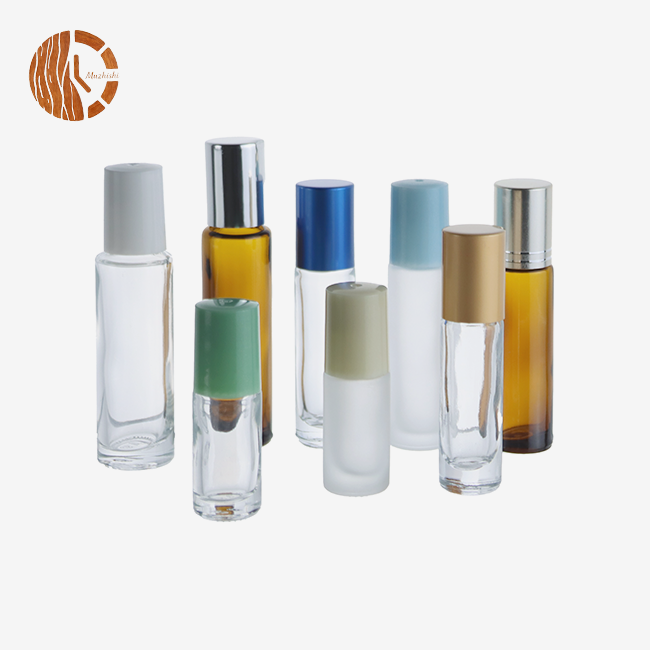
Small Essential Oil Bottles
Capacity:12ml
Usage: Essential Oil, Other Cosmetic, Perfume, Skin Care, Skin Care Serum
Ball type: Glass,Steel Balls,Plastic
Cap material: Plastic
Cap color: Gold, Silver, White, Black, etc.
Customization capability: Hot Stamping, Inside Engraving, Clear, SCREEN PRINTING, Sizes, Colors, Bottle Types, Logo, Sticker or Label, Packing Box, etc
Packaging: As per customer requirements
Transportation method: As per customer requirements Sample:Provided Freely
Small Essential Oil Bottles for Aromatherapy and Cosmetic Use
Small essential oil bottles prevent light-sensitive and volatile compositions against UV degradation and chemical contact with the container. Muzhishi offers 12 ml glass roller bottles in amber, cobalt blue, clear and frosted finishes, made of high hydrolytic resistance glass. Bottles have a DIN 18 standard neck finish meaning they will fit roller balls, euro droppers and orifice reducers. Certification : SGS, FDA, LFGB, available for documentation. We can produce free samples before any manufacturing commitment.
Who We Serve
They're for firms that want reliable, scalable packaging for liquid items in concentrated form.
Aromatherapy and essential oil companies require packaging that prevents UV light from entering and reduces terpene oxidation. The amber glass option filters off wavelengths below 450 nm, decreasing the potential for photo-oxidation of photosensitive oils.
Cosmetic and skincare formulators can find the standardised DIN 18 neck finish to be an advantage for products such as serums, face oils and botanical extracts. This finish is suitable for roller balls, euro-droppers and orifice reducers, creating a secure seal for air transfer.
purchasers sourcing for retail or gifting channels, private label and OEM purchasers can demand hot stamping, screen printing, logo placement and customised packaging boxes as part of their order.
Wholesale distributors that deal in big volumes can rely on our stated mass production lead time of about 30 days after sample approval, thanks to long-term agreements with raw material suppliers.
Technical Specifications of Small Essential Oil Bottles
| Specification | Details |
|---|---|
| Material | Premium Borosilicate Glass |
| Capacity | 12ml |
| Ball Type | Glass, Steel, or Plastic Options |
| Cap Material | High-Quality Plastic |
| Cap Colors | Gold, Silver, White, Black |
| Closure Type | Screw Cap |
| Shape | Gourd with Square Base |
| Model Number | CP-E-021 |
| Origin | Jiangsu, China |
| Sample | Available Free |
Customization Options
Cap finishes are available in gold, silver, white and black. Depending on the oil viscosity to be filled, the roller ball inserts are made of glass, steel or plastic. For thin oils like citrus or eucalyptus, a 0.6 mm aperture reducer is useful for controlling the flow rate. For richer oils such as vetiver or sandalwood, a 1.0 mm vertical dropper lowers the likelihood of clogging.
Logos can be applied using screen printing, hot stamping, sticker labels & interior engraving. Comes with custom packaging boxes for gifting or retail presentation.
Bottle sizes, colours, and structural shapes can be varied. The designated account contact will manage the specification details from sample stage to final shipping.
Sending the team a precise brief earlier in the process helps to shorten the sample confirmation cycle.

Manufacturing and Quality
Muzhishi has several glass furnaces with automated production lines. This allows to fulfilll orders of large volume without loss of dimensional uniformity.
The sourcing of raw materials is done via long-term supplier agreements which allows for constant pricing across order cycles. This format permits competitive unit pricing on both sample and bulk orders.
Small Essential Oil Bottles are tested to international compliance requirements. The glass is USP <660> for low-alkali release, ensuring chemical inertness and minimising the risks of pH change in delicate oil mixtures.
Quality inspections are performed to verify wall thickness uniformity, neck finish tolerance according to DIN 18 requirements, and UV spectrum filtering performance. Amber glass is evaluated for UV filtering in the range 200 nm-400 nm, which is significant for the protection of terpene and phenol rich essential oils against photo-oxidation.
Damage to packaging in transit is covered by the after sales policy. Verified transit loss claims are examined and processed directly by the account team.

Production Process
Step 1 — Design and Prototyping
Production begins with design confirmation. Standard prototypes are ready in 3 to 5 days. 3D-printed mockups can be arranged for complex structural shapes.
Step 2 — Raw Material Selection
Glass grade is selected based on application. Type I borosilicate is suitable for formulations that require autoclave sterilization at 121 °C. Type III soda-lime glass suits standard cosmetic and aromatherapy use.
Step 3 — Glass Forming
Bottles are produced using either molded or tubular forming. Molded bottles offer higher mechanical strength for bulk handling. Tubular bottles provide more uniform wall thickness, which suits premium retail aesthetics.
Step 4 — Surface Treatment
Color coating, frosting, hot stamping, screen printing, and inside engraving are available. External coatings are tested for oil resistance to reduce peeling risk on contact with essential oil residue.
Step 5 — Quality Inspection
Each unit is checked against DIN 18 neck finish tolerances. UV filtering performance is verified for amber and cobalt blue variants. Chemical inertness is confirmed against USP and LFGB standards.
Step 6 — Assembly and Packaging
Roller ball fitments, orifice reducers, and caps are assembled and torque-tested. Final packaging follows customer requirements. Export documentation — commercial invoice, packing list, and certificate of origin — is included.
Step 7 — Shipping
Sea, air, and multimodal shipping options are available. In-stock items can ship immediately. Mass production orders are delivered within approximately 30 days of sample approval.

FAQ
Q: Why amber glass for the products, instead of clear glass?
A: Amber glass absorbs UV wavelengths below 450 nm, which are involved in the photo-oxidation of essential oils. Clear glass does not offer any real UV protection and is not suited for light-sensitive formulas.
Q: What is the difference between moulded and tubular products?
A: Moulded bottles have stronger mechanical strength, and so are more suited to bulk shipment. The tubular bottles offer a more consistent wall thickness and superior optical clarity, preferred for premium retail packaging.
Q: Can these bottles withstand sterilization?
A: Normal autoclave cycles at 121 °C do not harm the structure or modify the dimensions of Type I borosilicate glass bottles. Type III soda lime glass is not qualified for autoclave sterility.
Q: How can I prevent oil from leaking under cap?
A: Poly-cone liners or orifice reducers that are calibrated to the DIN 18 thread standard will provide a secondary seal that will not leak under pressure variations associated with air freight conditions.
Q: Do you have BPA free bottles?
A: Glass products contain no BPA. All plastic closures supplied are tested to meet FDA food grade compliance criteria.
Q: Is it okay to use cobalt blue glass instead of amber?
A: Cobalt blue glass provides some UV filtering but is not as effective as amber over the complete UV spectrum. Often chosen for the visual aspect of branding. The finished items in cobalt blue bottles should be stored away from direct sunlight.
Contact Us
Send specifications or request a free sample of Small Essential Oil Bottles at long@muzhishi.com. Responses are provided during business hours.

Our customers’ satisfaction speaks for our quality — contact us to experience the same reliable service.