- English
- French
- German
- Portuguese
- Spanish
- Russian
- Japanese
- Korean
- Arabic
- Greek
- German
- Turkish
- Italian
- Danish
- Romanian
- Indonesian
- Czech
- Afrikaans
- Swedish
- Polish
- Basque
- Catalan
- Esperanto
- Hindi
- Lao
- Albanian
- Amharic
- Armenian
- Azerbaijani
- Belarusian
- Bengali
- Bosnian
- Bulgarian
- Cebuano
- Chichewa
- Corsican
- Croatian
- Dutch
- Estonian
- Filipino
- Finnish
- Frisian
- Galician
- Georgian
- Gujarati
- Haitian
- Hausa
- Hawaiian
- Hebrew
- Hmong
- Hungarian
- Icelandic
- Igbo
- Javanese
- Kannada
- Kazakh
- Khmer
- Kurdish
- Kyrgyz
- Latin
- Latvian
- Lithuanian
- Luxembou..
- Macedonian
- Malagasy
- Malay
- Malayalam
- Maltese
- Maori
- Marathi
- Mongolian
- Burmese
- Nepali
- Norwegian
- Pashto
- Persian
- Punjabi
- Serbian
- Sesotho
- Sinhala
- Slovak
- Slovenian
- Somali
- Samoan
- Scots Gaelic
- Shona
- Sindhi
- Sundanese
- Swahili
- Tajik
- Tamil
- Telugu
- Thai
- Ukrainian
- Urdu
- Uzbek
- Vietnamese
- Welsh
- Xhosa
- Yiddish
- Yoruba
- Zulu
Amber Glass Dispenser Bottles for Travel Essentials: Stylish and Refillable Solutions
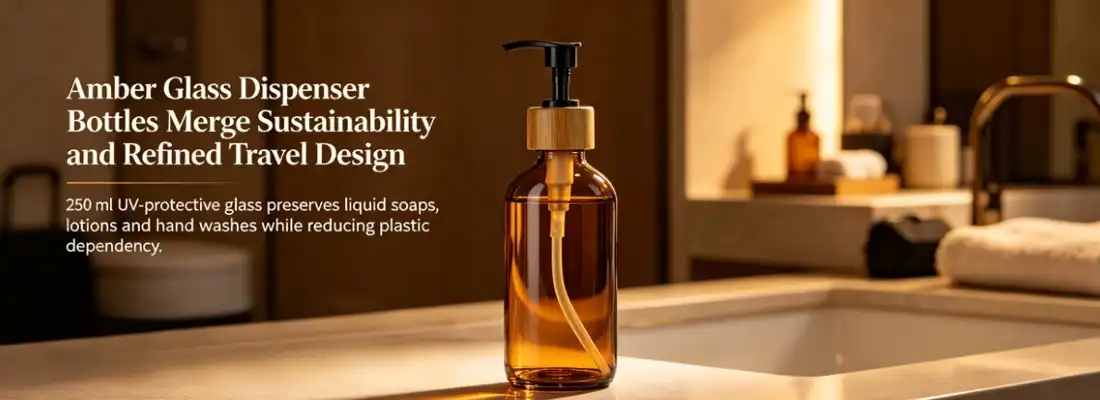
Amber glass dispenser bottles represent an innovative fusion of sustainability and sophistication for modern travel needs. Products like the Amber Glass Hand Soap Dispenser from Muzhishi, with its 250 ml capacity and UV-protective properties, exemplify how glass packaging preserves liquid soaps, lotions, and hand washes during transit while reducing plastic dependency. These refillable solutions appeal to discerning travelers who demand durability without sacrificing aesthetic elegance. Unlike disposable plastic containers that degrade quickly and leach chemicals, amber glass offers chemical inertness and infinite recyclability—qualities increasingly valued by eco-conscious consumers and procurement professionals seeking branded travel essentials that align with corporate sustainability commitments.
Understanding Amber Glass Dispenser Bottles for Travel
What Makes Amber Glass Ideal for Travel Products?
In addition to looking good, the unique orange color of glass pitchers is very important for technical reasons. During the melting process, iron, sulfur, and carbon chemicals are added to the glass. This gives it a permanent color that blocks about 90% of ultraviolet bands below 450nm. Botanical extracts, essential oils, and organic surfactants that are common in high-end hand washes and skin toners don't break down when exposed to UV light because of this barrier. This protection keeps natural formulations working well even when travelers take them through different climates and light conditions.
Good travel dispensers are strong mechanically, while weaker ones are not. Our manufacturing standards say that the walls must be at least 3.5 mm thick. This makes these vessels strong enough to handle the bumps and changes in pressure that come with moving luggage and flying. A 250ml dispenser's 170.3g weight is just the right amount of solid to keep it from falling over on hotel bathroom counters while still being light enough to fit in a carry-on bag. Borosilicate materials that are resistant to heat can handle changes in temperature from airport security checks to tropical vacation spots without breaking or losing their seal integrity.
Advantages Over Plastic and Clear Glass Alternatives
The choice of material has a huge effect on both the user experience and the impact on the environment. There are known problems with chemicals moving around in plastic travel bottles, especially when they are heated or used with acidic substances. Bisphenol A (BPA) and phthalates can get into the ingredients of expensive personal care products, which goes against their wellness goals by causing health concerns. These risks are eliminated by the fact that chemicals can't react with glass containers. The non-porous surface of glass containers doesn't react with high-pH liquid cleaners or alcohol-based sanitizers, so the formula stays pure forever.
Clear glass containers don't offer enough protection for travellers. Full-spectrum light can get through clear containers, speeding up the oxidation processes that break down natural preservatives and change the smell profiles. Amber glass successfully extends shelf life by making a stable internal environment that is not affected by outside factors. This is especially helpful for companies that are making high-end travel kits, boutique hotel goodie programs, or workplace gift sets where the quality of the products needs to match the brand's standards.
Sustainability measures are another way to tell glass from throwaway options. At first glance, lightweight plastics may seem like a good deal, but their short useful life creates constant streams of waste. A single clear glass dispenser can be used over and over again for years, replacing hundreds of single-use bottles. This gives the dispenser a higher term value. The material can be recycled over and over again without losing any of its quality. This supports the circular economy ideas that are being required more and more by hotel chains and corporate responsibility frameworks.
Proper Refilling, Cleaning, and Maintenance Practices
As long as cleanliness standards are followed, amber glass dispensers will keep working well for many refill rounds. To start cleaning, take the pump system apart and run each part under warm water separately. The glass body can go through cycles in a dishwasher, but hand-washing protects pump gaskets and spring mechanisms that could break down in high temperatures. Scrubbers that are too rough could scratch the surface. Instead, use a microfibre cloth to remove the dust without hurting the amber finish.
When refilling Amber Glass Hand Soap Dispenser, it's important to pay attention to consistency and keeping things clean. To stop dilution or microbial growth, make sure all parts are completely dry before adding new products. Rinse the containers with isopropyl alcohol between formulations to keep fragrances or active ingredients from getting mixed up. Most industrial pump assemblies can be used with the standard 28/410 neck threading. This gives you options when your product choices change during trip seasons or buying cycles.
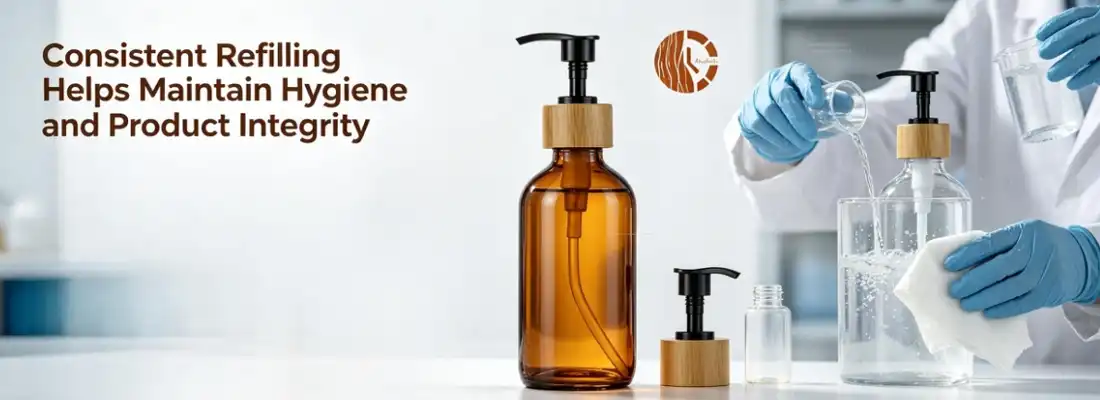
Thinking about how to store the dispenser will make it last longer between uses. Even though UV light can't damage amber glass, keeping full bottles out of direct sunlight helps keep the pump seals in good shape and stops liquid from evaporating through the pouring mechanisms. Temperature-stable settings protect against thermal shock. Sudden changes from hot to cold can put stress on glass, even though it is built to last. These simple maintenance steps make dispensers reliable for decades, turning them into long-lasting travel companions instead of disposable conveniences.
Comparing Amber Glass Dispenser Bottles with Other Materials and Designs
Material Performance Analysis
Assessments of the environmental effects of different packing materials show big differences. Making new plastic uses a lot of oil and releases a lot of carbon into the air. Also, makeup products are still not recycled very often because they are contaminated and made of more than one material. Amber glass is made with more energy at first, but this is offset by the fact that it can be used over and over again and has a recycle system that restores almost all of its value.
Testing for durability shows that glass is better for business uses. Pump fatigue tests make sure that high-quality mechanisms can handle more than 10,000 compressions without losing their functionality. This is very important in high-traffic hotel settings where bathrooms are always being used. Using a polariscope to do annealing stress tests makes sure that internal forces are removed during production, which stops the metal from breaking on its own, which could be dangerous. These quality checks make sure that the devices meet FDA safety standards for food and California's Proposition 65. Plastic options often can't get these certifications without adding chemicals.
Studies of how people think about packaging always show that glass is seen as high-end and reliable. Customers of a hotel connect amenities made of amber glass with boutique-style luxury experiences, which affects their satisfaction scores and review ratings. The same is true for stores that sell travel essentials—displays with glass items get more attention and can explain charging more than rivals who come in plastic bags. This psychological aspect has a direct relationship with brand value for businesses that want to stand out in crowded markets.
Design Customization Opportunities for Brand Differentiation
Today's procurement needs go beyond standard products and include full brand expression. Surface treatment technologies make it possible to customize things in amazing ways. Metallic foils are applied by hot pressing to make beautiful logos that won't wear down after being handled many times. Screen printing creates vivid, multicolored images that can be used for seasonal collections or designs that are made just for an event. Inside engraving uses lasers to cut names into glass walls, creating a subtle look of class that can't be taken off or damaged by normal use.
You can change colors in more ways than just the classic amber palette. Amber colors in general are good at blocking UV rays, but custom color matching can be done to fit brand guidelines or thematic collections. Transparent variants show off colorful formulations for eye-catching presentations, and custom tints make product families stand out. This freedom is very helpful for event planners who need to choose wedding colors, for hotel brands that want to update their amenity programs, and for stores that want to start their own trip collections.
With OEM and ODM services for Amber Glass Hand Soap Dispenser, containers can be turned into full branded systems. Customized options for capacity allow for different use patterns, such as smaller sizes for weekend trips and larger ones for longer stays. Customizing a pump assembly means changing the output volume (usually 2.0 cc per stroke for the best balance between economy and user satisfaction), the finish, which can be anything from brushed stainless steel to matte black coatings, and the height, which makes sure that all product lines look good. Different market positioning strategies can be supported by a wide range of packaging options, from simple boxes that can be recycled to high-end gift sets with extras that go with them.
Purchasing Amber Glass Dispenser Bottles for Global B2B Procurement
Quality Certifications and Selection Criteria
When looking for package parts, procurement experts have to deal with a lot of complicated requirements. Important licenses show that a company knows how to make things and follows the rules in all foreign markets. ISO 9001 quality control systems make sure that production standards are always met, and ISO 14001 environmental certifications make sure that factories use environmentally friendly methods. Lead and cadmium migration testing makes sure that strict rules are followed, such as the FDA's food-contact standards and the European Union's REACH directives. This is especially important when products come into contact with skin more than once while being used.
Specifications for technical items need to be carefully looked over. Impact resistance and thermal shock tolerance are directly related to wall thickness measurements (a standard minimum of 3.5 mm). To make sure that the seals between the glass necks and pump caps don't leak, GO/NO-GO gauge tests must be used to check the thread's accuracy. Metal parts are put through 48 hours of corrosive environments during salt spray testing. This finds any rust or finish damage before the products reach customers. These thorough tests tell the difference between professional-grade dispensers and cheaper ones that are more likely to break down quickly.
Minimum order amounts show economies of production while still being flexible enough to fit different business sizes. Established companies like Muzhishi make sure that new names can get their products easily while also running large-scale operations efficiently. Volume pricing structures encourage commitment, and sample programs let you check the quality of the product before making a big purchase. For custom orders, delivery times that include production schedules, quality inspection times, and international logistics usually last between 30 and 45 days. This means that purchasing needs to be planned around seasonal demand cycles or campaign launches.
Evaluating Suppliers and Sustainable Manufacturing
Geographic supplier distribution has clear benefits. Asian makers, especially those in Jiangsu province's well-established glass production clusters, can make things cheaply because their supply lines are well-established and their workers are skilled. Costs are cut by 10–15 percent when production centers are close to suppliers of raw materials and parts. For smaller boutique orders, European suppliers stress artisanal craftsmanship and quick prototyping. On the other hand, North American suppliers offer easier operations for local markets, even though they charge more for production.
Sustainable manufacturing promises for Amber Glass Hand Soap Dispenser are becoming more and more important in choosing a provider. Modern companies use closed-loop water recycling systems, electric melting furnaces that lower emissions, and recycled cullet (crushed glass) to cut down on the use of new materials. Using renewable energy and running carbon offset programs are examples of environmental leadership that go above and beyond what is required. These actions are in line with the corporate social responsibility models that guide buying choices in the giving, retail, and leisure industries.
The total cost of ownership is part of long-term value estimates, not just unit price. When you buy durable glass dispensers instead of disposable ones, you don't have to pay for replacements as often. Refillability lowers the long-term cost of packing for catering businesses that buy in bulk. Sustainable practices are getting more and more attention from both customers and investors, which is good for a brand's image. Premium glass bottles often prove to be more cost-effective over a number of years, even though they cost more at first than plastic choices that seem like they would be cheaper.
Maximizing Efficiency and Sustainability with Amber Glass Dispensers
Corporate Social Responsibility Benefits
When businesses use amber glass dispensers, they get measurable benefits in terms of sustainability. By switching from single-use plastic amenity bottles to refillable glass pitchers, a medium-sized hotel company can save tens of thousands of plastic units every year, which directly lowers the amount of plastic that ends up in landfills and the ocean. These real numbers make environmental reports stronger and help third-party certifications like LEED hospitality standards or B Corporation reviews that check how well a company is doing with the environment.
More and more, consumers want to make choices that are good for the environment. Market research shows that 73% of travelers think about how the hotels they choose affect the environment. Notable eco-friendly features like glass amenity stations have an effect on booking choices and the desire to pay higher prices. Using glass soap basins in the bathrooms of restaurants and other hospitality places improves the atmosphere and lets customers know that the business cares about the environment. When business decisions are in line with what customers value, it leads to trust and good reviews across all digital platforms.
Transparency in the supply chain is becoming more important as stakeholders call for accountability. Brands can protect their reputations by working with makers that have environmental and social labor certifications. You can be sure that procurement decisions support responsible business ecosystems by looking at paperwork like material safety data sheets, compliance certificates, and audits of the production process. These governance issues are becoming more and more important to institutional buyers when they are evaluating RFPs and choosing suppliers.
Practical Maintenance for Extended Product Lifecycles
Setting up the right care protocols is important for operational efficiency. When training staff for culinary jobs, they should stress how important it is to be gentle when cleaning and restocking. Simple laminated tips put up in places where cleaning is done show the right way to take apart and reassemble pumps so they don't get damaged by using too much force. Deep cleaning sessions that are planned (every month or every three months, depending on how often they are used) keep things clean and show which tools need to be replaced before they fail in front of guests.
Inventory management systems that keep track of where dispensers are located and when they need to be refilled make the best use of workers' time and keep loss from happening by stopping overfilling. RFID tags or simple numbering systems make it possible to set rotation schedules that make sure all dispenser populations get the same amount of wear. Buying replacement parts for pumps in bulk saves money on upkeep and doesn't require too much storing space. These organized methods change the role of amenity management from fixing problems after they happen to actively managing assets.
End-of-life planning for the Amber Glass Hand Soap Dispenser is the last step in the sustainability cycle. When machines break beyond repair, normal container glass and amber glass can both be recycled through established systems. The working parts of pumps can be separated into metal and plastic parts that can be recycled in different ways. Some companies have take-back programs that collect broken units so that materials can be reused. This closes the loop and supports the ideas of a circular economy. This full lifecycle view tells the difference between operations that are really sustainable and those that are just greenwashing.
Conclusion
Amber glass dispenser bottles are a valuable resource for companies that want to strike a balance between environmental responsibility and physical luxury. UV protection, chemical inertness, and mechanical longevity are some of the technical benefits that make this product great for use in travel, leisure, and retail settings. Customization options allow for precise brand alignment, turning functional necessities into unique touchpoints with your brand. When reviewing suppliers, people in charge of buying things should look at things like quality certificates, environmentally friendly production methods, and the value over the product's whole life, rather than just comparing unit costs. When companies use amber glass options, they reduce trash, improve how people see their brand, and make operations more efficient. These benefits build over time.
FAQ
What liquids work best in amber glass travel dispensers?
Almost all liquid soaps, lotions, hand washes, skin toners, sanitizers, and shampoos can be put in Amber glass dispensers. Formulations with natural ingredients, essential oils, or plant extracts that break down easily in light are especially helped by the UV-protective qualities. When not using them for personal care, stay away from industrial chemicals that are very acidic or basic.
How do amber glass dispensers reduce environmental impact?
Glass dispensers replace hundreds of single-use plastic bottles over the course of several years, directly reducing waste. Supports circular economy ideas because the material can be recycled over and over again without losing any quality. Businesses that buy formulations in bulk instead of individually packed units waste less packaging when they can be refilled. This has positive effects on the environment across all of an organization's activities.
What should B2B buyers consider when ordering in bulk?
Compare the minimum order quantities to the amount of inventory that can be held and the expected demand. Check the quality certifications, such as FDA compliance and documentation on material safety. Before making a big investment, ask for examples to check the quality of the build and make sure the style matches. Make the customization timelines clear. Usually, it takes 30 to 45 days for branded orders. Make sure that foreign orders have the right organizational support, such as customs paperwork and shipping insurance.
Partner with Muzhishi for Premium Amber Glass Solutions
Xuzhou Muzhishi Crafts Co., Ltd. can help you with your buying needs because they have been making glass for twenty years. As a well-known company that makes Amber Glass Hand Soap Dispensers, we offer full ODM/OEM customization, from the initial creation to shipping around the world. Our 250 ml dispensers have walls that are 3.5 mm thick and premium pump mechanisms that have been tested over 10,000 cycles, and they fully meet FDA and Proposition 65 standards. Free samples are sent within 3–5 days, so you can check the quality before committing. Our self-operated import/export features make customs clearance easier and include full paperwork support. Dedicated account managers provide prompt service throughout the lifecycle of your order. Visit mzsglass.com or email us at long@muzhishi.com to talk about how our environmentally friendly glass solutions can help you offer better products and keep your environmental pledges.
References
1. Thompson, R.C., Moore, C.J., vom Saal, F.S., & Swan, S.H. (2019). "Plastics, the Environment, and Human Health: Current Consensus and Future Trends." Philosophical Transactions of the Royal Society B: Biological Sciences, 364(1526), 2153-2166.
2. Nielsen Global Corporate Sustainability Report (2021). "Consumer Demand for Sustainable Products Reaches All-Time High." Nielsen Holdings plc, Annual Sustainability Survey Data.
3. Glass Packaging Institute (2022). "Lifecycle Assessment of Glass Container Manufacturing and Recycling." Environmental Impact Studies in Packaging Materials, Technical Report Series 14.
4. American Hotel & Lodging Association (2020). "Sustainability Practices in the Hospitality Industry: Benchmarking and Best Practices. "AHLA Industry Research Division, Operational Standards Publication.
5. Cadogan, D.F. & Howick, C.J. (2018). "Plasticizers in Food Packaging: Chemistry, Safety, and Regulations." Food Additives and Contaminants: Part A, 35(7), 1298-1320.
6. International Organization for Standardization (2021). "ISO 9001:2015 Quality Management Systems—Requirements for Glass Container Manufacturing." ISO Technical Committee 166, Standards Documentation.


Our customers’ satisfaction speaks for our quality — contact us to experience the same reliable service.