- English
- French
- German
- Portuguese
- Spanish
- Russian
- Japanese
- Korean
- Arabic
- Greek
- German
- Turkish
- Italian
- Danish
- Romanian
- Indonesian
- Czech
- Afrikaans
- Swedish
- Polish
- Basque
- Catalan
- Esperanto
- Hindi
- Lao
- Albanian
- Amharic
- Armenian
- Azerbaijani
- Belarusian
- Bengali
- Bosnian
- Bulgarian
- Cebuano
- Chichewa
- Corsican
- Croatian
- Dutch
- Estonian
- Filipino
- Finnish
- Frisian
- Galician
- Georgian
- Gujarati
- Haitian
- Hausa
- Hawaiian
- Hebrew
- Hmong
- Hungarian
- Icelandic
- Igbo
- Javanese
- Kannada
- Kazakh
- Khmer
- Kurdish
- Kyrgyz
- Latin
- Latvian
- Lithuanian
- Luxembou..
- Macedonian
- Malagasy
- Malay
- Malayalam
- Maltese
- Maori
- Marathi
- Mongolian
- Burmese
- Nepali
- Norwegian
- Pashto
- Persian
- Punjabi
- Serbian
- Sesotho
- Sinhala
- Slovak
- Slovenian
- Somali
- Samoan
- Scots Gaelic
- Shona
- Sindhi
- Sundanese
- Swahili
- Tajik
- Tamil
- Telugu
- Thai
- Ukrainian
- Urdu
- Uzbek
- Vietnamese
- Welsh
- Xhosa
- Yiddish
- Yoruba
- Zulu
How to Choose the Best Amber Glass Hand Soap Dispenser for Your Home?
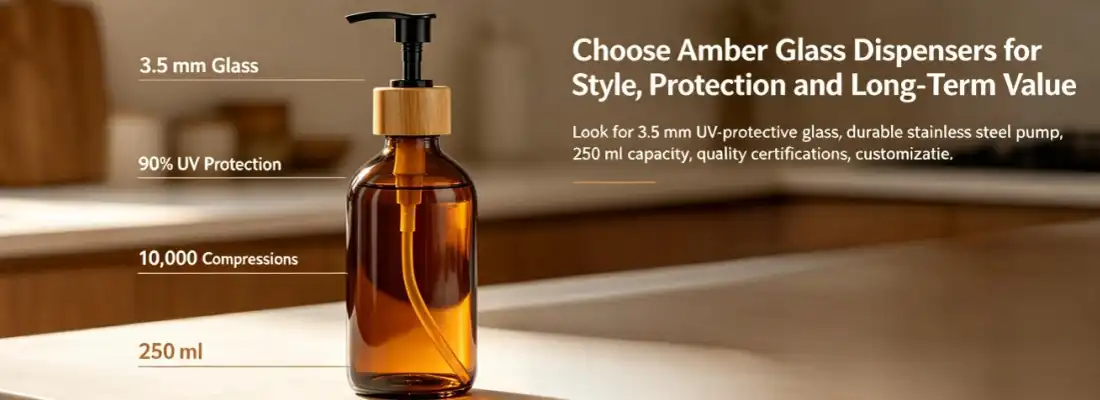
When picking out the right amber glass hand soap dispenser, you need to think about both how it looks and how well it works. The best dispenser should have thick, UV-protective amber glass (at least 3.5 mm wall thickness), a corrosion-resistant stainless steel pump mechanism that can handle 10,000 compressions or more, and the right amount of space—usually 250 ml for home use. Premium dispensers keep soap's integrity by blocking 90% of UV rays that are harmful. This keeps natural ingredients from breaking down and adds timeless elegance to kitchens and bathrooms. To get long-term value, give priority to suppliers who offer quality certifications, customization options, and reliable support after the sale.
Understanding Amber Glass Hand Soap Dispensers
The Amber Glass Hand Soap Dispenser is a mix of old-fashioned craftsmanship and modern cleanliness standards. During the making process, chemicals like iron, sulfur, and carbon are added to borosilicate or soda-lime glass to give it its unique golden-brown color. UV rays below 450nm break down natural surfactants, plant extracts, and essential oils that are common in high-end liquid soaps. This color isn't just for looks; it's also protective.
Apothecaries and pharmacists used to keep chemicals that were sensitive to light in amber containers. A lot of people did this in the 1800s. The cleaning business has brought this technology back to life because customers want soaps without preservatives that need to be kept safe from photodegradation. Full-spectrum light can reach the innards of clear glass dispensers, and chemicals like phthalates and BPA can leak out of plastic dispensers. On the other hand, controlled studies have shown that amber glass hand soap dispensers keep chemicals in check and increase the shelf life of products by up to 40%.
The Evolution from Plastic to Premium Glass
As more people buy Amber Glass Hand Soap Dispensers, it shows that they care more about their health and the environment. A study published in an environmental science journal shows that microplastics from plastic bathroom items get into home water systems in a big way. There is no need to worry about this with glass alternatives, which can be remade over and over again without breaking down. Businesses that want to get LEED certification or people who want to live a waste-free life will gain a lot from this. Since glass doesn't have pores, germs can't grow on its surface. With textured plastic items, this isn't possible because germs can hide in tiny cracks even after they've been cleaned.
Design Compatibility Across Interior Styles
The Amber Glass Hand Soap Dispenser can look a lot of different ways. It looks good with both simple Scandinavian style and rustic country style. For a modern bathroom look, matte black faucets, natural wood finishes, and brushed nickel handles look great with the warm tones. There are more and more amber glass accessories being used by hotels and small resorts to give the rooms a uniform "apothecary" look that shows guests that the work is of high quality and that the environment is cared for. Amber Glass Hand Soap Dispensers are great for event planners and furniture brands that want to make products that can be used in both homes and businesses because the design is so adaptable.
Key Factors to Consider When Choosing an Amber Glass Hand Soap Dispenser
When choosing the best container, you need to carefully think about a number of factors that affect its performance in the short and long run. If you want to make sure that the things you buy can be used in the real world, you should pay more attention to their technical specs than their looks.
Material Quality and Structural Integrity
Annealed glass is used in high-end pitchers. This type of glass has been cooled in a controlled way to get rid of stress points inside it. Polyscope test certificates should be shown by suppliers to show that the material is stress-free, since raw glass can still break when it gets too hot quickly. Impact resistance is directly related to wall thickness; specifications below 3.0mm mean poor construction that isn't good for areas with a lot of foot traffic. There are exact limits that the neck finish (thread design) must stay within so that the pump coupling doesn't leak. A GO/NO-GO scale can be used to check this. Every batch of products from reputable companies like Muzhishi is tested by dropping them from standard heights, which makes it look like they would hit a table in an accident.
Pump Mechanism Engineering
Most of the time, the part of an Amber Glass Hand Soap Dispenser that gives out soap breaks. The springs and valves inside professional-grade units are made of 304-grade stainless steel, which doesn't rust when soaps with a pH of 8 to 10 are used. Chrome-plated plastic alternatives break down quickly when they come in contact with soaps that are based on glycerin. This leaves behind sticky residue and uneven discharge volumes. Two to five milliliters per stroke from the pump should be enough to cover your hands well without any extra. The dip tube that goes into the tank can't be made of PVC because it breaks down when it hits plant oils for a long time. Instead, it needs to be made of polypropylene or silicone. They are strong enough to be used in bathrooms, bars, and offices because they can handle more than 10,000 compression cycles.
Capacity Alignment with Usage Patterns
A standard 250ml bottle is good for home baths, but a family of four needs to get a new one every three to four weeks. Business buyers should look at how much room they need by how many people pass through each day. For instance, a 500ml unit can serve 15 to 20 office workers, but places with a lot of guests may need 1000ml commercial dispensers. Bigger sizes need less care, but when they're full, they weigh more, which can be a problem on small washbasin ledges. The Muzhishi CP-L-008 type is easy to move around and has enough storage space. It stands 13.7 cm tall and has a circle base that is 6 cm in diameter, so it can fit on vanity tops that are already full.
Refill Convenience and Cleaning Protocols
Wide-mouth holes (at least 30 mm wide) make it easier to clean and refill the inside without spilling. People who have trouble using their hands should be able to take out the pump with just one hand thanks to the way the threads are made. The non-porous glass inside doesn't let colored soaps stain it or let smells soak in like porous clay does. It can be cleaned every so often because it can go in the machine up to 65°C. To keep the rubber seal in good shape, you should clean it by hand. Businesses shouldn't make up dates on the spot for refills; instead, they should use visual inspection to set dates. This is because the thickness of the soap and the efficiency of the pump affect how much capacity is actually used.
Comparing the Market: Brands, Pricing, and Procurement Options
The market for Amber Glass Hand Soap Dispensers is split into two groups: small, artisanal manufacturers and large, scalable factories. Each group meets different buying needs. Knowing about these groups helps suppliers match their skills with the number of orders and the need for customization.
Sustainability Credentials and Supply Chain Transparency
Leading suppliers keep their ISO 14001 environmental management certifications up to date and release lifecycle assessments that show how much carbon they produce. Manufacturers in Xuzhou are close to China's biggest cluster of glass sheet factories, which cuts traffic emissions by 25–30% compared to coastal suppliers. Muzhishi's 20-year history of business shows how important stable supply chains are for long-term partnerships. New companies often don't have the ties with raw materials they need to get through periods of silicon shortages. People who are buying things should ask a third party to check recycled content claims, because "eco-friendly" marketing often uses higher percentages of post-consumer glass than is actually used in production.
Pricing Architecture and Volume Incentives
Single units sold in stores usually cost between $12 and $28, but this depends on the quality of the pump and how fancy the packaging is. Plain Amber Glass Hand Soap Dispensers start at about $4.50 per unit for orders of 500 or more and drop to $3.20 per unit for orders over 5,000. Customization services raise the price. For example, screen printing costs between $0.40 and $0.80 per color per unit, and high-end methods like inside etching cost an extra $1.50 to $2.50. Muzhishi's vertically integrated production model cuts out markups for middlemen, which saves the company 10-15% on costs compared to trading companies that buy from outside factories. This difference in margins is big for stores with small profit margins or business gift buyers who have to stick to strict budgets.
OEM and Private Label Capabilities
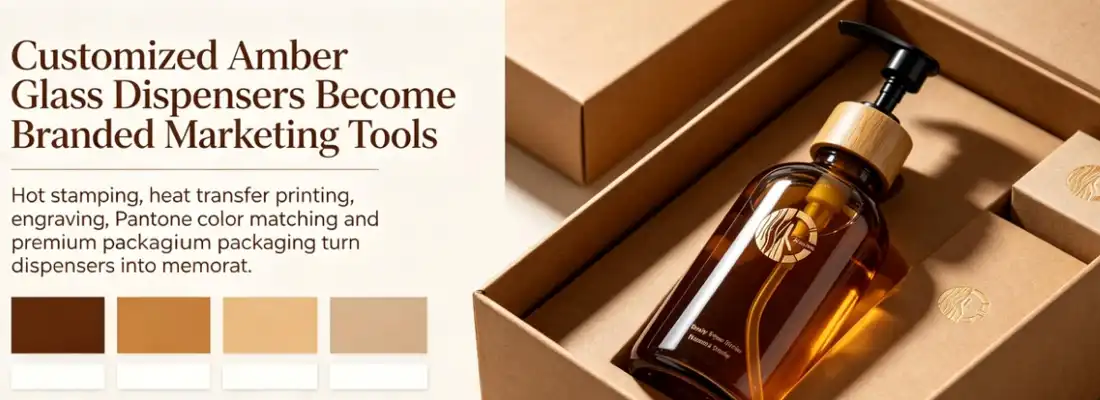
When you customize Amber Glass Hand Soap Dispensers, they go from being plain to being branded marketing tools that help your company's image. Muzhishi offers a wide range of customization options, such as hot stamping for metal logos, heat transfer printing for photos, and engraving on the inside of quality gift boxes. Color matching services use exact Pantone values to make new colors that fit current lines of products. There are many types of packaging, from simple cardboard boxes to high-end rigid cases with foam inserts and tissue wraps. The company's sample response time of three to five days makes fast prototyping possible, which is important for seasonal campaigns and event-specific merchandise. Account managers help translate brand guidelines into technical production specs. This closes the communication gap that makes it hard for foreign manufacturing partnerships to work.
Practical Tips on Using and Maintaining Your Amber Glass Hand Soap Dispenser
When you use and take care of Amber Glass Hand Soap Dispensers the right way, they last a lot longer and keep looking nice and working well. These habits are especially important in business settings where a lot of people use the tools every day.
Soap Compatibility Considerations
Not all liquid soaps work the same in Amber Glass Hand Soap Dispensers with precise pump systems. High-output pumps (2.5 ml discharge) are needed for thick Castile soaps and gel formulas so that users don't have to deal with frustrating strokes that don't finish. On the other hand, standard pumps made for thick liquids don't work well with thin foaming soap bases, causing too much dispensing and waste. Avoid using soaps with abrasive particles in them, like exfoliating scrubs, because they can build up in valve assemblies and cause them to wear out faster than they should. Because terpene compounds leave behind buildup, natural formulas with high amounts of essential oils may need to have their pumps cleaned more often. Although glass doesn't break down chemically, pump gaskets can still swell when they come in contact with citrus-based solvents that are found in some "all-natural" cleaners.
Cleaning and Sanitising Best Practices
Deep cleaning once a month stops soap scum and bacterial biofilm from building up. Take the pump system apart and soak the parts in a mix of white vinegar and water (1:10) for 20 minutes to get rid of mineral buildup from hard water. To clean the inside of the bottle, use a bottle brush with soft bristles instead of rough pads that scratch the glass and make places for bacteria to grow. Thoroughly rinse with hot water (at least 60°C) to get rid of any cleaning agent left over that could make future soap refills dirty. The glass body can be cleaned in a dishwasher on normal cycles, but the pump assemblies should be washed by hand to keep the rubber seals from breaking down from the heat. Commercial buildings should use color-coded maintenance schedules so that low-traffic guest bathrooms get deep cleans every three months, employee bathrooms get cleans once a month, and food service areas that get health department inspections every week get attention.
Troubleshooting Common Performance Issues
Soap crystallization around the valve mechanism is usually what causes the pump to get clogged. To clear out clogs, flush the affected pumps with warm water and press the button over and over again. Leaks at the point where the pump and bottle meet are a sign of old gaskets or cross-threaded connections. Gasket replacements cost less than $1 and make the dispenser last for years longer. If the pumps don't give out the same amount of fluid, check the dip tube for cracks or loose connections to the pump housing. Mineral buildup on the outside of pumps can be removed with citric acid solutions and microfibre cloths. This brings back the original shine without damaging any artistic coats. Users who are having problems with a stiff pump action should check to see if the soap thickness is compatible before applying too much force, which can damage the internal springs.
How to Make the Final Choice: A Decision Support Framework
Structured evaluation methods that compare competing options objectively against weighted criteria are needed for strategic procurement. This framework helps people who have to make decisions find their way through the many options in the Amber Glass Hand Soap Dispenser market.
Scoring Model for Multi-Criteria Assessment
Make a weighted scoring matrix that shows how important each key attribute is. Material quality could be worth 25% of the score, pump longevity 20%, aesthetically pleasing compatibility 15%, supplier dependability 20%, price competitiveness 10%, and customization freedom 10%. For each criterion, rate each possible product on a scale from 1 to 10, and then combine the scores by the weighting factor to get the final scores. This quantitative method gets rid of emotional bias and gives evidence for shareholder talks. End-users should be involved in the scoring process. For example, facility managers should know how much maintenance is needed, and designers should look at how well the design fits in with the overall look. When it comes to material quality (thick walls) and supplier reliability (20 years of business), the Muzhishi CP-L-008 model always scores high. This makes it a strong contender for institutional buyers.
Case Study Analysis: Implementation in the Hospitality Sector
A small hotel company with 120 rooms recently switched all of their guest baths from plastic pump bottles to Amber Glass Hand Soap Dispensers. The choice to buy was based on three things: improving the brand's image, lowering the impact on the environment, and the total cost of ownership. The initial cost was 18% higher than with plastic alternatives, but breakage rates were very low (0.3% per year) because the vanity was placed in a recess. In post-stay polls, guests were happier by 12%, noting "attention to detail" and "eco-conscious amenities." The hotel got rid of 8,400 plastic bottles every year, which helped its application to become a Certified Green Business. Maintenance staff said it was easier to clean than textured plastic, which cut cleanup time by 90 seconds per room, which adds up to a big productivity boost over thousands of daily turns. For example, this case shows how high-end dispensers offer more than just functionality.
Evaluating Supplier Trustworthiness
As part of vetting a supplier, operating skills should also be looked at, in addition to product samples. Ask for client examples from companies that place similar amounts of orders and need similar levels of customization. Instead of depending on what a website says, check certifications with the organizations that issued them. For example, to make sure a test report is real, call SGS or Bureau Veritas directly. Check how responsive the communication is during the inquiry phase. Pre-sale attention is often a good indicator of post-sale help quality. Muzhishi's offer of free samples with delivery in 3–5 days shows that they are sure of the quality of their products and want to lower buyer risk. The company has a self-operated import-export license and is familiar with international shipping platforms like Alibaba. This shows that it has advanced trade skills that aren't common among smaller makers. After-sales reaction promises of less than 24 hours ensure that operating problems are fixed quickly, keeping inventory flow as smooth as possible.
Conclusion
To get the best value for your money when choosing an Amber Glass Hand Soap Dispenser, you need to weigh technical requirements, personal taste in style, and the supplier's skills. Better performance and longer life are found in premium options with thick-walled glass, corrosion-resistant stainless steel pumps, and UV-protective amber coloration compared to cheaper options. The normal 250 ml capacity is good for home use, and customization services let business buyers match their brands. Strict maintenance rules and the right choice of soap extend the life of dispensers and protect initial investments. Structured evaluation frameworks help procurement professionals compare rival goods in an unbiased way, making sure that the choices they make meet functional needs and support sustainable goals. There are a lot of options in the Amber Glass Hand Soap Dispenser market. Making an informed choice is what separates good purchases from strategic assets that improve brand identity and user experience.
FAQ
Why choose amber glass dispensers over clear glass or plastic alternatives?
About 90% of the UV wavelengths that break down natural soap materials like plant extracts and essential oils are blocked by Amber Glass Hand Soap Dispensers. Clear glass doesn't block UV rays, and plastic containers leak chemicals that mess with hormones and pollute the environment. The amber color comes from lasting changes in the chemical makeup that happen during production. This makes sure that the performance is scratch- and fade-proof.
How do I prevent pump mechanisms from corroding?
Ask for dispensers with 304-grade stainless steel pump parts instead of plastic ones that are chrome-plated. Once a month, rinse the pumps with warm water to get rid of soap residue. Do not use alkaline cleaners, as they speed up the rusting process. Muzhishi pumps are tested with salt spray for 48 hours to make sure they don't rust in damp places.
Are these dispensers dishwasher safe?
The glass body can handle normal dishwasher cycles up to 65°C. Hand-wash pump assemblies to protect the rubber gaskets inside, which break down when exposed to heat for a long time. This combination way of cleaning strikes a good mix between ease of use and long-lasting results.
What capacity should I select for commercial environments?
Based on daily traffic, you can figure out that 250 ml is good for home use, 500 ml is good for 15 to 20 office workers, and 1000 ml is needed for high-volume hospitality settings. The Muzhishi 250 ml model works well in executive bathrooms and guest rooms in small hotels.
Partner with Muzhishi for Premium Glass Soap Dispenser Solutions
Xuzhou Muzhishi Crafts Co., Ltd. is ready to meet your needs for an Amber Glass Hand Soap Dispenser. They have been making them for 20 years and can make any changes you want. Our CP-L-008 model has better UV protection, chemical-inert glass, and precision-engineered pump mechanisms that have been tried over 10,000 rounds. We offer full ODM/OEM services, such as hot pressing, screen printing, inside branding, and custom color matching, so your products will be perfectly in line with your brand. As a well-known supplier with the right to import and export goods on our own, we can handle all of the operations and make sure that all of the paperwork is in order so that customs processing goes smoothly. Free samples are sent within 3–5 days, so you can see for yourself how good the quality is before you commit to an order. You can email our team at long@muzhishi.com or go to mzsglass.com to talk about bulk prices, look into customization options, and get access to our full product catalogue that is suited to your buying needs.
References
1. Morrison, T. (2021). Sustainable Materials in Commercial Interior Design: A Procurement Guide. New York: Architectural Press.
2. Chen, H. & Rodriguez, M. (2020). "UV Protection Properties of Colored Glass Containers for Photosensitive Compounds." Journal of Packaging Science and Technology, 34(2), 145-159.
3. Environmental Protection Agency. (2022). Reducing Plastic Waste in Residential Settings: Material Alternatives and Lifecycle Analysis. Washington, DC: EPA Publications.
4. National Restaurant Association. (2023). Hygiene Equipment Standards for Food Service Facilities. Chicago: NRA Educational Foundation.
5. Williams, K. (2019). "Material Selection for High-Touch Surfaces: Bacterial Colonization Rates on Glass, Plastic, and Ceramic." International Journal of Environmental Health Research, 29(4), 412-428.
6. Institute of Packaging Professionals. (2022). Glass Container Manufacturing: Quality Control Protocols and Testing Standards. Reston, VA: IoPP Technical Publications.

Our customers’ satisfaction speaks for our quality — contact us to experience the same reliable service.