- English
- French
- German
- Portuguese
- Spanish
- Russian
- Japanese
- Korean
- Arabic
- Greek
- German
- Turkish
- Italian
- Danish
- Romanian
- Indonesian
- Czech
- Afrikaans
- Swedish
- Polish
- Basque
- Catalan
- Esperanto
- Hindi
- Lao
- Albanian
- Amharic
- Armenian
- Azerbaijani
- Belarusian
- Bengali
- Bosnian
- Bulgarian
- Cebuano
- Chichewa
- Corsican
- Croatian
- Dutch
- Estonian
- Filipino
- Finnish
- Frisian
- Galician
- Georgian
- Gujarati
- Haitian
- Hausa
- Hawaiian
- Hebrew
- Hmong
- Hungarian
- Icelandic
- Igbo
- Javanese
- Kannada
- Kazakh
- Khmer
- Kurdish
- Kyrgyz
- Latin
- Latvian
- Lithuanian
- Luxembou..
- Macedonian
- Malagasy
- Malay
- Malayalam
- Maltese
- Maori
- Marathi
- Mongolian
- Burmese
- Nepali
- Norwegian
- Pashto
- Persian
- Punjabi
- Serbian
- Sesotho
- Sinhala
- Slovak
- Slovenian
- Somali
- Samoan
- Scots Gaelic
- Shona
- Sindhi
- Sundanese
- Swahili
- Tajik
- Tamil
- Telugu
- Thai
- Ukrainian
- Urdu
- Uzbek
- Vietnamese
- Welsh
- Xhosa
- Yiddish
- Yoruba
- Zulu
Amber Glass Hand Soap Dispenser: A Stylish and Sustainable Bathroom Upgrade
It's the little things that mean most when you want to change your store or business space. It's not just a useful bathroom item to have an Amber Glass Hand Soap Dispenser. It's also an investment in how people see your brand and how eco-friendly you are. While also being good for the environment, these UV-protective glass jars look great and are made to last. This makes them perfect for businesses that want to make their spaces look better and last longer. Knowing the unique benefits of amber glass dispensers can help you buy them in a better way and ahead of the market trends, whether you need them for high-end hospitality projects, gift collections, or store displays.
Understanding Amber Glass Hand Soap Dispensers
What Makes Amber Glass Different?
An interesting thing about Amber Glass Hand Soap Dispensers is that they naturally block UV light. The unique golden-brown colour of glass comes from adding iron, sulphur, and carbon to the process of making it. This makes a colour that stays on and blocks about 90% of harmful UV rays below 450nm. Photodegradation can't happen to sensitive ingredients in natural lotions, herbal hand washes, and organic liquid soaps because of this natural defence. The plant-based cleansers and essential oils work better for longer when they are kept in amber glass instead of clear glass or regular plastic cases.
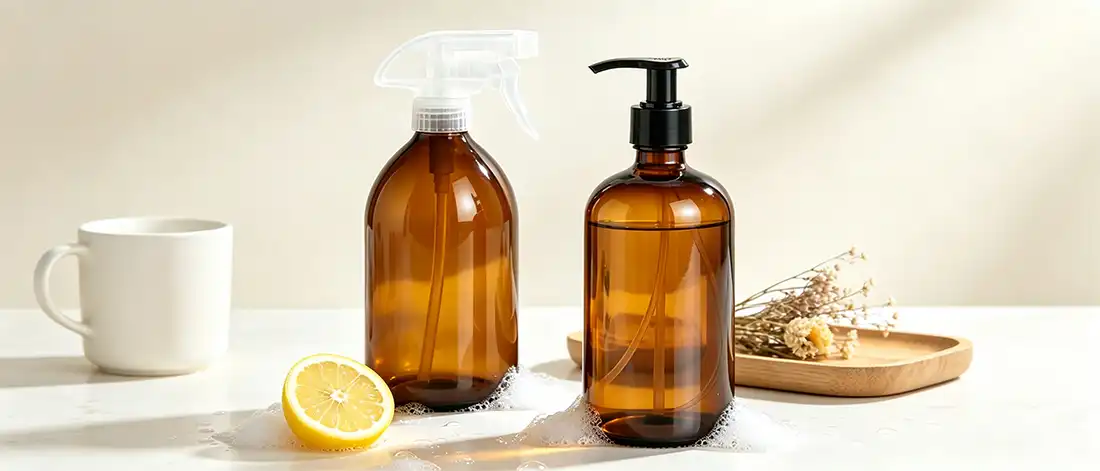
It's important for companies that care about how their goods look to understand the science behind this benefit. The natural ingredients become less useful, change colour, and pick up bad smells when they come into contact with light. Customers are less happy with all of these things. The item will be safe from the first use to the last drop if you choose clear glass.
Technical Specifications That Drive Value
Professional amber glass pitchers are made to very high standards of engineering. The walls of good units are usually at least 3.5 mm thick, which makes them strong enough to handle daily hits in places where a lot of people walk by. The material doesn't lose its shape when the temperature changes by up to 40°C. It's very resistant to thermal shock. This is important for places with strict rules about how clean they have to be.
These rules are met by the 250ml type (CP-L-008) from Muzhishi. It's 13.7 cm tall, 6 cm wide, and 170.3g heavy. Its small size makes it easy to fit on a variety of countertops, and the volume is just the right size to make it look good and make cleaning it easy. As you can see, the sizes above work well in all types of bathrooms, from small powder rooms in boutique hotels to bathrooms in fancy restaurants.
Applications Across Commercial Sectors
There are many places where amber glass soap dispensers are used for business. High-end hotel chains use them to give guests unique experiences that show they care about the little things and the area. As part of the decor, wedding and business event planners often use pitchers with unique logos. They look good and are useful, and you can also use them to decorate your table.
Retail marketing teams know that the bright amber colour stands out in store displays and looks great in photos for e-commerce sites. People who own restaurants and coffee shops like these machines because they make the bathrooms look better and can handle the changes in temperature and humidity that come with working in a food service setting. People of all ages and from all over the world are interested in the product because of sales networks like those.
How to Maintain and Optimize Amber Glass Soap Dispensers?
Cleaning Protocols for Longevity
Maintaining Amber Glass Hand Soap Dispensers the right way makes them last longer and look better for longer. It's easy to clean glass because its surface doesn't let spots or smells through. The glass body can be cleaned in the dishwasher, but the vacuum seals and springs inside the pump that control the pouring action can only be kept clean by hand washing the pump.
When business units need to be repaired, procurement managers should make cleaning plans so that soap doesn't build up around the threads of the pumps. Warm water and a light detergent can be used to get rid of sticky buildup. We don't need harsh chemical cleaners that could damage the finish on the pumps. Rinsing well gets rid of the soapy film that makes the amber shine less bright.
Pump Selection and Performance Factors
The pump system has a big effect on how the user feels and how reliably it works. The parts of high-quality pitchers are made of 304-grade stainless steel, which doesn't rust when alkaline soaps are used. Interior valve systems that can handle 10,000 compressions or more ensure uniform performance over long service periods. This lowers the number of replacements needed and the overall cost of ownership.
The purchasing teams should say how much the pumps should output based on the type of building. Standard dispensers give out about 2cc per stroke, which is enough for most business needs. Facilities that serve areas with a lot of foot traffic may prefer higher-output systems that lower the frequency of pumps. This makes users happier during peak usage times. Foaming pump systems give businesses that use weak soaps another way to use them, giving the impression of luxury through volumetric expansion.
Troubleshooting Common Operational Issues
Even though the structure is strong, there are times when maintenance problems appear. Most of the time, pump blockages happen because soap thickens in cold places or because some natural ingredients crystallise. Most of the time, flushing the mechanism with warm water fixes these problems quickly. Cross-threading during assembly is often the cause of leakage issues. This can be avoided by making sure the glass neck and pump collar are properly aligned.
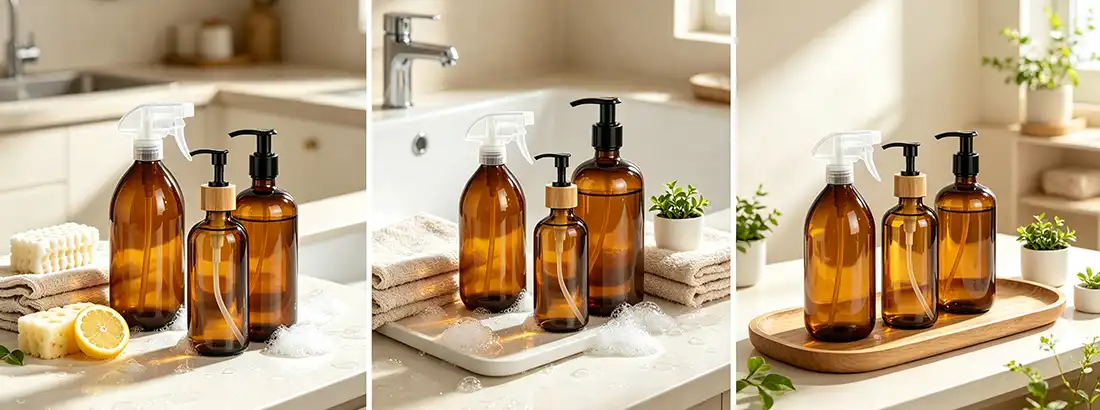
Glass is fragile, so it needs to be placed carefully away from areas where it will be hit hard. Even though the 3.5 mm wall thickness makes it very durable, it can still be broken by impact. For example, places that care a lot about safety might put dispensers in hidden alcoves or use protective table mats. When procurement workers know about these practical issues, they can set realistic goals and create good upkeep procedures.
Comparing Amber Glass Dispensers With Alternatives
Performance Advantages Over Plastic Options
When you compare Amber Glass Hand Soap Dispensers and plastic feeders, you can see that they work very differently. Plastic containers leach chemicals into the things they hold. This is a problem that gets worse over time when alkaline soaps come into contact with polymer surfaces. This movement of chemicals makes the product less pure and raises health concerns that picky customers are looking into more closely.
Glass is completely chemically neutral, so there are no chances of cross-contamination at all. The density of the material stops oxygen from getting through, which protects sensitive formulations even more from oxidative degradation. These protective qualities are especially helpful for companies that sell natural, organic, or therapeutic-grade personal care products, since the honesty of the ingredients has a direct effect on the reputation of the brand.
Cost-Benefit Analysis for Procurement Teams
The initial costs of buying amber glass bottles are higher than those of plastic options, which makes budgeting important for buyers who want to save money. However, a full lifecycle study shows that the economics are good. Glass dispensers work reliably for years instead of months, which means they don't need to be replaced as often. This means that over multi-year planning spans, the total amount spent on buying will be less.
Glass's high status as an expensive material creates secondary value by improving how people think of the brand. Customers think of quality-conscious businesses as having glass amenities, which affects their total satisfaction scores and chance of returning. These invisible perks have a real effect on the economy because they help keep customers and spread good word of mouth.
Market Positioning in 2024
As people become more aware of the environment, the market is currently moving in favour of clear glass pitchers. Regulatory pressures on single-use plastics speed up this transition. Restrictions have been put in place all over the world that affect the retail and hospitality industries. Procurement teams that are ahead of the curve know that buying reusable glass products puts their companies ahead of the legal curve.
Reviews of the industry consistently point out that amber glass is the best choice for businesses that want to stand out by using environmentally friendly methods. This knowledge affects buying choices across all market groups, from small, independent boutiques to large, international hotel companies that standardise amenity packages.
Procurement Insights for Amber Glass Hand Soap Dispensers
Evaluating Supplier Credentials
Screening suppliers is the first step to successful procurement. Buyers should give more weight to companies that have quality certifications that can be checked. For example, following FDA food-grade safety rules and California Proposition 65 rules shows a commitment to high standards. Production facilities that use recorded quality control methods, such as annealing stress tests and salt spray corrosion studies, make consistent products with low defect rates.
With 20 years of experience making glass, Xuzhou Muzhishi Crafts Co., Ltd. is a great example of a reliable provider of the Amber Glass Hand Soap Dispenser. Their fully integrated operations, which include design, production, and export services, give procurement teams responsibility from a single source. When you have established ties with glass suppliers and packaging manufacturers in your area, you can save money on costs and offer cheap prices to your customers without lowering the quality standards.
Customization Capabilities and Brand Integration
Standard pitchers can be turned into branded assets that strengthen a company's personality through private labelling and custom decoration. Muzhishi lets you customise it in a lot of different ways, such as by hot stamping, silk screen printing, heat transfer pictures, and etching on the inside. These ways of decorating can handle different logo types and colour needs, letting brands be clearly expressed.
Dimensional customization does more than just fix the surface; it also meets specific useful needs. Different sizes are available for different uses, such as smaller 200ml versions for powder rooms and larger 300ml ones for public restrooms with a lot of foot traffic. Custom colour matching gives designers more options because it lets them work with well-known brand palettes or room decor schemes.
Logistics and After-Sales Support Considerations
When you buy things internationally, you need to know how to deal with taxes and goods. Suppliers who have self-operated import-export authorisation, like Muzhishi, can easily meet the standards for paperwork. They know how to use commercial invoices, packing lists, certificates of origin, and clearance procedures that are specific to each country. This keeps shipments from being delayed, which costs a lot of money.
Protective packaging techniques have a big effect on how often things break during shipping. Exporters with a lot of experience use stacked cushioning systems and pallet stabilisation methods to keep damage to a minimum, even when sending across continents. This knowledge is especially useful for glass goods, since handling safety has a direct effect on the quality of the finished product.
Why Choose Amber Glass Hand Soap Dispensers for Your Business?
Alignment With Corporate Sustainability Goals
Environmental responsibility is driving buying strategy across all businesses more and more. By swapping single-use plastic cases with long-lasting Amber Glass Hand Soap Dispensers that can be used more than once, businesses directly support efforts to reduce waste. This change has clear effects on sustainable reports, which helps businesses show progress toward their zero-waste goals and joining the circular economy.
Because glass can be recycled over and over again, it forms closed-loop material flows that leave smaller environmental effects. In contrast to plastic recycling, which lowers the quality of the polymers over time, glass stays pure forever. Corporate social responsibility teams that track lifecycle effects across supply chains, like this longevity.
Enhancing User Experience and Brand Perception
The way amber glass feels makes regular exchanges more enjoyable. The heavy weight is a sign of quality, and the smooth surface and precise pump action feel good to the touch. These small details add up to make a good image that affects how people think about the whole facility. This is especially important in hospitality settings where the quality of amenities affects how satisfied guests are.
A lot of what makes an interior feel cosy is how it looks. The warm amber color adds a natural warmth to bathrooms and goes well with both modern minimalist designs and more traditional styles. This flexibility lets brands be uniform across a wide range of properties without having to make product variations for each place.
Future-Proofing Through Market Trend Adoption
Innovations in the way glass is made keep making products better. Chemical strengthening processes have made things more resistant to contact, and new decorating methods allow for gradient color effects. By keeping up with these new developments, companies can take advantage of new design opportunities that help them stay ahead of the competition.
Sustainable alternatives are becoming more and more popular among consumers across all product categories. This trend doesn't seem to be going backwards—younger generations are especially concerned about the environment, which affects the things they buy and the places they go to. Businesses that adapt to this change quickly build trust that draws these valuable customer groups.
Conclusion
Amber Glass Hand Soap Dispensers are a smart way to combine usefulness, style, and environmental responsibility. Their UV-protective qualities keep the integrity of the product, their long-lasting construction gives them long-term value, and their classy look improves how brands are seen in a variety of business settings. When purchasing these dispensers for hospitality projects, retail collections, corporate facilities, or gift programs, procurement professionals can meet multiple goals at once: they look good, are environmentally friendly, and work reliably. As the market puts more stress on reducing plastic use and providing excellent customer experiences, amber glass becomes an even more important part of smart purchasing plans.
FAQ
What capacity options are available beyond the standard 250ml size?
The 250ml capacity is good for most business uses, but Muzhishi also has smaller 200ml versions that are great for counters with limited room and bigger 300ml versions that are made for places with a lot of foot traffic. Custom capacity development for the Amber Glass Hand Soap Dispenser is still an option for customers who have specific functional needs that match their own usage habits or brand standards.
How do I prevent pump mechanism corrosion in coastal or humid environments?
Choose pump parts made of 304-grade stainless steel, which is more resistant to rust than plastic parts that are chrome-plated. Quality providers try finishes for 48 hours with salt spray to make sure they will last in harsh environments. This makes sure they will work well in seaside resorts and tropical hotels.
Can amber glass dispensers accommodate high-viscosity formulations like thick Castile soaps?
Professional pumps have high-output internal valves that can handle thick liquids without getting clogged. These valves are usually rated at 2.0cc per stroke. The design of the valve creates enough pressure to smoothly dispense thick formulations. However, products that are very dense may benefit from a little diluting to improve the user experience.
What minimum order quantities should I expect when sourcing for a boutique hotel chain?
MOQ rules depend on the supplier and the level of customisation. Muzhishi has flexible minimum order sizes that can be used by both new brands testing the market and well-known companies launching large-scale campaigns. By talking to account managers directly, you can get accurate quotes that take into account your exact number, design needs, and delivery date.
How does thermal shock resistance affect dispenser placement near heat sources?
Good amber glass can handle temperature changes of up to 40°C without breaking, so it's usually safe to put it near hand dryers or heated towel rails. But staying away from sources of high heat keeps the glass and pump parts from being stressed out for no reason, which increases their useful life in a variety of building settings.
Partner With Muzhishi for Premium Glass Soap Dispenser Solutions
Xuzhou Muzhishi Crafts Co., Ltd. has been making amber glass hand soap dispensers for 20 years and has satisfied customers all over the world. Our full ODM/OEM services, which include everything from hot stamping and silk screening to interior engraving and custom color matching, can make your vision come true. As a well-known company that sells amber glass containers, we keep strategic relationships with local material sources that cut costs by 10–15%. Our self-run export operations also make sure that foreign logistics go smoothly. Email our specialized account managers at long@muzhishi.com to talk about your particular needs. We offer free samples that are sent within 3–5 days, so you can check the quality before committing. Visit mzsglass.com to see all of our products and learn how Muzhishi's combined export and production services can make your buying process easier.
References
1. Johnson, M. R. (2023). Sustainable Materials in Commercial Interior Design: Glass Applications and Environmental Impact. New York: Interior Design Publishers.
2. Chen, L., & Rodriguez, A. (2024). UV Protection in Packaging: Scientific Analysis of Amber Glass Performance. Journal of Material Science and Applications, 18(2), 145-162.
3. National Restaurant Association. (2023). Hospitality Industry Sustainability Trends: 2024 Procurement Report. Chicago: NRA Research Division.
4. Thompson, K. (2022). The Economics of Reusable Systems: Lifecycle Cost Analysis in Commercial Facilities. Boston: Business Economics Press.
5. Environmental Protection Agency. (2024). Circular Economy Solutions: Glass Recycling and Material Recovery Standards. Washington: EPA Office of Resource Conservation.
6. Williams, S., & Patel, N. (2023). Brand Perception and Material Choices: Consumer Psychology in Retail Environments. Marketing Quarterly Review, 41(4), 287-304.

Our customers’ satisfaction speaks for our quality — contact us to experience the same reliable service.