- English
- French
- German
- Portuguese
- Spanish
- Russian
- Japanese
- Korean
- Arabic
- Greek
- German
- Turkish
- Italian
- Danish
- Romanian
- Indonesian
- Czech
- Afrikaans
- Swedish
- Polish
- Basque
- Catalan
- Esperanto
- Hindi
- Lao
- Albanian
- Amharic
- Armenian
- Azerbaijani
- Belarusian
- Bengali
- Bosnian
- Bulgarian
- Cebuano
- Chichewa
- Corsican
- Croatian
- Dutch
- Estonian
- Filipino
- Finnish
- Frisian
- Galician
- Georgian
- Gujarati
- Haitian
- Hausa
- Hawaiian
- Hebrew
- Hmong
- Hungarian
- Icelandic
- Igbo
- Javanese
- Kannada
- Kazakh
- Khmer
- Kurdish
- Kyrgyz
- Latin
- Latvian
- Lithuanian
- Luxembou..
- Macedonian
- Malagasy
- Malay
- Malayalam
- Maltese
- Maori
- Marathi
- Mongolian
- Burmese
- Nepali
- Norwegian
- Pashto
- Persian
- Punjabi
- Serbian
- Sesotho
- Sinhala
- Slovak
- Slovenian
- Somali
- Samoan
- Scots Gaelic
- Shona
- Sindhi
- Sundanese
- Swahili
- Tajik
- Tamil
- Telugu
- Thai
- Ukrainian
- Urdu
- Uzbek
- Vietnamese
- Welsh
- Xhosa
- Yiddish
- Yoruba
- Zulu
Everything about Glass Roller Bottles: Usage, Benefits, Cleaning, and Customization
Essential Oil Glass Roller Bottles are the best way to package aromatherapy goods or makeup lines because they are chemically stable and easy to use. These carefully designed containers are made of high-quality glass and have rolling devices that let you decide how much essential oils, serums, and perfumes you use. Glass doesn't respond with strong plant chemicals like plastic does. It keeps the integrity of the product and has a high-end look that improves brand image in retail, hospitality, and workplace gifts.
What Are Glass Roller Bottles and How to Use Them?
Rolling bottles made of glass are special objects made for using in massage and cosmetics. Borosilicate or soda-lime glass bodies are usually used in the building, along with a roller ball system that spreads the product evenly and smoothly on skin surfaces.
Understanding the Core Design Elements
The rolling system's most critical parts are the glass vessel, fitting housing, and ball. High-density polythene or polypropylene fittings fit tightly into bottle necks. This seal prevents leaks while allowing ball movement. You can get glass, stainless steel (304 or 316), or plastic balls. Each offers advantages depending on your goods.
Glass balls work well with citrus-heavy essential oil mixes because they prevent metal ions from combining. Stainless steel glides better for thicker carrier oils like fractionated coconut or castor oil. Plastic balls work well for smaller formulae and save money on budget-conscious product lines.
Proper Usage Techniques for Optimal Performance
You must know how to fill and utilise these bottles. Leave 3–5 mm headroom while filling to allow heat growth and prevent pressure buildup. This is crucial for shipping goods between weather zones.
The way an app is utilised greatly impacts user experience. Ask folks to gently roll the bottle over wrists, temples, behind the ears, and inside elbows. Body heat naturally delivers aroma molecules to these places. Slow and cautious rolling allows the ball to gather up enough product without giving it away.
Selecting Appropriate Capacity for Different Markets
Choosing the proper capacity relies on usage. The 5 ml size passes TSA liquid requirements and allows consumers enough product to test in travel kits and sample programs. The 10ml retail aromatherapy size is the most popular because it's affordable and lasts long, making customers buy it again.
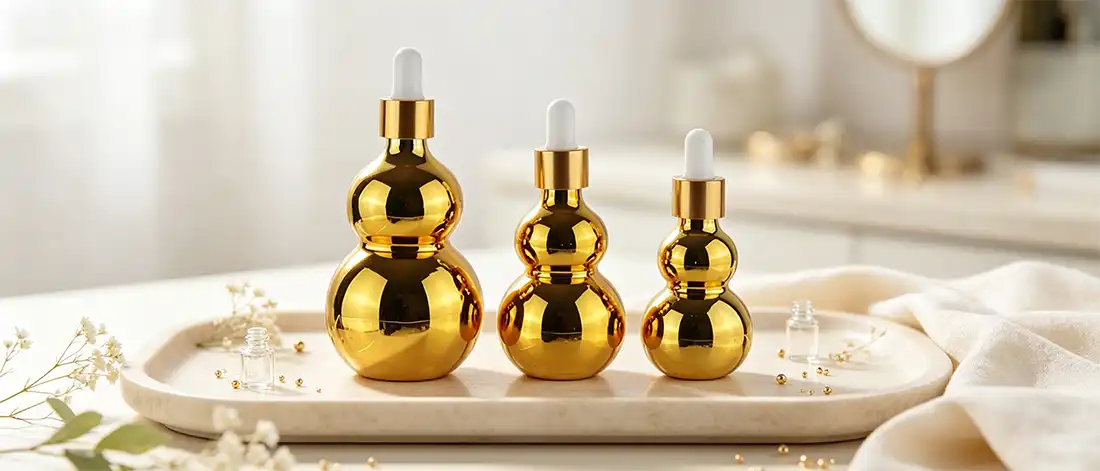
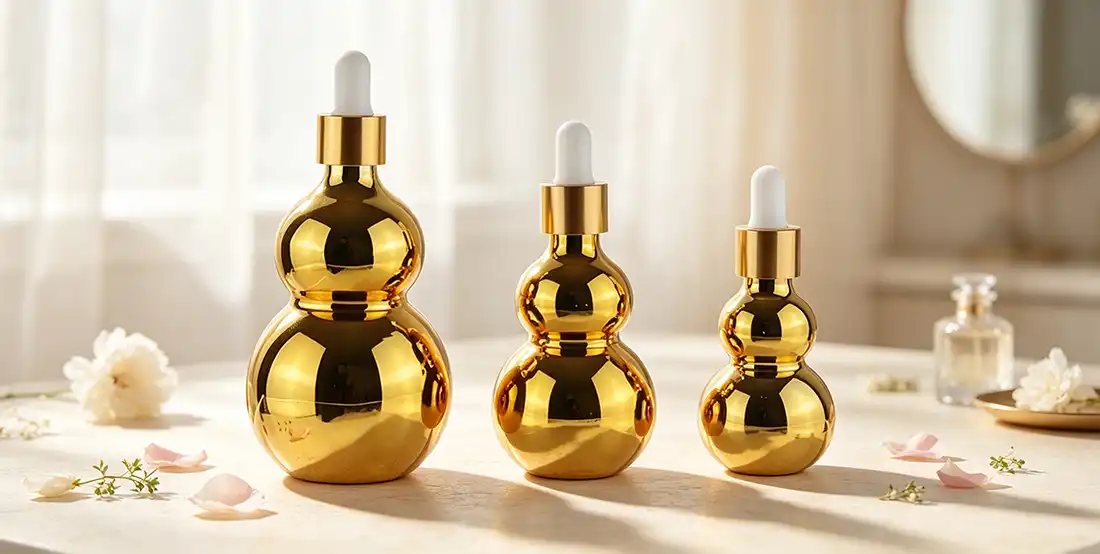
Our 50 ml Gourd-Shaped Clear Essential Oil Glass Roller Bottles are a fresh way to package larger things. Calabash is more practical than rectangular shapes and beneficial for your physique. The curved waist provides a natural grip that prevents slipping, even with oily hands from rubbing. Standard cylindrical bottles roll off store shelves and massage tables, but the larger base prevents this.
Key Benefits and Advantages of Glass Roller Bottles
Glass packaging has many benefits besides just keeping things inside. When procurement professionals know about these benefits, they can better defend investment choices and strategically place goods in markets that are already competitive.
Superior Chemical Compatibility and Product Preservation
When compared to plastic options, Essential Oil Glass Roller Bottles glass is very chemically neutral. Terpenes and other volatile organic compounds found in essential oils can leach plasticizers out of poor packing, which can affect the quality of the product and its scent. Glass completely gets rid of this problem, keeping the formulation's stability over long periods of time.
Excellent barrier qualities against oxygen and moisture entry make this material stand out. When working with oxidation-sensitive ingredients like vitamin E, rosehip oil, or sea buckthorn extracts, which are popular in anti-aging serums and skin treatments, this safety is very important.
Glass that is amber in color blocks UV rays that break down photosensitive materials by blocking dangerous wavelengths. Clear glass bottles, like the ones we have in the shape of a gourd, are great for products that are eaten quickly or that have visual elements like gold flakes, plants floating in liquid, or layered colour gradients that make the product look more valuable.
Enhanced User Experience Through Thoughtful Engineering
There are many design elements in modern glass roller bottles that make them more useful. Precision threads and silicone gaskets are used in leak-proof cap systems to make vacuum-tight seals that can handle changes in air pressure. Negative pressure testing at -0.06MPa is done on our bottles to make sure the seals work properly at a hypothetical high altitude.
Child-resistant caps meet safety standards in markets that need protective packing for goods with concentrated essential oils. These devices usually need you to push and turn at the same time, which kids younger than five can't easily do. This lowers the risk of unplanned ingestion.
The rolling way of application has therapeutic effects that go beyond just delivering the product. The rub action increases blood flow to the application area, which improves absorption and creates a multisensory experience that makes customers loyal and pushes them to use the product in a regular way.
Sustainability and Environmental Responsibility
More and more people want eco-friendly options, and glass containers fit those needs. Plastics lose their structure integrity after a certain number of processing steps, but this material can be recycled over and over again without losing any of its quality. A lot of spa and health brands have built their entire marketing efforts around refillable glass roller systems. This way, they can show that they care about the environment while also making regular sales.
Real-World Impact on Brand Perception
The reusability part makes a thing last a lot longer. Customers like that they can clean and refill expensive glass bottles with their own mixes, which turns packing from trash to a treasured accessory. This emotional link makes business relationships stronger and spreads the word naturally.
Premium glass packing has a direct effect on the buying choices of many types of customers. Glass's heavy weight and clear appearance show quality and workmanship in a way that plastic just can't match. Hospitality brands that use glass roller bottles in spa services have significantly higher retail conversion rates than those that use plastic bottles. Guests often buy goods just because of the high-end presentation of the package.
Cleaning, Refilling, and Maintenance Best Practices
Keeping hygiene standards high throughout the lifetime of a product protects the brand's image and makes sure that regulations are followed. Following the right cleaning steps keeps things from getting contaminated and makes glass objects last longer.
Step-by-Step Cleaning Protocol
Start cleaning by getting rid of all the leftover product. To take off the roller assembly, slowly twist it anticlockwise. Forcing it into place can break the glass neck. If you need to clean the roller part for a new product line, throw it away because oils can get into cracks that regular cleaning can't reach.
To get rid of bulk residue, rinse bottles well with warm water. Use isopropyl alcohol (70% strength or less) or a special glass cleaner made for lab use to make a cleaning solution. Do not use dish soaps in your home that have moisturizers or scents that leave behind leftovers that do not work with essential oils.
Put the bottles in the cleaning solution and let them soak for 15 to 20 minutes. To clean the inside of the bottle, use bottle brushes with nylon bristles and pay extra attention to the shoulder area where product builds up. Rinse several times with pure water to get rid of any cleaning product residue.
Drying and Sterilization Procedures
Towels don't get linty when they dry in the air. Place the essential oil glass roller bottles upside down on a clean drying rack in a place with no dust. Dedicated drying ovens set to 60–70°C are helpful for businesses because they speed up the drying process and provide extra sterilisation.
Businesses that need to sterilise things to a pharmacy level can put glass bottles in a steriliser for 15 minutes at 121°C. Before you put the bottles in the autoclave, make sure they have a rating for thermal shock protection. This is because sudden changes in temperature can cause microfractures in lower-quality glass.
Refilling Considerations for Quality Maintenance
Use clean scoops when refilling bottles to keep them from getting dirty. Use alcohol pads to clean the edges of the bottles before putting on the new wheel parts. Keep full bottles in places with controlled temperatures between 15°C and 25°C. Keep them out of direct sunlight, even if the glass is amber, because UV light weakens protective qualities over time.
Bulk Handling Safety Protocols
Large-scale operations have special problems when it comes to keeping things running smoothly and avoiding breakdowns. Use egg-crate-style wall dividers inside storage bins to keep individual bottles separate. Shrink-wrapped crates keep them from moving around while they're being moved, which lowers the normal 2% breakage rate that comes from bad packing.
Set up quality control points that check for things like hoover leaks, measuring the force needed to enter the part and making sure the ball spins. These steps find broken units before they get to the filling lines. This keeps expensive products from going to waste and keeps equipment from breaking down.
How to Choose the Best Glass Roller Bottles for Your Business?
To choose the right supplier and product specs, you need to look at a lot of things that affect both the short-term prices and the long-term success of your business. Buying choices should take into account the quality of the materials, the ability to customize them, and the dependability of the supply chain.
Critical Supplier Evaluation Criteria
Supplier licenses show what standards are used in production and how well they follow the law. Look for places that have ISO 9001 quality management certification, which shows that they have structured rules in place for their processes. Companies that sell cosmetics should follow Good Manufacturing Practices (GMPs) and make sure their production areas meet strict cleanliness standards.
Ask for scientific information like dimension models, tolerance specs, and papers that show what materials are used. Premium sellers show test results for glass hydrolytic resistance that show USP Class I or Class II scores, which means the product is safe for use in pharmaceutical applications.
Material Selection Trade-offs
The choice between clear and amber glass rests on the features of the product and how it fits in the market. Customers can see the color and brightness of the product better through clear glass, which is important for cold-pressed plant oils that are sold on their purity. Amber glass protects ingredients like citrus essential oils that break down in light, which extends the shelf life of photosensitive products.
The choice of roller ball material has a big impact on the user experience. Medical-grade stainless steel 316 has the smoothest glide and lasts the longest, which is why it costs more for high-end product lines. As a result, glass balls feel the coolest on skin and don't cause metal allergies, making them appealing to people with sensitive skin. Plastic balls are light and cheap, so they can be used for promotional items and high-value items.
Understanding Cap Options and Functionality
The shape of a cap affects both how it looks and how it works. When screw caps are lined with PE, they make solid covers that can be used in most situations. Dropper caps with built-in reducers let customers release exact drops for diluting, which makes the products more useful.
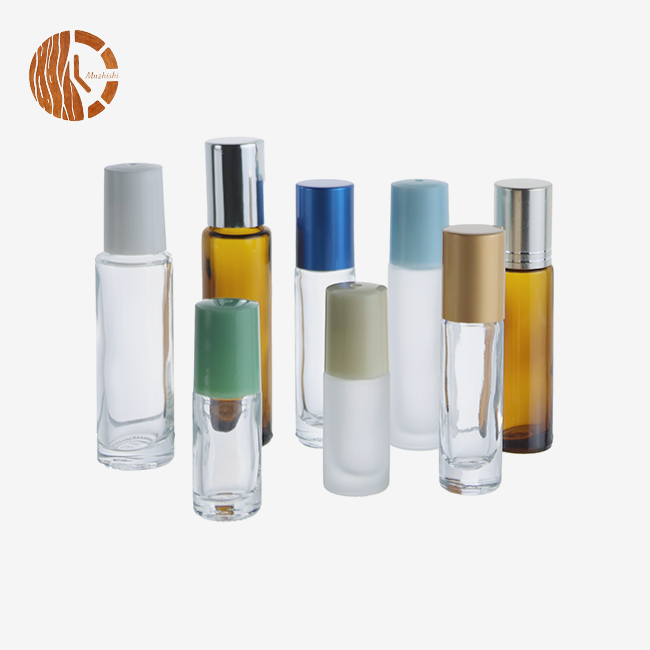
Color customization of Essential Oil Glass Roller Bottles extends branding opportunities beyond labels. Gold and silver caps communicate luxury and sophistication, aligning with premium positioning strategies. Black caps project modern minimalism popular in men's grooming lines. White caps suggest clinical purity, reinforcing therapeutic claims in wellness markets.
Customization and Bulk Ordering Options
Customization makes standard packaging stand out and turns it into strong branding tools. Strategic personalisation makes opening experiences that people will remember, which encourages them to interact on social media and make more purchases.
Available Customization Techniques
Different ways of decorating have different effects on how things look and how long they last. Screen printing gives you full covering that is great for logos and writing, and it's also very resistant to wear and tear, so it can be used a lot. With hot pressing, you can make shiny finishes like gold, silver, and copper that look amazing when they're on store shelves. This method works especially well on dark glass, making a striking difference that draws attention.
Inside engraving makes marking that is delicate and classy, which appeals to high-end markets. This method cuts patterns into the inside of the glass, which gives it depth that can be seen when the bottles are full. This method works especially well for the gourd-shaped bottles we make, because the curved surfaces catch and reflect light through etched designs.
Labeling gives you the most options for limited versions and seasonal projects. Pressure-sensitive stickers let you change the design quickly without having to pay for new tools, which lets you use flexible marketing strategies. Water-resistant materials keep the look of the bottles intact even when they are kept in wet spas or shown off in cold store displays.
Economics of Bulk Procurement
Through economies of scale, buying in bulk can save you a lot of money. When it comes to basic designs, the minimum order quantity usually starts at 5,000 units. At 10,000, 25,000, and 50,000 units, there are savings that get bigger. To justify investing in tooling, custom mould development needs higher minimums—usually 50,000 units—but this method creates unique patterns that rivals can't copy.
Lead times depend on how easy it is to customize and how quickly the product needs to be made. After approval, stock drawings with standard printing ship within 15 to 20 days. Custom bottle forms that need a new mould take 45 to 60 days longer, plus an extra 3 to 5 days for making samples and getting approval before full production runs start.
International Shipping Considerations
Logistics planning has a big effect on landing costs. For big orders, sea freight is the most cost-effective choice, but with transit times of 25 to 40 days, you need to plan your goods carefully. Air freight speeds up delivery to 5–7 days, but it costs a lot more to ship, so it's best for pressing restocking orders rather than building up stock from scratch.
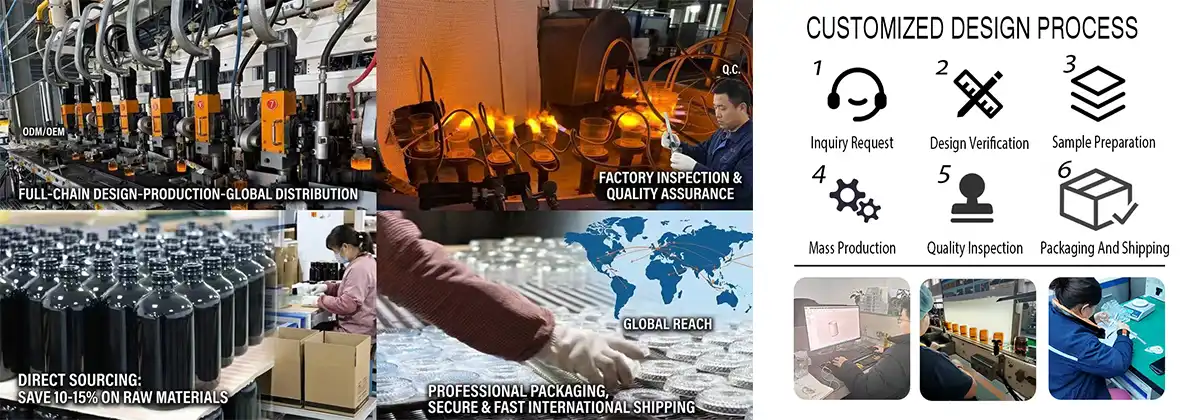
Xuzhou Muzhishi Crafts Co., Ltd. keeps the right to import and ship goods on its own, which speeds up the customs processing process. Our team makes full sets of paperwork, like business bills, packing lists, and certificates of origin, that are specific to the needs of the country where the goods are going. This knowledge keeps clearance delays from happening, which would mess up plans for product launches and store agreements.
Packaging Solutions That Enhance Brand Perception
Adding secondary packing to glass protects it during shipping and raises its perceived value. Custom-printed boxes with sticky closures make opening experiences that are so good that customers share them on social media, which is free marketing exposure. Consumers who care about the environment will like sustainable package choices that use recycled cardboard and soy-based inks. These options will also help companies meet their corporate responsibility goals.
When it comes to bulk packaging, the best methods combine security with saving room. Partition barriers keep bottles from touching each other during shipping, so there are almost no breaking losses. Shrink-wrapping adds extra support and keeps packages safe while they are being moved from one mode of transportation to another.
Conclusion
Essential Oil Glass Roller Bottles combine practicality, sustainability, and high-end looks to meet the needs of businesses in the health, aromatherapy, and makeup industries. The material's high chemical resistance keeps the integrity of the product and lets you customize it in ways that improve your brand's personality. Our gourd-shaped design specifically addresses the ergonomic problems that therapists and end users face. It combines useful grip benefits with unique visual appeal that helps goods stand out in crowded markets.
Effective procurement strategies require balancing short-term cost concerns with long-term value factors like source dependability, quality consistency, and the ability to customize. Businesses can make better packaging choices that improve both working efficiency and customer happiness by learning about cleaning routines, material selection trade-offs, and the economics of bulk ordering.
FAQ
Does clear glass risk UV degradation of essential oils?
Clear glass doesn't block UV light, so it's good for items that will be eaten quickly or kept in secondary packing like boxes. Amber glass options that block harmful wavelengths are good for oils that have a lot of photosensitive chemicals in them. How you display things is important. To get the most out of their shelf life, stores should keep clear glass items out of direct sunlight.
Can gourd-shaped bottles be used on standard filling lines?
Most current filling tools with pucks that can be adjusted can fit gourd shapes without any changes. Custom star-wheels may be needed for high-speed automatic lines to keep the bent shape stable during capping operations. Talking to the maker of your packaging equipment before placing big orders can help you avoid compatibility problems that could cause production to start to be delayed.
Which roller ball material works best for citrus essential oils?
Citrus oils have a lot of limonene, which can react with some metals after being in contact with them for a long time. Glass balls keep chemicals from reacting with each other and give incense users a cooling feeling they like. Stainless steel grade 316 works well enough for citrus mixes, but glass is still the best choice for the most stable formulations.
How do I prevent leakage during air transportation?
Negative pressure tests are done on professional-grade bottles to make sure the seals work properly at high altitudes. The PE fitting has to keep its interference fit with the glass neck within very tight limits, usually between 0.1 and 0.2 mm. Ask providers for technical details that prove their goods can withstand -0.06 MPa in a vacuum chamber for 5 to 10 minutes without leaking.
What is the expected breakage rate for bulk shipments?
When proper packing methods are used, industry guidelines usually allow less than 2% breaking. Using shrink-wrapped pallets and partition barriers to keep each bottle separate during shipping reduces movement. Reliable providers will pay for broken items up to the agreed upon limits and provide picture proof of how the items were packed to show that the right safety measures were taken.
Partner with Muzhishi for Your Essential Oil Glass Roller Bottles
Since 2005, Xuzhou Muzhishi Crafts Co., Ltd. has provided top-notch glass packing solutions to companies all over the world through a full range of ODM/OEM services. As an experienced maker of essential oil glass roller bottles, we can make samples quickly (within 3–5 days), so you can test the market right away before committing to full production runs. During the planning, prototyping, production, and delivery phases, our specialised account managers work directly with you to make sure that all of your specific needs are met for logos, colours, and packing.
Our smart partnerships with local sources in Xuzhou help us keep the quality of our pharmaceutical-grade materials high while lowering the costs of raw materials by 10 to 15 percent. We keep popular materials in stock, which cuts down on delivery times and helps you meet tight start dates. We can import and export goods on our own, and we take care of all the paperwork and details to make sure they get through customs without any problems, no matter where they are going. You can email us at long@muzhishi.com or go to mzsglass.com to talk about how our glass roller bottle options can help your business.
References
1. Anderson, M.J., & Williams, R.T. (2021). Essential Oil Packaging: Material Science and Consumer Preferences. International Journal of Cosmetic Science, 43(2), 178-192.
2. Chen, L., & Rodriguez, P. (2020). Glass Container Engineering for Aromatherapy Applications. Packaging Technology Quarterly, 15(4), 45-58.
3. Harrison, K.E. (2022). Sustainable Packaging Solutions in the Beauty Industry. Environmental Packaging Review, 28(1), 112-127.
4. Mitchell, D.S., Thompson, A.L., & Zhang, W. (2019). Quality Control Standards for Essential Oil Distribution Systems. Journal of Pharmaceutical Packaging, 22(3), 201-215.
5. Roberts, C.M. (2023). Chemical Compatibility of Glass and Plastic in Cosmetic Formulations. Materials Science in Packaging, 31(2), 89-103.
6. Wilson, J.R., & Kumar, S. (2021). Bulk Procurement Strategies for Glass Packaging in B2B Markets. Supply Chain Management Review, 19(6), 234-248.

Our customers’ satisfaction speaks for our quality — contact us to experience the same reliable service.