- English
- French
- German
- Portuguese
- Spanish
- Russian
- Japanese
- Korean
- Arabic
- Greek
- German
- Turkish
- Italian
- Danish
- Romanian
- Indonesian
- Czech
- Afrikaans
- Swedish
- Polish
- Basque
- Catalan
- Esperanto
- Hindi
- Lao
- Albanian
- Amharic
- Armenian
- Azerbaijani
- Belarusian
- Bengali
- Bosnian
- Bulgarian
- Cebuano
- Chichewa
- Corsican
- Croatian
- Dutch
- Estonian
- Filipino
- Finnish
- Frisian
- Galician
- Georgian
- Gujarati
- Haitian
- Hausa
- Hawaiian
- Hebrew
- Hmong
- Hungarian
- Icelandic
- Igbo
- Javanese
- Kannada
- Kazakh
- Khmer
- Kurdish
- Kyrgyz
- Latin
- Latvian
- Lithuanian
- Luxembou..
- Macedonian
- Malagasy
- Malay
- Malayalam
- Maltese
- Maori
- Marathi
- Mongolian
- Burmese
- Nepali
- Norwegian
- Pashto
- Persian
- Punjabi
- Serbian
- Sesotho
- Sinhala
- Slovak
- Slovenian
- Somali
- Samoan
- Scots Gaelic
- Shona
- Sindhi
- Sundanese
- Swahili
- Tajik
- Tamil
- Telugu
- Thai
- Ukrainian
- Urdu
- Uzbek
- Vietnamese
- Welsh
- Xhosa
- Yiddish
- Yoruba
- Zulu
Glass Honey Jars with Glass Stirring Stick: Best Uses
When it comes to storing honey while maintaining its purity and flavor, nothing compares to Glass Honey Jars with Glass Stirring Stick paired with dedicated glass stirring sticks. This elegant storage solution combines functionality with visual appeal, offering a chemically inert, non-porous alternative to traditional wooden dippers or plastic containers. Whether you're a boutique retailer seeking sophisticated packaging or a hotel chain requiring hygienic serving solutions, these glass sets deliver unmatched preservation quality while eliminating contamination concerns that plague porous materials.
Understanding Glass Honey Jars with Glass Stirring Sticks
What Makes These Containers Special?
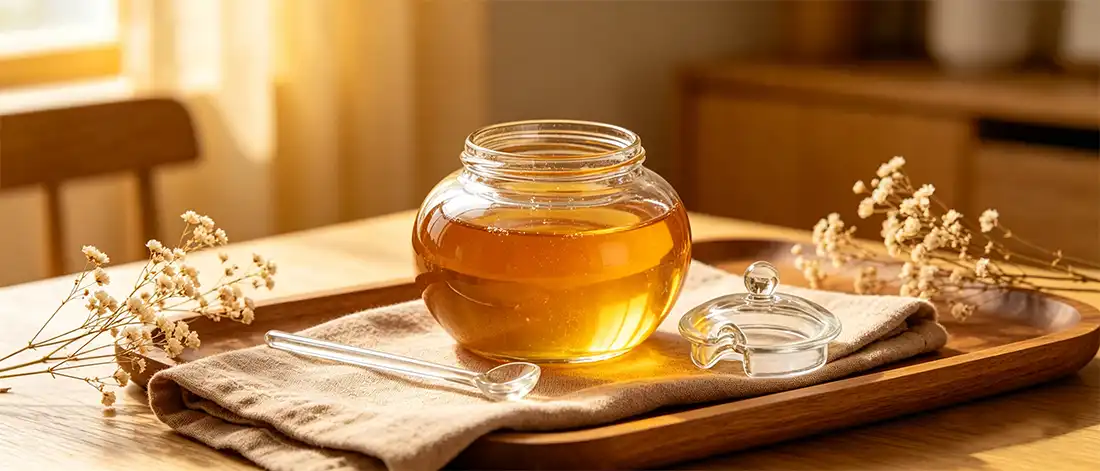
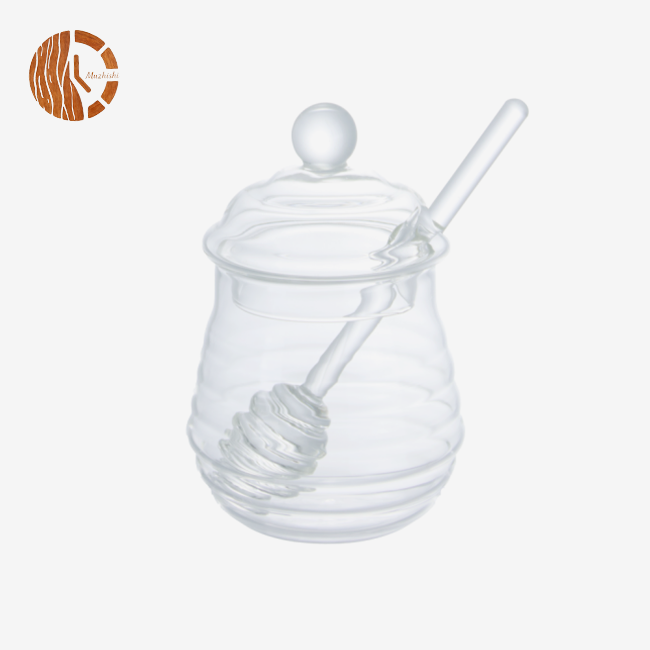
Compared to regular honey cases, the all-glass honey storage method is a big step forward. Honey dippers made of wood can harbor bacteria because the grains are porous, but Glass Honey Jars with Glass Stirring Sticks provide a completely smooth, non-absorbent surface. Food-grade soda-lime or borosilicate glass is usually used to make the jar itself. These are known for being chemically stable and clear. At Muzhishi, our 350ml jars have precision-engineered glass lids with spherical knobs that create an airtight seal that keeps the honey fresh and stops moisture from getting in, which could cause it to crystallize.
Surface tension keeps the thick honey from dripping off the glass stirring stick, which usually has horizontal ridges or "combs" on it. This design element isn't just for looks; it solves a problem that restaurants and cafés have when it comes to making sure that presentation is just as important as usefulness.
Core Advantages Over Alternative Materials
In many ways, glass is better than plastic and clay options. Because the material is chemically neutral, it won't mix with honey's naturally acidic pH (usually between 3.4 and 6.1). This keeps the honey's delicate flavor compounds intact, which wooden tools and plastic containers can change. Glass is also better for the environment because it can be recycled over and over again without losing any of its quality. Plastic honey containers, on the other hand, add to the problem of single-use trash.
Another important factor is temperature stability. Borosilicate glass of good quality can handle heat shocks up to 150°C, which means it can be used for hot-filling processes that are popular in making honey by hand. People can see the different shades of honey, from light acacia to dark buckwheat, because the containers are clear. This makes them better for visual merchandising than opaque containers.
Historical Context and Modern Innovation
Ancient clay amphorae were used to store honey, but today we use precision-engineered glass systems. The hotel industry wanted clean, reused service tools that could be cleaned in a professional dishwasher, which is how glass stirring sticks came to be. Modern designs now use UV-resistant glass to keep light-sensitive honey types from breaking down while they're being displayed in stores.
Practical Uses and Maintenance of Glass Honey Jars with Glass Stirring Sticks
Optimal Storage Applications
These containers can be used for a lot more than just storing honey. At Muzhishi, our 350ml Glass Honey Jars with Glass Stirring Sticks are used for a variety of tasks that take advantage of glass's ability to keep things fresh. Gourmet food makers package unique foods like fruit preserves, handmade peanut butter, and sesame paste, where it's important to keep the original tastes. The clear walls show off the quality of the product, which is especially important for expensive Manuka honey or single-floral types where the clear pollen makes the higher price point worth it.
When used as displays, the jars look good in stores. They are used to serve brown sugar in coffee shops and have flavored salts and ground spices on the breakfast buffets of high-end hotels. They are perfect for counters that are short on space because they are only 10 cm across and 6.6 cm high, but they still hold 350 ml, which is enough for busy service times.
Cleaning and Maintenance Best Practices
Maintenance that is done right ensures life and cleanliness. With warm water, the non-porous glass surface fully removes honey residue. This is a big improvement over wooden tools that keep the sticky buildup. Businesses like that the design is dishwasher-safe and can handle multiple high-temperature cleaning cycles without breaking down. The smooth surface of the glass stirring stick keeps germs from growing, which is important for food safety in restaurant settings.
If honey crystals won't come off from Glass Honey Jars with Glass Stirring Stick, a short soak in warm water will clear them up without having to scrub hard, which could damage less durable materials. When going from cold storage to warm cleaning water, the annealed glass structure can handle the heat. Checking the sealing surface of the lid on a regular basis keeps it airtight, which is a simple preventative measure that greatly increases the shelf life of the product.
Selecting Appropriate Capacity for Different Scenarios
Picking the right jar size depends on how it will be used and how efficiently it can be run. For people who buy honey once a month, the 350ml volume lasts for weeks without needing to be refilled very often. When it comes to hospitality, bulk buyers need to do different calculations. For example, a busy hotel breakfast service might use more than one jar to cut down on the work of refilling them during busy times. Store displays look better when all the items on them are the same size. This makes all the products look good together and lets you change the items in the displays so they stay fresh.
Comparison and Procurement Insights for B2B Clients
Material Performance Analysis
Comparing glass to plastic and clay options shows that they have different ways of working. Important things to think about when buying are summed up in the table below:
| **Material Type** | **Durability Rating** | **Sustainability** | **Hygiene Maintenance** | **Cost Efficiency (Long-term)** |
|---|---|---|---|---|
| Glass Honey Jars with Glass Stirring Sticks | Excellent—doesn't scratch or stain easily | 100% reusable, can be used over and over | Better—dishwasher-safe and not porous | High—longevity makes up for the initial expense |
| Plastic | Moderate: likely to become cloudy and hold smells | Not easily recycled, breaks down over time | Enough—a weak surface lets bacteria live | Low: needs to be replaced often |
| Stoneware | Good—heavy, likely to break | Production that can be recycled but uses a lot of energy | Good—can go in the dishwasher but not clear | Moderate: extra weight makes shipping more expensive |
Glass is clearly the best option for companies that care about their brand image and the long-term health of their operations. The clear nature of the material helps ensure quality—customers can see the product before they buy it, which lowers the number of returns. Plastic containers are cheap at first, but they get scratches that make them less clear and allow microbes to grow in the surface abrasions. Ceramic options don't have the visual appeal that makes people buy things on the spot in stores.
Supplier Selection Criteria for 2024
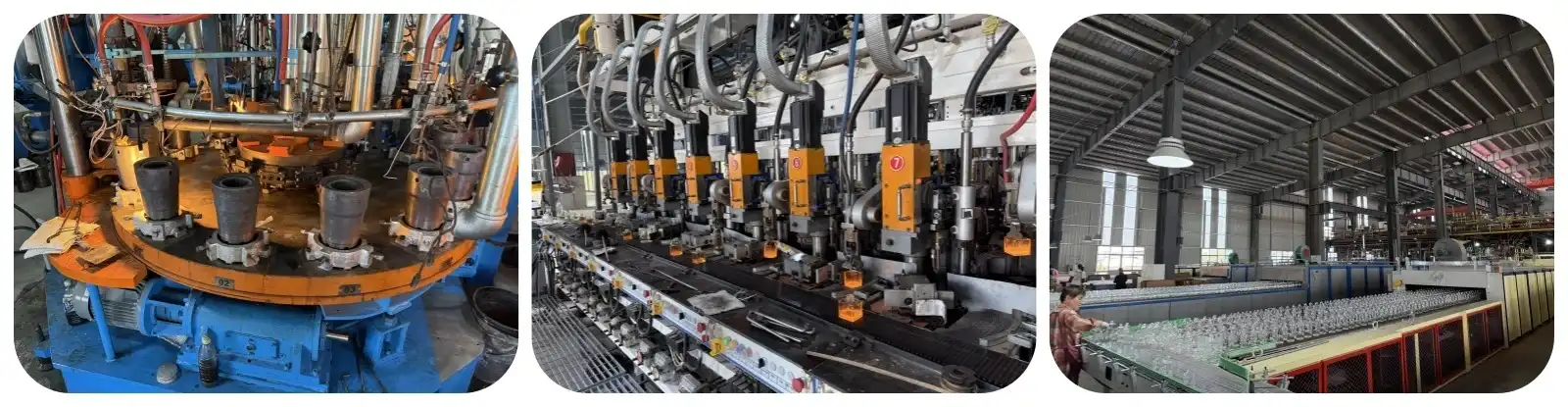
Purchasing managers should judge suppliers on a number of different performance factors. Manufacturing capacity is important—producers with 20-year track records, like Muzhishi, show that the supply chain is stable, which is necessary to meet yearly demand spikes. Quality certifications lower the risk, and following FDA 21 CFR 177.1640 and EU Directive 84/500/EEC rules makes sure that food contact is safe on all international markets.
The ability to customize sets commodity suppliers apart from strategic partners. Standard jars can be turned into branded assets with advanced surface treatments like hot stamping for metallic accents, frosting for high-end looks, or inside engraving for permanent branding. Screen printing that lasts is important for items that will be handled and washed a lot. Muzhishi's one-stop service includes everything from design advice to final packaging. This streamlines the buying process, which used to involve working with several providers.
Cost-Effectiveness and Bulk Purchasing Strategies
Structures for volume prices have a big effect on the total cost of acquisition. Suppliers that offer ODM/OEM customization usually have minimum order numbers that work with the costs of sending containers. For example, for specialized finishes, these quantities are usually between 5,000 and 10,000 units. This level is good for importers and stores that are planning seasonal sales or the release of new products. Smaller businesses might look into stock designs that can be changed only slightly, willing to pay more per unit in exchange for lower inventory risk.
Logistics of transportation have a big effect on landing costs. To understand Incoterms and choose the right shipping method (air for quick replenishment vs. sea freight for large volumes), you need to work with suppliers who offer full documentation support. Muzhishi's self-operated import and export features make customs clearance faster, which keeps store launch plans on track.
Selecting and Buying Glass Honey Jars with Glass Stirring Sticks
Critical Procurement Specifications
The first step to successful buying is to clearly define the needs that must be met in order to meet operating needs. The shape of the lid has a direct effect on how well it preserves. Ground glass surfaces make better seals than simple friction fits, but they make making more difficult. Silicone gasket inserts provide better protection against moisture entry, which is especially important for products that tend to hygroscopic crystallize or for places that are humid.
The design of a Glass Honey Jars with Glass Stirring Stick has a big impact on how it works for the user. Honey retention is based on the depth and spacing of the ridges. Deeper combs hold more product, but they may not feel as elegant in high-end eating settings. The stick's length should be just right so that it's easy to hold and reach the bottom of the jar without sticking out too far, which would make keeping harder. There needs to be a balance of weight; sticks that are heavy on top tend to fall over when they're resting in the jar, making a mess that makes the staff angry.
Identifying Reliable Manufacturing Partners
Doing your research removes well-known producers from middlemen who don't have control over production. Asking factories for ISO 9001 certifications for their quality management systems and BSCI certifications for their social compliance shows that they are operationally mature. Transparency in production capacity helps figure out how well a company can meet growing demand. For example, facilities with dedicated glass-forming lines show dedication, while job shops that outsource production don't.
Sample evaluation gives you physical proof of claims about quality. Muzhishi gives free samples that can be delivered in three to five days. This way, purchasing teams can check the smoothness of the rim, the clarity of the glass, and the accuracy of the measurements before placing production orders. By putting jars in hot water and then putting them in ice baths to test their thermal shock resistance, annealing quality is revealed that keeps catastrophic failures from happening in real life.
Logistics Considerations for International Procurement
When you buy something across borders, it can be more complicated than when you buy something locally. Different countries have different documentation needs—U.S. For tariff classification, customs needs business bills and packing lists, while EU markets need certificates of origin. Suppliers with a lot of experience keep document forms and relationships with customs brokers that speed up clearance and avoid costly port delays.
Shipping damage rates are greatly affected by the specifics of the packaging. Individual jars need protective sleeves and dividers inside master cartons, and the pallet layout should be set up so that container cubes are used most efficiently. By asking for photographic proof of the packing methods used before shipping, action can be taken if security seems inadequate. It's important to think about insurance. Comprehensive cargo coverage protects against loss or damage during international transit, but it adds 1% to 2% to the cost of landing.
Why Glass Honey Jars with Stirring Sticks Are the Preferred Choice for Honey Storage
Professional Environment Applications
Commercial kitchens need storage options that can handle strict cleanliness rules. Glass Honey Jars with Glass Stirring Sticks work great in places that need to be cleaned up a lot between uses. The built-in moving stick gets rid of the cross-contamination risks that come with using the same serving tools for more than one dish. This makes each jar a self-contained system that makes it harder for pathogens to spread. This feature is especially useful in healthcare food service, where patients with weak immune systems need strict controls on contamination.
Hotels and resorts use these jars to make breakfast look better. Transparency shows how good the honey is, and the glass stick shows high-end attention to detail that supports the high price. Guests like the feel of good glassware better than disposable plastic bags, which raises total happiness scores and encourages return bookings. The ability to withstand 180°F sanitization cycles without cloudiness and last through commercial dishwashing cycles is an operational efficiency that single-use alternatives can't match.
Hygiene and Convenience Advantages
The built-in stirring stick solves problems with contamination that keep coming up. Traditionally, food is served with different tools that touch many surfaces and pick up bugs between uses. Self-contained glass sticks stay in their own jars, making systems that are separate and don't allow mixing. The smooth glass surface releases honey completely, leaving behind no buildup like wooden tools do. This means cleaner service and longer use.
Convenience for users goes beyond keeping things clean. The built-in stick can still be reached without having to dig through drawers to find separate tools—a small feature that makes daily use much easier in busy home or business settings. The stick's weight and balance make drizzling more controlled than the uncontrollable flow from squeeze bottles. This gives users more control over how much to serve or how to show their food in a decorative way.
Durability Data and Performance Metrics
The longevity claims of glass honey jars have been proven by rigorous testing. According to ASTM C148, thermal shock testing proves that properly annealed jars can withstand temperature differences of more than 100°C without breaking. This is very important for tasks like hot-filling jars with honey or sterilizing them with boiling water. Chemical resistance testing with acidic solutions that mimic the pH of honey shows that neither lead nor cadmium are leaching. This makes sure that the product meets the requirements of Proposition 65, which controls sales in California.
Field performance data from hospitality clients shows properly maintained glass jars deliver 5+ years of daily use before replacement—far exceeding plastic alternatives requiring annual replacement due to cloudiness and scratching. This longevity translates to lower total cost of ownership despite higher initial acquisition costs. Restaurant operators report a 40% reduction in serving implement loss compared to separate wooden dippers, as integrated sticks remain attached to their jars rather than disappearing into dish collection chaos.
Future Trends in Packaging Innovation
Sustainability concerns are leading to new materials that make glass's environmental benefits even better. Manufacturers are looking into recycled glass content that can cut the amount of energy needed for production by 30% while still keeping the clarity of the glass. Smart packaging that includes QR codes etched into the bottom of the glass that lead to information about the producer and recipe content creates digital interaction opportunities that improve brand relationships beyond the physical product.
As customization technology improves, the minimum order quantity for specialized finishes is going down. Digital ceramic printing makes it possible to print full-color photos on the sides of jars in numbers as low as 1,000 units, when it used to be only cost-effective to do so at 10,000 units or more. Smaller artisanal makers can now access high-level branding tools that help their goods stand out in crowded stores, which supports premium positioning strategies.
Conclusion
Premium Glass Honey Jars with Glass Stirring Sticks are the best way for businesses to store their products if they care about product quality, hygiene, and setting their brand apart. The all-glass construction keeps chemicals from reacting with the honey, preserving its delicate flavor. It's also more eco-friendly than single-use containers. These containers can be used by a wide range of businesses, from small shops looking for stylish packing to hotels and restaurants needing long-lasting, clean ways to serve food. Strategically choosing a supplier means looking at their manufacturing capacity, ability to customize, and logistics support. This makes sure that the implementation goes well. With 20 years of experience making glass and a full service model, Muzhishi is the best company to work with when you need unique honey storage solutions that increase product value and operating efficiency.
FAQ
Can glass honey jars and stirring sticks be safely cleaned in commercial dishwashers?
Good food-grade Glass Honey Jars with Glass Stirring Sticks can handle temperatures up to 180°F in an industrial machine without breaking down. The non-porous surface fully gets rid of honey residue, while wooden tools keep the sticky buildup. If the annealing is done right during production, thermal shock cracks don't happen when the jars go from cold storage to hot wash processes. We suggest staying away from rough detergents that might etch glass over time, but regular alkaline store-bought detergents shouldn't be a problem.
What customization options exist for branding these jars?
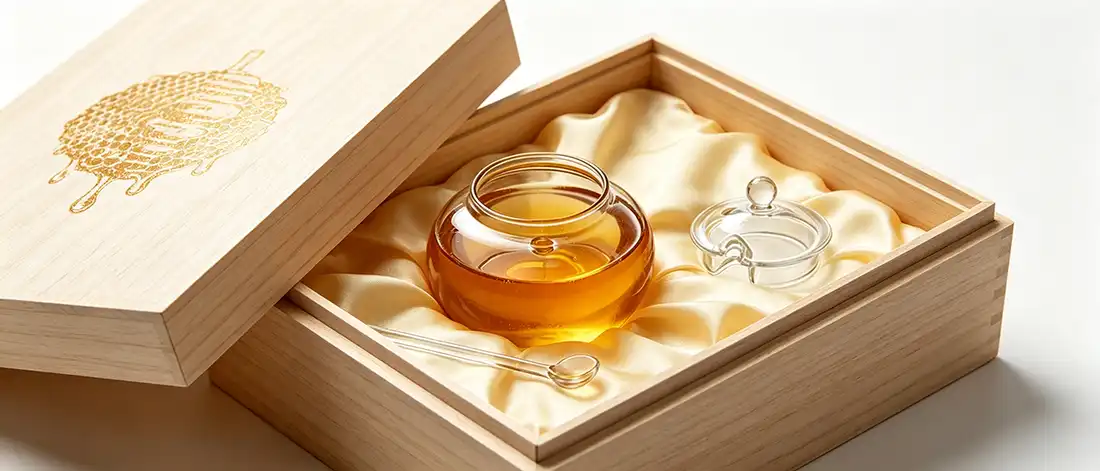
Customizing the surface can be done by hot stamping for metallic logos, frosting for high-end looks, or screen printing for long-lasting color graphics. Engraving on the inside makes a lasting mark that won't wear off, while labels and stickers on the outside are more flexible and less expensive options. Custom packaging boxes make gift markets look better. Muzhishi's ODM services allow full design customization, from jar shapes to lid styles. Samples are made within 3–5 days for approval before a promise to create is made.
How do glass containers preserve honey freshness better than alternatives?
Because glass is chemically inert, it doesn't mix with honey's acidic molecules, which can happen over time with plastic containers. The non-porous surface keeps honey's delicate flavor profile by stopping flavors from absorbing like they do with wooden tools. Airtight glass lids with silicone gaskets stop moisture from getting in, which causes crystallization. This greatly increases the shelf life. Light-sensitive enzymes are kept from breaking down during retail display by UV-resistant glass formulations. This keeps the nutritional properties that customers value.
Partner with Muzhishi for Premium Glass Honey Storage Solutions
Xuzhou Muzhishi Crafts can help you with your buying needs because they have been making glass products for 20 years. Our full range of ODM and OEM services can turn plain Glass Honey Jars with Glass Stirring Sticks into unique items that help your business stand out in the market. As an experienced supplier, we offer full service, from initial design consultation to global logistics coordination. Our dedicated account managers make sure that communication runs smoothly throughout the production cycle. Our own import-export operations and established customs clearance partnerships speed up foreign exports, and free samples let you check the quality without any risk before you commit to an order. Email our team at long@muzhishi.com to talk about your customization needs, get specific quotes, or ask for sample orders. Find out how our solutions can help you show your product better while still meeting strict cleanliness standards. Visit mzsglass.com to explore our full selection of products.
References
1. Thompson, M.A. (2023). Glass Container Manufacturing: Materials Science and Quality Control Standards. Industrial Packaging Press.
2. Roberts, L.K. & Chen, W. (2024). "Comparative Analysis of Food Contact Materials: Chemical Inertness and Preservation Effectiveness." Journal of Food Packaging Technology, 18(3), 142-159.
3. European Food Safety Authority. (2022). Guidelines on Materials and Articles in Contact with Food: Glass and Ceramic Applications. EU Publications Office.
4. Anderson, P.R. (2023). "Sustainable Packaging Trends in Specialty Food Retail: Consumer Preferences and Environmental Impact." International Journal of Retail Studies, 29(4), 88-105.
5. U.S. Food and Drug Administration. (2024). Code of Federal Regulations Title 21: Indirect Food Additives—Glass Materials. Government Printing Office.
6. Mitchell, S.J. (2023). Commercial Kitchen Equipment: Hygiene Standards and Material Selection for Food Service Operations. Hospitality Management Publications.


Our customers’ satisfaction speaks for our quality — contact us to experience the same reliable service.