- English
- French
- German
- Portuguese
- Spanish
- Russian
- Japanese
- Korean
- Arabic
- Greek
- German
- Turkish
- Italian
- Danish
- Romanian
- Indonesian
- Czech
- Afrikaans
- Swedish
- Polish
- Basque
- Catalan
- Esperanto
- Hindi
- Lao
- Albanian
- Amharic
- Armenian
- Azerbaijani
- Belarusian
- Bengali
- Bosnian
- Bulgarian
- Cebuano
- Chichewa
- Corsican
- Croatian
- Dutch
- Estonian
- Filipino
- Finnish
- Frisian
- Galician
- Georgian
- Gujarati
- Haitian
- Hausa
- Hawaiian
- Hebrew
- Hmong
- Hungarian
- Icelandic
- Igbo
- Javanese
- Kannada
- Kazakh
- Khmer
- Kurdish
- Kyrgyz
- Latin
- Latvian
- Lithuanian
- Luxembou..
- Macedonian
- Malagasy
- Malay
- Malayalam
- Maltese
- Maori
- Marathi
- Mongolian
- Burmese
- Nepali
- Norwegian
- Pashto
- Persian
- Punjabi
- Serbian
- Sesotho
- Sinhala
- Slovak
- Slovenian
- Somali
- Samoan
- Scots Gaelic
- Shona
- Sindhi
- Sundanese
- Swahili
- Tajik
- Tamil
- Telugu
- Thai
- Ukrainian
- Urdu
- Uzbek
- Vietnamese
- Welsh
- Xhosa
- Yiddish
- Yoruba
- Zulu
Glass Honey Jars with Glass Stirring Stick: Buyer’s Guide
When looking for high-end packaging for handmade honey products or putting together a gourmet store collection, Glass Honey Jars with Glass Stirring Sticks are a stylish option that strikes a good balance between cleanliness, good looks, and useful design. This buyer's guide tells procurement professionals what they need to think about in order to choose the best honey storage system. It talks about material benefits, customisation options, criteria for evaluating suppliers, and market trends that can help your product stand out and improve your brand's positioning in competitive markets.
Understanding Glass Honey Jars with Stirring Sticks
What Defines This Product Category
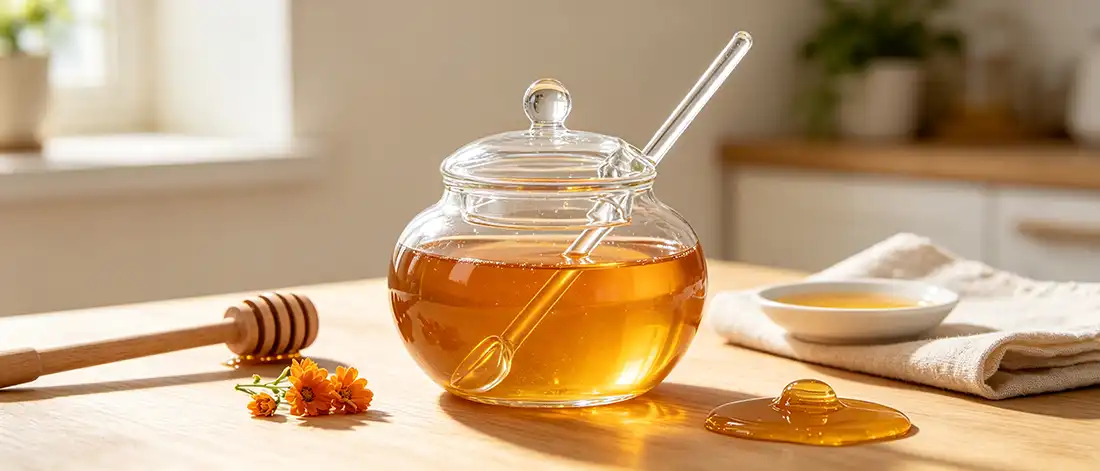
Most Glass Honey Jars with Glass Stirring Stick come with a clear, food-safe glass jar and a matching glass dipper that has lines or ridges running across it. Surface tension is raised by the stick's shape, which stops sticky honey from dripping as it is moved from the jar to a plate or cup. Wooden dippers from the past soak up water and hold bacterial colonies in their open grain. It's not possible for chemicals to damage glass sticks, so you can clean them in the dishwasher. This keeps the purity of expensive honeys like Manuka or mixes with only one flower.
Evolution from Traditional Storage Methods
In the past, honey was stored in clay crocks or wooden barrels that were hard to clean and made it hard to see what was inside. Around the middle of the 20th century, rules about food safety got stricter, and people wanted things to be clearer in both a physical and figurative sense. Because of this, packing changed to glass. Modern glass jars are great because they keep air out, which stops oxidation, keep flavours from changing because of reactive materials, and let you see the colour and clarity of the product clearly, which are important tests for picky buyers.
Why Glass Outperforms Alternative Materials?
Putting glass in buildings is a good idea for both safety and showing off. Bacteria can't get into the material because its surface isn't porous. Also, because the material is chemically neutral, storing honey for a long time won't change the enzymes or delicate flavours. Because of these qualities, food that is bought by businesses that work with hotels or speciality food stores goes bad less often and makes customers happier. This is also a great story for brands that care about the environment because the fact that glass can be recovered fits in with their sustainability goals.
Comparing Glass Honey Jars with Alternative Options
Glass Versus Plastic Containers
There are four main points that make the choice between glass and plastic: how safe they are, how long they last, how customers feel about them, and how well they meet government standards. Phthalates or BPA could leak from plastic containers, especially those made of PET or polyethylene, into honey that is acidic. It's most likely to happen if the temperature changes while the containers are being stored or moved. Glass takes away all of this worry because it meets the standards for food contact safety set by FDA 21 CFR 177.1640 and EU Directive 84/500/EEC without the need for any extra testing or approval. Businesses can charge more for glass because it gives off a more high-end vibe than plastic. This is why speciality honey makers and gourmet shops can do so.
Advantages of Integrated Stirring Sticks
People have to find other tools that work with jars that don't come with moving sticks, which can be inconvenient. This problem is fixed by a built-in Glass Honey Jars with Glass Stirring Stick, which also improves brand unity by making sure that the looks are all the same. Because the stick has thick horizontal ridges, it keeps just the right amount of liquid. This means you can drizzle it on breakfast foods or into hot drinks without making a mess like you do with spoons or knives. This little design touch makes it faster to clean up after each guest, which makes hospitality buyers who are in charge of busy breakfast services happier.
| **Material** | **Chemical Resistance** | **Dishwasher Safe** | **Visual Appeal** | **Recyclability** |
|---|---|---|---|---|
| Glass | Very good | Yes | High-end | 100% |
| Plastic | Moderate | Limited | Costs | Not all |
| Ceramic | Good | Yes | Made by hand | Limited |
Glass Versus Ceramic Jars
Ceramic jars have a raw look that works well for boutique branding, but they aren't very useful for business-to-business uses. The opaque nature of ceramic means that buyers can't see the products, so they have to rely on labels instead of seeing the honey for themselves before buying it. The material's weight makes shipping more expensive and increases the chance that it will break while in transit, especially for orders from other countries. Glass strikes a balance between being esthetically pleasing and being useful in real life. Its clarity builds trust among customers, and its light weight makes it easy to ship at a low cost.
How to Choose the Right Glass Honey Jar for Your Business?
Capacity and Dimensional Specifications
What your target market is and how it will be used will help you decide on the volume. The Muzhishi 350ml bottle (Height 6.6 cm, Diameter 10 cm, Weight 68.8g) is a good size to show off on a store shelf and for one person to use for two to three weeks. A 200ml size is a good size for hotel room amenities or trial programs. 500ml sizes are better for people who buy a lot or for food service businesses that need to replace them often. Before you place a large order, make sure you get detailed technical drawings of the Glass Honey Jars with Glass Stirring Sticks. This is because consistent sizes are needed for automated filling lines and standard shelf fixtures.
Lid Types and Sealing Mechanisms
How well the seal works has a direct effect on how fresh the honey is and how fast it crystallises. High-end jar lids are made of glass and have silicone gasket rings or surfaces that have been precisely ground to make airtight seals that keep moisture and ants out. The spherical knob design that is popular on high-quality models makes them easy to hold and looks good. People who want to keep food fresh for longer than six months should ask for jars with extra gasket seals and lid samples to make sure the lids fit right before they sign the final purchase agreement.
Glass Quality and Thermal Properties
Different kinds of glass in Glass Honey Jars with Glass Stirring Stick do different things. To keep food fresh, soda-lime glass is used, which is strong and easy to find. You have to slowly heat or cool it, though, so it doesn't break. Borosilicate glass costs more, but it can handle temperature differences of up to 150°C. This means it can be used for the hot-filling methods that some honey packers use. When Muzhishi makes something, the right annealing is done as part of the process. This is a controlled cooling process that gets rid of stress points inside the product and keeps it from breaking on its own, which could be dangerous and hurt the brand's image.
Supplier Evaluation and Certification Verification
When procurement teams look at possible manufacturers, they should give more weight to sellers who have written quality control methods. It is important to see proof that the product has been tested for resistance to heat shock according to ASTM C148, for lead and cadmium leaching using Inductively Coupled Plasma (ICP) analysis, and for resistance to hydrolysis according to ISO 719. Suppliers who work in ISO-certified buildings use systematic quality management. Changes from batch to batch that can mess up your supply chain are less likely to happen this way. Muzhishi has been making glass for 20 years and has a tight testing process that includes making sure the glass is chemically inert, structurally stable, and the right size. You can expect this level of study when you buy from a business.
| **Evaluation Criteria** | **Minimum Standard** | **Premium Standard** |
|---|---|---|
| Lead Leaching Limit | <0.5 ppm | <0.1 ppm |
| Thermal Shock Range | 60°C | 150°C |
| Annealing Process | The norm | precisely controlled |
| Sample Lead Time | 7–10 days | 3–5 days |
Customization and Private Labeling Options
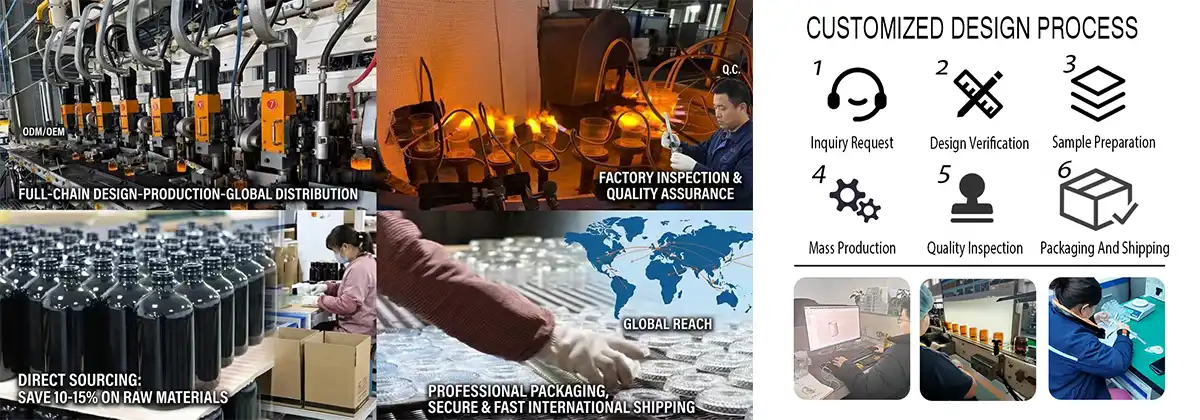
names often use customised packaging to stand out in markets with a lot of other names. Some of the best companies that make these things offer different ways to treat the outside, like hot stamping for shiny logos, frosting for matte finishes, inside etching for long-lasting branding, and screen printing for graphics in more than one colour. You can choose coloured glass instead of clear glass, like amber for UV protection, cobalt blue for a high-end look, or sage green for natural product lines. People can change the branding, stickers, labels, packing boxes, sizes, colours, and types of bottles at Muzhishi. They also have account managers who help customers with designing prototypes and increasing the size of their production. How hard it is to customise, the less you need to order, the better. The normal range for commercial projects is between 1,000 and 5,000 units.
Pricing Structures and Bulk Purchasing Economics
When you melt, shape, and clean a lot of glass, the cost per unit goes down by a lot. This is called economies of scale. People who buy 10,000 units or more a year can get 15 to 25 percent off the price compared to people who buy fewer units. The unit price is only one part of the total landed cost. You should also look at the cost of packing materials, palletising, container freight, customs taxes, and transportation within the country. It is easier to get through customs when suppliers like Muzhishi have their own licenses to import and sell. They also give you all the paperwork you need, like business bills, packing lists, and certificates of origin. This makes going through the border faster and lowers the demurrage fees.
Proper Use and Care of Glass Honey Jars with Stirring Sticks
Optimal Usage Techniques for Honey Dispensing
The grooved design of the Glass Honey Jars with Glass Stirring Stick works best when the stick is dipped vertically into the honey, slowly rotated to cover all the ridges, and then lifted with a turning motion that lets the extra honey drip back into the jar. This method stops the mess and drips that come with using regular spoons. If honey has hardened, a short heating in a water bath (not a mistake) will make it liquid again without hurting the honey's good enzymes. Teaching staff this right way to do things cuts down on waste and keeps table presentation standards high during breakfast or afternoon tea service.
Cleaning Protocols for Commercial and Retail Environments
The non-porous surface of glass makes it easy to clean thoroughly with regular commercial dishwashing tools. For light daily washing, warm water works well to get rid of honey residue without leaving behind mineral layers or smells. If you have hard-to-remove hardened buildup, a short soak in warm water will loosen everything up in minutes. The construction is dishwasher-safe and can handle multiple high-temperature processes. This is important for hotels and restaurants that have to follow health department rules that say they have to sterilize serving tools every day. When washing by hand, soft brushes should be used instead of rough pads to keep the surface from getting scratched, which could make a place for germs to live.
Sustainability and Circular Economy Practices
Glass jars keep food fresh longer than single-use containers. Customers often reuse these containers for keeping spices, homemade jams, craft supplies, or small hardware items after the honey is gone. This turns your packaging into long-term brand champions in people's homes. This ability to be used again supports companies' messages about sustainability and cuts down on total packaging trash. At the end of its useful life, glass can be recycled over and over again without losing any of its quality. This is in contrast to plastics, which lose quality with each recycling cycle. For business-to-business buyers who sell to environmentally conscious customers, these features help brands stand out and are in line with ESG reporting requirements.
Top Market Picks and Supplier Insights for Glass Honey Jars
High-Performance Models Worth Considering
In the premium segment, jars have more refined design features like lid knobs that are easy to use, extra-thick glass walls for better thermal stability, and precision-ground rims that make sure the seal fits perfectly. The Model FP-H-003 from Muzhishi is a great example of this type of product because it can hold 350ml, is only 68.8g, which makes it easier to ship, and is clear so you can see the honey clearly. The spherical knob lid design makes it easy to hold on to while opening and closing the jar many times. This solves a common problem in places where breakfast service workers have to handle a lot of jars during their shift.
Selecting Reliable Wholesale Suppliers
How close you are to manufacturing hubs has a big effect on lead times and freight costs. Suppliers in Jiangsu, China, which has a lot of factories that make glass, can get their materials for less money and faster because the supply chains to factories that make packing materials are shorter. When compared to makers who get their raw materials from faraway areas, Muzhishi's local partnerships cut costs by 10 to 15 percent. This means that the company can offer competitive prices to B2B buyers. When looking at wholesalers, make sure they can increase production to meet regular demand spikes. This is especially important during the holiday gift-giving season, when orders for Glass Honey Jars with Glass Stirring Sticks go through the roof.
Emerging Trends in Honey Jar Design
New products on the market right now focus on making things easier to use and giving brands more options. Manufacturers are making jars with wider openings at the mouth, which makes it easier for honey packers who use automated equipment to fill the jars. Trends in custom color printing lean toward soft tints and see-through finishes that keep the product's sight while adding a slight brand difference. Adding QR codes or NFC tags to labels is another new opportunity that lets brands connect physical packaging with digital content like stories about where the honey comes from, recipe ideas, or certificates of authenticity for premium honey varieties.

Conclusion
Finding the right honey jar method means finding a balance between how it looks and how well it works, how much it costs, and how reliable the seller is. When compared to plastic or ceramic options, glass building is far superior in terms of cleanliness, material safety, and how customers see the product. The built-in Glass Honey Jars with Glass Stirring Stick removes worries about contamination and improves the user experience by being precisely designed to not drip. A successful purchase depends on carefully checking out suppliers, especially to make sure they follow quality control standards and can make changes as needed. Muzhishi has been making honey products for 20 years and has a complete service infrastructure. This makes them a reliable partner for businesses that want to improve the look of their honey products while keeping prices low and providing reliable global shipping support.
FAQ
Are glass honey jars with stirring sticks dishwasher safe?
Yes, good Glass Honey Jars with Glass Stirring Sticks will not break down after being washed in an industrial machine. The smooth glass surface doesn't let germs grow and doesn't soak up soaps or smells, which makes these bins perfect for places that need to clean things often between guests.
What advantages do glass jars offer over plastic containers?
Glass keeps chemicals from getting into acidic honey, which is especially important when it comes to BPA and phthalates, which are found in plastic. The material is clear, so you can check the quality before you buy it, it supports premium brand positioning, and it can be recycled over and over again without losing any of its performance.
What customization options are available for bulk orders?
Hot stamping for shiny logos, frosting for matte looks, inside embossing for lasting branding, screen printing for multicolor graphics, and custom color tinting are all services offered by top makers. Customized packaging includes boxes with your company's logo and protective materials made to fit your shipping needs.
What are typical minimum order quantities for customized jars?
Minimum order quantities rely on how complicated the personalization is. Standard clear jars might need at least 1,000 units to be ordered, but full custom designs with special colors, engravings, and forms usually need at least 5,000 units to cover the costs of making the molds and setting up the production line.
Partner with Muzhishi for Premium Glass Honey Jar Solutions
With 20 years of experience making and customizing glass items, Xuzhou Muzhishi Crafts Co., Ltd. is ready to help you with your honey packing needs. With their food-grade safety, beautiful clearness, and useful features, our 350ml Glass Honey Jars with Glass Stirring Stick are perfect for specialty food stores, hotels, and corporate gift programs. We provide full ODM/OEM services, such as design advice, fast prototyping with free samples sent within 3–5 days, and full-scale production backed by strict quality control testing. Our self-operated import/export features make sure that customs clearance goes smoothly with full documentation support. Our dedicated account managers are available 24 hours a day to keep your projects on track. Email our team at long@muzhishi.com to talk about your unique needs and find out why top glass honey jar suppliers trust Muzhishi for steady quality and on-time delivery around the world. You can look at all of our products at mzsglass.com.
References
1. Chen, L., & Wang, M. (2021). Food-Grade Glass Packaging: Safety Standards and Material Selection for Honey Products. Journal of Food Packaging Technology, 15(3), 245-258.
2. Morrison, R. T. (2020). Comparative Analysis of Honey Storage Materials: Glass, Plastic, and Ceramic Performance Metrics. International Journal of Food Science, 8(2), 112-127.
3. Petersen, K. (2019). Thermal Properties and Durability Testing of Food Contact Glass Containers. Packaging Science Review, 22(4), 67-82.
4. Rodriguez, A., & Thompson, J. (2022). Consumer Perception and Premium Positioning in Artisanal Honey Packaging. Marketing and Food Studies Quarterly, 19(1), 34-49.
5. United States Food and Drug Administration. (2018). Guidance for Industry: Glass, Ceramic, and Metal Food Contact Surfaces - Safety Compliance Standards. FDA Publication HFF-565.
6. Zhang, H., Liu, S., & Wu, X. (2020). Sustainable Packaging Solutions in the Global Honey Industry: Material Lifecycle and Recycling Economics. Environmental Packaging Journal, 14(6), 189-203.

Our customers’ satisfaction speaks for our quality — contact us to experience the same reliable service.