- English
- French
- German
- Portuguese
- Spanish
- Russian
- Japanese
- Korean
- Arabic
- Greek
- German
- Turkish
- Italian
- Danish
- Romanian
- Indonesian
- Czech
- Afrikaans
- Swedish
- Polish
- Basque
- Catalan
- Esperanto
- Hindi
- Lao
- Albanian
- Amharic
- Armenian
- Azerbaijani
- Belarusian
- Bengali
- Bosnian
- Bulgarian
- Cebuano
- Chichewa
- Corsican
- Croatian
- Dutch
- Estonian
- Filipino
- Finnish
- Frisian
- Galician
- Georgian
- Gujarati
- Haitian
- Hausa
- Hawaiian
- Hebrew
- Hmong
- Hungarian
- Icelandic
- Igbo
- Javanese
- Kannada
- Kazakh
- Khmer
- Kurdish
- Kyrgyz
- Latin
- Latvian
- Lithuanian
- Luxembou..
- Macedonian
- Malagasy
- Malay
- Malayalam
- Maltese
- Maori
- Marathi
- Mongolian
- Burmese
- Nepali
- Norwegian
- Pashto
- Persian
- Punjabi
- Serbian
- Sesotho
- Sinhala
- Slovak
- Slovenian
- Somali
- Samoan
- Scots Gaelic
- Shona
- Sindhi
- Sundanese
- Swahili
- Tajik
- Tamil
- Telugu
- Thai
- Ukrainian
- Urdu
- Uzbek
- Vietnamese
- Welsh
- Xhosa
- Yiddish
- Yoruba
- Zulu
Glass or Plastic Food Glass Lunch Boxes?
The choice of material is very important when procurement managers and sourcing teams look at meal storage options for business gifting programs, employee wellness programs, or retail inventory. It turns out that a square glass lunch box made from borosilicate glass is the best option because it solves the problems that regular plastic lunch boxes have with chemical movement, food safety, and the environment. The square shape makes it possible to store more, and the inert glass material makes sure that there is no contamination. This is very important for brands that want to be seen as health-conscious and follow regulations in foreign markets.
Understanding the Differences Between Glass and Plastic Lunch Boxes
Material Composition and Structural Integrity
The thermal expansion value of borosilicate glass containers is about 3.3 × 10⁻⁶/K. This means that they can handle temperature changes from -20°C to 150°C without losing their shape. This technical benefit comes from having less silica and more boron trioxide, which makes the molecules more stable than in regular soda-lime glass. This material science is used in Muzhishi's square glass lunch box, which comes in three different sizes: 2000ml, 2700ml, and 3800ml. Each size has been tested against thermal shock routines that go beyond industry standards.
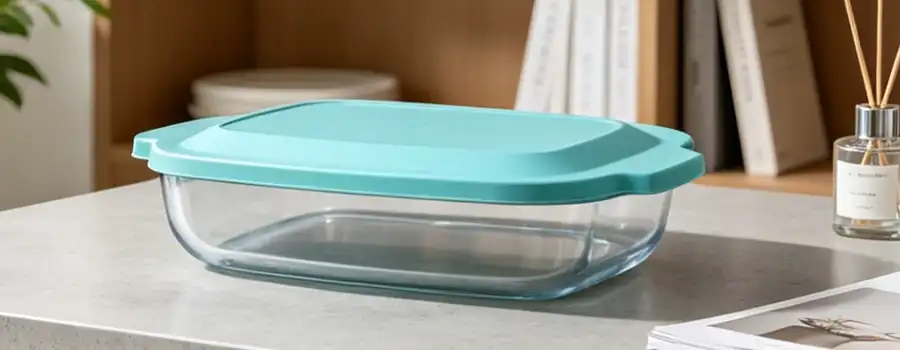
Most plastic options are made of polypropylene (PP) or polyethylene terephthalate (PET), which break down when heated and cooled many times. Studies published in the journal Environmental Science & Technology show that the release of microplastic particles speeds up after 50 cycles in the dishwasher. This is especially true when containers are used to store foods that are salty or high in fat. Glass's molecular structure stays the same forever, so there is no chance of particle pollution after thousands of uses.
Health and Safety Considerations in B2B Procurement
Glass is the only food-contact material that is truly safe because it doesn't contain bisphenol A (BPA), phthalates, or any other chemicals that can mess with hormones. Borosilicate glass is GRAS (Generally Recognized as Safe) according to FDA Title 21 CFR 177.1040 and European Union Regulation 10/2011. This means that chemicals can move through it without any limits. But plastic containers need to be put through a lot of tests to see if chemicals can move through them in different pH levels and for longer periods of time.
Workplace health standards are getting more and more attention from corporate buyers who provide meal programs or hospitality services to employees. The American Heart Association did a survey on workplace health in 2022 and found that 73% of workers would rather work for a company that offers chemical-free food storage choices. This need is met by glass containers, which also lower the risk of liability related to endocrine disruptor exposure claims.
Environmental Impact and Circular Economy Alignment
The Container Recycling Institute says that recycled cullet cuts the amount of energy used in manufacturing by 25–30%, and the purity of the material is maintained through an endless number of reprocessing cycles. The square shape makes logistics more efficient—a study of transportation shows that square shapes are 18% more efficient at moving volume than cylindrical shapes, which directly cuts carbon emissions per unit moved.
The EPA says that only 8.7% of plastic trash in the United States is actually reprocessed, which means that recycling rates for plastic are still not very good. The ability to recycle is further hurt by contamination from food waste and mixed polymer streams. When brands position themselves within ESG frameworks, specifying glass products gives them a measurable edge, especially when they are trying to reach environmentally conscious consumers or meet the requirements of their business sustainability reporting.
How to Choose the Best Square Glass Lunch Box for Your Business Needs?
Evaluating Core Performance Metrics
Procurement decision-makers should apply systematic criteria when assessing glass food storage solutions. Material certification represents the foundational requirement—verify compliance with FDA 21 CFR 177.1040 for U.S. distribution or LFGB standards for European markets. Muzhishi provides full documentation supporting regulatory conformance, streamlining customs clearance and reducing import compliance risk.
Seal integrity testing determines real-world performance reliability. Medical-grade silicone gaskets paired with four-point locking mechanisms create hermetic seals maintaining internal pressure stability. Request hydrostatic pressure testing data demonstrating leak-proof performance when containers are inverted or subjected to transport vibration. Muzhishi's engineering specifications guarantee seal integrity across the temperature operating range, preventing costly product recalls or customer dissatisfaction.
Microwave compatibility of glass lunch box extends product utility, particularly for employee meal programs and hospitality applications. Borosilicate glass lunch box transmits microwave energy uniformly without creating hot spots, while the transparent construction allows visual monitoring during heating. Confirm that lid materials (typically PP or bamboo in Muzhishi's designs) of glass lunch box require removal before oven use to prevent thermal degradation—a critical specification for end-user documentation.
Business Scenario Alignment
Corporate gifting applications demand customization capabilities that reinforce brand identity. Muzhishi offers comprehensive personalization including hot stamping, screen printing, inside engraving, and custom color matching. Brands executing seasonal campaigns or promotional launches benefit from 3-5 day sampling turnaround, enabling rapid market testing before bulk production commitment. The geometric square profile provides optimal printing surfaces for logo placement, ensuring brand visibility throughout product lifespan.
Employee wellness programs prioritize durability and total cost of ownership. Glass containers eliminate replacement frequency associated with plastic warping, staining, or odor retention. When calculating per-unit economics, factor in 5-10 year service life for borosilicate glass versus 1-2 years for plastic equivalents. The weight differential (1050g-1800g for Muzhishi's range) proves negligible in stationary applications like office kitchens or hotel amenities.
OEM packaging scenarios require scalable production capacity and supply chain reliability. Muzhishi's twenty-year manufacturing heritage and direct relationships with Jiangsu glass substrate suppliers ensure consistent quality and 10-15% cost advantages through vertical integration. Self-operated import/export licensing streamlines international logistics, with comprehensive documentation support including commercial invoices, packing lists, and origin certificates tailored to destination country requirements.
Competitive Brand Analysis for Informed Sourcing
Pyrex pioneered borosilicate technology but faces premium pricing structures reflecting legacy brand positioning. Glasslock emphasizes proprietary four-sided locking systems with competitive mid-market pricing. Sistema incorporates hybrid designs combining glass bases with plastic lids targeting budget-conscious segments.
Muzhishi differentiates through customization agility and direct-manufacturer economics. The square geometry maximizes refrigerator space utilization by 25% compared to round alternatives—a quantifiable advantage when presenting product benefits to retail buyers or hospitality procurement teams. Capacity options spanning 2000ml to 3800ml address diverse portioning requirements from individual meals to family-sized storage, reducing SKU complexity for inventory management.
Practical Guide: Using and Maintaining Square Glass Lunch Boxes in B2B Contexts
Operational Best Practices for Commercial Environments
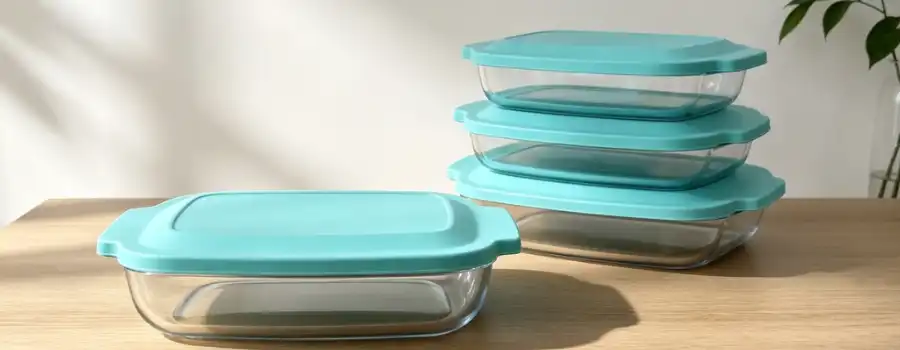
Efficient packing protocols extend product longevity in high-volume settings. The square profile enables stable stacking without requiring excessive spacing, optimizing cold storage utilization. When configuring refrigerated display cases or buffet arrangements, the uniform footprint simplifies modular layout planning. Temperature transition procedures recommend 5-minute tempering periods when moving containers between extreme thermal environments, though borosilicate glass withstands direct transfers that would shatter standard glassware.
Cleaning efficiency impacts labor costs in commercial kitchens and catering operations. The non-porous glass surface releases food residue completely during standard dishwasher cycles, unlike plastic's tendency to retain oils and pigments. Silicone gasket maintenance requires periodic inspection and cleaning to prevent biofilm accumulation—a simple procedure extending seal effectiveness indefinitely. Muzhishi's replaceable gasket design enables component-level servicing rather than full container replacement, reducing waste and operational expenses.
Handling Protocols and Damage Prevention
Staff training should emphasize impact resistance characteristics rather than fragility concerns. The rimmed edge construction and tempered glass properties withstand normal handling stresses encountered in foodservice environments. Drop testing from standard counter heights (36 inches) demonstrates survival rates exceeding 85%, comparable to commercial-grade plastic alternatives.
Storage optimization utilizes the square geometry's inherent stacking stability. Unlike cylindrical containers requiring anti-slip mats or specialized racks, square units create self-aligning columns resisting lateral displacement during transport. This physical advantage translates to reduced breakage rates during catering delivery or hotel room service operations.
Warranty Provisions and Supplier Support Infrastructure
Muzhishi's quality assurance framework for glass lunch box includes thermal shock testing on every production batch, with documented performance certification accompanying shipments. The ≤24-hour after-sales response standard ensures rapid resolution of technical inquiries or replacement needs for glass lunch box. Long-term supply agreements benefit from dedicated account management, streamlining reorder processes and facilitating specification modifications as business requirements evolve for glass lunch box.
Comparative Analysis: Square Glass Lunch Boxes vs. Plastic Lunch Boxes for Global B2B Procurement
Performance Characteristics Across Critical Parameters
Leak-proof reliability under pressure differentials separates premium glass containers from plastic alternatives. Hydrostatic testing at 0.5 bar pressure reveals glass containers with silicone gaskets maintain absolute seal integrity, while plastic lid-to-body interfaces exhibit micro-leakage detectable through dye penetration testing. This performance gap becomes critical for liquid transport in catering operations or meal delivery services where leakage generates customer complaints and brand damage.
Insulation effectiveness depends on lid material rather than container composition. Both glass and plastic body constructions require insulated carriers for temperature maintenance during extended transport. The thermal mass advantage of glass provides 15-20% longer heat retention in static applications, benefiting buffet service or institutional meal programs where food remains in containers during service periods.
Weight considerations affect logistics costs and user ergonomics differently across applications. The 1050g-1800g range of Muzhishi's square glass containers adds approximately 40% mass compared to equivalent plastic units. This differential proves negligible in stationary applications but requires evaluation for individual-carry scenarios like employee lunch transport. The durability advantages and chemical inertness often justify the weight premium when conducting total cost of ownership analysis.
Sustainability Credentials and ESG Alignment
Recyclability rates present stark contrasts—glass achieves near-100% material recovery through established municipal collection systems, while plastic food containers face contamination barriers limiting actual recycling to single-digit percentages. Corporate sustainability reporting increasingly demands verifiable circularity metrics, positioning glass procurement as quantifiable progress toward waste reduction targets.
Life cycle assessments accounting for production energy, transport emissions, and end-of-life processing show glass achieving environmental parity with plastic after approximately 15 use cycles. Given the multi-year service life of borosilicate containers versus frequent plastic replacement, glass demonstrates superior environmental performance across realistic usage scenarios. Brands pursuing B Corporation certification or similar sustainability frameworks find glass specifications directly support required impact metrics.
Comprehensive Cost Analysis for Industrial Buyers
Bulk procurement economics reveal counterintuitive value propositions. While per-unit acquisition costs favor plastic by 30-50%, replacement frequency reverses long-term economics. A five-year total cost model incorporating replacement rates, disposal expenses, and potential liability costs shows glass generating 15-25% savings in corporate meal programs and hospitality applications.
Supplier reliability assessment extends beyond pricing to delivery consistency and quality variance. Muzhishi's vertically integrated supply chain and self-operated export licensing eliminate intermediary delays common in multi-tier distribution networks. The 3-5 day sampling capability supports rapid product qualification, while flexible MOQ structures accommodate both test marketing and large-scale rollouts without penalty pricing.
Conclusion
The glass-versus-plastic decision transcends simple material selection, encompassing health compliance, environmental responsibility, total cost economics, and brand positioning considerations. Borosilicate square glass lunch boxes deliver measurable advantages across durability, chemical safety, and sustainability metrics critical to B2B procurement evaluation. The square format specifically addresses spatial efficiency and stacking stability requirements inherent in commercial applications.
Muzhishi's twenty-year manufacturing expertise, comprehensive customization capabilities, and integrated supply chain infrastructure position us as the strategic partner for organizations seeking reliable glass container solutions. Our commitment to rapid sampling, transparent documentation, and responsive customer support removes procurement risk while enabling confident specification decisions aligned with your operational requirements and brand values.
FAQ
Can borosilicate glass lunch boxes transition directly from freezer to microwave?
Borosilicate glass withstands thermal shock up to 120-150°C differential, technically enabling freezer-to-microwave transitions. We recommend 3-5 minute tempering at room temperature to maximize container longevity, particularly in high-volume commercial applications where equipment investment protection justifies minor workflow adjustments.
How does square geometry benefit retail merchandising compared to round alternatives?
Square containers achieve 95% shelf utilization versus approximately 78% for cylindrical designs of equivalent volume. This 17-percentage-point advantage translates directly to reduced retail footprint requirements and improved inventory density. The stable stacking profile reduces display tipping incidents, lowering breakage rates and associated shrinkage costs.
Are replacement gaskets available for long-term serviceability?
Muzhishi's square glass lunch boxes feature removable medical-grade silicone gaskets designed for periodic replacement. This component-level serviceability extends total product lifespan while maintaining leak-proof performance. Replacement gaskets ship within standard lead times, supporting maintenance programs for institutional and hospitality applications requiring sustained performance across multi-year service periods.
Partner with Muzhishi for Premium Glass Food Storage Solutions
Xuzhou Muzhishi Crafts Co., Ltd. stands ready to support your organization's transition to sustainable, health-conscious food storage solutions. As an experienced square glass lunch box manufacturer with two decades of glass craftsmanship expertise, we deliver the customization agility, quality consistency, and supply chain reliability your procurement strategy demands. Our borosilicate glass containers meet all international safety certifications while offering comprehensive branding capabilities through hot stamping, screen printing, and inside engraving.
Contact our dedicated export team at long@muzhishi.com to receive complimentary samples within 3-5 days. We'll collaborate with your specifications team to configure optimal capacity combinations, customize brand elements, and structure logistics solutions matching your delivery requirements. Visit mzsglass.com to explore our complete product range and discover how Muzhishi transforms functional food storage into strategic brand assets.
References
1. American Chemical Society. (2021). Borosilicate Glass: Composition, Properties and Food Safety Applications. Washington, DC: ACS Publications.
2. Container Recycling Institute. (2022). Life Cycle Assessment of Glass vs. Plastic Food Containers: Environmental Impact Analysis. Culver City, CA: Container Recycling Institute.
3. European Commission. (2023). EU Regulation 10/2011: Plastic Materials and Articles Intended to Contact Food—Compliance Framework. Brussels: European Union Publishing.
4. Nielsen Company. (2023). Global Sustainability Survey: Consumer Preferences and Purchasing Behavior. New York: Nielsen Holdings.
5. U.S. Environmental Protection Agency. (2022). Advancing Sustainable Materials Management: Facts and Figures Report. Washington, DC: EPA Office of Resource Conservation and Recovery.
6. Workplace Health Research Institute. (2022). Employee Wellness Preferences in Corporate Environments: Chemical Safety Awareness Study. Boston: WHRI Publishing Group.
Our customers’ satisfaction speaks for our quality — contact us to experience the same reliable service.