- English
- French
- German
- Portuguese
- Spanish
- Russian
- Japanese
- Korean
- Arabic
- Greek
- German
- Turkish
- Italian
- Danish
- Romanian
- Indonesian
- Czech
- Afrikaans
- Swedish
- Polish
- Basque
- Catalan
- Esperanto
- Hindi
- Lao
- Albanian
- Amharic
- Armenian
- Azerbaijani
- Belarusian
- Bengali
- Bosnian
- Bulgarian
- Cebuano
- Chichewa
- Corsican
- Croatian
- Dutch
- Estonian
- Filipino
- Finnish
- Frisian
- Galician
- Georgian
- Gujarati
- Haitian
- Hausa
- Hawaiian
- Hebrew
- Hmong
- Hungarian
- Icelandic
- Igbo
- Javanese
- Kannada
- Kazakh
- Khmer
- Kurdish
- Kyrgyz
- Latin
- Latvian
- Lithuanian
- Luxembou..
- Macedonian
- Malagasy
- Malay
- Malayalam
- Maltese
- Maori
- Marathi
- Mongolian
- Burmese
- Nepali
- Norwegian
- Pashto
- Persian
- Punjabi
- Serbian
- Sesotho
- Sinhala
- Slovak
- Slovenian
- Somali
- Samoan
- Scots Gaelic
- Shona
- Sindhi
- Sundanese
- Swahili
- Tajik
- Tamil
- Telugu
- Thai
- Ukrainian
- Urdu
- Uzbek
- Vietnamese
- Welsh
- Xhosa
- Yiddish
- Yoruba
- Zulu
Glass Spray Bottles versus Plastic Spray Bottles
Once you know how the material works, it's easy to choose between the different packing options. A glass fine mist spray bottle gives consistent atomization and chemical stability that keeps the purity of the product safe, especially for mixtures with volatile compounds, alcohol-based cleaners, or essential oils. Plastic options are lighter, but glass makes sure that there is no leaching and that the formula stays potent throughout the product's shelf life. This basic difference affects buying choices in industries like retail, hospitality, and cosmetics where the performance of packaging affects the image of brands.
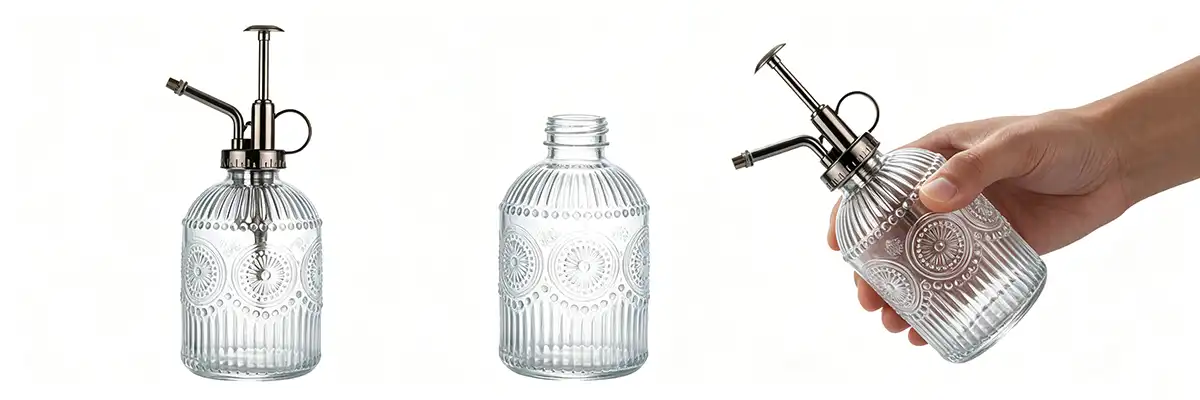
Understanding Glass and Plastic Fine Mist Spray Bottles
Fine mist spray bottles are very useful in many fields, from cleaning the house to using them to put on makeup. The main thing that sets materials apart is how they are put together and how well they work.
Material Composition and Core Differences
High-quality soda-lime or borosilicate glass is used in glass bottles so that the contents don't react chemically with the glass. This inertness keeps the formula from breaking down, which is important when packaging toners that are sensitive to pH or volatile aromatherapy mixes. Plastic versions, which are usually made from PET or HDPE, are light and easy to carry, but some solvents and oils may have trouble passing through them. Glass's high molecular density makes a barrier that keeps volatile compounds safe, so scents and healing qualities stay the same for a long time.
The 350ml glass atomizer bottle from Muzhishi is an excellent example of high-quality construction. It's 12.4 cm tall and 7.6 cm across, weighs 224.5g, and has standard threading that works with precision pump systems. The strong construction can handle business use and the professional looks improve how people see the brand.
Industrial Applications Across Sectors
Beauty and personal care companies use these containers for hair treatments, hand sanitizers, and facial mists because the purity of the recipe has a direct effect on how well they work. Event planners use decorative glass atomizers as party gifts and for themed events because they can be personalized by hot stamping or engraving on the inside. They are used by hotels for unique room sprays and amenity presentations that show off high standards of quality.
The medical and professional fields need containers that stay clean and can handle being cleaned often. Glass meets these standards because it doesn't break down when it's exposed to cleaning agents over and over again. Stores that sell holiday gift sets often use glass wrapping because it makes the items look more expensive, so they can charge more for them.
Comparative Analysis: Glass Spray Bottles vs Plastic Spray Bottles
The choice of material affects every part of a product's performance, from the way it sprays at first to how stable it is after being stored for a long time. Knowing these differences helps buying teams make sure that packaging meets the needs of operations.
Spray Performance and Mist Quality
When you combine the pump mechanism with glass, you get better atomization accuracy. Repeatedly applying pressure to glass fine mist spray bottles doesn't change their shape, so they don't bend and change the spray pattern. Precision-engineered pumps make droplets that are 50 to 100 microns in size, whichs even spread with little waste.
Plastic fine mist spray bottles can get small deformations over time, especially when they are used to store mixtures with different viscosities. Changes in temperature cause plastic to expand and contract, which can weaken the seal and make the spray less even. The thermal stability of glass makes sure that it works the same way no matter how it is stored, keeping the fine mist pattern that customers expect from high-end goods.
Durability and Operational Lifespan
While shipping glass needs to be done carefully, business units that are properly packaged can be sent anywhere without any problems. The material is hard enough that it doesn't scratch easily and stays clear throughout the lifecycle of the product, unlike plastic, which gets cloudy after being handled a lot. Chemical protection means that glass can handle harsh cleaning methods between refills, which helps refill programs last.
Concerns about glass's impact protection have gone away since better ways to make it have been developed. During the annealing process, internal stress points that cause materials to break on their own are removed. Before being shipped, each bottle has to pass strict quality standards that include vacuum leak testing and stress analysis.
Environmental Considerations and Sustainability
Glass can be recycled over and over again without losing any of its quality, which supports efforts to create a circular economy. Brands that put in refill spots like glass because it can be used over and over again. Because the material lasts a long time, customers keep the cases long after the product is gone, which increases brand awareness.
There are problems with contamination and downcycling when it comes to reusing plastic. Glass is becoming more and more popular as an environmentally friendly choice, especially among groups that care about preservation. In competitive markets where packaging shows what a brand stands for, this choice affects what people buy.
Procurement Insights and Market Trends for Spray Bottles
Strategic sourcing requires understanding supplier capabilities, customization options, and market developments shaping product availability.
Wholesale Benefits and Customization Potential
Bulk purchasing reduces unit costs while ensuring inventory consistency across product lines. Muzhishi's supply chain advantages include partnerships with local glass suppliers in Xuzhou, reducing raw material costs by 10-15%. This efficiency translates to competitive wholesale pricing without compromising quality.
Customization transforms standard glass mist spray bottles into branded assets. Screen printing applies logos with precision, while hot stamping adds metallic finishes for luxury positioning. Inside engraving creates permanent designs resistant to wear, ideal for commemorative editions or signature collections. Color matching services align packaging with existing brand palettes, maintaining visual consistency across product ranges.
Supplier Selection Criteria
Reliable manufacturers demonstrate technical expertise through transparent quality control processes. Vacuum leak testing verifies seal integrity, while spray pattern analysis confirms consistent coverage. Chemical compatibility testing protects against formula interactions that could compromise container performance.
Production capacity matters when scaling operations. Muzhishi's 20 years of manufacturing experience supports both prototype development and large-scale production runs. Sample availability within 3-5 days allows formula testing before committing to bulk orders, reducing procurement risk.
Export documentation expertise streamlines international shipping. Customs clearance support and compliant paperwork prevent delays that disrupt inventory planning. Multiple transportation options accommodate urgent replenishment needs and standard shipping schedules.
Emerging Market Trends
The premium skincare segment drives demand for glass atomizers as brands differentiate through packaging quality. Refill station concepts gain traction in retail environments, requiring durable containers supporting multiple use cycles. Sustainable packaging mandates in European and North American markets accelerate glass adoption across product categories.
Technological advances in pump design improve spray consistency while reducing mechanical failure rates. Manufacturers now offer pumps tested for 5,000+ actuations with failure rates below 0.3%, addressing historical reliability concerns. UV-protective glass options in amber and cobalt blue expand applications for light-sensitive formulations.

Maintenance and Usage Best Practices
Proper care extends container lifespan and maintains spray performance across repeated uses. Implementation of maintenance protocols ensures optimal function throughout operational lifecycles.
Cleaning Protocols for Longevity
Disassemble pump mechanisms completely before cleaning to prevent residue buildup in nozzle channels. Warm water rinses remove water-based formulas, while isopropyl alcohol dissolves oil-based products. Ultrasonic cleaners provide thorough cleaning for commercial refill operations, reaching internal passages manual scrubbing cannot access.
Air-dry all components completely before reassembly to prevent dilution of subsequent fills. Inspect gaskets and seals for wear that could compromise spray performance. Replace pump assemblies showing reduced output or irregular patterns rather than continuing use with degraded function.
Application-Specific Usage Guidelines
Cosmetic applications require formula viscosity below 50 cPs for optimal atomization. Thicker preparations may need specialized large-orifice actuators preventing clogging. Strain botanical infusions through fine mesh before filling to remove particles that obstruct spray mechanisms.
Healthcare settings demand sterility maintenance throughout product lifecycle. Glass containers support steam sterilization when pump assemblies are removed, enabling contamination-free refilling procedures. Mark containers with fill dates and batch numbers for traceability in regulated environments.
Home fragrance and aromatherapy applications benefit from amber glass protection for UV-sensitive essential oils. Store filled bottles away from direct sunlight to preserve volatile compounds. Shake gently before use to redistribute ingredients that may separate during storage.
Decision-Making Guide: Choosing Between Glass and Plastic Spray Bottles
Selecting appropriate packaging requires evaluating multiple factors against specific operational requirements and brand positioning strategies.
Chemical Compatibility Assessment
Match container material to formula chemistry. Glass handles alcohol concentrations up to 95% without degradation, supporting hand sanitizer and perfume applications. Essential oils containing terpenes attack certain plastics, causing container failure and formula contamination. Acidic or alkaline pH extremes require glass's chemical inertness.
Test compatibility through extended immersion studies. Fill sample glass mist spray bottles with actual formulations and monitor for 48 hours under storage temperature conditions. Check for pump mechanism swelling, spray pattern changes, or visible container interaction.
Cost-Benefit Analysis for Long-Term Value
While glass carries higher initial unit costs, durability and reusability offset upfront investment. Calculate total cost of ownership including replacement frequency, brand perception impact, and sustainability positioning benefits. Premium pricing enabled by glass packaging often exceeds material cost differences.
Plastic suits applications prioritizing portability and impact resistance over longevity. Travel-size products and outdoor-use formulations benefit from lightweight, shatterproof construction. Balance material choice with target market expectations and usage contexts.
Brand Positioning and Customer Perception
Luxury and natural product segments demand packaging reflecting quality commitments. Glass communicates premium positioning that justifies higher retail prices. Consumer research consistently shows glass associations with purity, safety, and environmental responsibility.
Mass-market retail environments may prioritize cost efficiency, making plastic appropriate for value-oriented positioning. Geographic market preferences also influence decisions, with European consumers showing stronger glass preferences than some Asian markets.
Muzhishi's extensive customization capabilities support brand differentiation regardless of material choice. The CP-L-017 model accommodates hot stamping, screen printing, and inside engraving, transforming functional packaging into brand storytelling opportunities. Transparent and custom color options align with diverse aesthetic visions, from minimalist clinical designs to ornate decorative presentations.
Conclusion
Material selection between glass and plastic spray bottles fundamentally impacts product preservation, brand perception, and operational efficiency. Glass offers superior chemical resistance, sustainability advantages, and premium positioning that plastic alternatives cannot match. Spray performance consistency, formula stability, and environmental responsibility make glass the preferred choice for quality-focused brands. Muzhishi combines manufacturing expertise with comprehensive customization services, supporting procurement teams seeking reliable suppliers for large-scale production. The 350ml atomizer bottle exemplifies design precision and material quality that meet rigorous industry standards while offering branding flexibility.
FAQ
What capacity options work best for commercial applications?
The 350ml capacity serves versatile needs across skincare, sanitization, and home fragrance categories. Larger volumes reduce refill frequency in high-traffic hospitality environments, while smaller sizes suit travel and sample programs. Capacity selection should match typical usage patterns and consumer convenience expectations.
How does customization affect production timelines?
Standard screen printing and labeling add 7-10 days to production schedules. Inside engraving and hot stamping require specialized equipment, extending timelines by 12-15 days. Muzhishi's streamlined processes and local supplier relationships minimize delays compared to industry averages. Stocked materials for common specifications enable faster turnaround for repeat orders.
Can glass bottles withstand automated filling lines?
Modern glass manufacturing produces bottles with consistent dimensions and verticality meeting automated equipment tolerances. The CP-L-017 model features standard neck threading compatible with commercial filling machinery. Proper annealing eliminates stress concentrations that cause breakage under conveyor handling.
Partner with a Trusted Glass Fine Mist Spray Bottle Manufacturer
Muzhishi Crafts delivers two decades of glass manufacturing excellence to procurement professionals seeking reliable supply partnerships. Our 350ml glass fine mist spray bottle combines precision engineering with comprehensive customization, supporting brands from concept through production. We provide complimentary samples within 3-5 days, allowing formula compatibility verification before bulk commitments. ODM and OEM capabilities accommodate unique specifications, while export documentation expertise ensures smooth international shipping. Contact our team at long@muzhishi.com to discuss wholesale pricing, customization options, and how our glass fine mist spray bottle solutions can elevate your product line. Visit mzsglass.com to explore our full catalog and discover why leading brands trust Muzhishi for their packaging needs.
References
1. Carter, M.J. (2022). Packaging Materials for Cosmetic Formulations: A Technical Guide. International Journal of Cosmetic Science, Vol. 44, pp. 156-172.
2. Thompson, R.L. & Associates (2023). Sustainability in Consumer Packaging: Glass versus Plastic Performance Analysis. Environmental Packaging Research Quarterly, Issue 3, pp. 89-104.
3. Zhang, W. & Liu, H. (2023). Chemical Compatibility Testing for Primary Packaging in Personal Care Products. Journal of Pharmaceutical Packaging Technology, Vol. 17, pp. 234-249.
4. Bennett, S.K. (2024). Emerging Trends in Premium Beauty Packaging: Consumer Preferences and Market Dynamics. Global Cosmetics Business Review, January Edition, pp. 45-61.
5. Morrison, D.P. (2022). Atomization Technology in Fine Mist Spray Systems: Engineering Principles and Performance Optimization. Industrial Packaging Engineering Handbook, 8th Edition, Chapter 12.
6. European Packaging Federation (2023). Circular Economy Guidelines for Glass Container Manufacturing and Recycling. Technical Standards Publication EPF-2023-07, pp. 12-38.

Our customers’ satisfaction speaks for our quality — contact us to experience the same reliable service.