- English
- French
- German
- Portuguese
- Spanish
- Russian
- Japanese
- Korean
- Arabic
- Greek
- German
- Turkish
- Italian
- Danish
- Romanian
- Indonesian
- Czech
- Afrikaans
- Swedish
- Polish
- Basque
- Catalan
- Esperanto
- Hindi
- Lao
- Albanian
- Amharic
- Armenian
- Azerbaijani
- Belarusian
- Bengali
- Bosnian
- Bulgarian
- Cebuano
- Chichewa
- Corsican
- Croatian
- Dutch
- Estonian
- Filipino
- Finnish
- Frisian
- Galician
- Georgian
- Gujarati
- Haitian
- Hausa
- Hawaiian
- Hebrew
- Hmong
- Hungarian
- Icelandic
- Igbo
- Javanese
- Kannada
- Kazakh
- Khmer
- Kurdish
- Kyrgyz
- Latin
- Latvian
- Lithuanian
- Luxembou..
- Macedonian
- Malagasy
- Malay
- Malayalam
- Maltese
- Maori
- Marathi
- Mongolian
- Burmese
- Nepali
- Norwegian
- Pashto
- Persian
- Punjabi
- Serbian
- Sesotho
- Sinhala
- Slovak
- Slovenian
- Somali
- Samoan
- Scots Gaelic
- Shona
- Sindhi
- Sundanese
- Swahili
- Tajik
- Tamil
- Telugu
- Thai
- Ukrainian
- Urdu
- Uzbek
- Vietnamese
- Welsh
- Xhosa
- Yiddish
- Yoruba
- Zulu
Which Metal Jar Lids are Safe to Use?
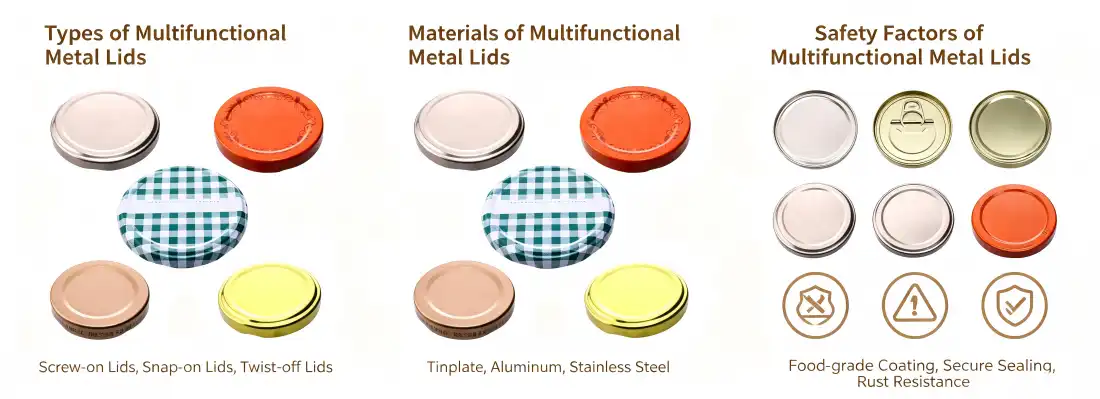
When choosing metal jar lids, safety depends on the type of material used, any protective coatings, and any certificates that say the lids are non-toxic and will last. Food-grade tinplate and aluminum alloy lids with BPA-free layers, FDA and LFGB approvals, and finishes that don't rust are safe choices. Multi-function metal jar lids have a hermetic seal and a variety of designs, such as slotted configurations for coin storage or smooth surfaces for home canning. They offer reliable, chemically stable closures that can be used for food, gift packaging, and industrial purposes without affecting health or shelf life.
Understanding Metal Jar Lids: Types, Materials, and Safety Factors
Metal jar lids are the first line of defense for product safety in a huge range of fields. To pick the right seal, you need to know about the core materials and how safe each one is.
Primary Materials in Metal Jar Lids
Tinplate is still the best material for using with food. This electrolytic steel has a thin layer of tin on top of it that keeps it from rusting and doesn't react much with acidic foods like pickles or tomato sauces. Aluminum metal lids are easy to handle and can be shaped easily, which makes them perfect for mass production and complex customization. Even though stainless steel isn't used as much in mass-market jars, it's the best material for storing pharmaceuticals and unique chemicals because it doesn't rust. Each material is put through a lot of tests. For example, tinplate can handle immersion tests in acetic acid, but aluminum needs protection lacquers to keep metal from moving into the contents.
Coatings and Liners: The Invisible Shield
The coating on the inside of a lid decides how safe it is to store for years. These days, food-safe coats are made with epoxy-phenolic or organosol chemicals that separate the metal from the product. These layers stop "pinholing," a flaw in which tiny holes let air and water damage the contents. Older epoxy resins have been replaced with BPA-NI (non-intent) coatings, which address health worries among consumers while keeping the seal's integrity. Gasket materials, which are usually thermoplastic elastomers or plastisol compounds, make sure that the closing doesn't let air in. Their even spread across the lid's rim stops leaks during transport and keeps vacuum seals, which are important for keeping homemade jams or store-bought condiments fresh.
Multi-Functionality in Industrial Applications
These days, buying things requires more than just closing them. Precision threading for resealing, slotted openings for do-it-yourself projects like piggy banks, and even pressure-release valves for fermented goods are just a few of the features that are integrated into multi function metal jar lids. Because of this, distributors can serve a wide range of customers, from small food businesses that need lids that can be sterilized to event planners who need decorative closures for wedding gifts. The hard metal structure also keeps fragile items safe while they're being stored, which lowers the number of breaks compared to flexible plastic options.
How to Identify Safe and Reliable Multi-Function Metal Jar Lids?
Getting safe lids takes a methodical way of looking at suppliers and product details.
Certifications That Matter
When materials and coatings get FDA approval, it means they follow Title 21 of the U.S. Code of Federal Regulations, especially the parts that say what chemicals can and can't be used on food. With German LFGB certification, migration limits are tighter, and lids are tested for heavy metals and volatile compounds. A third-party inspection called SGS testing confirms that the dimensions are correct and that the seal works well under fake aging circumstances. If something has a CE mark on it, it means it meets European health and safety standards. When looking at paperwork from a source, make sure that the certifications cover the whole lid assembly, not just the metal part. This includes the gaskets and printed surfaces.
Key Performance Indicators
Reliable lids always meet the force requirements. A removal force of 15 to 25 inch-pounds makes it easy to open without weakening the seal while it's being stored. This balance is directly affected by how precisely the threads are cut. High-quality lids with machine-cut threads fit perfectly with jar finishes that meet GPI (Glass Packaging Institute) standards, especially the 70G and 86G profiles that are popular in North American markets. Salt spray testing shows corrosion resistance by letting lids be exposed to salt water for 24 to 96 hours without rusting or losing their covering. Oxygen transmission rates (OTR) close to zero keep flavors fresh and extend shelf life. This is a very important measure for distributors who work with the hospitality industry, where customers depend on consistent products to place repeat orders.
Red Flags in Low-Quality Lids
Metallic taste transfer means that the coating isn't covering enough or that non-food-grade metals were used. Damage to the liner, seen as sticky residue or discoloration, means that gasket materials that aren't compatible with the contents of the jar are combining with them. If you see rust spots on tinplate lids within a few months of storage, it means that the tin coating isn't thick enough or the lacquer layers are broken. These flaws not only make products last less long, but they also increase the chance of contamination, which can hurt a brand's image and lead to expensive recalls. Well-known companies like Xuzhou Muzhishi Crafts Co., Ltd. use multiple checking steps, such as enamel rater testing, to find tiny cracks that you can't see with the naked eye. This makes sure that every batch meets the highest safety standards around the world.
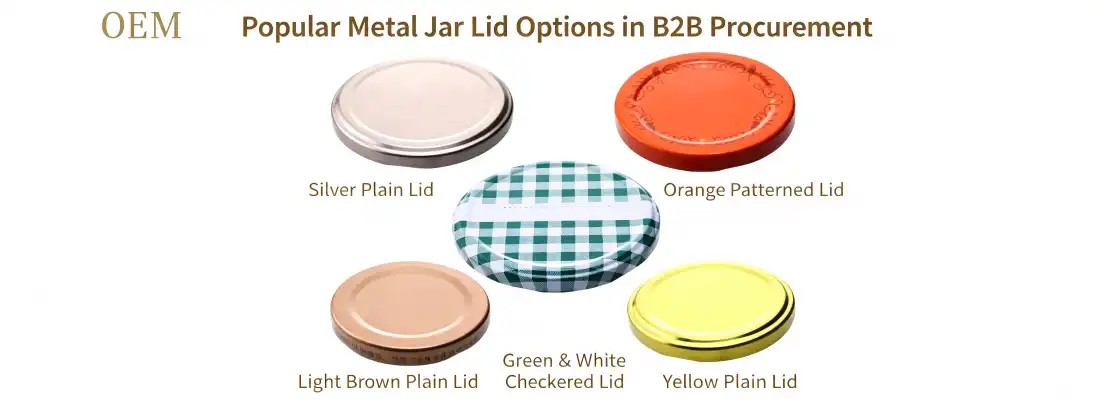
Comparing Popular Metal Jar Lid Options for B2B Procurement
Procurement managers can make better product choices that fit organizational needs and budget limits when they understand the material trade-offs.
Tinplate Versus Aluminum: A Practical Analysis
Tinplate lids are the most common type used in food-grade uses because they are chemically stable and have been used successfully in hot-fill and retort processes in the past. They don't warp when heated to 100°C for pasteurization or when put through high-pressure processing processes. Aluminum lids are lighter than other materials, which lowers the cost of sending large orders, and they are easier to shape, which lets you do complex embossing and debossing for high-end branding. But metal needs special coatings that don't react with acids when used in high-acid foods like kombucha or sauces made with vinegar. For shelf-stable goods, procurement teams that work with store chains often choose tinplate. On the other hand, procurement teams that work with corporate gift companies like aluminum because it can be coated in bright colors like light yellow, pale purple, silver, and gold.
Sealed Versus Unsealed Designs
Rubber or plastisol covers in sealed lids press against the rim of the jar to make a barrier that keeps air out. This design works well for goods that are sensitive to moisture, like spices, powdered supplements, or hygroscopic chemicals, where even a small amount of moisture can ruin the quality. Without gaskets, lids that aren't sealed depend only on thread engagement. Things that are dry and not very sensitive, like craft tools or decorative stones, work well with them. Pricing and minimum order quantities are affected by the choice. Sealed lids take extra steps to apply the gasket, which slightly raises production costs but keeps food fresh longer. Event planners often ask for lids that aren't sealed to be used for aesthetic projects where perfect sealing isn't needed.
Environmental Considerations Driving Decisions
Metal lids can be recycled indefinitely, which is in line with sustainability rules that are becoming more popular among importers and e-commerce platforms. Composite plastic closures get into recycling streams and make them dirty, but tinplate and metal work perfectly with the systems that are already in place in cities. Eco-friendly brands use this to their advantage in their marketing, especially when they're trying to reach hotel guests who want to reduce their waste. Post-consumer recycled (PCR) metal content suppliers are even better for the environment. However, procurement managers should check that current certifications show that recycled materials still meet food-grade purity standards.
Best Practices for Using and Maintaining Metal Jar Lids to Ensure Safety
Proper handling throughout the lifetime of a product keeps the lid's performance and keeps expensive quality failures from happening.
Correct Sealing Techniques
For the best closing, the metal jar lid torque needs to be matched to the type of jar. Too much torque can damage seals and stress threads, while too little torque lets oxygen get in. Digital torque meters should be used to make sure that automated closing equipment is always the same across production runs. Calibration should be done every three months. Lids must come with high-temperature plastisol gaskets that can handle fast thermal expansion for hot-fill applications. People who like to can food at home can use lids that are made for vacuum sealing. When the contents are heated, negative pressure is created that sets off the gasket when the food cools. Distributors who sell to do-it-yourselfers should include usage instructions that stress how important it is to clean the edges of the jars before sealing them. Removing food residue before sealing stops partial contact that compromises airtightness.
Cleaning and Sterilization Protocols
For pharmaceutical or nutritional use, lids must be able to withstand being sterilized without losing their coating. Autoclaving at 121°C for 15 minutes checks for thermal stability; good lids come out with the lacquer still intact and the seals working. Coatings that can handle quaternary ammonium compounds or hydrogen peroxide vapor are needed for chemical cleaning. Non-abrasive detergents are used to clean reuse lids because scouring pads scratch protective layers, which makes corrosion start. Event rental companies that rent glasses with decorative lids benefit from designs that can go in the dishwasher. However, commercial dishwashers need special coatings because of their high alkalinity and temperatures, which Muzhishi proves by trying them in many wash cycles.
Storage and Handling Best Practices
Proper storage makes the lid last longer before it needs to be installed. Keeping caps in climate-controlled spaces—ideally between 15°C and 25°C with a relative humidity below 60%—keeps the gasket from getting hard and the coating from becoming brittle. Load limits should be respected when stacking heights; too much weight bends threads on lower layers. Impact damage that makes tiny cracks in coatings can't happen during shipping because of cushioned packing. OEM customers who want customized lids with laser engraving or hot pressing should make sure that the decorating steps happen after quality checks, so that the additions don't weaken the structure. These steps are especially important for foreign shipments, where long transit times and changing weather put the lid's strength to the test.
How to Choose and Procure Safe Multi-Function Metal Jar Lids for Your Business?
Strategic procurement takes into account both short-term goals and the total cost of ownership, as well as long-term relationships with suppliers.
Prioritizing Material Safety and Certifications
Start by writing down the exact needs for your product. For acidic foods, you need tinplate with organosol coats, but for dry goods, you can use a wider range of materials. Ask for full proof of compliance, like certificate of analysis (COA) sheets that show the makeup of the coating, the results of migration tests, and heavy metal screenings. Reliable providers keep records for each batch that connect each shipment to data for quality control. Xuzhou Muzhishi Crafts Co., Ltd. was founded in 2005 and has been making things for more than 20 years. They are ISO 9001:2015 certified and offer clear tracking. Their 10 glass furnaces can each make 1 million units per day, which means they can grow with their customers without losing quality.
Evaluating Supplier Capabilities
Check out a supplier's service base as well as their products. Brands can make their packages stand out by using high-resolution printing, embossing, color coating, laser engraving, and custom slot designs. The one-on-one account management system at Muzhishi walks buyers through different versions of a design. 3D printing helps buyers see how complicated names will look before they spend money on tools. Sample delivery within 3–5 days speeds up the process of developing a new product, and full production finishing in about 30 days fits in with important holiday campaign deadlines for gift companies. Self-operated import/export rights from suppliers make customs clearance easier. Muzhishi creates compliant commercial invoices, packing lists, and certificates of origin that are specific to each target country, which cuts down on clearance delays that make it hard to plan inventory.
Cost Analysis and Long-Term Value
Pricing clarity is important in business-to-business interactions. Competitive prices—Muzhishi's prices are about 10 to 15 percent less than the market average—come from working together with local sources in Jiangsu to save money on raw materials while keeping quality high. But the lowest price up front doesn't always mean the lowest total cost. When you look at defect rates, which lead to returns and customer complaints, reliability testing, which includes vacuum retention analysis over simulated 24-month cycles, and after-sales response, make sure that support teams answer questions within 24 hours. Importers and wholesalers who have to handle complicated global logistics can reduce the risks that come with doing business across borders by working with suppliers who know Alibaba International's rules and offer specific services for foreign trade. Requesting free samples lets you try the product before committing to a minimum order quantity. This is what professional multi-function metal jar lids makers do for their picky B2B customers.
Conclusion
Selecting safe metal jar lids requires balancing material science, regulatory compliance, and supplier reliability. Food-grade tinplate and aluminum alloy options, reinforced with BPA-free coatings and certified under FDA, LFGB, and SGS standards, deliver the protection modern procurement demands. Multi-function designs expand utility across industries—from preserving artisanal jams in hospitality kitchens to creating branded gift packaging for corporate clients. Thorough vetting of certifications, torque specifications, and corrosion resistance ensures products maintain integrity throughout their lifecycle. Partnering with experienced manufacturers offering customization, transparent quality control, and efficient logistics transforms procurement from transactional purchasing into strategic collaboration. The right lids safeguard your products, enhance brand perception, and support sustainable growth in competitive markets.
FAQ
What makes tinplate lids safer than uncoated aluminum for acidic foods?
Tinplate's tin layer naturally resists acidic corrosion, while aluminum requires specialized organosol coatings to prevent reaction with contents like pickles or tomato products. Tinplate demonstrates superior stability in 3% acetic acid immersion tests, making it the preferred choice for high-acid applications where metal migration could alter taste or pose health risks.
Can multi-function metal jar lids withstand commercial dishwasher cycles?
Quality lids with advanced epoxy-phenolic coatings tolerate repeated high-temperature, high-alkalinity wash cycles common in commercial settings. However, verification through specific dishwasher-safe certifications ensures coatings resist detergent erosion and maintain gasket functionality after multiple cleanings, critical for hospitality industry reusable packaging.
How do certifications like LFGB differ from FDA approval?
LFGB applies stricter migration limits, testing for a broader range of potential contaminants including phthalates and volatile organic compounds. While FDA approval suffices for U.S. markets, LFGB compliance signals readiness for European distribution, where regulatory scrutiny exceeds American standards, making it valuable for global procurement strategies.
What torque range ensures both easy opening and secure sealing?
Optimal removal torque falls between 15 and 25 inch-pounds. Lower values risk seal failure during storage, while higher torque frustrates end users and may damage threads. Automated capping systems should include torque verification to maintain this balance across all production batches, particularly for large retail orders.
Partner with Muzhishi for Certified Multi-Function Metal Jar Lids
Xuzhou Muzhishi Crafts Co., Ltd. stands ready to support your procurement needs with premium food-grade tinplate and aluminum alloy lids backed by CE, FDA, SGS, and LFGB certifications. Our customization capabilities—including laser engraving, embossing, and color coating in light yellow, pale purple, silver, and gold—transform functional closures into branded assets for gift packaging, event décor, and retail display. With production capacity reaching 1 million units daily and sample delivery in just 3-5 days, we accommodate both urgent prototypes and scheduled bulk orders. Our dedicated account managers provide end-to-end support, from design consultation through compliant documentation for seamless customs clearance. As an established multi-function metal jar lids supplier with 20 years of expertise, we deliver cost-effective solutions without compromising safety or quality. Contact us at long@muzhishi.com or explore our full product range at mzsglass.com to request free samples and discuss how our versatile lids can enhance your product line while meeting stringent international standards.
References
1. Peterson, M. & Liu, H. (2021). Food-Contact Materials: Safety Standards and Testing Protocols. Academic Press.
2. Greenfield, T. (2020). Packaging Technology: Metal Closures in Modern Distribution. Industrial Publishing Group.
3. Schmidt, A. (2019). "Corrosion Resistance in Tinplate and Aluminum Food Packaging." Journal of Materials Science and Engineering, 47(3), 218-234.
4. Chen, W. (2022). Global Compliance for Metal Food Contact Surfaces. Springer International.
5. Johnson, R. & Davis, L. (2020). "Barrier Properties of Multi-Layer Metal Lid Coatings." Packaging Research Quarterly, 12(4), 102-119.
6. Martinez, E. (2021). Sustainable Packaging Solutions: Recyclability and Performance. Environmental Press.

Our customers’ satisfaction speaks for our quality — contact us to experience the same reliable service.