- English
- French
- German
- Portuguese
- Spanish
- Russian
- Japanese
- Korean
- Arabic
- Greek
- German
- Turkish
- Italian
- Danish
- Romanian
- Indonesian
- Czech
- Afrikaans
- Swedish
- Polish
- Basque
- Catalan
- Esperanto
- Hindi
- Lao
- Albanian
- Amharic
- Armenian
- Azerbaijani
- Belarusian
- Bengali
- Bosnian
- Bulgarian
- Cebuano
- Chichewa
- Corsican
- Croatian
- Dutch
- Estonian
- Filipino
- Finnish
- Frisian
- Galician
- Georgian
- Gujarati
- Haitian
- Hausa
- Hawaiian
- Hebrew
- Hmong
- Hungarian
- Icelandic
- Igbo
- Javanese
- Kannada
- Kazakh
- Khmer
- Kurdish
- Kyrgyz
- Latin
- Latvian
- Lithuanian
- Luxembou..
- Macedonian
- Malagasy
- Malay
- Malayalam
- Maltese
- Maori
- Marathi
- Mongolian
- Burmese
- Nepali
- Norwegian
- Pashto
- Persian
- Punjabi
- Serbian
- Sesotho
- Sinhala
- Slovak
- Slovenian
- Somali
- Samoan
- Scots Gaelic
- Shona
- Sindhi
- Sundanese
- Swahili
- Tajik
- Tamil
- Telugu
- Thai
- Ukrainian
- Urdu
- Uzbek
- Vietnamese
- Welsh
- Xhosa
- Yiddish
- Yoruba
- Zulu
How to Choose the Right Metal Jar Lids?
To choose the right metal jar lid, you need to carefully consider the type of material used, the sealing technology, and the supplier's skills. Food-grade tinplate or aluminum alloy multi-function metal jar lids offer better barrier protection, customization options, and regulatory compliance that are necessary for companies in the home decor, hospitality, gift packaging, and retail sectors. The choice affects how long the product lasts, how the brand looks, and how happy the customers are. In today's competitive market, making smart buying decisions is essential for staying ahead of the competition.
Understanding Multi-Function Metal Jar Lids and Their Benefits
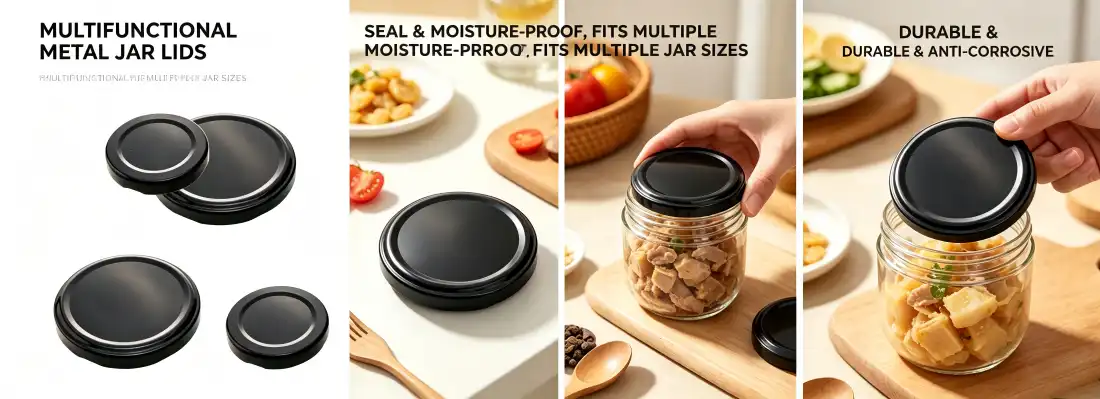
Metal closures are no longer just easy ways to cover things. Decorative finishes, advanced sealing mechanisms, and specific features that meet a wide range of business needs are all built into today's multi-function metal jar lids. These closures combine technology for keeping food fresh with good looks. They give buying teams a useful way to protect products and make them stand out on the shelf.
Superior Material Construction
The standard for quality closures in the business is food-grade tinplate and aluminum alloy. Tinplate is very chemically stable, so it doesn't mix with acidic foods like pickles, kombucha, or specialty sauces. The material is safe to touch food because it is made of non-toxic materials that meet strict FDA and LFGB standards. Alternatives to aluminum alloys are strong, lightweight, and resistant to corrosion. This is especially helpful for goods that are stored in wet or changing conditions. Both materials can be recycled over and over again, which meets the growing demands for sustainability in retail and hospitality buying strategies.
Enhanced Sealing Performance
Precision-threaded edges make closures that are effective and keep the integrity of the product throughout the distribution chain. The rigid metal structure keeps it from deforming while it's being moved and handled, which is a common way for plastic options to break. Airtight sealing technology keeps air and other contaminants out, which extends the shelf life of perishable goods and keeps the flavors of specialty foods. This hermetic seal feature is especially useful for wedding planners who need to find homemade favor jars or for sellers who have to keep track of seasonal inventory that needs to be sold quickly.
Versatile Functionality Across Industries
The modern aluminum closures are useful for more than just canning. Standard jars can be turned into useful coin banks with slotted designs, which makes them appealing to gift companies that are coming up with new, creative products. Standard screw-top designs can hold jams, honey, spices, and artisanal sauces for hotels and restaurants that are putting together labeled pantry collections. The ability to do two things at once lets suppliers target different types of customers while making inventory management easier. This reduces the number of SKUs needed while increasing the number of possible uses.
Core Criteria for Choosing the Right Metal Jar Lid
Aligning product specs with operational needs is key to successful procurement. A strategic review will make sure that the closures you choose work well, match your brand, and save you money all along the supply chain.
Application-Specific Requirements
Home decor brands need finishes that match the latest trends in interior design while still being reliable. Finishes in light yellow, pale purple, silver, and gold give you a lot of style options that go with a wide range of seasonal and lifestyle items. Planners of events need themed choices that make wedding favors or party packaging look better. When buying in-room amenities or condiments for restaurants, hospitality buyers look for jars that are durable and shut well every time. Figuring out your main use case helps you choose materials and set goals for customization.
Material Safety and Compliance
Following the rules helps keep a brand's image and market access safe for products like metal jar lid. European safety standards are confirmed by CE certification, and FDA approval makes sure that the materials used are safe for food contact uses. SGS testing confirms that the product will last and work well in real life, and LFGB certification meets the standards of German food law, which are important for European distribution. When buying things for foreign markets, procurement teams need to make sure that the paperwork from suppliers covers all the necessary jurisdictions. By asking for copies of the certificates while evaluating a seller, you can avoid costly compliance problems and customs delays.
Customization Capabilities
Buying choices are based on how different brands are, both in stores and online. High-resolution printing technology makes it possible to print logos and advertising messages that are true to the brand. The methods of embossing and debossing give premium gift lines a tactile dimension that raises their perceived value. Laser engraving makes marking that lasts forever and isn't affected by wear and water. Hot stamping gives high-end hospitality uses a luxurious look. By looking at the customization range of a supplier, you can be sure that the partner you choose can meet changing style needs without any problems with sourcing.
Cost Efficiency and Volume Pricing
To find a good balance between quality and budget, you need to know more about the total landing cost than just the unit price. Minimum order quantities affect the cost of keeping inventory and the amount of working capital that is needed. Seasonal goods must have storage and obsolescence risks that are balanced out by volume discounts. When you compare suppliers based on clear pricing, flexible minimum order quantities (MOQs), and payment terms, you can find the best relationships. Forecasts are less likely to be wrong when makers are well-known and their prices are stable. This helps with more accurate planning for margins.
Types and Variations of Multi-Function Metal Jar Lids
There are a lot of different products in each category of metal closure, which makes it easy to match the features of the lids to business goals. Understanding the various variations makes it easier to create specifications and talk to vendors.
Sealing Technology Options
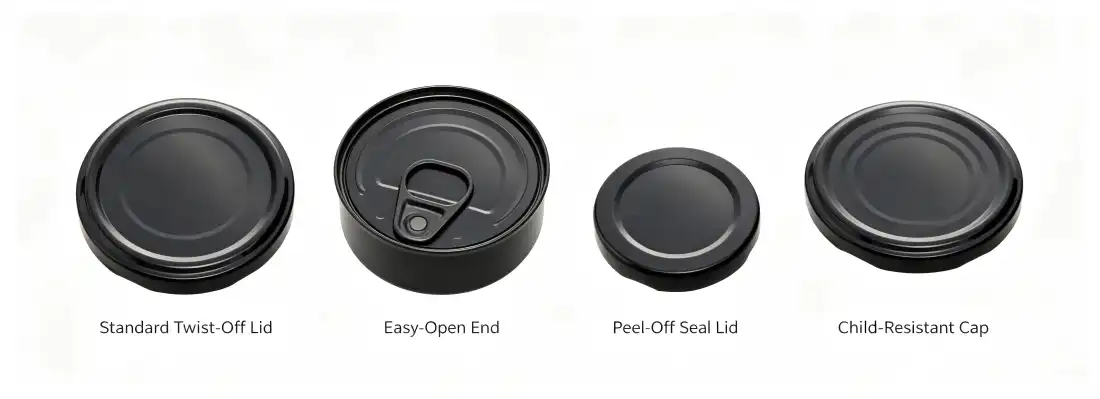
Integrated silicone gasket lids keep air out better, which is important for fermented foods or other items that are sensitive to moisture. The elastomeric seal adjusts to the irregularities in the rim of the jar, making up for small production flaws while keeping the pressure in. Standard screw-thread designs that don't have built-in gaskets work well for storing dry goods, craft tools, or decorative items where complete hermetic sealing isn't as important. It's easier for procurement teams to handle a wide range of products when suppliers offer both configurations. This makes managing vendors and checking quality easier.
Reusability Considerations
When it comes to single-use gift packaging or marketing efforts where recovery and reprocessing are too expensive, disposable closures are the best way to save money. Reusable designs support sustainability efforts that are valued by brands that care about the environment and hotel businesses that are trying to cut down on waste. Finishes that last and threading that is strengthened can handle being opened and closed many times, which extends their useful life. Event companies that are building rental inventory or stores that want customers to return jars like standards that can be used more than once and lower the cost of replacement over time.
Specialty Design Features
Slotted coin bank lids give gift companies that sell educational or fun items for families more ways to reach new customers. Any normal currency can fit in the built-in slot, which also looks nice. Custom color-coated finishes make it possible to match brands exactly for business gift programs and seasonal collections. Wide-mouth compatibility caters to certain container types that are commonly used for home canning and storing large amounts of food in the cupboard. Category managers can get the best product mix and inventory distribution by comparing the unique qualities of a product to what the target market wants.
Practical Considerations for Using and Maintaining Metal Jar Lids
Operational excellence depends on proper implementation and maintenance protocols that preserve closure performance throughout product lifecycles.
Optimal Sealing Practices
Achieving reliable closure requires clean, dry jar rim surfaces free from product residue or moisture. Applying consistent torque during lid application ensures uniform compression across the sealing interface. Under-tightening risks contamination and spoilage, while excessive force may damage threading or deform gasket materials. Training warehouse staff on proper capping techniques reduces rejection rates and customer complaints. Hospitality operations benefit from standardized procedures that maintain service quality across multiple locations and shift rotations.
Cleaning and Maintenance Protocols
Proper cleaning extends the lifespan of metal jar lid closures and prevents corrosion failures. Hand washing with mild detergent and warm water removes food residue without compromising protective coatings. Avoiding abrasive cleaners or steel wool preserves surface finishes and decorative treatments. Thorough drying before storage prevents moisture accumulation that accelerates rust formation. Periodic inspection identifies wear indicators like coating degradation or threading damage requiring replacement. Establishing maintenance schedules optimizes closure inventory turnover and reduces unexpected shortages.
Quality Monitoring and Safety Compliance
Ongoing quality verification protects brand reputation and customer safety. Visual inspection detects coating defects, denting, or threading abnormalities before product assembly. Random seal testing confirms proper closure application and gasket performance. Tracking failure rates by production lot enables rapid response to quality deviations. Maintaining documentation for regulatory audits demonstrates due diligence and process control. Retailers and hospitality groups implementing robust quality management systems minimize liability exposure while ensuring consistent customer experiences.
Procurement Strategies and Trusted Suppliers for Metal Jar Lids
Strategic sourcing relationships determine supply chain reliability, cost competitiveness, and innovation access. Selecting the right manufacturing partner requires comprehensive evaluation beyond initial pricing considerations.
Supplier Qualification Criteria
Established manufacturers with specialized production capacity deliver consistency and scalability essential for growing operations. Xuzhou Muzhishi Crafts Co., Ltd. operates ten glass furnaces with daily production capacity reaching one million units per furnace, ensuring stable supply for large-volume procurement. Twenty years of manufacturing expertise since 2005 provides technical knowledge supporting complex customization requirements. Certification portfolios covering CE, FDA, SGS, and LFGB standards demonstrate commitment to quality and regulatory compliance across international markets.
Customization Support and Service
Dedicated account management ensures personalized attention throughout the design, sampling, and production process. One-on-one consultation helps translate brand requirements into technical specifications. Three-to-five-day sample delivery accelerates product development timelines and market testing initiatives. Full ODM and OEM capabilities accommodate unique designs protecting intellectual property and competitive differentiation. Bulk production completion within approximately thirty days supports seasonal launches and promotional campaigns with predictable lead times.
Logistics and Supply Chain Integration
Self-operated import-export licensing and customs expertise streamline international procurement for North American buyers. Comprehensive documentation support including commercial invoices, packing lists, and certificates of origin ensures smooth customs clearance. Flexible transportation options accommodate varying urgency and cost requirements. After-sales response commitments within twenty-four hours address quality concerns and operational questions promptly. Evaluating supplier logistics capabilities reduces landed cost variability and delivery disruptions that impact inventory planning.
Cost Optimization Through Partnership
Long-term supplier relationships established with local raw material providers reduce component costs by ten to fifteen percent compared to market averages. Common material inventory programs shorten order fulfillment cycles, supporting just-in-time procurement strategies. Volume pricing structures reward repeat business while maintaining quality standards. Transparent cost breakdowns enable accurate total landed cost calculations supporting margin analysis. Strategic partnerships deliver sustained competitive advantage through predictable pricing and priority capacity allocation during peak demand periods.
Conclusion
Selecting appropriate metal jar lids requires balancing technical performance, aesthetic requirements, and supply chain considerations. Multi-function metal jar lids manufactured from food-grade materials deliver reliable sealing, customization flexibility, and regulatory compliance essential for businesses across diverse sectors. Evaluating supplier capabilities, certification portfolios, and service infrastructure ensures procurement decisions support operational excellence and brand objectives. Strategic partnerships with established manufacturers provide access to innovation, competitive pricing, and dependable capacity that strengthens market positioning and customer satisfaction.
FAQ
What certifications should metal jar lids have for food contact applications?
Food-safe closures must carry FDA approval confirming non-toxic material composition and migration testing. LFGB certification addresses European food law requirements particularly stringent in German markets. SGS testing validates performance under actual use conditions, while CE marking confirms general European safety compliance. Requesting copies of current certificates during vendor evaluation prevents regulatory complications.
How do customization options affect procurement timelines?
Standard configurations with existing tooling ship within typical production cycles of approximately thirty days. Custom designs requiring new printing plates, embossing dies, or color formulation extend timelines by one to two weeks for tooling preparation. Sample production typically completes within three to five days regardless of customization complexity. Planning product launches with adequate lead time accommodates custom development without schedule pressure.
Can metal lids accommodate hot-fill processes used in sauce production?
High-temperature applications require specialized plastisol gaskets and heat-resistant internal coatings capable of withstanding thermal expansion during hot-fill operations. Discussing processing temperatures and product pH levels with suppliers ensures appropriate material specifications. Proper lid selection prevents seal failures and contamination in pasteurized or hot-packed products.
Partner with Muzhishi for Your Metal Jar Lid Requirements
Xuzhou Muzhishi Crafts Co., Ltd. delivers comprehensive closure solutions combining manufacturing excellence with personalized service. Our multi-function metal jar lids supplier capabilities span design consultation, rapid sampling, and scalable production supporting businesses from boutique brands to international distributors. Contact our technical team at long@muzhishi.com to discuss your specific requirements and explore customization possibilities. Request samples to evaluate our food-grade tinplate and aluminum alloy quality meeting FDA, LFGB, and CE standards. Visit mzsglass.com to access our complete product catalog and discover how our twenty years of expertise can strengthen your supply chain and enhance your brand presentation.
References
1. Anderson, M. J. (2022). Metal Packaging Technologies for Food Preservation. Industrial Press.
2. Chen, L., & Roberts, P. (2023). Sustainable Closure Solutions in Modern Retail Packaging. Journal of Packaging Science, 18(3), 145-162.
3. European Food Safety Authority. (2021). Guidelines on Materials Intended for Food Contact. EFSA Publications.
4. Miller, K. (2023). Procurement Strategies for Hospitality Supply Chains. Cornell Hospitality Quarterly.
5. Thompson, R. (2024). Innovations in Metal Lid Manufacturing and Customization. Packaging Technology Review, 41(2), 78-91.
6. U.S. Food and Drug Administration. (2022). CFR Title 21: Food Contact Materials Compliance Guide. FDA Regulatory Documentation.


Our customers’ satisfaction speaks for our quality — contact us to experience the same reliable service.