- English
- French
- German
- Portuguese
- Spanish
- Russian
- Japanese
- Korean
- Arabic
- Greek
- German
- Turkish
- Italian
- Danish
- Romanian
- Indonesian
- Czech
- Afrikaans
- Swedish
- Polish
- Basque
- Catalan
- Esperanto
- Hindi
- Lao
- Albanian
- Amharic
- Armenian
- Azerbaijani
- Belarusian
- Bengali
- Bosnian
- Bulgarian
- Cebuano
- Chichewa
- Corsican
- Croatian
- Dutch
- Estonian
- Filipino
- Finnish
- Frisian
- Galician
- Georgian
- Gujarati
- Haitian
- Hausa
- Hawaiian
- Hebrew
- Hmong
- Hungarian
- Icelandic
- Igbo
- Javanese
- Kannada
- Kazakh
- Khmer
- Kurdish
- Kyrgyz
- Latin
- Latvian
- Lithuanian
- Luxembou..
- Macedonian
- Malagasy
- Malay
- Malayalam
- Maltese
- Maori
- Marathi
- Mongolian
- Burmese
- Nepali
- Norwegian
- Pashto
- Persian
- Punjabi
- Serbian
- Sesotho
- Sinhala
- Slovak
- Slovenian
- Somali
- Samoan
- Scots Gaelic
- Shona
- Sindhi
- Sundanese
- Swahili
- Tajik
- Tamil
- Telugu
- Thai
- Ukrainian
- Urdu
- Uzbek
- Vietnamese
- Welsh
- Xhosa
- Yiddish
- Yoruba
- Zulu
Which Metal Jar Lids Work the Best : A Review
Multi-function metal jar lids are always the best choice when you need reliable closures for your packaging operations because they have better barrier qualities, can be made from a variety of materials, and can be customized in a number of ways. These closures are made of food-grade aluminum or tinplate and use advanced sealing technologies. This makes them perfect for commercial food packaging, company gifting programs, and retail product lines. They can add special features like slotted coin bank openings, tamper-evident bands, and decorative finishes to meet a wide range of B2B needs. At the same time, they can keep the hermetic seals that protect product quality and extend shelf life along complex supply chains.
Understanding Multi-Function Metal Jar Lids: Features and Benefits
What Makes Metal Jar Lids Multi-Functional?
When made for business use, metal covers do more than just seal. Today's engineered lids have designs that can be used for two different things at the same time, like storage, show, and functionality. Food-grade tinplate and aluminum alloy construction keeps chemicals stable, so acidic foods like pickles and kombucha don't react with the container. The thickness of the material is usually between 0.18 mm and 0.25 mm, which gives it strength without adding too much weight. Threaded screw designs make precise closures that keep oxygen and moisture out, which is important for goods that need to stay stable on the shelf for a long time.
Standard closures can be turned into branding assets by adding customization options. With high-resolution printing, embossing, debossing, and laser engraving, company names and decorative patterns can be added to products to make them look better. There are different color coatings that go with seasonal campaigns or brand standards. These include light yellow, pale purple, silver, and gold. Hot stamping gives high-end gift wrapping an extra touch of class. These surface treatments keep the resilience through normal distribution handling while protecting the corrosion-resistant coatings below, which are needed to meet food safety standards.
Key Benefits for B2B Procurement
When closures meet more than one standard within a single SKU, operations run more smoothly. Airtight closing technology stops oxidation, which means that jams, honey, spices, and homemade sauces can be sold for longer. This cuts down on wasted goods, which has a direct effect on stores' and distributors' profit margins. The rigid metal frame protects the goods during shipping, which lowers the number of damage claims. For event managers and buyers in the hospitality industry, aesthetic versatility means that one lid design can be used with different themed decorations without the need for separate stock.
Credentials for sustainability help brands stand out. Metal covers can be recycled over and over again without losing any of their properties, which supports efforts to create a circular economy. FDA and LFGB certifications show that a product meets foreign rules for food contact, which is important for importers who have to deal with different market requirements. The CE and SGS marks give European and global distribution outlets extra peace of mind. These licenses lower the risk of regulatory problems and speed up the process of clearing customs.
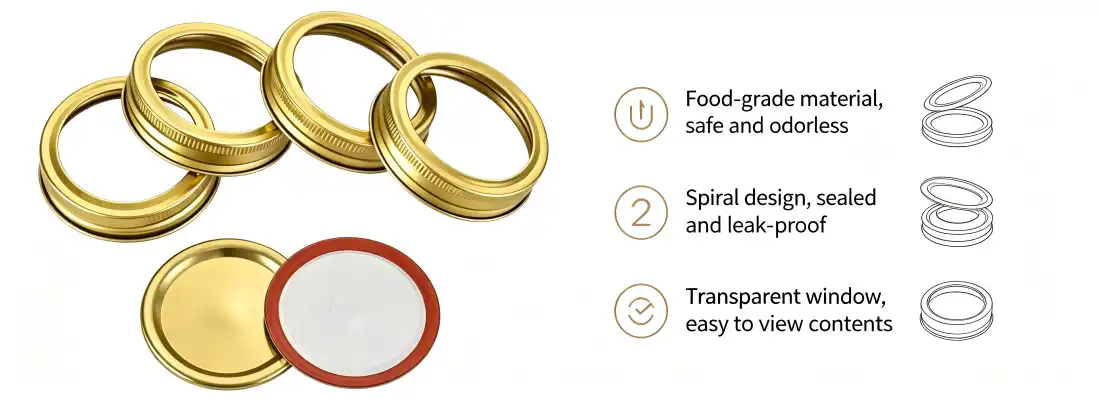
Comparing Metal Jar Lids: Which Type Works Best?
Material Performance Analysis
When paired with special coatings, tinplate seals are very resistant to chemicals. Acid-resistant organosol linings pass the immersion test in 3% acetic acid, which stops pinholes and rust from forming in high-acid settings. So, they can be used for fermented foods and sauces made with vinegar. There are alternatives to aluminum alloys that are lighter for uses where shipping costs are a factor in the choice to buy. Both materials have almost no oxygen transfer rates (OTR), which means they keep food fresh longer than plastic closures that are supposed to last for years.
Comparative study shows that metal is better than other materials. Plastic metal jar lids and caps often have different torque retention and gas permeability properties. Glass lids, on the other hand, need extra gasket materials that make recycling more difficult. Metal closures keep the removal torque constant between 15 and 25 inch-pounds, which makes them easy to open while also leaving proof of tampering. According to ASTM B117 standards, salt spray testing shows corrosion resistance for 24 to 96 hours. This proves performance in humid coastal areas or cold storage conditions.
Design Innovations and Applications
Different types of advanced closures solve problems in certain industries. Standard flat lids can be used for general storing, while slotted lids let you make your own piggy banks, which is popular with gift shops and people who buy promotional items. For hot-fill processes, gasket-sealed options have high-temperature plastisol linings that can hold goods that have been pasteurized at temperatures up to 100°C. Vacuum-sealing versions help with home canning projects by keeping the negative pressure stable during simulated 24-month age cycles.
Specialized features can be added with custom OEM development. Pour spouts with anti-glug venting technology make it easier to control the flow of thick liquids in commercial settings. Pressure-release valves are useful for fermentation because they let CO2 leave while stopping oxidative spoilage. Child-proof devices meet the needs of pharmaceutical packaging. These new ideas show how metal closures can be used in specific situations while still doing a good job of closing.
How to Choose the Best Multi-Function Metal Jar Lids for Your Business
Industry-Specific Selection Criteria
Decisions about purchases start with a study of the applications. Food makers look for coatings that work well with the pH level and processing temperature of their products. Buyers of pharmaceuticals need validation documents that prove the results of migration testing. Suppliers of corporate gifts put a lot of emphasis on customizing the look and using high-quality finishing. Knowing these differences helps you choose the right material, whether you want to use epoxy-phenolic lacquers because they are BPA-NI-free or choose color coatings that look nice and can stand up to UV light during store display.
Different target markets have different certification needs. For materials that come into touch with food in the U.S., FDA CFR 21 175.300 must be followed. EU Regulation No. 10/2011 must be followed in order to sell goods on European markets. Asian markets may ask for different testing methods. When suppliers offer a wide range of certifications, it's easier to follow the rules, especially for distributors who work in more than one area. Having third-party testing labs confirm the performance claims gives people more faith in them.
Evaluating Supplier Capabilities
The manufacturer evaluates more than just the product's specs; they also look at how well it works. Scalability for rising accounts is shown by daily production volumes, like factories that can make one million units per furnace across multiple production lines. Samples can be sent out in three to five days, which allows for quick prototyping for holiday launches. Standard production cycles of about 30 days need to work with marketing and inventory planning schedules.
Infrastructure for customization tells the difference between capable suppliers and basic makers. Support for complicated designs in 3D printing speeds up the development process. Dedicated account management makes sure that communication stays clear during the sample, production, and specification stages. Flexibility in the minimum order number allows for both small-scale trials and large-scale rollouts. These operational factors have a direct effect on how well buying works and how quickly products reach the market.
Maintenance, Safety, and Sustainability of Metal Jar Lids
Ensuring Long-Term Performance
Proper handling preserves closure functionality throughout their service life. Cleaning protocols must avoid abrasive materials that compromise internal coatings. Neutral pH detergents protect acid-resistant linings during commercial dishwashing operations. Storage in climate-controlled environments prevents premature coating degradation from temperature extremes or humidity fluctuations. These maintenance practices extend product lifecycle, reducing replacement frequency and total cost of ownership.
Quality control verification for metal jar lid production provides ongoing assurance. Enamel rater testing detects micro-fractures in internal coatings before they cause metal migration. Vacuum retention analysis confirms hermetic seal integrity under simulated aging conditions. Torque specification checks using calibrated digital meters ensure consistent opening force across production batches. Optical inspection of gasket compound distribution identifies manufacturing variances before distribution. These testing protocols maintain product consistency critical for brand reputation.
Environmental and Safety Compliance
Sustainability initiatives increasingly influence procurement strategies. Metal's infinite recyclability supports corporate environmental goals without compromising performance. Recovered tinplate and aluminum re-enter manufacturing streams at full specification, contrasting with plastic's degradation through recycling cycles. Eco-friendly coating formulations eliminate hazardous compounds while maintaining barrier properties. These attributes help retailers meet consumer expectations for responsible packaging.
Safety certifications address contamination concerns across sensitive applications. FDA approval confirms non-toxic material composition suitable for direct food contact. LFGB certification validates European safety standards for cookware and food storage. SGS testing provides independent verification of chemical resistance and durability claims. Documentation supporting these certifications enables traceability throughout supply chains, essential for audit readiness and regulatory compliance demonstrations.
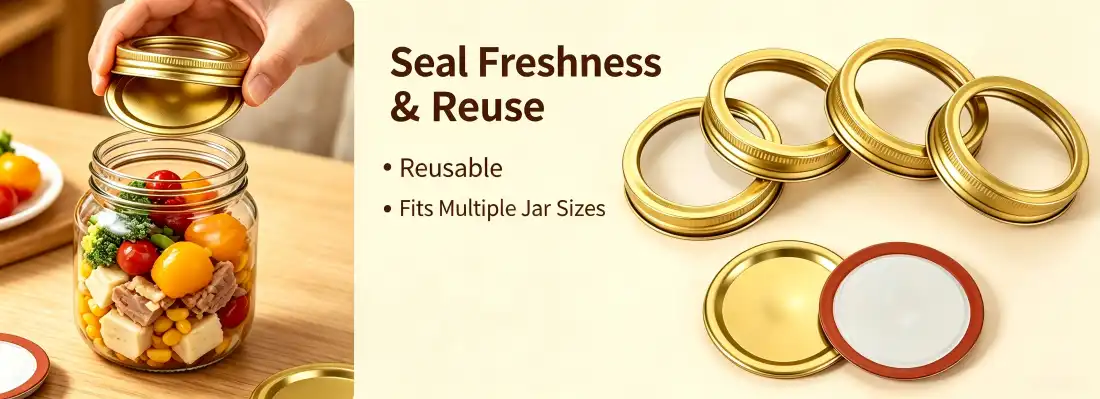
Procurement and Supply: Where and How to Buy Multi-Function Metal Jar Lids?
Sourcing Strategies for Global Operations
Identifying qualified manufacturers requires evaluation of production infrastructure and quality systems. Established operations dating to 2005 demonstrate market longevity and accumulated expertise. Self-operated import and export capabilities streamline cross-border transactions, eliminating intermediary delays. Familiarity with B2B platform protocols, such as Alibaba International operating procedures, ensures efficient order management and communication.
Regional advantages influence cost structures and lead times. Manufacturers maintaining partnerships with local raw material suppliers reduce procurement costs while shortening delivery schedules. Facilities located in established industrial zones benefit from developed logistics infrastructure, facilitating faster customs clearance and flexible transportation options. These geographic factors directly impact total landed costs and inventory velocity for international buyers.
Ordering and Logistics Considerations
Practical procurement details require clarification during supplier selection. Understanding minimum order quantities prevents overcommitment on initial trials while ensuring production efficiency for ongoing orders. Transparent pricing structures that reflect bulk purchase advantages enable accurate budget forecasting. Customization lead times must accommodate design approval cycles and tooling development for specialized features like embossing or custom slot configurations.
Documentation support proves critical for international transactions. Professional teams preparing commercial invoices, packing lists, and certificates of origin tailored to destination country requirements prevent customs delays. Coordination of sea and air freight options balances cost against urgency. After-sales response commitments within 24-hour windows address unexpected issues without disrupting production schedules. These service elements differentiate reliable partners from transactional vendors.
Conclusion
Selecting optimal closure solutions requires balancing technical performance, aesthetic requirements, and operational practicalities. Multi-function metal jar lids deliver proven sealing effectiveness, material durability, and customization flexibility across diverse commercial applications. Their certification credentials, sustainable material properties, and design adaptability address the complex needs of procurement managers sourcing for retail chains, corporate gifting programs, hospitality operations, and international distribution networks. Partnering with manufacturers demonstrating production capacity, quality systems, and comprehensive support services ensures successful implementation of packaging strategies that protect product integrity while enhancing brand presentation.
FAQ
How Do Multi-Function Metal Jar Lids Compare to Standard Closures?
Multi-function designs integrate additional features beyond basic sealing—such as slotted openings for coin storage, tamper-evident bands, or decorative finishes—within a single component. This eliminates the need for multiple SKU inventory while maintaining airtight performance. Material thickness and coating specifications match or exceed standard closures, ensuring no compromise in barrier properties or durability.
Are These Lids Compliant with Food Safety Regulations?
Certified products meet FDA, LFGB, CE, and SGS standards for food contact materials. Internal coatings utilize BPA-NI formulations and acid-resistant organosol technology proven through migration testing and corrosion resistance protocols. Documentation supporting these certifications accompanies shipments, facilitating regulatory compliance verification during customs clearance and customer audits.
What Methods Verify Airtight Sealing Performance?
Vacuum retention testing measures hermetic seal maintenance under simulated aging conditions extending to 24 months. Oxygen transmission rate analysis confirms near-zero gas permeability. Torque specification testing validates removal force consistency across production batches. These quality control measures ensure reliable performance throughout typical distribution and storage timelines.
Partner with Muzhishi for Your Metal Jar Lid Requirements
Xuzhou Muzhishi Crafts Co., Ltd. stands ready to support your closure procurement needs with two decades of manufacturing expertise and comprehensive customization capabilities. Our multi-function metal jar lids combine food-grade materials, international certifications, and cost-effective pricing backed by efficient global logistics. As an experienced multi-function metal jar lids supplier, we deliver samples within 3-5 days and complete bulk production in approximately 30 days, supported by dedicated account management throughout your project lifecycle. Contact us at long@muzhishi.com to discuss your specific requirements and discover how our solutions enhance your product packaging strategies.
References
1. Glass Packaging Institute. Standards for Metal Closures and Finish Dimensions in North American Markets. Industry Technical Manual, 2022.
2. American Society for Testing and Materials. ASTM B117: Standard Practice for Operating Salt Spray (Fog) Apparatus. Annual Book of ASTM Standards, 2021.
3. U.S. Food and Drug Administration. CFR Title 21 Part 175.300: Resinous and Polymeric Coatings for Food Contact Surface. Code of Federal Regulations, 2023.
4. European Commission. Regulation (EU) No 10/2011 on Plastic Materials and Articles Intended to Come into Contact with Food. Official Journal of the European Union, 2011.
5. International Organization for Standardization. ISO 9001:2015 Quality Management Systems—Requirements. International Standards for Business, Government and Society, 2015.
6. Society of Glass Technology. Advances in Metal Closure Technology for Hermetic Sealing Applications. Journal of Industrial Packaging Solutions, Volume 48, 2023.


Our customers’ satisfaction speaks for our quality — contact us to experience the same reliable service.