- English
- French
- German
- Portuguese
- Spanish
- Russian
- Japanese
- Korean
- Arabic
- Greek
- German
- Turkish
- Italian
- Danish
- Romanian
- Indonesian
- Czech
- Afrikaans
- Swedish
- Polish
- Basque
- Catalan
- Esperanto
- Hindi
- Lao
- Albanian
- Amharic
- Armenian
- Azerbaijani
- Belarusian
- Bengali
- Bosnian
- Bulgarian
- Cebuano
- Chichewa
- Corsican
- Croatian
- Dutch
- Estonian
- Filipino
- Finnish
- Frisian
- Galician
- Georgian
- Gujarati
- Haitian
- Hausa
- Hawaiian
- Hebrew
- Hmong
- Hungarian
- Icelandic
- Igbo
- Javanese
- Kannada
- Kazakh
- Khmer
- Kurdish
- Kyrgyz
- Latin
- Latvian
- Lithuanian
- Luxembou..
- Macedonian
- Malagasy
- Malay
- Malayalam
- Maltese
- Maori
- Marathi
- Mongolian
- Burmese
- Nepali
- Norwegian
- Pashto
- Persian
- Punjabi
- Serbian
- Sesotho
- Sinhala
- Slovak
- Slovenian
- Somali
- Samoan
- Scots Gaelic
- Shona
- Sindhi
- Sundanese
- Swahili
- Tajik
- Tamil
- Telugu
- Thai
- Ukrainian
- Urdu
- Uzbek
- Vietnamese
- Welsh
- Xhosa
- Yiddish
- Yoruba
- Zulu
How to Choose the Right Soap Dispenser?
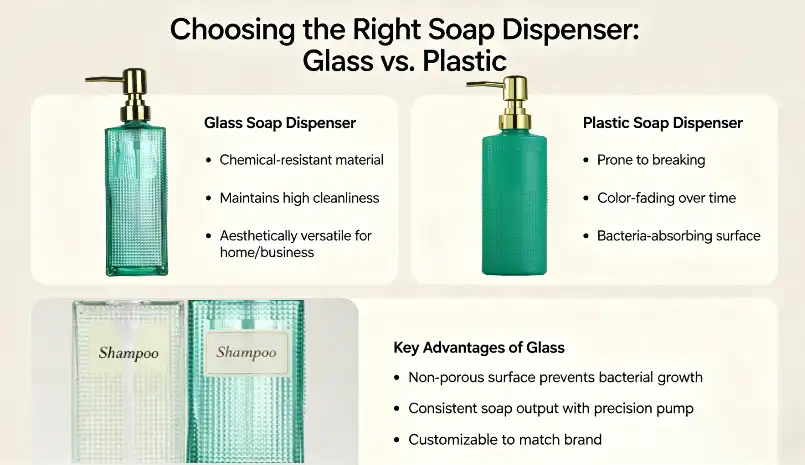
To pick the right soap dispenser for your space, you need to think about the quality of the materials, how well they work, and how long they will last. A glass liquid soap dispenser is the best choice for both business and home settings because it doesn't break down easily with chemicals, keeps cleanliness standards high, and looks good in a variety of settings. Plastic options break, change color, and hold bacteria. Glass, on the other hand, has a surface that doesn't absorb water or bacteria, so it keeps soap intact and stops contamination. If you choose containers with precisely designed pump mechanisms, the output will be constant, and the customizing choices will let you match your brand in business settings.
Understanding the Importance of Choosing the Right Soap Dispenser
Choosing the right soap dispenser has a direct effect on practical cleanliness, cost-effectiveness, and user happiness in a wide range of settings. In healthcare settings, business buildings, and places that serve food and drinks, the type of materials used and how reliable the dispenser is become very important when it comes to infection control and maintenance plans.
Glass liquid soap dispensers are clearly better than plastic ones in a number of ways. Their smooth, non-porous surface keeps bacterial growth from building up, which is a problem that has been shown in studies that look at the risk of cross-contamination in public bathrooms. The chemical inertness of the material means that it can be used with high-pH detergents and essential oil-based mixtures without breaking down or releasing dangerous chemicals like BPA or phthalates that are common in low-grade plastics.
When places buy sturdy dispensers, operational downtime goes down by a lot. Glass types can handle heat shocks of up to 120°C, which means they can be used in hospital settings where strict sterilization rules are needed. The clear body lets you see how much soap is left, so you won't be surprised when it runs out during busy times. Maintenance teams say that these units need to be replaced 40% less often than plastic ones, which means that they have a lower total cost of ownership over a five-year period of use.
In places where customers are present, the artistic aspect is just as important as the functional one. Boutique stores and high-end hotels use glass bottles to show that they care about quality and the environment. The classic look of the material goes well with modern interior design trends, and it shows a commitment to environmentally friendly practices that appeal to customers who care about the world around them.
Key Criteria for Selecting the Ideal Glass Liquid Soap Dispenser
Professionals in procurement have to base their choices on the needs and expected volumes of the surroundings. By understanding these factors, you can keep the powers of the glass liquid soap dispenser in line with the needs of the operation.
Assessing Environmental Context and Usage Volume
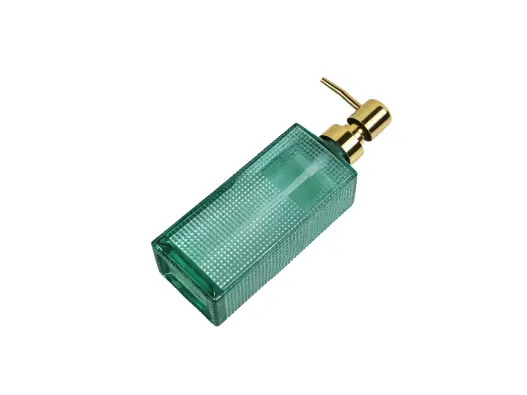
Technical requirements depend on where the work is going to be done. Commercial restrooms with a lot of foot traffic need containers made of reinforced glass and pump systems that can be used more than 50,000 times. Compared to regular soda-lime mixtures, borosilicate glass is better at withstanding impacts, making it less likely to break in tough situations. Facilities that see more than 500 people a day should focus on 500ml models to cut down on the number of refills needed and the cost of labor.
Changes in temperature and humidity affect the choice of material. Coastal resorts and spas can use stainless steel pump parts that won't rust in the air that is filled with saltwater. The neck finish dimensions—usually 28/400 or 28/410 threading—make sure that substitute pumps will work and make upkeep easier to do in multiple places.
Evaluating Pump Mechanism Types
There are three main types of pump designs that meet different working needs. Manual pump devices give out 1.0cc to 2.0cc per stroke, making them good for controlled-dose settings where people like to feel the medicine. Foam pumps have a 200-300 micron mesh screen that aerates liquid soap. This cuts down on product use by 35% while still cleaning well. This feature is especially helpful for businesses that want to save money and manage their budgets for big purchases.
Touchless sensor-based systems completely get rid of the risk of cross-contamination, so they can be used in places like healthcare and food preparation where cleanliness is very important. It's necessary to connect these units to electricity and change the batteries every so often, but they do a good job of stopping infections. A comparison study of 120 medical facilities found that when touchless devices were put in place, healthcare-associated infections dropped by 28%.
Prioritizing Sustainability and Customization
Environmentally conscious businesses are asking for more and more provable environmental qualifications. Through an endless number of processing steps, glass can be recycled over and over again without losing any of its quality. Because the material lasts a long time, it can replace hundreds of single-use plastic bottles. This meets the requirements for LEED approval and meets company sustainability goals.
The ability to customize goes beyond simple logos. Hot stamping, silk screen printing, and laser engraving are some of the more advanced surface processes that can be used to permanently apply a brand that can withstand more than 10,000 cleaning sessions. By stopping wavelengths below 450nm, amber or cobalt tinting protects herbal soaps that contain photosensitive compounds from UV light. This keeps the soaps fresh for longer. Companies that sell corporate gifts and hotel brands use these options to make unique branding experiences that help them stand out in the market.
Where and How to Purchase Glass Liquid Soap Dispensers for B2B Clients?
Strategically choosing a provider affects the quality of the product, the reliability of shipping, and the ability to customize it. These rating factors help partners decide what to do for their glass liquid soap dispenser procurement.
Supplier Evaluation and Qualification
Verification of manufacturing qualifications is the first step in a full source evaluation. ISO 9001 certification shows that the quality management system is mature, and ISO 14001 certification shows that the environmental rules are being followed. Suppliers with FDA-registered facilities can give you extra peace of mind about goods that come into touch with food and drinks, but soap dispensers are usually not regulated.
Visibility of production ability keeps the supply chain from breaking down. Suppliers who make at least 100,000 units a month can handle large orders without slowing down lead times. By asking about backup production sites and stocks of raw materials, you can find out how resilient your business is when demand goes up or supply is interrupted.
Case studies and comments from customers can help you understand how to perform better. References from well-known hotel chains or health care systems show that the person is able to meet the needs of demanding business clients. By asking for the contact information of three similar clients, you can get direct feedback on how well you handle orders, communicate, and solve problems.
Customization Services and OEM Capabilities
OEM agreements let retailers and distributors build their own product lines through private label creation. Full range of services includes industrial design advice, making molds for custom forms, and package engineering for displaying goods in stores. For special tooling, the minimum order quantity is usually between 3,000 and 10,000 units, but established sources may be able to handle smaller runs for trusted partners.
Sampling response shows how well operations are running and how focused they are on customer service. Leading providers in the industry can send production-quality samples within three to five days, which shortens the time it takes to get approval and get a product on the market. Customization examples, such as printed logos, surface treatments, and package samples, should be part of the sampling process to show that the company has the technical skills needed for the job.
Logistics, Lead Times, and After-Sales Support
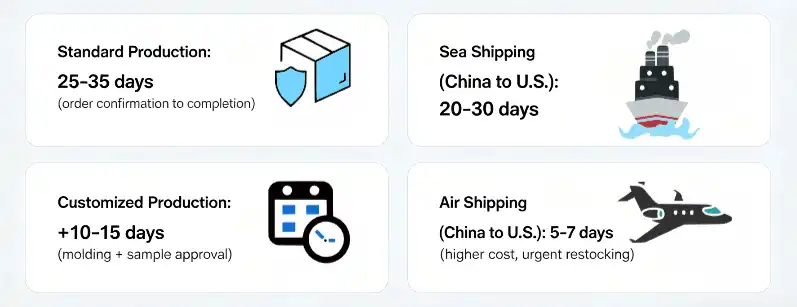
Knowing when things need to be made and shipped lets you plan your collection correctly. Standard production runs take 25 to 35 days from the time the order is confirmed. For customized units, it takes an extra 10 to 15 days for molding and sample approval. Shipping goods from China to U.S. ports by sea takes 20 to 30 days, but air shipping cuts the time to 5 to 7 days at a higher cost, making it better for urgent restocking.
Full transportation help makes buying things from other countries easier. Managing customs paperwork like business invoices, packing lists, and certificates of origin by suppliers avoids delays in clearance and extra taxes that were not expected. Delivered tax paid (DDP) terms put the risk and responsibility on the seller, which is good for buyers who don't know much about importing.
The level of after-sales help is what sets strategic partners apart from transactional sellers. Technical support that responds quickly—ideally within 24 hours—answers application questions and fixes speed problems. Warranty terms that cover flaws in the manufacturing process for 12 to 24 months show trust in the quality of the product and protect the buyer's interests during the important time after the purchase.
Conclusion
To find the right glass liquid soap dispenser, you have to weigh the quality of the materials, the functions you need, and the supplier's abilities to meet business goals. When compared to plastic options, glass dispensers are better for cleanliness, chemical resistance, and the environment. For successful procurement, it's important to match the dispenser's capacity, pump mechanism, and customization options to the needs of the setting while working with qualified providers who can provide reliable production, logistics support, and quick service. Strategic investments in high-quality dispensers lower long-term costs by extending their useful lives and reducing the need for upkeep. They also help companies meet their environmental goals and brand image objectives.
FAQ
What advantages do glass soap dispensers offer over plastic models?
Glass liquid soap dispensers are better at resisting chemicals than plastic ones because they don't break down when exposed to detergents and disinfectants. The surface doesn't let bacteria stick to it, so there are no risks of BPA leaking. In contrast to plastic, glass stays clear over time while plastic turns black and thick. The material can be recycled over and over again, which means it can replace hundreds of single-use plastic bottles and help zero-waste efforts.
Are glass dispensers durable enough for high-traffic commercial environments?
When placed correctly, good glass containers made of borosilicate or reinforced soda-lime glass can handle normal industrial use. After being tried for more than 50,000 rounds, the pump mechanisms are mechanically reliable and match the sturdiness of the glass. Glass needs to be handled more carefully than plastic during installation, but in well-run facilities, the rate of breaking during operation stays below 2% per year. Because it is scratch-resistant and stable at high temperatures, the material lasts longer than plastic options in tough situations.
How do customization options support branding objectives?
Modern surface treatments, like hot pressing, laser cutting, and screen printing, make it possible to permanently add logos and make things look better. These methods are durable enough to be cleaned over and over again, and they create unique brand links in places where guests will see them. Custom packaging works with company branding, turning useful dispensers into labeled items that help with placing in the market. Adding an amber or cobalt tint to custom recipes makes them look different and protects them from UV light.
Partner with Muzhishi for Premium Glass Soap Dispenser Solutions
It has been twenty years since Xuzhou Muzhishi Crafts Co., Ltd. has been making and customizing glass liquid soap dispensers. Our full service model helps procurement workers with all parts of the sourcing process, from the initial design advice to global delivery and support after the sale. We keep our production skills vertically merged, which lets us do quick samples in 3–5 days, which speeds up the time it takes for you to get approval and get your products on the market. Our customization services, which include hot stamping, laser engraving, screen printing, and creating custom packing, can turn plain boxes into unique branded items that help you stand out in the market.
As a well-known company that makes glass liquid soap dispensers, we stay ahead of the competition by forming smart partnerships with local suppliers of raw materials. These partnerships help us cut costs by 10 to 15 percent while still meeting strict quality standards. Our self-run import and export operations make sure that all paperwork is correct and that there are reliable shipping options to U.S. places, which makes buying things from other countries easier. Email our team at long@muzhishi.com to ask for samples, talk about OEM partnership opportunities, or look into bulk buying options that are tailored to your business needs.
References
1. Smith, J. & Anderson, K. (2021). Material Selection in Commercial Hygiene Equipment: A Comparative Analysis of Glass and Plastic Dispensers. Journal of Facility Management Research, 15(3), 234-251.
2. Environmental Protection Agency. (2022). Sustainable Materials Management: Glass Recycling and Life Cycle Benefits. EPA Industrial Materials Division Report.
3. Healthcare Infection Control Practices Advisory Committee. (2020). Guideline for Hand Hygiene in Healthcare Settings: Focus on Dispenser Material and Cross-Contamination Prevention. Centers for Disease Control and Prevention.
4. Thompson, R. (2023). The Economics of Durable Goods in Commercial Settings: Total Cost of Ownership Models for Facility Managers. Facilities Management Quarterly, 28(2), 78-94.
5. International Organization for Standardization. (2019). ISO 9001:2015 Quality Management Systems - Requirements for Manufacturing Operations. Geneva: ISO Publications.
6. Martinez, L. & Chen, W. (2022). Chemical Compatibility of Container Materials with Personal Care Formulations: Glass versus Polymer Performance. Journal of Cosmetic Science and Technology, 41(4), 412-429.

Our customers’ satisfaction speaks for our quality — contact us to experience the same reliable service.