- English
- French
- German
- Portuguese
- Spanish
- Russian
- Japanese
- Korean
- Arabic
- Greek
- German
- Turkish
- Italian
- Danish
- Romanian
- Indonesian
- Czech
- Afrikaans
- Swedish
- Polish
- Basque
- Catalan
- Esperanto
- Hindi
- Lao
- Albanian
- Amharic
- Armenian
- Azerbaijani
- Belarusian
- Bengali
- Bosnian
- Bulgarian
- Cebuano
- Chichewa
- Corsican
- Croatian
- Dutch
- Estonian
- Filipino
- Finnish
- Frisian
- Galician
- Georgian
- Gujarati
- Haitian
- Hausa
- Hawaiian
- Hebrew
- Hmong
- Hungarian
- Icelandic
- Igbo
- Javanese
- Kannada
- Kazakh
- Khmer
- Kurdish
- Kyrgyz
- Latin
- Latvian
- Lithuanian
- Luxembou..
- Macedonian
- Malagasy
- Malay
- Malayalam
- Maltese
- Maori
- Marathi
- Mongolian
- Burmese
- Nepali
- Norwegian
- Pashto
- Persian
- Punjabi
- Serbian
- Sesotho
- Sinhala
- Slovak
- Slovenian
- Somali
- Samoan
- Scots Gaelic
- Shona
- Sindhi
- Sundanese
- Swahili
- Tajik
- Tamil
- Telugu
- Thai
- Ukrainian
- Urdu
- Uzbek
- Vietnamese
- Welsh
- Xhosa
- Yiddish
- Yoruba
- Zulu
Cream Jars - a Classic Packaging in a Modern Edition
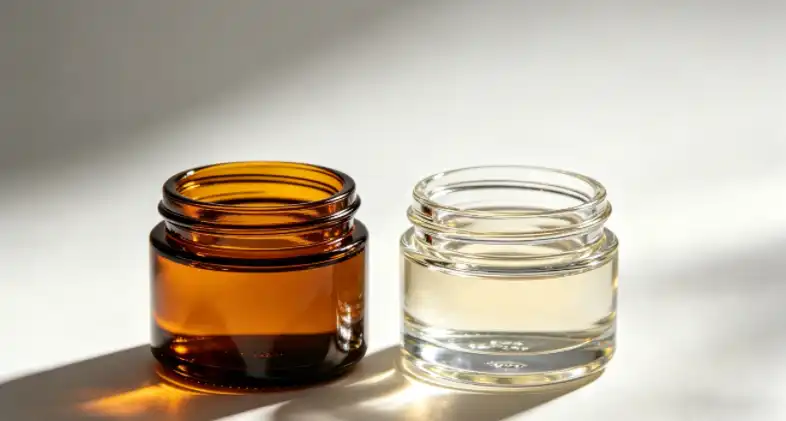
Picking the right essential oil glass cream jar can affect how long the product lasts, how people feel about the brand, and how happy the customer is. The choice between colored and clear glass isn't just about looks when you're packaging massage mixes, high-end serums, or fragrance oils. Light-sensitive chemicals are protected from UV breakdown by colored containers, especially amber and cobalt blue ones. This keeps the compounds' strength and extends their shelf life. In stores with a lot of competition, clear containers make products stand out more by showing how clear and appealing they are to look at. These differences help business-to-business buyers, like home decor brands and hotel providers, choose packaging that balances usefulness, cost-effectiveness, and market positioning while also meeting a wide range of customization needs.
Understanding Glass Cream Jars – Materials, Types, and Benefits
Due to its high chemical inertness, a glass cream jar is still the best way to store volatile smelling compounds. Borosilicate and soda-lime glass don't react chemically with terpenes and acidic parts of citrus and pine-based oils like other plastics do. This trait of not reacting keeps the container from breaking down and keeps the therapeutic purity of the contents for a long time. The material is impermeable, so air can't pass through it. This lowers the risk of oxidation, which can damage fragrance profiles and active chemical concentrations.
Material Composition and Durability
Brands that care about the environment also choose glass over other types of packing. Customers can use containers more than once with refillable glass containers, which supports the cycle economy. This lowers the amount of single-use plastic trash and fits with the values of eco-friendly customers who have an impact on buying choices in the beauty and wellness industries.
Varieties Tailored to Product Requirements
Scientifically speaking, colored glass is useful because it filters light. About 99% of light wavelengths between 200nm and 450nm are blocked by amber glass. This is the range of wavelengths that is most harmful to the ingredients in essential oils. This is especially helpful for citrus oils that contain limonene and bergapten, which break down quickly in strong sunlight. When held in the same amount of light, studies show that oils kept in amber containers stay chemically stable 3–5 times longer than those kept in clear glass. Similar UV protection is provided by cobalt blue glass, which also has a unique look that is popular in high-end product lines.
Functional Features Enhancing Performance
Three important parts make up a standard closure assembly: the glass container, the applicator motor, and the closure system. The mechanism for closing the lid has a friction-fit frame that holds the applicator in place with an accuracy of ±0.05mm. This close limit sets up the best surface tension, which stops leaks during shipping and keeps the action smooth. Screw-cap styles with threaded necks make sure that the lids don't let air in, which is important for keeping flammable chemicals safe and meeting the standards for pharmaceutical-grade packaging.
Environmental and Branding Advantages
Clear glass helps brands that want to make their products stand out and send messages of honesty. Customers can see the color, brightness, and amount of oil in the container, which builds trust by showing that the product is of good quality. This transparency comes in handy for multicolored mixes and layered formulas where the way something looks affects how much people value it. When it comes to managing goods, stores like clear containers because staff can quickly see how much stock they have without having to open containers.
How to Choose the Best Glass Cream Jars for Your Cosmetic Products?
Selecting the appropriate glass cream jar requires evaluation of capacity and material performance to match specific demographic needs. Business-to-business buyers should choose capacity based on how their target customers usually use the product, balancing portability with usage volume.
Product Compatibility Assessment
Choice of capacity is based on use cases. 6ml is the normal size for personal aromatherapy and travel-sized products. Depending on the applicator size and how the product is used, it can be used 100 to 120 times. For store shelf items that will be used for a long time, 10ml sizes are best, even though they are heavier and bulkier. 3ml sizes are better for sampling programs and event freebies, where the small size is more important than the amount used.
The F-1 Criteria Screening Approach
Professional uses mostly stainless steel internal components because they last longer and don't rust. The normal steel grade 304 can handle acidic oil without rusting or discoloring, so it can be used over and over again without breaking. Plastic internal components keep performance at a good level while cutting costs by 15 to 20 percent, making them good for budget-friendly product lines and advertising items.
Comparative Analysis with Alternative Materials
| Feature | Glass with Color | Clear Glass |
|---|---|---|
| Blocking UV Light | 90–99% blocked | Not much safety (<10%) |
| Seeing the Product | Not much or any sight | Openness to everyone |
| Increasing Shelf Life | 3–5 times longer | Normal time to last |
| Price Difference | 8 to 12 percent more | Baseline Pricing |
| Needs for MOQ | Usually over 5,000 units | As low as 1,000 units |
| Appeal to Looks | Premium placement | Simple, clean appearance |
Decision Factors for Procurement Optimization
The costs of making colored and clear glass are different. Because the production method is easier and needs fewer raw material additives, clear glass usually costs 8–12% less. For colored glass, exact amounts of metal oxides are needed—iron and sulfur for amber, and cobalt compounds for blue—which raises the cost of materials and makes quality control more important. Problems with batch uniformity can make it take 5–10 days longer to make colored glass than clear glass.
Modern Manufacturing and Customization of Glass Cream Jars
Modern manufacturing of a glass cream bottle balances material purity with advanced decoration techniques. Whether using borosilicate glass for pharmaceutical resistance or soda-lime glass for commercial scale, production runs must meet strict batch uniformity standards to ensure consistency across global supply chains.
Manufacturing Process Overview
Chinese makers offer reasonable prices for both types and have production cycles of 20 to 25 days. On the other hand, U.S. sources offer faster turnaround times at 15 to 25 percent higher prices. One of our quality control procedures is to test the seals in a vacuum room with 0.8 bar of negative pressure. This simulates the conditions at high altitude that cause seals that aren't up to par to fail. Every production batch goes through pull-off force testing to ensure closure systems meet the necessary separation force.
Customization Options for Brand Differentiation
Customization tools let corporate gift sellers make branded health kits for advertising and employee appreciation programs. You can turn plain containers into high-end gifts that show off your company's personality by hot stamping, screen printing, or branding them on the inside. Customizing the packaging improves the unboxing experience, which leads to more social media interaction and return orders. The people on our design team work together to come up with ideas for packing that balance cost and brand effect.
Quality Standards and Compliance
For international marketing, safety guidelines and material certifications must be followed. For European markets, products meant to come into touch with food and cosmetics must follow EC 1935/2004 rules. In the U.S., FDA 21 CFR 177 rules apply for indirect food additives. Because our borosilicate glass meets USP Type III standards, it is chemically resistant and can be used in pharmaceutical-grade uses around the world. Sustainability is becoming a competitive difference, and eco-certifications play a bigger role in buying choices.
Supplier Evaluation and Partnership Development
For buying to go well, suppliers must first be thoroughly evaluated across a number of performance factors. Verification of manufacturing capacity makes sure that sellers can meet volume needs. To get written proof of production capabilities, ask for building certifications and records of recent order fulfillment. Certification for quality management systems, especially compliance with ISO 9001:2015, shows that there are established process controls that make sure that all production runs meet the same product standards.
Best Practices for Using, Cleaning, and Maintaining Glass Cream Jars
Proper usage techniques for a glass cream jar ensure effective product application and container longevity. To use it effectively, holding the container at a 45-degree angle will help the fluid move and stay in touch with the skin. Apply 3–5 strokes over pulse points, such as the wrists, temples, and base of the neck, to help the formula absorb better.
Application-Specific Usage Guidelines
Using the right method for refilling keeps the purity and stops waste. To keep air from getting into the containers during the move, use small funnels with 3–5 mm holes that are made just for them. Fill to 90%, leaving enough space at the top to allow for heat expansion and keep the contents from spilling out when the caps are tightened. When you fill the tank too much, the pressure pushes the oil past the seals, which leads to leaks and product loss.
Cleaning and Reuse Protocols
A thorough cleaning makes the container last longer and keeps different blends from getting contaminated. By unscrewing the cap and gently pulling the housing mechanism, you can take off the assembly. Use warm water and light, fragrance-free soap to rinse everything. Don't use harsh cleaners that leave behind filmy residue. For 10-15 minutes, soak tough spots in 70% isopropyl alcohol. Then, rinse the area well with pure water to keep minerals from building up before letting parts dry fully in the air.
Design Trends and User Experience Enhancement
Minimalist aesthetics and functional labeling help keep things clear and ensure quality, which is especially important in business settings that make unique formulas for many clients. Store containers that are full standing up in cool, dark places away from heat sources and direct sunlight. When oil crystallizes or housing trash builds up, systems sometimes have less flow. Put containers in water tubs heated to 40–45°C for 5–10 minutes to melt any chemicals that have become crystallized again.
Bulk Purchasing and Procurement Guide for Glass Cream Jars
Strategic sourcing of the glass cream bottle requires finding a good mix between lowering costs, maintaining quality, and making sure there is enough supply. Establishing direct relationships with manufacturers allows for better oversight of production quality and adherence to delivery deadlines.
Sourcing Strategies and Platform Selection
Look at how quickly suppliers respond to technical questions, how willing they are to give thorough specs, and how flexible they are in meeting specific needs. When a supplier offers specialized account management, it shows that they want to understand your business's needs and come up with effective solutions. We answer all questions within 24 hours and give each project a personal account manager who oversees it from the beginning of the planning process to the end of delivery.
Minimum Order Quantities and Pricing Structures
Tiered price is unlocked by volume agreements. Our established supply chain relationships allow orders over 10,000 units to be 10-15% cheaper than orders for smaller amounts. The terms of payment have a big effect on cash flow. It is possible to get test orders of 1,000 to 3,000 pieces of clear glass, but colored glass usually needs minimums of 5,000 or more pieces to be cost-effectively produced. Sampling programs lower the risks of buying, and we offer free samples within 3–5 days.
Logistics and Customs Considerations
Getting goods from other countries can be tricky and needs skilled transportation management. Our self-operated import/export services make it easier to get goods through customs because we prepare all the paperwork needed, including commercial bills, packing lists, and certificates of origin. For sales over 5,000 units, sea freight is 40–60% cheaper than air transport, and the 25–35 day transit times work with inventory planning processes. We provide clear freight prices when you confirm your order to avoid unexpected costs.
Supplier Comparison Framework
Transactional exchanges are less likely to lead to a successful relationship than responsive communication. Request samples from different production runs to check for consistency. This is a very important step for brands that want to keep their high quality standards across all of their marketing networks. Problems with leaks are usually caused by caps that are cross-threaded or housing seals that are broken. Look at the thread's structure under a microscope for cracks or deformations that could make the binding surfaces less reliable.
Conclusion
When deciding between colored and clear glass cream jar options, you need to think about how much they cost, how well they protect against UV light, and how you want to place your brand. Colored glass keeps light-sensitive products fresh longer and sends a message of high-end security, while clear glass focuses on clarity and a simple look at a lower cost. To do good buying, you need to look at what the seller can do, negotiate good terms, and take advantage of customization options that make your products stand out in crowded markets.
FAQ
Are glass cream jars environmentally sustainable?
Glass achieves complete recyclability without material degradation, unlike plastics that downcycle into lower-grade applications after 2-3 recycling cycles. The container glass recycling rate in developed markets reaches 70-75%, with recycled cullet reducing manufacturing energy consumption by 25-30% compared to virgin material production. Glass production does require significant initial energy input, but lifecycle assessments show environmental payback within 12-18 months of normal use when accounting for infinite recyclability potential. Brands adopting glass packaging demonstrate measurable sustainability improvements aligning with ESG reporting requirements and consumer expectations for environmental responsibility.
What size glass jar works best for face cream products?
Market analysis shows 30ml and 50ml capacities dominate face cream segments, balancing product preservation with usage duration. Our 30ml option suits targeted treatments like eye creams or serums where smaller quantities maintain freshness, while 50ml jars accommodate daily moisturizers providing 6-8 weeks supply at typical application rates. Luxury brands sometimes select 15ml sizes creating premium pricing perception, whereas value lines may offer 100ml jars emphasizing cost-efficiency. Consumer research indicates 30-50ml represents the optimal range where customers perceive sufficient value without fearing product expiration before completion.
Can glass containers safely store essential oil-based formulations?
The chemical inertness of glass makes it ideal for essential oil creams where plastic containers risk degradation. Essential oils contain terpenes and phenolic compounds acting as solvents that gradually leach plasticizers from polymer containers, compromising both packaging integrity and product purity. Glass demonstrates zero reactivity with these compounds across standard cosmetic shelf life periods. Testing confirms that essential oil formulations maintain terpene profiles within 98% of initial concentrations after 24 months in glass storage versus 82-89% retention in plastic alternatives. This preservation advantage justifies glass selection for aromatherapy and natural cosmetic lines where ingredient authenticity represents core brand values.
Partner with Muzhishi for Premium Glass Cream Jar Solutions
Xuzhou Muzhishi brings two decades of glass craftsmanship excellence to cosmetic packaging challenges faced by procurement managers and brand developers. Our comprehensive glass cream jar supplier capabilities span design consultation through final delivery, with dedicated account managers ensuring your specifications translate accurately into production. We maintain competitive advantage through strategic raw material partnerships reducing costs while stocking common components for rapid turnaround—samples ship within 3-5 days, enabling accelerated product development cycles. As an experienced cosmetic glass jar manufacturer, we offer complete customization including hot stamping, screen printing, and proprietary color matching, plus compliant documentation for smooth international logistics. Reach our team at long@muzhishi.com to discover how quality glass packaging elevates your skincare formulations into market-leading brands.
References
1. Marsh, K., & Bugusu, B. (2017). "Food Packaging and Its Environmental Impact: An Overview." Journal of Food Science and Technology, examining material lifecycle assessments including glass container sustainability metrics.
2. Robertson, G. L. (2016). "Food Packaging: Principles and Practice, Third Edition." CRC Press, detailing barrier properties and chemical compatibility of various packaging materials.
3. Sørensen, A. L., & Nielsen, H. (2018). "Consumer Perception of Packaging Materials in the Cosmetics Industry." International Journal of Consumer Studies, analyzing how packaging influences purchasing decisions and perceived product quality.
4. Thompson, R. C., Moore, C. J., & Swan, S. H. (2019). "Plastics, the Environment and Human Health: Current Consensus and Future Trends." Philosophical Transactions of the Royal Society B, discussing material safety and environmental implications.
5. Verghese, K., Lewis, H., & Fitzpatrick, L. (2020). "Packaging for Sustainability: A Strategic Framework for Brand Owners." Springer Publishing, covering sustainable packaging strategies in consumer goods sectors.
6. Zhang, M., & Li, Y. (2021). "Modern Glass Manufacturing Technologies and Quality Control Systems." Materials Science Forum, documenting contemporary production methods and testing protocols for commercial glass products.


Our customers’ satisfaction speaks for our quality — contact us to experience the same reliable service.