- English
- French
- German
- Portuguese
- Spanish
- Russian
- Japanese
- Korean
- Arabic
- Greek
- German
- Turkish
- Italian
- Danish
- Romanian
- Indonesian
- Czech
- Afrikaans
- Swedish
- Polish
- Basque
- Catalan
- Esperanto
- Hindi
- Lao
- Albanian
- Amharic
- Armenian
- Azerbaijani
- Belarusian
- Bengali
- Bosnian
- Bulgarian
- Cebuano
- Chichewa
- Corsican
- Croatian
- Dutch
- Estonian
- Filipino
- Finnish
- Frisian
- Galician
- Georgian
- Gujarati
- Haitian
- Hausa
- Hawaiian
- Hebrew
- Hmong
- Hungarian
- Icelandic
- Igbo
- Javanese
- Kannada
- Kazakh
- Khmer
- Kurdish
- Kyrgyz
- Latin
- Latvian
- Lithuanian
- Luxembou..
- Macedonian
- Malagasy
- Malay
- Malayalam
- Maltese
- Maori
- Marathi
- Mongolian
- Burmese
- Nepali
- Norwegian
- Pashto
- Persian
- Punjabi
- Serbian
- Sesotho
- Sinhala
- Slovak
- Slovenian
- Somali
- Samoan
- Scots Gaelic
- Shona
- Sindhi
- Sundanese
- Swahili
- Tajik
- Tamil
- Telugu
- Thai
- Ukrainian
- Urdu
- Uzbek
- Vietnamese
- Welsh
- Xhosa
- Yiddish
- Yoruba
- Zulu
How to Source Bulk Glass Candle Holders Efficiently
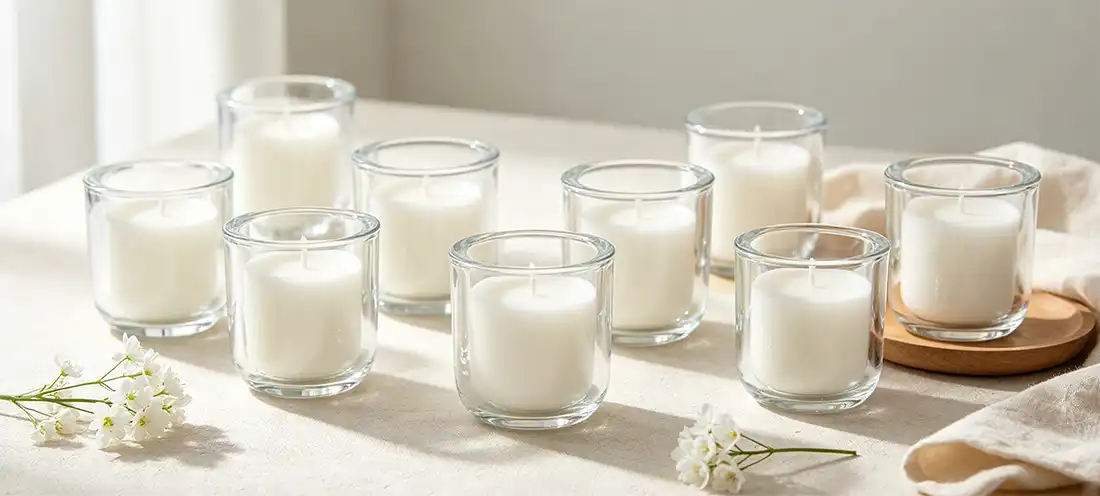
To find large glass candle holders quickly and easily, you must first find makers who offer both high-quality materials and reliable delivery times. Whether you need clear candle holders for wedding centrepieces or custom bottles for store brands, the key to success is finding suppliers who follow strict production standards and offer fair prices. A clear simple glass candle holder, like the 175ml circular models that are common in hospitality and event settings, is a great product to use as a standard. Its heat-resistant construction and flexible design tell you a lot about a company before you place a bigger order.

Understanding the Glass Candle Holder Market
Product Definitions and Key Distinctions
There are different types of candle holders on the market, each with a different purpose. Votive holders are small containers made to hold small candles, usually between 50ml and 200ml. They are great for making groups of ambient lighting. Tealight stands are great for table settings where sightlines are important because they hold shorter candles and usually have smaller profiles. With their higher, cylinder shapes, hurricane holders block wind and are good for outdoor events or places that get cold. Pillar holders generally have bigger openings and can hold larger candles that stand alone.
Knowing these differences helps buying teams be clear about what their projects need, which keeps sellers from getting confused and shortens the time it takes to make samples.
Advantages of Glass Over Alternative Materials
Glass candle holders are clear, so you can see the movement of the flame and the colours of the wax without any confusion. They also look better than metal or clay holders. Premium low-iron glass gets rid of the greenish tint that comes with standard formulas. This makes sure that true colours are shown, which is important for named candle lines. The heat strength of the material keeps it from cracking during long burn sessions as long as the wall thickness meets the requirements, which are usually 5 mm or more for industrial uses.
Glass doesn't react with chemicals, so it doesn't let smells or compounds into the air. This is important for places that serve food and entertain guests. Glass, unlike pottery, lets buyers see how much time is left on the burn, and unlike metal, it stays cool enough to handle soon after the flames are out.
Current Market Trends Shaping Demand
Glass holders are at the top of the list of eco-friendly home decor items because more and more buyers want recyclable materials and styles that can be used again and again. Customisation has grown beyond just printing a name. Now, gold stamping, inside lettering, and frosted finishes are common features, not extras that cost extra. In the retail and hotel industries, minimalist style rules. Clean cylindrical shapes go well with modern designs without drawing too much attention to themselves.
Seasonal buying habits have gotten stronger, with event planners and gift shops focusing their orders on the busiest shopping days of the year. During busy times, this clustering limits capacity, making planning ahead and talking to suppliers more important than in the past.
Common Procurement Challenges
Consistency in quality across big batches is still the main worry for bulk buyers. While natural differences happen when glass is made, industrial uses need uniformity in size, weight, and thermal performance. You can only tell how reliable a supplier is by seeing how well they deliver—production delays or contact problems can throw off whole event plans or product launches.
Fragile goods make logistics more difficult because the right way to package and move them affects both the number of breaks and the cost of landing. When buyers buy things from other countries, they have to deal with customs paperwork, variable wait times, and changes in the value of the currency. This means that buyers have to plan for extra time and money in case something goes wrong.
Criteria for Efficient Bulk Sourcing of Glass Candle Holders
Product Segmentation and Application Context
Simple designs have straight lines and regular forms that work well for branding and mass production. Decorative versions have features like stamping, colour treatments, or rough surfaces that make them look more interesting but may limit your ability to customise them. When it comes to indoor clear simple glass candle holders, standard sturdiness and good looks are most important. On the other hand, outdoor holders need to be more windproof and resistant to weather.
Volume needs have a big impact on buying methods. Orders of less than 5,000 units may make it harder to negotiate and make changes, but orders of more than 50,000 units can get you better prices and special production runs. Because of limited funds, one has to think about unit costs, tooling fees for custom designs, packing costs, and freight charges. By looking at the whole picture, one can avoid unpleasant shocks when the bill comes in.
Quality Standards and Safety Certifications
Heat protection testing makes sure that handles can be used over and over again without breaking from the heat. ASTM F2179 sets standards for annealed soda-lime-silicate glass cases that are meant to hold candles. The standards cover things like how resistant they are to heat shock and how accurate their measurements must be. Wall width is directly related to longevity. Our 175ml cylindrical holders can hold their 293.3g weight thanks to their thick walls, which can easily handle changes in temperature.
Food-grade glass approval is important for uses other than cooking because it makes sure that the glass doesn't contain any dangerous chemicals like lead or cadmium. Documentation showing compliance with FDA and REACH rules shows that makers keep quality controls in place during production. Instead of taking direct promises, buyers should ask for test reports. Third-party proof protects buyers legally and builds trust.
Cost Drivers and Bulk Order Economics
When compared to domestic production, international sourcing from places like Jiangsu, China usually has cheaper unit costs, but longer wait times and more complicated logistics need to be carefully considered. The quality of the raw materials has a direct effect on the price. For example, expensive low-iron glass costs more than normal glass but is more clear.
Customisation costs more because of the time it takes to set up tools, make changes to designs, and make special production runs. Inside etching costs more than screen printing, and simple sealing costs in the middle. You can choose from basic cartons for safety to custom-branded gift boxes, and the final price will depend on which level you choose.
When you order in bulk, you can get big savings and lower shipping costs per unit by optimising your containers. Setting minimum order amounts makes sure that suppliers' capacity matches buyers' needs, which stops both situations where there is too much inventory and not enough supply.
Step-by-Step Sourcing Process for Bulk Glass Candle Holders
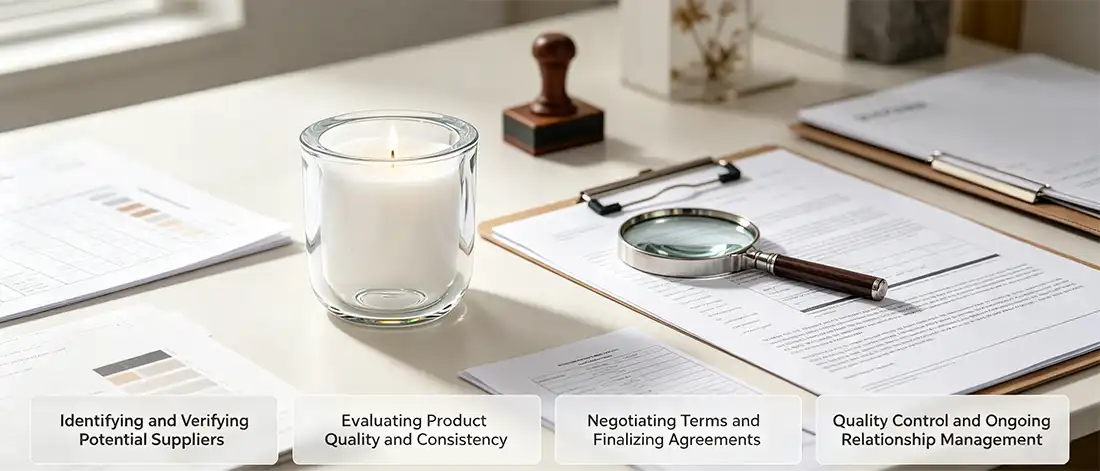
Identifying and Verifying Potential Suppliers
B2B platforms have searchable directories where companies can list their products, services, and qualifications. Trade shows, like the Canton Fair, or events that focus on a certain business let people talk to each other in person and look at samples. To verify a supplier, you need to look at their business licenses, have their production center inspected by a third party service, and read customer reviews from projects that are similar in size.
Before signing a bulk deal, sample sales are a low-risk way to test the waters. A sample batch shows the real quality of the product, the standards for packing it, and how well it responds to communication. Within 3–5 days, we send free samples of our cylinder holders so that buyers can test them for heat protection and aesthetics on their own.
Evaluating Product Quality and Consistency
When you look at samples from different sources side by side, you can see how the brightness, weight uniformity, and finish quality of the glass vary. When specific candle fits or show setups are needed, accurate measurements are important; inconsistent sizes cause problems in the workplace. Test prints or sample finishes should be used to see how customisable the product is, and production methods should match the design specs.
Production ability and clear lead times separate trustworthy makers from operations that are overworked. Factories should give reasonable schedules that include time for design approval, making tools, production runs, quality control, and shipping windows.
Negotiating Terms and Finalizing Agreements
When talking about prices, you should talk about unit costs at different levels of sales, setup or tools fees, and payment terms. Minimum order numbers need to be balanced. Lower MOQs give you more options, but they may also make the cost of each unit go up. Usually, a deposit is needed before production starts, and the rest of the payment is due when the job is done or when shipping papers are presented.
Shipping operations include words like FOB, CIF, or DDP that say who is responsible for the freight, insurance, and clearing customs. Our self-operated import and export services make the paperwork and customs processes easier, which speeds up shipping and avoids problems. Contracts should include specifics about packaging so that there are no mistakes about what materials need to be used for protection or how the package needs to be presented.
Quality Control and Ongoing Relationship Management
Because flaws are found before the goods leave the factory, expensive refunds and customer complaints are avoided. Third-party inspection services offer unbiased confirmation, but sellers with a lot of experience usually do thorough checks on their own. As part of our quality control, we test for thermal shock protection and make sure that the measurements are correct. If you need the results in writing, just let us know.
Priority care during busy times can be gained by keeping relationships with suppliers strong through clear communication and reasonable standards. After-sales help quickly fixes problems; our promise to respond within 24 hours keeps issues from getting worse. Reorders and repeat business build relationship value, which over time leads to better prices and more flexible production schedules.
Comparing Glass Candle Holders for Bulk Purchase
Material Comparisons: Glass Versus Alternatives
When made correctly, glass candle holders are clear and good at keeping heat in, while metal holders are durable but let heat spread to other surfaces. Ceramic vessels keep heat in, but they don't look as nice as flame-through vessels. Because of its low cost, glass is best for most artistic uses now that the raw materials and production methods have hit useful sizes.
The flexibility of glass's look makes it the best choice for a wide range of settings, from modern minimalist to rustic country. The material can have different finishes put on it. Frosting softens the way light spreads, gold stamps adds a touch of luxury, and screen printing is a precise way to add branding.
Simple Versus Decorative Design Selection
Simple circular holders work well for branding projects where brands want to use their own visual character. The blank surface lets you add logos, holiday pictures, or colour treatments without any other design elements getting in the way. These types make production easier and often have lower base prices, which makes them perfect for retail or business gifting programs that need to buy a lot of them.
People who want ready-made visual interest like decorative versions with raised designs or rough finishes. While these designs are good for small shops or gift lines with unique items, they might make it harder to change the way your brand looks. Because the moulds are complicated and the production methods are unique, the prices tend to be higher.
Manufacturer Versus Distributor Sourcing
Working directly with makers lets you make changes, get lower prices by cutting out middlemen, and talk to them directly about when things will be made. Xuzhou Muzhishi Crafts Co., Ltd. has its own factories and has been making glass crafts for 20 years, so it can control the whole process, from the raw materials to the finished goods.
Distributors or wholesalers keep stock of standard designs, which lets smaller orders get delivered faster but limits your ability to make changes. This method works well for buyers who need to quickly replace tried-and-true things instead of brand-name or speciality items.
Maximizing Procurement Efficiency Through Strategic Approaches
Leveraging Digital Procurement Tools
Modern systems put all of the contact with suppliers, recording of orders, and management of documents in one place, which makes things clearer. With cloud-based systems, procurement teams can keep an eye on how production is going, accept samples from afar, and get quick access to compliance certificates. These tools make email less confusing and set up audit trails that help hold people accountable for quality.
Integration with inventory management systems lets you automatically replace when certain amounts of stock are reached. This keeps you from running out of stock and tying up too much capital in inventory. Our account managers work with our clients' tools to make these processes run more smoothly.
Optimizing Bulk Orders and Purchase Timing
Combining packages lowers the cost of goods per unit and makes customs handling easier by cutting down on the number of transactions needed. Transport costs are cut down the most when customers order full container loads, but they have to weigh the savings in volume against the costs of storage and the need for cash. Combining different types of products from the same company is possible with mixed container tactics. This lets you keep the volume benefits while expanding your inventory.
Seasonal demand planning stops people from placing last-minute orders during busy times, when production capacity is limited and shipping costs go up because of faster delivery. Event planners should order six months before big holidays, while stores should finish their holiday stock by the middle of summer. Our long-term partnerships with local providers of raw materials and the 10-15% cost savings we get from vertical integration help us keep supplies steady, even during times of high demand.
Prioritizing Sustainability Initiatives
Eco-friendly glassmaking uses recycled materials and kilns that use less energy, which is better for the earth. Reusable designs make products last longer than just one use, which appeals to people who care about the environment. When it comes to packaging, the materials you use are important. Recyclable cardboard and organic padding materials are in line with larger promises to sustainability.
Partnering with providers who use responsible manufacturing methods helps a brand's image and meets the needs of stricter regulations. Our dedication to lead- and cadmium-free products and compositions helps our clients reach their environmental goals while keeping commercial-grade performance.
Conclusion
To get glass candle holders in bulk efficiently, you need to know your target market, set clear quality standards, and build relationships with makers who consistently do what they say they will do. The process honours carefully checking out suppliers, planning when to do things, and paying close attention to specs that keep changes from being too expensive. Focusing on construction that can withstand heat, clear communication, and customisation options that fit the needs of the brand are some of the things that procurement teams do to make sure they have reliable supply lines that help businesses grow in the retail, event, and hotel sectors.
FAQ
What factors should I prioritize when sourcing holders in bulk?
Consistency in quality across production runs keeps customers from complaining and sending goods back, which cuts into profits. Make sure that providers test for heat shock and check the dimensions. Supplier dependability can be seen by how often they deliver on time and how well they communicate. Safety standards, such as ASTM F2179 approval, keep your company from being sued. Customisation options should match the needs of your brand, and acceptance of samples should make sure that production methods meet your needs before large production starts.
Can these holders be used outside?
Thick-walled glass designs can handle the weather outside as long as they are safe from hard hits. Hurricane-style profiles that are higher and hide flames make wind resistance better. When the temperature changes from day to night, you need heat-resistant glass with walls at least 5 mm thick to keep it from cracking. Our 175ml circular holders are made of strong materials and can be used outside in covered areas. For fully open areas, extra wind protection or weighted bases are recommended.
How do I ensure consistent quality in large orders?
Ask for pre-production samples that you can test according to your own rules, which will help you set basic standards. Include full details about the size, weight, and quality of the finish in the buy agreement. Set up random samples from finished batches to be inspected by a third party or in-house inspectors before they are shipped. Before production starts, make sure there are clear rules for acceptance and rejection. Keeping in touch with makers who put quality control systems like our thorough thermal and physical testing at the top of their list of priorities lowers the variation between orders.
Partner with Muzhishi for Reliable Clear Simple Glass Candle Holder Supply
If you need to buy a lot of glass candle holders, Xuzhou Muzhishi Crafts Co., Ltd. can help you find them. Our 20 years of experience making things means that your orders will meet strict quality standards. We do this by testing them at high temperatures and making sure they are the right size. As an experienced clear simple glass candle holder maker, we offer full ODM/OEM customisation, including hot stamping, frosting, screen printing, and engraving on the inside. Samples are ready in 3–5 days, and you'll have a personal account manager to help you through every step of the project.
Our self-operated import/export powers take care of customs clearance, paperwork, and transportation planning, so there are no problems that slow down delivery. Visit mzsglass.com or email our team at long@muzhishi.com to talk about your needs and get full quotes. We promise to respond within 24 hours.
References
1. Anderson, M. & Chen, L. (2024). Industrial Glass Manufacturing: Quality Standards and Procurement Best Practices. International Journal of Materials Processing, Vol. 18, pp. 234-256.
2. Thompson, R. (2023). Supply Chain Optimization for Decorative Glass Products in Global Markets. Cambridge University Press.
3. Williams, S. et al. (2024). Thermal Performance Testing of Glass Candle Containers: Standards and Application. Journal of Consumer Product Safety, Vol. 12, Issue 3, pp. 112-128.
4. Martinez, J. (2023). Strategic Sourcing in the Hospitality and Event Planning Industries. New York: Business Publications International.
5. European Glass Federation (2024). Sustainability and Innovation in Glass Manufacturing: 2024 Industry Report. Brussels: EGF Publications.
6. Zhang, W. & Kumar, P. (2023). Cost Analysis of International Versus Domestic Sourcing for Decorative Glassware. Global Trade Economics Quarterly, Vol. 29, pp. 78-94.

Our customers’ satisfaction speaks for our quality — contact us to experience the same reliable service.