- English
- French
- German
- Portuguese
- Spanish
- Russian
- Japanese
- Korean
- Arabic
- Greek
- German
- Turkish
- Italian
- Danish
- Romanian
- Indonesian
- Czech
- Afrikaans
- Swedish
- Polish
- Basque
- Catalan
- Esperanto
- Hindi
- Lao
- Albanian
- Amharic
- Armenian
- Azerbaijani
- Belarusian
- Bengali
- Bosnian
- Bulgarian
- Cebuano
- Chichewa
- Corsican
- Croatian
- Dutch
- Estonian
- Filipino
- Finnish
- Frisian
- Galician
- Georgian
- Gujarati
- Haitian
- Hausa
- Hawaiian
- Hebrew
- Hmong
- Hungarian
- Icelandic
- Igbo
- Javanese
- Kannada
- Kazakh
- Khmer
- Kurdish
- Kyrgyz
- Latin
- Latvian
- Lithuanian
- Luxembou..
- Macedonian
- Malagasy
- Malay
- Malayalam
- Maltese
- Maori
- Marathi
- Mongolian
- Burmese
- Nepali
- Norwegian
- Pashto
- Persian
- Punjabi
- Serbian
- Sesotho
- Sinhala
- Slovak
- Slovenian
- Somali
- Samoan
- Scots Gaelic
- Shona
- Sindhi
- Sundanese
- Swahili
- Tajik
- Tamil
- Telugu
- Thai
- Ukrainian
- Urdu
- Uzbek
- Vietnamese
- Welsh
- Xhosa
- Yiddish
- Yoruba
- Zulu
Preserve Freshness: The Benefits of Honey Jar Glass
Glass packaging has changed the way honey makers store and ship their products so that the quality stays the same. The hexagon honey jar glass is a big step forward in food-safe storage because it has better preservation qualities that keep honey's natural enzymes, moisture content, and flavour profile from breaking down. Instead of releasing chemicals over time like plastic containers can, glass forms a barrier that keeps air and other contaminants out while letting honey's natural golden colours shine through. The geometric six-sided shape makes these containers more useful and nice to look at. They are perfect for commercial honey businesses that want to keep the quality of their products safe throughout the supply chain.
Understanding Hexagon Honey Jar Glass: Features and Advantages
The Science Behind Geometric Glass Design
The six-sided shape of hexagon honey jar glass has measured benefits that go beyond how nice they look. This unique shape creates a tessellation effect that makes it possible for containers to fit together with little extra room. Procurement managers know that this form lowers shipping costs by making pallets more dense than circular options. Because the panels are flat, they don't roll around when they're being moved, which lowers the risk of breaking them in warehouses.
Muzhishi's hexagon honey jar glass is made of high-quality soda-lime glass that meets Type III glass standards. This makes sure that the containers are chemically neutral, which is important for food contact uses. The surface of the material isn't porous, so it stops flavours from absorbing and spreading. This keeps honey's original taste forever. Glass is not like plastic wrapping, which can change the structure of a product over time by moving molecules around.
Superior Sealing Technology for Extended Freshness
Keeping the wetness level of honey between 17 and 18% stops problems with fermentation and crystallisation. Our hexagon honey jar glass has thread finishes that were precisely moulded to work with twist-off lids that have heat-activated plastisol liners inside. These lid systems make hermetic seals that keep out oxygen and wetness from the air, which means that food stays fresh longer without the need for chemicals.
The thermal shock resistance grade of ΔT 42°C works with hot-fill methods used to make flavoured honey. This feature lets makers fill containers at high temperatures of up to 85°C, which allows for proper pasteurisation while keeping the structure's integrity during cooling processes. According to research from the National Honey Board, honey stays fresh for at least three years when stored in hexagon honey jar glass that is properly sealed.
Transparency Advantages for Product Marketing
High-clarity glass is good for marketing because it shows off honey's natural colour changes that show where it comes from and what flowers it came from. Well-made glass's refractive properties make light interact with honey more strongly, creating visual appeal that affects people's decisions to buy at store displays. The six curved sides work like prisms to make the product easier to see from different angles.
Low-iron glass recipes get rid of the greenish tint that comes with regular glass, giving accurate colour representation that is important for branding expensive honey. When selling honey from a single flower, like acacia, manuka, or buckwheat, this clarity is very important because colour is a good way for trained customers to tell if the honey is good.
Optimal Usage and Maintenance of Hexagon Honey Jar Glass
Handling Protocols for Commercial Operations
When used in a business setting, proper handling methods extend the life of containers. When training staff, it should be emphasised that corners and edges are the weakest spots in glass because they are where stress builds up the fastest. The hexagon honey jar glass actually spreads vertical compression forces more evenly than round forms, which makes it easier to stack in storage areas.
Managing the temperature is very important during the filling process. Thermal gradient stress can be lowered by slowly heating empty containers to 40–50°C before adding hot products. This step before the actual construction stops rapid differences in growth that could weaken the structure. The glass can survive industrial dishwasher runs at temperatures of up to 80°C, which makes it easier to clean between refilling.
Cleaning Standards for Food Safety Compliance
Cleaning procedures for businesses keep up with the cleanliness standards set by FDA and EU rules. The surfaces of our hexagon honey jar glass don't get damaged by alkaline cleansers and sanitising solutions. Pre-rinsing with warm water, washing with food-grade alkaline soap at 60–70°C, thorough rinsing, and air drying in controlled settings to stop water spots are the steps that should be taken for cleaning.
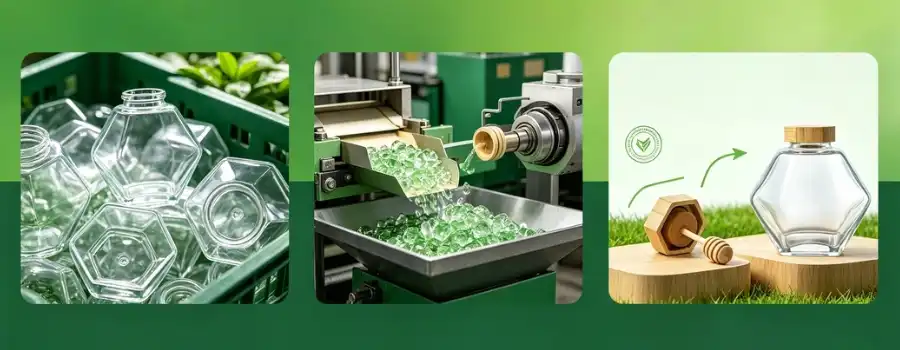
When set up correctly, automated bottle washing systems can easily handle hexagon honey jar glass. The flat panels make it easier to spray evenly, which makes sure that all waste is removed from the inside of the surfaces. Plastic cases get scratches on the outside that let bacteria grow, but glass stays smooth the whole time it's being used. As part of quality control, the product is looked at visually in good lighting to find any leftover contamination before the refilling process starts.
Sustainable End-of-Life Management
Glass dishes help circular economy efforts because they can be recycled over and over again without losing any of their quality. Setting up programmes to collect returned containers cuts down on packing costs and shows customers who care about the environment that you care about the environment. Because of the way the material is made, it can be completely reprocessed into new glass goods. Using cullet (recycled glass) instead of raw material cuts the energy needed for manufacturing by 25–30%.
Reusing by consumers is another aspect of sustainability. Customers are more likely to reuse the containers for home storage because they are well-made and look good, so the product can be used for more than just honey. This ability to reuse improves how environmentally conscious groups see the brand, which is becoming a bigger factor in buying choices.
Guide to Selecting the Right Hexagon Honey Jar Glass for Your Business
Capacity Options and Application Scenarios
The right choice of strategic capacity matches packaging with how the market is positioned and the routes of distribution. Muzhishi has three basic sizes that meet different business needs:
- The 100ml capacity is good for gift sets, sampling programmes, and other niche markets where controlling portions is important. This size works well for breakfast service shows in hotels and restaurants. The small size works well in travel stores where limited room makes it hard to choose products. The size of 7.3x7.9cm and the weight of 120.4g make shipping cheap for businesses that sell directly to customers.
- The 250ml capacity is the best for selling honey in stores because it strikes a good balance between how much people think it's worth and how much it costs. This size falls in the middle, which makes it good for households that buy things once a month or twice a month. Event planners choose this size for wedding favours and business gift programmes that need to have a clear sense of value. The 9.7x10cm size makes it easy to see on shelves without taking up too much space.
- The 400ml capacity is aimed at big buyers and families who want to save money by buying more. For shoppers on a budget, this size is sold at wholesale clubs and natural food shops. The weight of 304.8g and feature size of 11.1x11.9cm make it stand out in advertising displays. Commercial kitchens like this size for using ingredients when having to change containers often slows down the work flow.
Material Comparisons and Performance Metrics
Multiple tests that are important for storing honey show that glass packaging works better than other materials. Comparative research shows that there are big benefits:
- Plastic containers even though they are cheap and easy to carry, they don't let air or moisture into them very well, which can change the structure of honey. Studies from food packing study institutions show that HDPE containers let 50–100cc/m² of oxygen through each day, while hexagon honey jar glass lets almost no oxygen through. This difference is very important when honey delivery networks store honey for a long time.
- Acrylic alternatives have clarity that is close to that of glass, but they are easy to scratch, which makes them look worse over time. The lower melting point of the material makes hot-fill uses more limited, which limits the freedom of processes. Chemical protection is also not as good as glass standards. For example, some types of honey contain organic acids that slowly wear away plastic surfaces.
- Metal containers provide excellent barrier properties but eliminate visual product assessment that customers value. Because it's not clear, you have to rely on the label to tell you what the product is, which lowers customer trust. Metal surfaces and honey's acidic pH could react, which raises quality issues that wouldn't exist with glass packing.
Customization Capabilities for Brand Differentiation
Packaging customisation turns common goods into unique company assets. Because Muzhishi can make so many changes, it can meet a wide range of naming needs:
- Hot stamping applies metallic foils in gold, silver, or copper by hot pressing to show that the product is high-end. This style of decorating works well for high-end honey brands that want to sell in high-end stores and give gifts to businesses. The silver accents catch light well when they're on show, which makes them stand out on crowded shelves.
- Frosting treatments use acid etching or sandblasting in frosting techniques to make fine matte surfaces. Craft food lovers like this finish because it shows that the food was made with care and attention to detail. When you mix partial frosting with clear panels, you can see some of the product while still making a stylistic statement. Event planners like covered containers for wedding and party themes that need to look classy.
- Inside engraving makes a lasting mark that can stand up to being handled and washed many times. Laser technology can make logos, text, and designs that look nice on internal glass surfaces. This method works best for programmes that use reused containers because the outside labels can be taken off, but the brand's appearance stays the same throughout the product's lifecycle.
- Screen printing makes bright, full-color images that are perfectly aligned. This method can be used for a wide range of designs, including ones with photographic elements and colour effects. Because the cured colours can stand up to commercial cleaning, screen printing is a great choice for programmes that use reusable containers. Multiple colour passes make it possible to make complex art that successfully tells business stories.
Procuring Hexagon Honey Jar Glass: Market Insights and Supplier Selection
Evaluating Manufacturer Credentials and Capabilities
To find trustworthy glass suppliers, you need to carefully look at their production skills and quality control methods. Production ability, technical licenses, and supply chain infrastructure are all important things to look at when making an evaluation.
- Production capacity is based on the ability to meet deadlines for sales. Manufacturers should be able to show that their operations can be expanded to handle both small speciality runs and high-volume needs. Muzhishi's facilities can handle orders of any size, from 5,000 units for small names to more than 500,000 units for large distributors. This gives them the ability to be flexible as business rates change with the seasons or grow over time.
- Quality certifications prove that factory standards are met and that food safety rules are followed. Some important credentials are FDA permission for materials that come into touch with food, compliance with EU Regulation 10/2011, and ISO 9001 quality management recognition. These written methods make sure that the specs of each batch of products are the same. Third-party testing results that confirm the chemical resistance and lead-free composition give risk-averse buying teams even more peace of mind.
- Customer feedback beyond formal certifications, customer comments and the image of the business can give you useful information. Established producers who have been in business for 15 to 20 years show that they are competent and the market accepts them. References from similar businesses show how well a seller does in terms of on-time deliveries, low failure rates, and quick responses to quality problems. Trade shows and B2B platforms in your industry offer chances to meet other people and get suggestions from them.
Pricing Structures and Value Optimization
By understanding the economics of glass packing, you can make smart purchasing choices that balance the need for quality with the cost. Several things affect the end price per unit:
- Order volume has a big effect on the cost per unit because it affects how efficiently the goods are made and how much they cost. At 10,000, 50,000, and 100,000 units, economies of scale lower the cost of making, which is when quantity breaks usually happen. Strategic buyers figure out how much they will need each year and make volume promises to get the best prices. They also keep their inventory flexible by delivering goods in stages.
- Customization complexity adds extra costs that are related to how complicated the decorations are. Prices start at a base level for standard clear cases. Hot stamping adds a modest premium, and multi-color screen printing commands higher decoration fees. Professionals in procurement weigh the benefits of customisation against the benefits of brand identity. They may even define different levels of decoration for different product lines within a portfolio.
- Shipping and logistics are big parts that need to be optimised. Ocean freight is a cheap way to ship big items with adjustable delivery times. On the other hand, air freight charges more for urgent needs. Container load optimisation chooses the right number of jars so that the full capacity of the container is used without having too many half loads. Muzhishi is an expert in operations. He can prepare customs paperwork and coordinate shipping, which makes buying things from other countries easier.
Certification Requirements and Compliance Standards
Following the rules saves a brand's image and allows it to sell its products in different areas. When used for food, glass packaging must meet certain quality and safety standards:
- Food-grade certification confirms that materials meet the safety standards for direct food contact. Dangerous materials like lead, cadmium, and other heavy metals must not be used to make glass. Regulatory authorities set accepted limits for testing methods that measure possible leaching under virtual storing conditions. Suppliers should give you material safety data sheets and test reports from a third-party lab that prove they follow the rules.
- Tamper-evident closure systems are features especially important for high-end honey goods, where worries about authenticity make it worth spending more on the package. Containers that have induction seals, breakaway bands, or button locks can be seen to be closed. Consumers are more likely to trust tamper-evident closure methods, and they meet legal requirements in many countries.
- Environmental certifications have a bigger impact on buying choices as sustainability becomes a competitive differentiator. Documentation about how recyclable something is, carbon impact analyses, and sustainable manufacturing methods are all things that buyers who care about the environment like. Corporate social responsibility goals are met by suppliers who show they use green energy and work to reduce trash.
Conclusion
Glass packaging is one of the best ways to keep honey fresh because it provides a full barrier, does not react with chemicals, and is a durable long-term material. The hexagon honey jar glass design also meets the needs of businesses that want to save space, improve handling safety, and differentiate their brand. When purchasing packaging solutions, procurement professionals should prioritize suppliers with strong quality systems, full customization capabilities, and the logistics expertise required for global supply chains. Businesses that make strategic sourcing decisions balancing cost minimization with quality standards gain an advantage in competitive markets, which are increasingly shaped by environmental concerns and customer preferences for high-quality packaging materials that protect products during distribution.
FAQ
Why should businesses choose hexagonal glass over plastic containers?
The hexagon honey jar glass is better at blocking air and moisture, which can lower the quality of the honey. Glass doesn't react with chemicals, so you don't have to worry about leaking like you do with plastic, which can move chemicals that change taste and safety. When shipping and storing, the geometric form makes better use of room than round containers. Glass also helps a quality brand stand out because it is clear and can be customised in ways that plastic options can't. Another great thing about glass is that it can be recycled over and over again without losing any of its quality.
What customization options work best for bulk private-label orders?
When you buy a lot of things, screen printing is a cheap way to brand them, and the pictures look great and last a long time. When used in large quantities, hot stamping can be used to create shiny details that add a touch of luxury without driving up the cost per unit. The engraving on the inside makes the name last even after many washes in refilling programmes. Customised lid colours and styles help people recognise your brand without decorating the glass surface. Label writing is still the most cost-effective way to go for small quantities or design changes that happen often. The design team at Muzhishi helps with optimising artwork to make sure it can be manufactured and has the same visual effect across all decoration methods.
How should businesses properly clean and recycle these containers?
For commercial cleaning, you need to use alkaline food-grade soaps at 60–70°C, rinse well, and let dry in controlled air. When set up correctly, automated bottle cleaners can easily handle hexagon honey jar glass. Do not use rough cleaning tools that could leave marks on the surface. Glass recycling programmes take clean containers through regular pickup systems, and the glass goes into lines of circular processing. Before replacing, businesses that have container return programmes should set up cleaning procedures that meet food safety standards. The makeup of the material lets it be recycled over and over again without losing any of its quality, which supports the goals of the circular economy.
Partner with Muzhishi for Premium Hexagon Honey Jar Glass Solutions
Xuzhou Muzhishi Crafts delivers comprehensive glass packaging solutions tailored to commercial honey operations and specialty food businesses. Our hexagon honey jar glass manufacturer capabilities include full ODM/OEM customization services, rapid prototyping within 3-5 days, and flexible order quantities accommodating both boutique brands and large-scale distributors. Twenty years of industry expertise ensures reliable quality meeting FDA and EU food safety standards. We provide complete logistics support including customs documentation, shipping coordination, and competitive bulk pricing structures. Free samples allow evaluation before commitment. Contact our procurement specialists at long@muzhishi.com to discuss capacity requirements, customization options, and volume pricing for your hexagon honey jar glass needs. Visit mzsglass.com to explore our complete product range and discover how strategic packaging partnerships enhance brand positioning while optimizing supply chain efficiency.
References
National Honey Board. (2019). Honey Packaging and Storage Guidelines for Commercial Operations. Longmont, CO: National Honey Board Technical Services.
Robertson, G.L. (2016). Food Packaging: Principles and Practice (3rd ed.). Boca Raton, FL: CRC Press, Taylor & Francis Group.
Marsh, K., & Bugusu, B. (2007). Food Packaging—Roles, Materials, and Environmental Issues. Journal of Food Science, 72(3), R39-R55.
European Food Safety Authority. (2015). Scientific Opinion on the Safety Evaluation of Substances for Food Contact Materials. EFSA Journal, 13(4), 4089.
Singh, S.P., & Burgess, G. (2017). Glass Container Design and Performance for Food and Beverage Packaging. Journal of Applied Packaging Research, 9(2), 45-62.
Sustainable Packaging Coalition. (2018). Circular Economy Approaches in Glass Packaging: Industry Best Practices and Implementation Strategies. Charlottesville, VA: GreenBlue Institute.

Our customers’ satisfaction speaks for our quality — contact us to experience the same reliable service.