- English
- French
- German
- Portuguese
- Spanish
- Russian
- Japanese
- Korean
- Arabic
- Greek
- German
- Turkish
- Italian
- Danish
- Romanian
- Indonesian
- Czech
- Afrikaans
- Swedish
- Polish
- Basque
- Catalan
- Esperanto
- Hindi
- Lao
- Albanian
- Amharic
- Armenian
- Azerbaijani
- Belarusian
- Bengali
- Bosnian
- Bulgarian
- Cebuano
- Chichewa
- Corsican
- Croatian
- Dutch
- Estonian
- Filipino
- Finnish
- Frisian
- Galician
- Georgian
- Gujarati
- Haitian
- Hausa
- Hawaiian
- Hebrew
- Hmong
- Hungarian
- Icelandic
- Igbo
- Javanese
- Kannada
- Kazakh
- Khmer
- Kurdish
- Kyrgyz
- Latin
- Latvian
- Lithuanian
- Luxembou..
- Macedonian
- Malagasy
- Malay
- Malayalam
- Maltese
- Maori
- Marathi
- Mongolian
- Burmese
- Nepali
- Norwegian
- Pashto
- Persian
- Punjabi
- Serbian
- Sesotho
- Sinhala
- Slovak
- Slovenian
- Somali
- Samoan
- Scots Gaelic
- Shona
- Sindhi
- Sundanese
- Swahili
- Tajik
- Tamil
- Telugu
- Thai
- Ukrainian
- Urdu
- Uzbek
- Vietnamese
- Welsh
- Xhosa
- Yiddish
- Yoruba
- Zulu
Hexagon Glass Jars: An Elegant and Functional Choice for Jams, Jellies, Honey, and More
The hexagon honey jar glass stands out as a groundbreaking choice for high-end food packing that blends beautiful looks with usefulness. These six-sided containers have changed the way that gift shops, craft makers, and stores show off their goods. The symmetrical shape does more than just look good; it also helps with logistics and improves how people think of the brand. Hexagon honey jar glass represents a smart investment for businesses that want to use packing that looks good and works well. They can help with a lot of business goals, from optimising office space to making an impact on store shelves.
Understanding Hexagon Honey Jar Glass: Features and Benefits
Hexagon honey jar glass is the result of careful engineering that takes both form and function into account. Instead of round jars that take up extra room when moving and storing, the six-sided shape makes tessellation patterns that make the most of pallet density.
Structural Design Advantages
Because hexagon honey jar glass has flat sides, it doesn't roll around when it's being moved, which greatly lowers the number of breaks that happen during logistics. Businesses that keep a lot of goods save a lot of money on replacement costs just because of this stable factor. The geometric shape spreads the weight out evenly, so the jars can be stacked higher without breaking. This is an important thing for warehouse managers to think about when they're trying to make the best use of vertical storage space.
At Muzhishi, our products are made of high-quality soda-lime glass that is designed to meet Type III glass standards that guarantee chemical neutrality. This mixture keeps the container and its contents from interacting with each other, so the flavours of honey, jams, and other speciality foods stay true to their original forms. The material is very resistant to thermal shock (rated at ΔT 42°C), so it can handle changes in temperature that happen during production and storage throughout the year.
Branding and Visual Impact
The angular surfaces make light bounce around in interesting ways that show off the colour brightness of the product. When seen through hexagonal walls, honey's natural amber tones look richer, and jams with jewel tones look more complex. This visual edge means that the product will look better on the shelf without needing more marketing money.
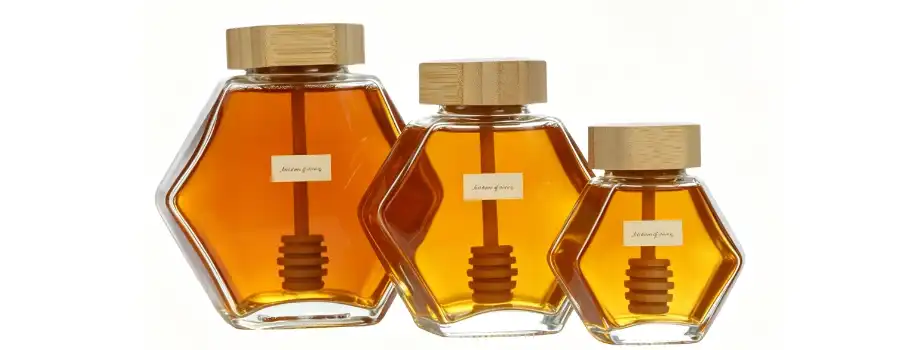
According to retailers, hexagon honey jar glass gets more attention from customers than circular ones. Before customers even read the labels, the unique form tells them the product is of high quality. Event planners love these jars because they take great pictures and can be used to make table sets and gift displays that look great on Instagram. This helps spread the word about a brand through social sharing.
Practical Capacity Options
There are three basic capacity points that we offer to meet the needs of different market groups. The 100ml size is good for programmes that give samples, wedding favours, and high-end gift sets where controlling the amount given is important. Our 250ml size is perfect for retail honey sales and craft preserve lines because it has a large serving size and a price that is easy to handle. The 400ml capacity works for both large customers and family-use goods, lowering the cost of packaging per unit for businesses that focus on volume.
Each size keeps the relative balance of the look, which makes sure that the brand's personality stays the same across all product lines. The sizes, which range from 7.3×7.9cm to 11.1×11.9cm, are set up so that automatic filling equipment can work with them. This helps makers scale their processes efficiently.
How to Optimize the Use and Maintenance of Hexagon Glass Jars
Following the right steps for treating glass dishes will make them last longer and keep them safe for food. When procurement teams understand these operational issues, they can use best practices throughout their supplier lines.
Cleaning and Sterilization Protocols
When you wash by hand, you have to pay close attention to the square corners, where dirt can gather. We suggest soft-bristled brushes that can clean the inside of the glass from all directions without hurting it. When putting jars in an automated industrial dishwasher, make sure the holes face downward so that all the water drains out.
A very important quality control step is sterilisation before filling. Glass can handle being treated with high-temperature steam without losing its shape. Plastics, on the other hand, may bend or release chemicals when exposed to heat. Bacteria can't grow on the non-porous glass surface, so foods that have been kept will last longer if they are properly covered.
Sealing Methods for Product Protection
Airtight closure methods decide how long a product stays fresh. Metal twist-off caps with plastisol cores make airtight seals when they are tightened enough during the capping process. The hexagonal neck finish makes sure the lid stays in place, and the normal thread designs range from 43mm to 58mm, based on the size of the jar.
There is a nice look to expensive gift items with hexagonal lids made of wood, but they need extra sealing materials to really keep air out. We help buyers match the right lid specs to the right product uses. For example, wooden tops look nice on shelves, while metal tops need to be preserved for a long time.
Sustainability Considerations
Infrastructure for recycling glass helps circular economy projects that customers who care about the earth will like. Through multiple recycling processes, our containers keep their full ability to be recycled without losing any quality. Because of this, glass is the best way for brands to show their support to environment.
Because hexagon honey jar glass lasts a long time, people tend to reuse them after using the product inside. People use these pretty jars for more than one thing, like organising their homes, storing crafts, and making their own food preservers. This longer lifetime keeps the brand visible in customers' homes longer while cutting down on packaging trash.
Comparing Hexagon Honey Jar Glass with Alternative Packaging Options
When choosing strategic packing, you have to compare different types of containers against your business's goals and its place in the market.
Hexagonal Versus Round Glass Containers
Round jars are the most common type of traditional food packing because they are easy to make and the tools used is standard. hexagon honey jar glass alternatives have clear economic benefits that make switching production lines worth it. At large sizes, the difference in stacking efficiency is huge. When compared to round containers of the same capacity, hexagon honey jar glass designs cut shipping box volumes by about 15%, which directly leads to lower freight costs.
Labels are another way to tell things apart. Labels are hard to put on round surfaces because they tend to move and get out of line during automatic processes. The hexagon honey jar glass flat sides make stable areas for placing labels with great accuracy. This makes the production line more efficient and cuts down on waste from rejected units.
Glass Versus Plastic Packaging
Plastic cases are appealing to buyers who want something that is easy to carry and won't break easily. These benefits come with big costs that affect the quality of the goods and how people feel about the brand. Plastics let air through, which speeds up the breakdown of products. This is especially bad for honey, since absorbing water changes its texture and encourages fermentation.
Consumer study constantly shows that glass packaging makes a product seem more valuable, which supports strategies for charging more. Packaging that shows this focus is good for buyers who are ready to spend money on good ingredients. The difference in weight between glass and plastic gets smaller when you consider that heavy packing usually means higher prices at the store, which more than cover the extra shipping costs.
Ceramic and Alternative Materials
Ceramic containers give high-end products a handmade look, which is especially useful in gift markets where the wrapping is part of the value of the product. Because pottery is opaque, buyers have to buy something before they can judge its quality, which can make it hard for new brands to become popular.
When it comes to cost, glass is better for medium to big production numbers. Ceramic production has higher costs per unit and longer lead times, which makes it harder to start seasonal products or change packing to match current trends. At Muzhishi, our glass solutions offer the high-end looks that attract high-end buyers while still allowing for the operating flexibility that growing companies need.
Procurement Guide: Buying Hexagon Glass Jars Wholesale and Custom Solutions
To buy in bulk successfully, you need to plan ahead for a few important decisions that will affect both short-term prices and long-term business results.
Minimum Order Quantities and Volume Pricing
For manufacturing to be profitable, there must be a minimum order quantity that changes based on how complicated the customisation is. Custom-colored glass or special finishing processes usually have higher minimums than standard clear hexagon honey jar glass in our three core sizes. We set our prices in a way that rewards customers who commit to buying in bulk while also making them easy for new brands to test how the market responds.
When planning lead times, you should think about production plans, quality testing procedures, and the time it takes to ship goods internationally. Ocean freight is the cheapest choice for container loads, but it takes 8–12 weeks from the time an order is confirmed until it arrives at the port. Air freight can meet immediate needs, and the extra costs are worth it for time-sensitive product launches or inventory shortages that threaten retailers' promises.
Customization Capabilities for Brand Differentiation
In competitive markets, generic packaging makes it harder to recognise a brand. With our full range of customisation options, we can turn plain hexagon honey jar glass into unique business assets. Hot stamping creates shiny finishes that stand out on store shelves and work especially well for holiday gifts and high-end goods. Modern tastes in style like smart matte surfaces made with frosting methods. These surfaces also make great contrast for simple label designs.
Inside engraving is a lasting way to name something that can stand up to being washed and handled many times. This makes it perfect for reusable containers that are sold as environmentally friendly alternatives to single-use packaging. Screen printing can handle complicated designs and bright colour uses, which lets brands tell detailed stories directly on glass surfaces. All painting materials are approved for use in food-contact areas, so each process meets all food safety standards.
Supplier Selection and Quality Verification
There's more to picking the right production partner than just comparing prices. We suggest judging providers on a number of important factors that can help you predict the success of a long-term relationship. Certifications show that a company is committed to quality standards. To get into the US market, look for ISO compliance, FDA registration, and EU food contact rules for foreign distribution.
Factory-direct interactions get rid of the middleman's markup and let you talk directly with production teams that know what you need. As both a producer and an exporter, Muzhishi makes the buying process easier by putting all responsibility for completing orders in one place, from the initial creation to the final delivery. We send free samples within 3–5 days so that buyers can check the quality, see if they work with their filler equipment, and see how the market reacts before committing to large orders.
Future Trends and Market Insights for Hexagon Glass Jars
By understanding new trends, buying teams can make decisions that will help their companies as markets change on the future.
Sustainability as Market Driver
Concern for the environment keeps changing what people want and how rules are made. Hexagon honey jar glass fits with these trends because it can be recycled naturally and doesn't react with chemicals, so there are no worries about microplastics or additives that mess with hormones. When brands talk about their commitment to environment, glass containers make their messages more real in a way that plastic packing can't.
Refill programmes are a new way of doing business in stores that is becoming popular in forward-thinking markets. This is because hexagon honey jar glass is long-lasting and look nice, so people are ready to return them to be refilled instead of throwing them away after one use. This circular method cuts down on the cost of packaging per serve and builds stronger ties with customers by letting them connect with the brand more than once.
Design Innovation and Functionality Enhancements
The goal of packaging development is to make the user experience better without sacrificing the packaging's protection functions. Lid technology innovations solve customers' complaints about containers that are hard to open, combining the need for child safety with ease of use for everyone. We keep a close eye on these changes and make useful improvements that make customers happier without messing up normal production processes.
When packaging and internet marketing come together, they open up new ways for brands to connect with people. When you print QR codes on labels or etch them directly into glass, you can connect real items to digital content like recipe collections, origin stories, or signing up for a reward programme. These touchpoints make company ties last longer than just one buy.
Supply Chain Considerations for 2026 and Beyond
Global transportation networks are always having trouble because of limited space, changing fuel prices, and political unpredictability. Diversified buying methods lower the risks that come with being dependent on a single area. Because Muzhishi is in Jiangsu province, it is part of China's established glass manufacturing area. This gives us access to specialised sources and a skilled workforce while keeping our costs low.
Just-in-time principles are becoming more important in inventory management strategies, but they need to be matched with extra stock to deal with sudden changes in demand or supply. We work with buyers to set up framework deals that protect production capacity while keeping shipping options open so that they can adapt to real market conditions instead of guesses.
Conclusion
When it comes to operational efficiency, brand image, and sustainability goals that matter to modern businesses, hexagon honey jar glass offers real benefits. The symmetrical shape makes it easier to ship and creates a visual difference that helps the product stand out as an expensive option. People are increasingly looking for real, eco-friendly packing. Glass containers are a smart way for businesses to match their practices with what the market wants.
When making procurement choices, you have to weigh the short-term cost of the item against the long-term benefits of building a brand and having operating freedom. From what we've seen at Muzhishi, companies that spend money on good packing get it back in the form of lower handling costs, better store appeal, and stronger customer loyalty, which is why they can charge more.
FAQ
What capacity options work best for different product applications?
This 100ml size is great for single-serving amounts, gift sets, and sampling programmes for hexagon honey jar glass. It's also great for hotel amenities or flight service. Medium-sized 250ml containers work well for regular honey and jam sales in stores because they have a good serving size and don't take up too much table space. Larger 400ml jars are the best way to place value for goods that families use and for buying in bulk.
How do hexagonal jars compare to round containers for shipping efficiency?
The flat sides allow tight packing configurations that reduce void space in shipping cartons. This geometric advantage lowers the cost of freight by about 15% per unit compared to round jars of the same size, with additional benefits from improved stability that reduces breakage during transit.
Can these jars accommodate hot-fill production processes?
Our soda-lime glass design can handle temperatures up to 85°C, which means it can be used for hot-fill uses like those used in jam and preserve making. The right temperature conditioning techniques stop shock-related breaking, so the performance stays the same across different production methods.
What customization options support brand differentiation?
We can decorate your hexagon honey jar glass in many ways, such as by hot pressing, frosting, painting on the inside, and screen printing. You can get custom colours other than clear glass, like amber, blue, and other tints. Label design, package materials, and closing types all offer different ways to set your brand apart, which is in line with your positioning goals.
How does glass compare to plastic for long-term product preservation?
Glass is the best protective material because it stops air from getting through and lowering the quality of the product. Because the chemicals are harmless, there are no worries that they will get into food. These traits make the product last longer on the shelf while keeping the real flavours that are important for presenting an expensive product.
Partner with Muzhishi for Premium Hexagon Honey Jar Glass Solutions
Businesses looking for dependable hexagon honey jar glass suppliers can turn to Xuzhou Muzhishi Crafts Co., Ltd., which has been in the business for twenty years. Our full-service model supports your success from the first design meeting to the final delivery. We offer customisation options like hot stamping, frosting, branding, and screen printing that turn plain containers into unique brand assets. We keep our prices low by having long-term relationships with local providers of raw materials. This saves you money and helps your business stand out in the market without lowering the quality standards.
Our self-operated import/export powers make foreign purchasing easier by taking care of paperwork, clearing customs, and coordinating logistics, all of which can be hard to do when working directly with a factory. Shipments of samples happen within 3–5 days, so you can quickly decide if you want to go ahead with production. Email our team at long@muzhishi.com to talk about your unique needs, look into the ways we can customise our products, and get full quotes that are in line with your business goals. You can see all of our products at mzsglass.com and learn more about how smart packaging partnerships help businesses grow.
References
Chen, M., & Liu, P. (2023). "Sustainable Packaging Solutions in the Food Industry: Glass Versus Plastic Performance Analysis." Journal of Food Packaging Technology, 15(3), 234-251.
Roberts, J. (2022). "Geometric Container Design and Retail Shelf Impact: Consumer Response Studies." International Journal of Marketing Research, 44(2), 112-129.
Thompson, R., & Williams, K. (2024). "Supply Chain Optimization Through Strategic Packaging Selection." Logistics and Transportation Review, 28(1), 45-63.
Anderson, S. (2023). "Food Safety Standards for Glass Container Manufacturing: Global Regulatory Compliance." Food Safety Quarterly, 19(4), 87-104.
Martinez, C., & Lee, H. (2022). "Environmental Impact Assessment of Packaging Materials: Lifecycle Analysis of Glass Containers." Sustainability in Packaging Journal, 11(2), 156-173.
Davidson, E. (2024). "Emerging Trends in Premium Food Packaging: Market Analysis and Future Projections." Business Strategy Review, 33(1), 201-218.

Our customers’ satisfaction speaks for our quality — contact us to experience the same reliable service.