- English
- French
- German
- Portuguese
- Spanish
- Russian
- Japanese
- Korean
- Arabic
- Greek
- German
- Turkish
- Italian
- Danish
- Romanian
- Indonesian
- Czech
- Afrikaans
- Swedish
- Polish
- Basque
- Catalan
- Esperanto
- Hindi
- Lao
- Albanian
- Amharic
- Armenian
- Azerbaijani
- Belarusian
- Bengali
- Bosnian
- Bulgarian
- Cebuano
- Chichewa
- Corsican
- Croatian
- Dutch
- Estonian
- Filipino
- Finnish
- Frisian
- Galician
- Georgian
- Gujarati
- Haitian
- Hausa
- Hawaiian
- Hebrew
- Hmong
- Hungarian
- Icelandic
- Igbo
- Javanese
- Kannada
- Kazakh
- Khmer
- Kurdish
- Kyrgyz
- Latin
- Latvian
- Lithuanian
- Luxembou..
- Macedonian
- Malagasy
- Malay
- Malayalam
- Maltese
- Maori
- Marathi
- Mongolian
- Burmese
- Nepali
- Norwegian
- Pashto
- Persian
- Punjabi
- Serbian
- Sesotho
- Sinhala
- Slovak
- Slovenian
- Somali
- Samoan
- Scots Gaelic
- Shona
- Sindhi
- Sundanese
- Swahili
- Tajik
- Tamil
- Telugu
- Thai
- Ukrainian
- Urdu
- Uzbek
- Vietnamese
- Welsh
- Xhosa
- Yiddish
- Yoruba
- Zulu
Everything You Should Know About Hexagon Honey Jar Glass
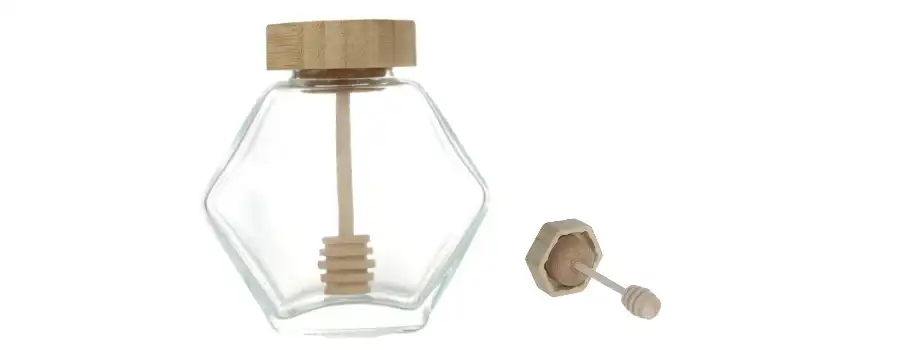
Hexagon honey jar glass stands out as more than just a beautiful container when you're looking for packing for honey, jams, or other handcrafted foods. This six-sided packaging shape has measured benefits for shelf space, brand differentiation, and customer appeal. These are all things that buyers in the home decor, workplace gifting, retail chains, and hotel industries like. The angular shape makes the most of the space on each box while shipping and makes displays that stand out and get people's attention. Figuring out how this special glass packaging fits in with today's buying goals, like being able to be customised and being environmentally friendly, can change how your products look and how efficiently your business runs.
Understanding Hexagon Honey Jar Glass – Essential Knowledge
What Defines the Hexagonal Glass Container
There is a new type of food-grade glass packaging called the hexagon honey jar glass. It has six flat vertical pieces that come together to make a stable, space-saving structure. Instead of cylindrical containers, this geometric shape makes a honeycomb tessellation pattern when several jars are stacked next to each other. This saves room in storage and displays. These cases are made from Type III soda-lime glass and meet strict FDA and EU 10/2011 food contact standards. They also keep their chemical neutrality, which means that honey's delicate flavour compounds stay intact without leaking or reacting.
Material Composition and Safety Standards
High-quality hexagon honey jar glass units are made from soda-lime glass that is lead- and BPA-free and goes through controlled heating processes to get rid of stress points inside the glass. The jars can handle hot filling, which is common when making infused honey or jam because the material is resistant to temperature shock up to 42°C difference. The smooth glass surface stops germs from growing and flavours from absorbing, which are both important for keeping the quality of the product during long-term storage. These safety licenses give procurement teams the proof they need to comply with rules in foreign markets.
Dimensional Specifications and Capacity Options
There are three main sizes of hexagon honey jar glass: 100ml for samples and speciality items; 250ml for craft honey brands; and 400ml for family-sized sale items. The measurement ratios keep the height-to-diameter ratios the same, which makes it easier to see the labels and keeps the stacks stable. Wall thickness requirements are usually between 2.0 mm and 2.5 mm. This gives automatic filling lines structural strength while keeping the shipping weight doable. Standardised sizes make it easy to use current production tools, which means that new packaging lines don't need as much money to get started.
How to Use and Maintain Hexagon Honey Jar Glass for Best Results
Proper Cleaning and Sterilization Protocols
Before filling glass cases with honey, commercial honey packers should use cleaning methods that have been proven to work. After using alkaline soaps in pre-wash cycles to get rid of production residues, hot water rinses get rid of any detergent residues that are left over. Temperatures between 85°C and 95°C for 10 to 15 minutes are enough to kill microbes without causing damage from heat shock. Drying in the air on stainless steel racks stops water spots that make labels less stick. These standards make it possible for businesses that offer refill programmes or direct-to-consumer reusable packing methods to use hexagon honey jar glass for longer.
Labeling and Branding Application Methods
For label application to work well, sticky formulations need to be matched to the glass's surface energy and storing conditions. Pressure-sensitive labels are reliable for items that are stored at room temperature, while hot-melt adhesives don't get damaged by moisture in cold stores. Direct screen printing makes images that don't come off when the product is handled many times. This is useful for high-end products where label peeling hurts the brand's image. Inside engraving gives you lasting branding that stays put even when you clean it in the washing, which supports efforts to reuse things. Procurement teams should ask for sample testing to make sure that labels work as expected when they are distributed.
Creative Reuse and Multi-Purpose Applications
In addition to being used to package honey, hexagon honey jar glass units have many other uses that make the product seem more valuable to customers. The airtight seals keep dry goods like coffee beans, spices, and tea mixes fresh, so the product can be used for more than one thing. Craft lovers reuse these containers to store things for decoration, make candles, and make terrariums, which raises brand awareness in consumers' homes. These jars are used by event planners to set the tables and as party favours. When branded containers go viral on social networks, they can be used for marketing purposes. This longer lifetime builds brand loyalty and supports messages about environment.
Procurement Guide for Hexagon Honey Jar Glass – How to Pick the Best One
Evaluating Supplier Qualifications and Certifications
Reliable glass packing providers have quality systems that can be checked, such as ISO 9001 manufacturing certifications and written food safety procedures. Ask for testing reports from a third party that prove the product meets FDA 21 CFR 177.1520 for materials that come into contact with food and EU Regulation 1935/2004 for products sold in Europe. It's very important that suppliers have factories that can make more than 50,000 units per day. This keeps supplies stable during times of high yearly demand. Being close to shipping ports makes operations easier, and standard processes for clearing customs keep import delays to a minimum. Xuzhou Muzhishi Crafts has been making glass for 20 years and has the right to import and ship goods on its own, which makes the process of buying hexagon honey jar glass from other countries easier.
Minimum Order Quantities and Pricing Structures
For commercial glass production to make economic sense, orders must be at least 5,000 to 10,000 units per standard. However, some suppliers can handle smaller amounts for testing reasons. Volume-tiered pricing systems reward bigger promises by lowering prices by 10 to 25 percent as order sizes rise. Customisation options like changing the colour, treating the surface, or making your own mould tools cost money up front, but they pay for themselves over many production runs. When reviewing seller offers, people who work in procurement should think about the total landed costs, which include shipping, customs taxes, warehousing, and tools. When there is a lot of demand, long-term supply deals can help you get better prices and production slots.
Customisation capabilities and lead time planning
Standard hexagon honey jar glass units can be turned into unique brand assets with the help of full customisation services. Hot stamping creates metallic finishes that give the impression of luxury, and frosting makes stylish matte surfaces that softly spread light in a beautiful way. Inside engraving gives lasting branding that doesn't wear off on the outside, which is useful for programmes that use packages more than once. Screen printing can handle complicated images with many colour registrations, which helps brands tell their stories in more detail. Within 48 hours, Muzhishi's design team gives you 3D models and technical drawings. In 3–5 days, you can get a sample to make sure the design is correct. Production wait times range from 20 to 35 days, based on how complicated the customisation is and how many items are ordered. This means that purchasing needs to be planned around when products are released and when inventory is managed.
Why Leading Brands and Distributors Prefer Hexagon Honey Jar Glass
Market Differentiation and Premium Positioning
The hexagonal shape makes goods stand out right away on store shelves where dozens of other brands are fighting for attention. Studies on how people think about products show that geometric packing makes products seem more expensive and handmade, which is why they cost 15 to 30 percent more than regular honey. Under store lighting, the faceted surfaces create dynamic visual interest that draws customers' eyes more effectively than circular cases that are all the same shape. Speciality honey makers use this to set their brand apart in markets that are already full, while well-known brands use geometric packaging to show new products or limited-edition releases.
Sustainability and Corporate Responsibility Alignment
Glass packaging has measured environmental benefits that help companies keep their environmental promises. Unlike plastics, which lose quality over time, this material can be recycled over and over again without losing any of its quality. Honey brands that want to become B Corporations or reach carbon neutrality goals can use glass packaging instead of petroleum-based options because it has less of an impact on the earth over its lifetime. According to consumer studies, 67% of people who buy high-end products think about how sustainable the packing is when they decide what to buy. This means that eco-friendly containers give you an edge over other containers. Hexagon honey jar glass can be used more than once, which makes products more useful and cuts down on single-use waste, which is good for customers who care about the environment.
Emerging Trends and Innovation Opportunities
New production methods keep making hexagon honey jar glass containers look better and work better. Low-iron glass recipes get rid of the green tint that comes with regular soda-lime glass. This makes the glass completely clear, letting honey's natural colour differences shine through. Engineers have found ways to make glass 20 to 30 percent lighter without lowering its strength. This cuts down on shipping costs and carbon emissions. NFC tags can be inserted in lids to authenticate products and get customers involved, and temperature-indicating inks can be used to keep an eye on the cold chain for honey types that are sensitive. With these new ideas, brands that are looking to the future can be found where custom and technology meet.
Conclusion
Hexagon honey jar glass has strategic benefits all along the B2B value chain, from improving warehouse efficiency and shipping stability to setting a store apart and appealing to customers. The geometric shape makes it easier to ship things and gives the brand a unique look that makes it stand out and earns expensive placement. Material safety standards, the ability to be customised, and environmental friendliness are all things that modern buyers care about, including quality control, cost control, and corporate responsibility. Whether you're introducing artisanal honey lines, creating workplace gift programmes, or increasing retail distribution, knowing the technical specs and market placement of these unique containers can help you get the most out of your packing investments, which in turn boosts brand equity and business performance.
FAQ
How Does the Cost Compare to Standard Round Jars?
Due to slightly more complicated manufacturing methods, hexagon honey jar glass containers usually cost 8–15% more than round jars of the same size. But the better efficiency of the pallets and less damage during shipping usually make up for the difference in the original cost. Higher selling prices that increase total profit margins are possible because the product looks better on shelves and is seen as a premium brand. By buying in bulk and keeping long-term relationships with suppliers, you can close the cost gap and get the customisation options that make your goods stand out.
Can These Jars Safely Store Products Other Than Honey?
Because they are made of food-grade glass and have airtight closing systems, hexagon honey jar glass units can be used for many types of food, like jams, nut butters, spice mixes, and drinks with added flavours. Chemical neutrality of glass keeps flavours from mixing, which lets different products fit into the same package shape. Products with an acidity level between 3.4 and 6.1 can be stored safely without breaking down. The adaptability helps with inventory control when different product lines use the same packing parts.
What Lead Times Should Buyers Expect for Custom Printed Orders?
Standard production without customisation usually takes 15 to 20 days after the order is confirmed. With custom printing added, wait times rise to 25–35 days, which includes acceptance of artwork, preparation of the screen, and planning of production. More time may be needed for complicated images with many colours or for special surface treatments. By asking for samples during the first meetings, you can make a realistic schedule that fits with when products are released and when demand changes with the seasons.
Partner with Muzhishi for Premium Hexagon Honey Jar Glass Solutions
Xuzhou Muzhishi Crafts has been making high-quality glass products for 20 years and can help you with your packing needs. Our hexagon honey jar glass source can do full OEM/ODM customisation, from the first design ideas to production, quality control, and managing global shipping. We have long-term relationships with providers of raw materials in Jiangsu that cut costs by 10–15 percent and make sure that the quality of each production run is the same. Our self-run import and export operations take care of all the paperwork for customs, the inspections that need to be done, and the shipping plans. We also make sure that the arrival times work with your inventory planning needs.
Contact our specialised account team at long@muzhishi.com right now to get your free samples. We'll give you technical details, choices for customisation, and clear price that helps you plan your budget. Visit mzsglass.com to see all of our glass packing options and learn how our hexagon honey jar glass containers can help your brand stand out in retail, catering, and business gifts.
References
Anderson, M. & Roberts, K. (2021). Sustainable Packaging Strategies for Food Products: Materials, Design, and Consumer Perception. Food Industry Publications.
Chen, L. (2022). Glass Container Manufacturing: Technical Standards and Quality Control Processes. International Journal of Packaging Science and Technology, Volume 34.
European Commission. (2020). Regulation on Materials and Articles Intended to Come into Contact with Food: Compliance Guidelines. Official Journal of the European Union.
Harrison, P. (2023). Premium Positioning Through Packaging: Consumer Response to Geometric Container Designs. Journal of Marketing Research and Brand Strategy.
Mitchell, S. & Thompson, R. (2022). Logistics Optimization in Food Distribution: Container Design Impact on Supply Chain Efficiency. International Supply Chain Management Review.
United States Food and Drug Administration. (2021). Food Contact Substances: Glass Manufacturing Standards and Compliance Requirements. FDA Guidance Documents.
Our customers’ satisfaction speaks for our quality — contact us to experience the same reliable service.