- English
- French
- German
- Portuguese
- Spanish
- Russian
- Japanese
- Korean
- Arabic
- Greek
- German
- Turkish
- Italian
- Danish
- Romanian
- Indonesian
- Czech
- Afrikaans
- Swedish
- Polish
- Basque
- Catalan
- Esperanto
- Hindi
- Lao
- Albanian
- Amharic
- Armenian
- Azerbaijani
- Belarusian
- Bengali
- Bosnian
- Bulgarian
- Cebuano
- Chichewa
- Corsican
- Croatian
- Dutch
- Estonian
- Filipino
- Finnish
- Frisian
- Galician
- Georgian
- Gujarati
- Haitian
- Hausa
- Hawaiian
- Hebrew
- Hmong
- Hungarian
- Icelandic
- Igbo
- Javanese
- Kannada
- Kazakh
- Khmer
- Kurdish
- Kyrgyz
- Latin
- Latvian
- Lithuanian
- Luxembou..
- Macedonian
- Malagasy
- Malay
- Malayalam
- Maltese
- Maori
- Marathi
- Mongolian
- Burmese
- Nepali
- Norwegian
- Pashto
- Persian
- Punjabi
- Serbian
- Sesotho
- Sinhala
- Slovak
- Slovenian
- Somali
- Samoan
- Scots Gaelic
- Shona
- Sindhi
- Sundanese
- Swahili
- Tajik
- Tamil
- Telugu
- Thai
- Ukrainian
- Urdu
- Uzbek
- Vietnamese
- Welsh
- Xhosa
- Yiddish
- Yoruba
- Zulu
What are the Benefits of Amber vs. Clear Glass Wine Bottles?
When selecting packaging for wine production and distribution, bottle color plays a pivotal role that extends far beyond aesthetics. Glass wine bottles in amber or clear variations each deliver unique advantages that directly impact preservation, brand positioning, and procurement efficiency. Amber bottles provide exceptional UV protection, filtering up to 90% of harmful light wavelengths that can trigger premature oxidation and flavor deterioration. Clear bottles, conversely, showcase liquid transparency, allowing consumers to appreciate color depth and clarity—critical factors when marketing white wines, rosés, and premium spirits. Understanding these distinctions enables procurement professionals to align bottle selection with product characteristics, storage environments, and target market expectations while optimizing supply chain performance.
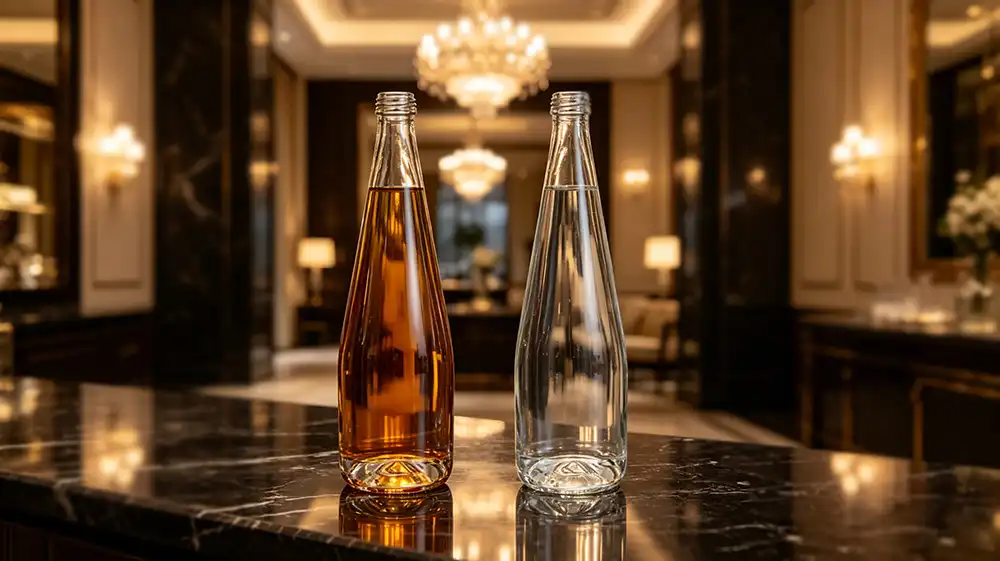
Understanding Glass Wine Bottles: Amber vs. Clear
Material Composition and Manufacturing Differences
Soda-lime-silica glass, which is made up of about 70% silica, 15% sodium oxide, and 10% calcium oxide, is the base of both amber and clear bottles. The colorant additives that are added during the melting process are what make it different. The amber color comes from iron sulfide and carbon combining, while clear glass has very little iron in it (less than 0.02%) to be as clear as possible. Changing these parts directly affects how much energy is needed to make something and how much raw materials cost. This changes how much suppliers charge and how much you have to order in order to qualify.
Using blow-and-blow or press-and-blow forming methods to get precise dimensional limits, manufacturing processes stay mostly the same no matter what color they are. Because amber glass has different thermal qualities, the annealing process is very important. This is when controlled cooling releases internal stresses. Having production lines that can handle both types of glass gives buying teams more options. However, some specialized facilities only make clear glass because that's what some market groups need more of.
Historical Context and Wine Type Associations
Before modern storage methods came along, European brewers liked to ship wines over long distances in amber and green-tinted bottles. When wines were being shipped and displayed in stores, they were exposed to long periods of sunlight. This is when the protective properties of colored glass came in very handy. Because of this historical taste, there are long-lasting links between bottle color and wine type. For example, red wines tend to come in darker bottles, while white and sparkling wines tend to come in clear or light-colored bottles that look better.
These customs are still used in modern winemaking, but it has to change to meet the needs of modern brands. Premium farms that make red wines that can be aged usually choose brown or dark green bottles that can last for decades. On the other hand, makers of crisp white wines and rosés prefer clear bottles that show how fresh the wine is and let customers check the color before buying. The most common size on the global market is 750ml, which is about 28.8 cm tall and 8.4 cm across. This makes it compatible with automatic filling equipment and normal shipping containers.
Quality Evaluation Criteria for Procurement
When judging the quality of a bottle, you have to look at more than just the color. Ratings for hydrolytic resistance show how well glass can handle chemical reactions with sour wine over long periods of time. The best standard, Class HGB1 grades, ensure that there is no mineral leaching that could change the taste profiles. Vertical load resistance of more than 1.5 tons allows safe stacking of pallets during storage and transport in a warehouse, preventing accidents that cost a lot of money to fix.
Thermal shock resistance is a measure of how well a bottle can handle sudden changes in temperature that can happen during processing or climate-controlled shipping. Any difference in temperature of 40°C or more won't cause stress cracks in good bottles. Procurement teams should ask for full specs that include these performance measures, as well as certifications that show the company follows FDA food contact standards and ISO 9001 quality management practices.
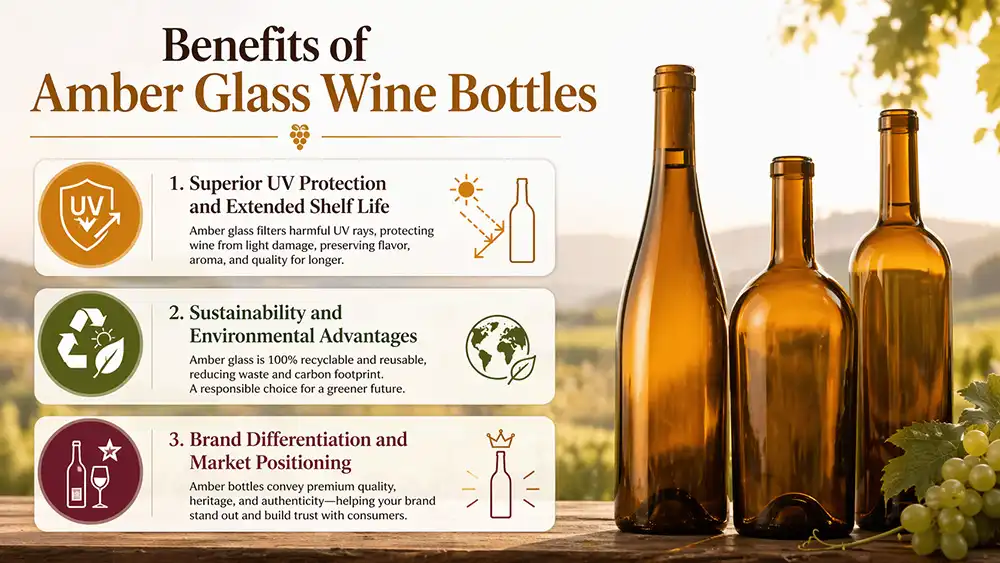
Benefits of Amber Glass Wine Bottles
Superior UV Protection and Extended Shelf Life
Amber glass is very good at blocking ultraviolet light with a wavelength range of 200 to 450nm. This is the range of light that starts most photochemical processes in wine. Researchers have found that amber glass wine bottles block about 90% of the sun's dangerous UV rays, while clear glass bottles block less than 30%. This protection is especially helpful for wines that have delicate aromatic compounds and phenolic structures that break down quickly when exposed to light.
Iron and sulfur molecules in the glass matrix selectively absorb light, which is how the process works. Shorter wavelengths of visible light are blocked by these elements, but longer wavelengths can pass through. In real life, this means that bottled wines will last a lot longer, especially those that are exposed in stores with fluorescent or LED lights. Premium winemakers who want to keep the quality of their products stable over time are choosing amber bottles for their main product lines more and more.
When wines have enough UV protection, oxidation rates go down in a measurable way. Tannins and anthocyanins, the chemicals that give red wines their color and texture, stay stable longer when they are not exposed to light. Distributors who move goods between different temperature zones like how amber bottles keep the quality of the product consistent. This lowers the chance that customers will complain about products going bad before they're meant to be eaten because they aged too quickly or developed off tastes.
Sustainability and Environmental Advantages
Companies are becoming more responsible for the environment, which makes amber glass a good choice for companies that want to show they are environmentally friendly. Amber recycled glass keeps its color better than clear recycled glass, which needs to be carefully sorted to avoid coloring problems. Because of this trait, higher amounts of recycled content can be used in production without affecting the look or strength of the result.
The amount of energy used in manufacturing is lower when sites improve production runs for certain colors. It is more efficient for batch melting processes when the ratios of colorants stay the same over long production runs. Many sources say that furnaces that are only used to make amber glass save 10 to 15 percent of the energy that would be used to switch between color specs.
The circle economy gains from the fact that amber glass can be recycled over and over again. Glass will always have the same basic qualities, unlike plastics, which break down with each recycling step. Amber bottles that are returned through deposit programs or local recycling streams can be used again with little quality loss. This supports closed-loop supply chains that appeal to eco-friendly customers and business procurement policies that focus on reducing waste.
Brand Differentiation and Market Positioning
In busy stores, being visually different is a powerful way to build a brand. Color psychology links amber to natural materials and old-fashioned ways of making things, which is how amber glass wine bottles communicate history, skill, and a high-end image. Craft breweries and artisanal wineries use amber packaging to support stories of authenticity that appeal to customers who want to buy goods that seem to be of better quality and more care have been put into them.
Customization choices help people remember your business even more. Metallic foils are used in hot stamping methods to make surfaces that are yellow stand out in a striking way. Inside etching creates complex three-dimensional effects that can be seen through the colored glass, which increases the item's value without making it too expensive. Screen printing and clay decoration burning produce long-lasting branding elements that can handle handling, condensation, and changes in temperature over the course of a product's life.
Xuzhou Muzhishi Crafts Co., Ltd. is an expert at customizing amber bottles in every way. They help brand managers come up with unique packaging that stands out from rivals. There are a lot of different ways to treat the outside of our 750ml bottles. You can precisely put your name, match the color to your brand, or give them a special finish that fits your needs. From coming up with the first idea to getting approval for production, the design team works directly with clients to make sure that the finished products accurately reflect the brand's vision and meet technical performance standards.
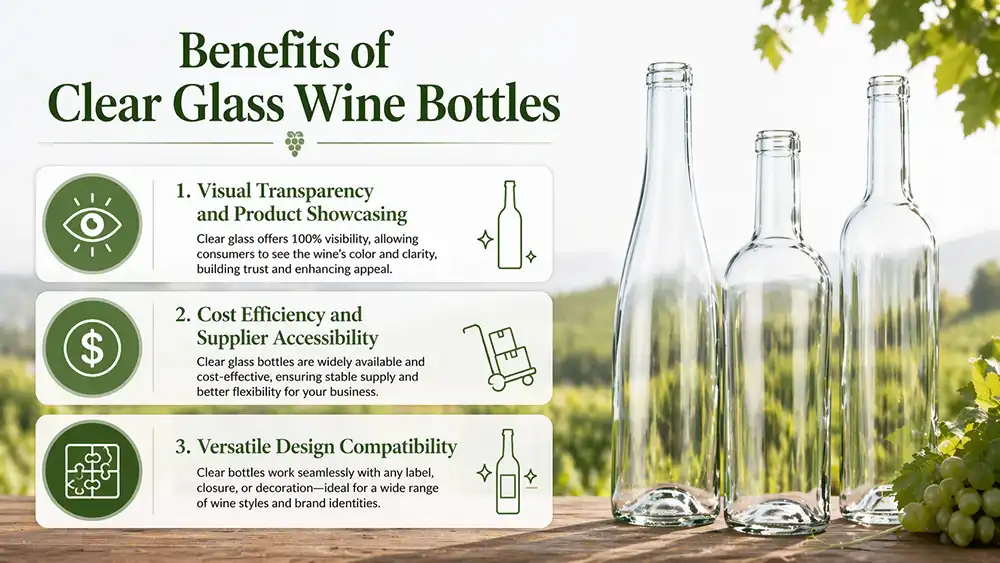
Benefits of Clear Glass Wine Bottles
Visual Transparency and Product Showcasing
Clear bottles let you see the color, brightness, and fizz of the wine without any obstructions. These are important visual cues that affect buying choices at the point of sale. This clarity is especially important for white winemakers because customers look at the color and brightness of a wine to figure out what kind of grapes were used, how long it will last, and the quality level. In the same way, rosé wines benefit from having soft pink tones that set them apart from competing goods.
Presentation is very important for sparkling wines and champagne. As bubbles rise through clear glass, they make displays that move and catch people's eyes on store shelves and restaurant tables. The visual effect of carbonation supports feelings of freshness and joy, which leads to impulse purchases and accepting higher prices. In upscale markets, where perfect looks are important to the brand, high-clarity glass formulas with little iron content (achieving true flint transparency) get a lot of attention.
The useful benefits also apply to methods for quality control. When winemakers visually check glass wine bottles during the bottling process, they can see sediment, haze, or fill-level errors more easily in clear bottles. This real-time feedback lets production changes happen quickly, cutting down on waste and keeping output standards high on high-speed lines that process 10,000 bottles an hour or more.
Cost Efficiency and Supplier Accessibility
The biggest part of the global container manufacturing industry is making clear glass, which creates competitive supply markets that are easy for many people to reach. Multiple production sites in major manufacturing regions keep inventory levels steady. This cuts down on wait times and gives customers more choices for order numbers than with specialized colored glass options. This wide range of products and services in the market gives purchasing teams more power in negotiations and more ways to get goods, which makes the supply chain safer.
Because clear glass recipes are easier and need fewer specialized additives, they are cheaper to make. Lack of colorant chemicals makes quality control easier during melting processes and lowers the risk of differences between batches. Prices are more reasonable because of these things, especially for big sales where economies of scale become important. Clear bottles are a good choice for businesses that are starting new product lines or trying how the market will react because they require less money up front.
Flexible manufacturing lets sample and development go faster. There isn't much downtime when factories move between clear glass standards, which lets suppliers respond quickly to requests for unique designs. As a result of its ties with local glass suppliers in Xuzhou, Muzhishi is able to keep standard specifications in stock and cut the cost of raw materials by 10 to 15 percent compared to other options on the market. Our self-operated import/export services make foreign shipping easier by taking care of paperwork and clearing customs, so packages get delivered on time.
Versatile Design Compatibility
Clear bottles can be closed with a variety of methods, from traditional corks to modern screw caps and synthetic stoppers. Because it has a bland look, it goes with any label design, printing method, or brand color scheme without standing out. This flexibility is helpful for brands that have a lot of products and need uniform package platforms that can be changed for seasonal changes or limited-edition releases.
Labels are easiest to see on surfaces made of clear glass. Transparent backgrounds let you use empty space in creative ways, and metallic inks and holographic elements make high-end effects that you can't get on colored substrates. Back stickers can be read clearly through the bottle walls, giving information about regulations and stories without needing complicated multi-panel designs.
Acid etching and sandblasting are two decorative methods that can be used to make beautiful frosted patterns on clear glass. These techniques make the product more interesting to touch and increase its worth, while still keeping the basic transparency that shows off its features. Muzhishi's 750ml bottles can be decorated in a lot of different ways, such as with screen printing in multiple colors, heat transfer graphics, or permanent ceramic-based patterns that can stand up to commercial washing cycles in hotel settings.
How to Choose the Right Glass Wine Bottle Color for Your Business
Aligning Bottle Selection with Wine Characteristics
The type of wine and how long it will be stored should guide the first color choices for the bottles. Red wines with more tannins and phenolic compounds gain a lot from UV protection from amber glass. This is especially true when the goal is for the wine to age longer in the bottle before it is released. Lighter-bodied whites and rosés that are made to be drunk right away and look good naturally go well with clear bottles that show off the colors.
When making sparkling wine, there are extra things to think about when it comes to resistance to pressure and how the wine will look in marketing. In this group, clear glass wine bottles are most popular because they make the fizz more visible to customers. Specialized heavy-wall designs can handle high carbonation pressures while still keeping attractive shapes that are good for parties. The procurement team should make sure that the pressure ratings meet or go beyond the product specs. For example, for normal sparkling wines, the ratings should be 5–6 bars, and for premium champagne, they should be 7–8 bars.
Practical bottle selection is based on a study of the storage surroundings. Wines that are mostly sold in temperature-controlled stores with little light exposure have a lower UV risk, which could mean that people can choose clear bottles based only on their looks. Products going to grocery shops, outdoor events, or warehouses that will be stored for a long time need to be protected with amber glass so that the quality doesn't go down before they get to customers.
Supplier Portfolio Evaluation and Partnership Development
In order to build trusting relationships with suppliers, you need to look at their production capabilities in more than just terms of unit price. As competition heats up across all wine categories, full customization services that help brands stand out become more and more important. When launching new products or updating old packaging systems, suppliers with in-house design teams, rapid prototyping tools, and a variety of decoration methods can be very helpful.
Supply chain resilience depends on supplier financial stability and production capacity scalability. Dual-sourcing strategies mitigate disruption risks, though maintaining consistent quality across multiple suppliers demands rigorous specification documentation and ongoing quality audits. Manufacturers who have been in business for 15 to 20 years have shown they can handle changes in the market while keeping service levels high.
Xuzhou Muzhishi Crafts Co., Ltd. has been making glasses for twenty years and works with wineries, hotels, and luxury gift companies around the world. Our ODM/OEM customization services include everything from the first design advice to the final production. Samples can be sent within 3–5 days for quick testing in the market. Strategic relationships with local providers of materials keep quality high while lowering prices by 10 to 15 percent below market rates. Self-operated import/export features make foreign logistics easier by helping with things like clearing customs, making sure paperwork is ready, and coordinating deliveries.
Emerging Trends and Future Considerations
Expectations about sustainability keep changing the goals of buying packages. Even though they have some structural problems, lightweight bottle designs that use 15–25% less material are becoming more popular. Advanced annealing methods make up for thinner walls by keeping the breaking resistance at a good level while lowering the carbon footprint and lowering the cost of shipping.
The combination of smart packaging is a new area. Putting temperature-sensitive stickers, QR codes, and NFC chips on both amber and clear bottles makes it possible to watch the supply chain, make sure that the bottles are real, and get customers involved. These technologies can be added on top of regular packaging without completely redesigning the bottle. However, printed codes and sensors that are attached to clear glass surfaces are often easier to read.
Premium market groups look at artistic bottle designs as collectibles that go beyond their practical roles as packing. Custom molds that make unique forms, textures, and sculptural elements set ultra-premium products apart, even though the cost of packing only makes up a small part of the total value of the product. These artistic directions can be carried out with both amber and clear glass. The choice of color is based on the story of the brand and the tastes of the target audience, not just on how it works.
Conclusion
When choosing between amber and clear glass wine bottles, you have to think about how to best meet the needs of preserving, branding, and cost-effectiveness in your unique market. Amber glass provides the best UV protection, which extends the shelf life of light-sensitive wines and supports green stories and premium marketing strategies. Clear glass shows off the features of the product by letting you see right through it. It also has good cost-effectiveness and can be used in a variety of wine styles. Successful buying strategies take these things into account along with the type of wine, where it will be sold, and the brand's image in order to come up with package options that protect the product best and set it apart in the market. The 750ml size is still the standard around the world because it can hold both color options and offers the same level of structural performance and customizable options.
FAQ
Are amber bottles fully recyclable like clear glass?
Amber bottles can still be recycled completely through normal glass recycling channels. The iron and sulfur molecules that give it its orange color don't get in the way of reprocessing. Cities and towns have recycling programs that take orange glass along with clear and green glass. Sorted amber glass keeps its color even after being recycled many times, which is better than clear glass, which needs to be carefully cleaned to keep it from getting tinted. A lot of bottle makers actively use 30 to 50 percent recovered amber glass in their new products. This supports the idea of a circular economy and uses less energy than making new materials.
Does bottle color affect wine taste or quality?
The color of the bottle doesn't come into direct touch with the wine, so the glass doesn't change the taste. The quality effect shows up in the ability to block light. Amber glass stops UV light from starting chemical processes that give off "light-struck" flavors, which are sulfurous notes that taste like cooked cabbage or burned rubber. These flaws happen when riboflavin and sulfur molecules combine with light. This is especially bad for white wines and lighter reds. Clear bottles don't offer much protection, so wine is at risk when it's on show in stores with natural or electric lighting. This problem can be fixed by storing the items properly in dark places, but amber glass still protects them no matter how they are handled along the distribution chain.
Where can I source wholesale eco-friendly amber bottles?
The most safe places to get amber bottles that are good for the environment are from well-known companies with well-established sustainability programs. For verification, proof of recycled glass content amounts, energy use data, and environmental management standards such as ISO 14001 must be requested. Transportation emissions are cut down by regional production; buying from makers close to selling markets lowers carbon footprints by a large amount. Xuzhou, Jiangsu is a major hub for making glass. It has state-of-the-art industrial facilities and reasonable prices. Instead of using multiple delivery methods, build direct relationships with manufacturers. This will make sure that you know exactly how your products are made and where the materials come from, and it will also help you get better prices by cutting out the markups that are added by middlemen.
Partner with a Trusted Glass Wine Bottles Manufacturer
Muzhishi offers high-quality 750ml bottle options that are perfect for winemakers, hospitality brands, and foreign distributors who need solid quality and full customization. Our soda-lime-silica glass mix is completely chemically neutral, has a hydrolytic resistance grade of Class HGB1, and can hold up to 1.5 tons of weight vertically. You can decorate both the amber and clear choices in a lot of different ways, such as by hot pressing, engraving on the inside, screen printing, and custom color matching. With 20 years of experience making things and our own import/export services, we make global procurement easier by offering reasonable prices, quick samples (3-5 days), and dedicated account management that makes sure projects are completed on time and to specs. Email our team at long@muzhishi.com to talk about your specific needs, ask for samples, and find out how our glass wine bottles supplier services can help you present your products better and make your brand more appealing.
References
1. Sutter, R., & Brunner, M. (2018). "Impact of Light Exposure on Wine Quality: UV Protection Properties of Colored Glass Containers." Journal of Food Packaging Science and Technology, 12(4), 287-302.
2. Williams, J. D., & Thompson, K. A. (2020). "Comparative Analysis of Glass Container Manufacturing: Energy Consumption and Carbon Footprint Assessment Across Color Variations." International Journal of Sustainable Manufacturing, 15(2), 134-156.
3. Chen, L., & Rodriguez, M. (2019). "Chemical Stability of Wine in Glass Packaging: Hydrolytic Resistance and Material Migration Studies." Food Chemistry and Preservation, 8(3), 412-429.
4. Anderson, P. R., & Mitchell, S. C. (2021). "Consumer Perception and Purchase Behavior: The Role of Packaging Color in Premium Wine Marketing." Journal of Wine Economics and Marketing, 19(1), 67-85.
5. European Container Glass Federation (2022). "Glass Recycling and Circular Economy: Technical Performance of Recycled Colored Glass in Container Production." Industry White Paper on Sustainable Packaging Solutions.
6. International Organization of Vine and Wine (2020). "Standards for Wine Bottling and Packaging: Technical Requirements for Glass Containers in Global Wine Trade." OIV Resolution Guidelines, Edition 7.


Our customers’ satisfaction speaks for our quality — contact us to experience the same reliable service.