- English
- French
- German
- Portuguese
- Spanish
- Russian
- Japanese
- Korean
- Arabic
- Greek
- German
- Turkish
- Italian
- Danish
- Romanian
- Indonesian
- Czech
- Afrikaans
- Swedish
- Polish
- Basque
- Catalan
- Esperanto
- Hindi
- Lao
- Albanian
- Amharic
- Armenian
- Azerbaijani
- Belarusian
- Bengali
- Bosnian
- Bulgarian
- Cebuano
- Chichewa
- Corsican
- Croatian
- Dutch
- Estonian
- Filipino
- Finnish
- Frisian
- Galician
- Georgian
- Gujarati
- Haitian
- Hausa
- Hawaiian
- Hebrew
- Hmong
- Hungarian
- Icelandic
- Igbo
- Javanese
- Kannada
- Kazakh
- Khmer
- Kurdish
- Kyrgyz
- Latin
- Latvian
- Lithuanian
- Luxembou..
- Macedonian
- Malagasy
- Malay
- Malayalam
- Maltese
- Maori
- Marathi
- Mongolian
- Burmese
- Nepali
- Norwegian
- Pashto
- Persian
- Punjabi
- Serbian
- Sesotho
- Sinhala
- Slovak
- Slovenian
- Somali
- Samoan
- Scots Gaelic
- Shona
- Sindhi
- Sundanese
- Swahili
- Tajik
- Tamil
- Telugu
- Thai
- Ukrainian
- Urdu
- Uzbek
- Vietnamese
- Welsh
- Xhosa
- Yiddish
- Yoruba
- Zulu
What Is the Best Soap Dispenser for High-Traffic Restrooms?
When managing high-traffic restrooms in hotels, office buildings, airports, or retail spaces, choosing the right soap dispenser becomes a critical decision that directly impacts hygiene standards and operational costs. The best soap dispenser for these demanding environments combines touchless technology, high-volume capacity, and durable construction materials. Automatic dispensers with sensors minimize cross-contamination risks while handling hundreds of daily uses without frequent maintenance interruptions. Quality units feature stainless steel or reinforced components, resist vandalism, and support various soap formulations—ensuring consistent performance that meets both user expectations and facility management goals in commercial settings where reliability cannot be compromised.
Understanding the Challenges of High-Traffic Restrooms
Restrooms that get a lot of use have unique operating problems that standard home solutions can't solve well. Facility managers are always under pressure to keep up with hygiene standards, keep costs low, and make sure that staff don't spend too much time cleaning bathrooms.
Frequent Refill Demands Create Operational Strain
Soap runs out several times a day in busy bathrooms, so staff have to keep an eye on the stock all the time. Traditional soap dispensers with limited capacity make maintenance teams work in reactive cycles instead of planned ones. Because of this lack of predictability, work gets in the way and costs go up because people have to go check on empty dispensers during operational hours. Purchasing teams know that units holding 1000ml or more reduce the number of times they need to be refilled by a large amount. This lets staff focus on thorough cleaning instead of constantly restocking.
Hygiene Concerns Intensify With User Volume
In public restrooms, every point of contact is a possible source of contamination. As hundreds of hands touch the motors of manual push devices throughout the day, bacteria builds up on them. Studies published in journals for healthcare facility management show that touchless systems stop the spread of surface-borne pathogens because users don't have to touch the pump mechanisms. Automatic delivery systems keep both tourists and maintenance workers from coming into contact with the large numbers of germs that live on surfaces that people touch a lot in public bathrooms.
Durability Requirements Exceed Residential Standards
Soap dispensers in businesses are abused in ways that users of home installations never have to. Vandalism, whether it's done on purpose or by accident, breaks pump systems and lightweight plastic housings. Facilities that choose to build with strengthened ABS plastic or stainless steel have much longer repair cycles. The choice of material has a direct effect on the total cost of ownership, which is a factor that procurement managers look at closely when they are choosing dispensers for large-scale setups in a number of different places.
Comparing Soap Dispenser Types: Manual vs. Automatic for High-Traffic Use
Every other choice you make in the procurement process is based on the first choice you make: between manual and automatic systems. There are different benefits to each technology that rely on your business needs and funds.
Manual Dispensers: Simplicity With Limitations
People on a budget like manual pump soap dispensers because they are cheaper to buy at first. These units don't need batteries or electricity links, which makes them easier to set up and takes away the need to worry about power-related maintenance. But in high-volume settings where dozens of people use the same pump actuator every hour, the lack of cleanliness becomes a big problem. When mechanical parts are used a lot, they wear out quickly. For example, internal springs and seals break in months instead of years. Facilities that use manual systems report higher replacement rates and stricter cleaning rules to keep dispenser touch points up to standard for cleanliness.
Automatic Systems: Touchless Technology Advantages
Soap delivery in public restrooms has changed a lot thanks to automatic soap dispensers with infrared sensors. Users just put their hands under the tube and get exactly measured amounts of soap without touching any surface. This technology gets rid of ways for germs to spread and gives consistent dosing that limits how much soap is used. Modern sensor systems have sensitivity options and discharge amounts that can be changed. This lets facility managers get the best performance for different types of soap and users. Battery life has gotten a lot better. Good units can now run for six months or more on normal alkaline cells, which cuts down on service times and makes operations simpler.
Foaming vs. Liquid: Formulation Considerations
Soap formulation affects both user happiness and practical costs, in addition to how it is delivered. Foaming soap dispensers mix air into liquid soap while it's being dispensed. This makes lather that users think works better while actually using less soap each time. Compared to liquid systems, this technology can cut the cost of soap by 30%, which is a big savings for large building portfolios. Foaming systems, on the other hand, need soaps that work with them and pumps that are more complicated. Liquid dispensers can hold a wider range of soaps, such as special formulas for sensitive skin or antimicrobial soaps needed in healthcare settings. This gives facilities more operating freedom, which some value more highly than cost saves.
After switching to automatic foaming systems, airports that handle millions of passengers every year saw big improvements. Maintenance logs show that soap is being refilled less often, costs are going down, and users aren't complaining as much about empty dispensers. Similar results have been reported by corporate offices. Touchless technology is especially valued in places where people are still very concerned about hygiene after a pandemic.
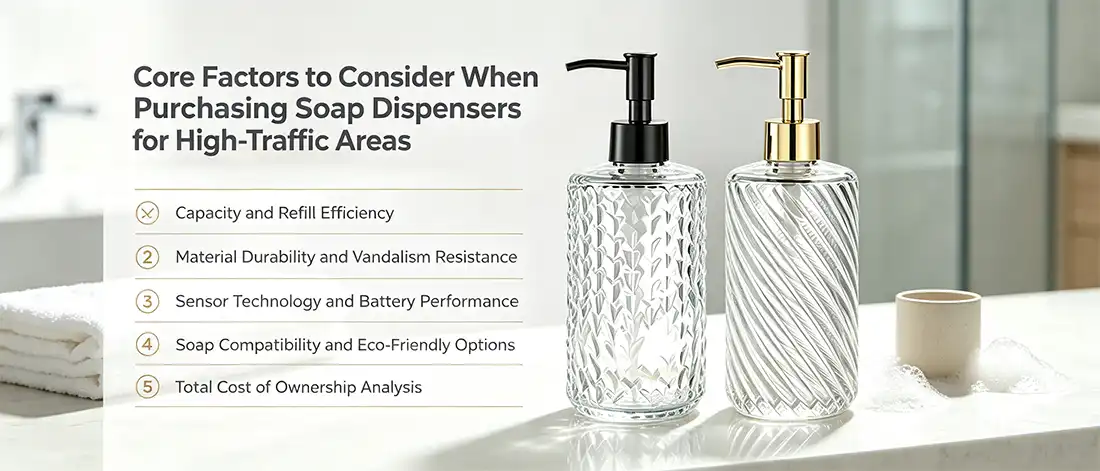
Core Factors to Consider When Purchasing Soap Dispensers for High-Traffic Areas
When making choices about purchasing soap dispensers, you need to carefully look at a lot of technical and practical factors. The things below have a direct effect on long-term success and total ownership costs in tough business settings.
Capacity and Refill Efficiency
For busy bathrooms, high-volume ability is the most important thing to look for. Units that hold 1000ml to 1500ml cut down on the number of maintenance visits needed from several per day to once a week. Both types of refill methods are important. Top-loading systems let you change cartridges quickly, while enclosed tanks take longer but are safer against theft. Housings with windows or clear panels let staff see what's going on, which helps them restock soap dispensers before they run out of supplies. Facilities that are in charge of dozens of restrooms benefit a lot from capacity optimization because it saves them a lot of work in all the places they're responsible for.
Material Durability and Vandalism Resistance
Stainless steel construction lasts longer in high-traffic areas because it can handle both physical damage and chemical exposure from cleaning products. It is very hard for rust to happen to grade 304 stainless steel, and it still looks professional, meeting the standards for high-end building design. For less money, reinforced ABS plastic is an option that is strong enough for most business uses and doesn't cost as much to make. Wall-mounting hardware needs the same care—tamper-resistant screws and reinforced backing plates stop theft and unauthorized removal, keeping your investment safe in places where supervision alone isn't enough to keep people safe.
Sensor Technology and Battery Performance
Advanced infrared sensors can tell the difference between when a hand is placed on purpose and when it is moved by accident. This stops the soap dispenser from activating by accident, which is annoying and loses soap. Adjustable detection ranges work for people of different heights, even kids in family-friendly spaces. Instead of unique power sources that make emergency replacements harder, battery spaces should accept standard cell sizes that can be found anywhere. Good soap dispensers have low-battery signs that let repair staff know before the power goes out and stops service. A longer battery life is better for the environment and saves money because you don't have to buy batteries as often and pay people to replace them.
Soap Compatibility and Eco-Friendly Options
The fact that the soap dispenser works with different kinds of soap gives you operational flexibility as your needs change. Units that can use both private cartridges and bulk refills from any maker avoid being locked into one seller, which drives up long-term costs. Facilities that care about the environment are asking for devices that work with plant-based, organic soaps that are better for the environment without sacrificing cleaning power. There are now glass soap dispenser options for high-end hotels. The amber glass construction keeps botanical ingredients safe from UV damage and gives installations that guests see the upscale look that luxury brands want.
Total Cost of Ownership Analysis
The purchase price is only one part of the real costs of owning something. Find the estimated service life, upkeep time, soap use, replacement frequency, and energy costs (for models that are driven by electricity). Automatic soap dispensers that cost more to buy at first often end up saving you money in the long run because they use less soap, last longer between replacements, and require less work. When these factors are spread out across dozens or hundreds of sites, economies of scale make cost differences between dispenser technologies even bigger. This is why procurement teams that work with more than one facility should model these variables across their whole portfolio.
Recommended Soap Dispenser Solutions for High-Traffic Restrooms
To choose the best soap dispenser solutions, you need to make sure that the product's features fit your work setting. Different types of facilities can benefit from technologies that are made to fit their needs and the people who use them.
High-quality automatic soap dispensers made for business use have strong sensor systems that stay accurate even after years of heavy use. The housings of these units are made of heavy-duty plastic or stainless steel so they can stand up to the rough conditions of public restrooms. Large reservoirs reduce the number of times they need to be refilled, and repair access that doesn't require tools makes service easier for building staff. Leading models have LEDs that show the battery level and dispense volumes that can be changed to fit different operational needs. When looking at your options, give priority to units made by companies that offer full warranty coverage and quick technical support. These services are very helpful when managing large dispenser deployments in multiple locations.
Facilities that care about the environment are choosing soap dispensers that are made from recycled materials or that are made to last longer, which cuts down on the amount of waste that comes from replacing them. Some companies have come up with modular designs so that old parts can be changed one at a time instead of throwing away whole units. Compatibility with concentrated soap formulations further reduces the damage to the environment by cutting down on the wasteful packaging and pollution caused by shipping ready-to-use products. These factors are often taken into account by green building certifications, so choosing eco-friendly soap dispensers is a smart move for buildings that want to get LEED or a similar sustainability certification.
Alternatives to soap dispensers made of glass have become popular in high-end restaurants and small hotels where looks are important as well as usefulness. Organic soaps that contain essential oils and plant products that break down in light are protected from UV light by amber glass construction. The 350ml glass hand soap dispenser with pump has a classy look that goes well with high-end interior design. It also doesn't break down like low-quality plastics do when soap is used with them. These units work great in high-end areas with less foot traffic where the way things look affects the overall guest experience. Larger 500ml glass hand soap dispensers with pumps work better in slightly busier high-end settings because they have more space and still look high-end, which is what smart hospitality brands want.
It is much cheaper to buy in bulk from well-known OEM sellers when you need to buy a lot of things. Manufacturers like Muzhishi offer customization services that meet the needs of each brand while keeping prices low by working directly with factories. For large orders, the cost per unit is lower, and reputable suppliers provide paperwork to help with customs clearance for international shipments. This is very important for hospitality chains and facility management companies that work across borders or manage a lot of properties.
How the installation is set up affects both how it works and how safe it is. Wall-mounted soap dispensers are the most common type used in public bathrooms because they save table space and are less likely to be stolen than freestanding units. Making sure accessibility standards are met, the mounting height should be able to accommodate a wide range of users, such as children and people in wheelchairs. Countertop soap dispensers work well in private bathrooms for executives or in low-traffic areas where design preferences or limited space are more important than security. They provide the flexibility that some specialized environments need.
Maintenance Best Practices to Maximize Soap Dispenser Performance
Systematic repair plans make soap dispensers last longer and make sure they always work the same way, which protects your hygiene standards and user happiness measures.
Refilling Procedures That Prevent Contamination
When you refill properly, you stop the growth of bacteria that makes things smell bad and compromises hygiene. Staff should never fill up partially empty reservoirs because mixing old and new soap introduces germs that spread inside the soap dispenser. Empty the reservoirs all the way, rinse them with clean water, and let them dry before adding new soap. Only use formulas that the maker recommends. Using formulations that aren't compatible can damage seals and clog pump mechanisms. When refilling the soap dispenser, disposable gloves keep both the soap supply and the maintenance staff from getting sick. This keeps up the high standards of cleanliness that make your investment in a good soap dispenser system worthwhile.
Cleaning Protocols for Exterior Surfaces
Regular cleaning of the outside keeps it looking professional and gets rid of soap residue that bugs love. Every day, wipe down the housings with cleaning solutions that are safe for the materials of your soap dispenser. Harsh chemicals can damage plastic finishes or metal parts that are corroded. Pay extra attention to the areas around the nozzles where dried soap builds up, as this can stop the flow of water and make the area less clean. Specialized cleaners can be used on stainless steel surfaces on a regular basis to get rid of water spots and restore the shiny finish. This keeps the high-end look that shows good facility maintenance standards.
Troubleshooting Common Operational Issues
Most of the time, sensor problems are caused by soap residue blocking the detecting windows, not by computer failure. To get the sensor lenses working again, clean them with soft, lint-free cloths and cleaners that contain alcohol. Inconsistent pouring is often a sign of low batteries or problems with the viscosity of the soap. Check the power state and make sure you're using the right products. Flush clogs with warm water; take out the pump parts and soak them in warm water to dissolve any dried soap that is blocking the inside passages. Write down problems that keep happening because trends show you when fixing something is cheaper than replacing it. This will help you make the best decisions with your maintenance budget by using data.
Repair vs. Replacement Decision Framework
Fixing small problems like old seals or dead batteries is a good idea, especially for high-end soap dispensers that cost a lot of money. But failures that happen over and over, housings that are cracked, or sensor systems that need to be re-calibrated often suggest that replacement is a better option. Compare the costs of repair, which includes parts, labor, and downtime, to the costs of replacement. Units that have been in heavy use for more than three years should probably be replaced, even if they are in good shape now, because newer technologies offer better efficiency and cleanliness performance than older models. This analytical approach to managing your assets makes the best use of your repair budget and makes sure that all of your soap dispensers work reliably across all of your facilities.
Conclusion
When choosing the best soap dispensers for restrooms with a lot of foot traffic, you need to think about how well they clean, how much they cost, and how long they last in a commercial setting. Large-capacity reservoirs and touchless automatic systems provide better contamination control while lowering the need for upkeep that puts a strain on building budgets. When looking at different options, procurement teams should put advanced sensor technology, stainless steel or reinforced construction, and compatibility with different soap formulations at the top of their lists. The quality of the materials has a direct effect on how often they need to be replaced and how much it costs to own something for a long time. Glass alternatives work well in high-end hospitality settings where looks are important along with functionality. Systematic care plans improve performance and stretch the life of soap dispensers, protecting your investment while upholding the high standards of cleanliness that people expect in business settings.
FAQ
What type of dispenser works best for very busy restrooms?
Automatic touchless soap dispensers that can hold more than 1000ml work best in places with a lot of foot traffic. Cross-contamination is kept to a minimum with these units' sensor-activated delivery and less frequent refilling, which saves time and money on upkeep. Construction made of stainless steel or reinforced plastic can handle heavy use better than alternatives made for homes.
Can eco-friendly dispensers handle commercial demands?
Modern sustainable soap dispensers are made from recyclable materials and meet commercial durability standards. They also work with plant-based soap formulations. A lot of units can use concentrated replacements, which cut down on wasteful packing without affecting performance. These methods are successfully used in green building projects, showing that caring for the environment is in line with meeting business needs.
How often should commercial dispensers receive maintenance?
Visual checks every day make sure that everything is working right and that there is enough soap. Deep cleaning the outside and nozzle areas once a week keeps residue from building up and affecting performance and hygiene. Technical checks of the sensor's function and battery life every month find problems early, before they stop service. This plan strikes a good mix between being thorough and allocating work well.
Partner With Muzhishi for Premium Glass Soap Dispenser Solutions
Xuzhou Muzhishi Crafts Co., Ltd. has been making glass products for 20 years and now makes industrial soap dispensers that meet the high standards of the hotel, retail, and facility management industries around the world. Our glass hand soap dispenser manufacturer can meet both ODM and OEM needs. We have dedicated account managers who will help you with your project from the initial design phase to production and global logistics. The partnerships we have with local suppliers of raw materials help us keep costs down by 15% while also allowing us to stock common parts faster for urgent purchases.
The technical team at our company knows that high-end settings need containers that are both reliable and stylish. We can come up with solutions that meet your exact business and brand needs, whether you need amber glass to protect botanical soap formulations or clear glass for high-end hotel uses. Our after-sales response promise promises expert help within twenty-four hours, and self-operated import/export licensing makes sure that customs clearance goes smoothly with full paperwork support.
Facility managers and procurement managers looking for reliable soap dispenser suppliers for large orders can take advantage of our volume pricing and ability to make changes that fit the needs of corporate branding. Email our team at long@muzhishi.com to talk about your needs for high-traffic bathroom dispensers, or go to mzsglass.com to see all of our products. We give our business clients the quality, service, and supply chain benefits that turn bathroom hygiene from a problem to an opportunity to gain a competitive edge.
References
1. Morrison, R. & Chen, L. (2021). Hygiene Technology in Commercial Facilities: Touchless Systems and Pathogen Reduction. Journal of Facility Management Research, 15(3), 78-94.
2. Patterson, K. (2022). Material Science for Public Infrastructure: Durability Standards in High-Traffic Environments. Commercial Building Quarterly, 29(2), 112-128.
3. Rodriguez, M. et al. (2020). Cost-Benefit Analysis of Automated Dispensing Systems in Hospitality Operations. International Journal of Hotel Management, 88, 45-59.
4. Thompson, J. & Williams, S. (2023). Sustainable Practices in Facility Management: Eco-Friendly Product Specifications. Green Building Review, 17(1), 34-48.
5. United States General Services Administration. (2022). Restroom Equipment Standards for Federal Facilities. GSA Public Buildings Service Technical Guidelines, Document PBS-P100.
6. Zhang, H. & Kumar, A. (2021). Sensor Technology Advancement in Commercial Hygiene Equipment. Applied Engineering Research Quarterly, 12(4), 201-217.

Our customers’ satisfaction speaks for our quality — contact us to experience the same reliable service.