- English
- French
- German
- Portuguese
- Spanish
- Russian
- Japanese
- Korean
- Arabic
- Greek
- German
- Turkish
- Italian
- Danish
- Romanian
- Indonesian
- Czech
- Afrikaans
- Swedish
- Polish
- Basque
- Catalan
- Esperanto
- Hindi
- Lao
- Albanian
- Amharic
- Armenian
- Azerbaijani
- Belarusian
- Bengali
- Bosnian
- Bulgarian
- Cebuano
- Chichewa
- Corsican
- Croatian
- Dutch
- Estonian
- Filipino
- Finnish
- Frisian
- Galician
- Georgian
- Gujarati
- Haitian
- Hausa
- Hawaiian
- Hebrew
- Hmong
- Hungarian
- Icelandic
- Igbo
- Javanese
- Kannada
- Kazakh
- Khmer
- Kurdish
- Kyrgyz
- Latin
- Latvian
- Lithuanian
- Luxembou..
- Macedonian
- Malagasy
- Malay
- Malayalam
- Maltese
- Maori
- Marathi
- Mongolian
- Burmese
- Nepali
- Norwegian
- Pashto
- Persian
- Punjabi
- Serbian
- Sesotho
- Sinhala
- Slovak
- Slovenian
- Somali
- Samoan
- Scots Gaelic
- Shona
- Sindhi
- Sundanese
- Swahili
- Tajik
- Tamil
- Telugu
- Thai
- Ukrainian
- Urdu
- Uzbek
- Vietnamese
- Welsh
- Xhosa
- Yiddish
- Yoruba
- Zulu
What styles of glass honey jars with glass stirring sticks are popular for kitchen decor?
Modern kitchens must have glass honey jars with glass stirring sticks because they look good and serve a purpose. These clear containers keep honey's natural qualities and look nice on tables at the same time. The built-in glass stirring stick solves the problem of cleanliness that wooden dippers can't, as it doesn't let germs in and isn't porous. People who work in procurement who are looking for these products find that the market prefers styles that are true to the materials, look good in a variety of settings, and are useful for business. Buyers can make better sourcing choices that meet customer needs and fit with the brand's image when they know which styles appeal to different groups of people.
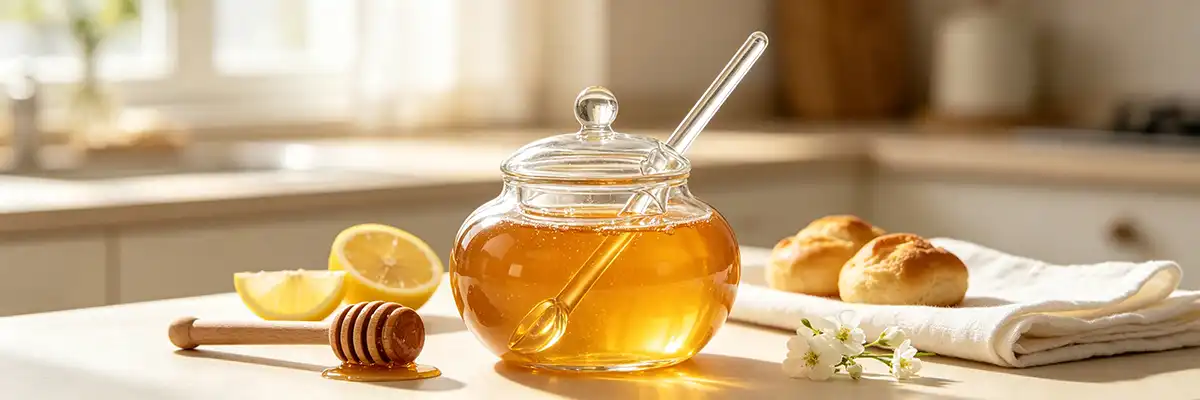
Popular Styles of Glass Honey Jars with Glass Stirring Sticks for Kitchen Decor
The way honey jars look has a direct effect on what people buy in both the retail and catering sectors. The styles chosen are in line with current trends in kitchen design and take into account practical issues like usefulness and visual appeal.
Classic Round and Hexagonal Designs
Round honey jars dominate the market. Their ergonomic shape makes them comfortable to hold and pour from, which is crucial in high-volume eating environments where workers handle containers frequently. Industrial dishwashers clean easily due to their smooth curvature, saving work and maintaining cleanliness. Many tiny apiaries enjoy this classic design because it evokes traditional honey- making.
Honeycomb-shaped hexagonal jars work well. This design immediately connects to beekeeping and stacks effectively for store display. Flat sides prevent containers from rolling while being served and stabilize food business storage. Since triangular shapes indicate handmade honey and support unusual honey pricing, gift shops favor them.
Modern Minimalist Options
Simple glass honey jars with glass stirring sticks are popular in modern kitchens with clean lines and lots of glass. These forms are usually spherical with straight edges and simple glass lids. Honey's golden tint is highlighted by the basic pattern, making it the ornament. This strategy works effectively for specialist food stores that aim to attract health-conscious clients who value purity and transparency.
Minimalist designs are neutral and effective for branding. By screen printing, icing, or engraving the inside of plain glass surfaces, customized packaging can seem sophisticated and classy. Muzhishi's 350 ml volume is perfect for home use—large enough to reduce refills yet tiny enough to handle with one hand. Procurement managers enjoy this since it maximizes product quantity while reducing shelf space.
Vintage Artisan-Inspired Jars
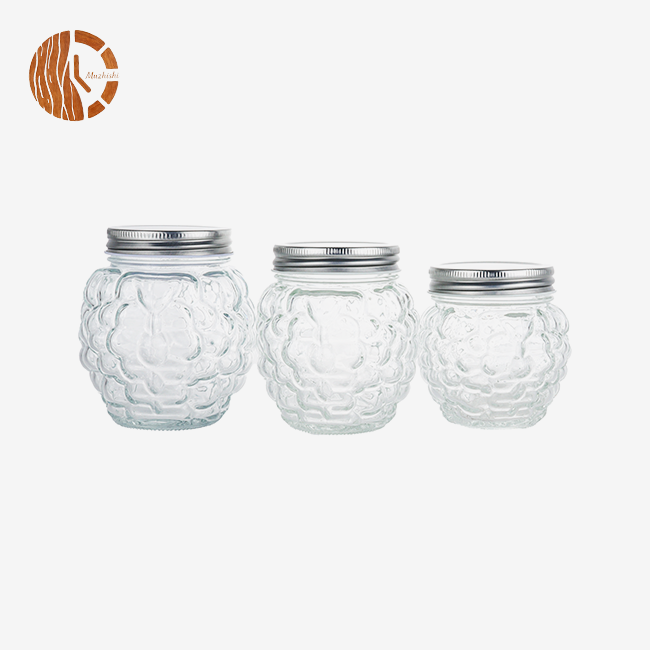
Heritage styles are growing in high-end marketplaces where people demand handmade experiences. Old-fashioned honey jars contain embossed decorations, relief work, or lid reproductions. These design aspects evoke old-fashioned food preservation, placing the products in the artisanal food movement.
Glass stirring sticks in antique collections frequently have attractive bends or handles that match the jar. This planned design strategy creates attractive product displays in competitive stores. Wedding and event planners want old honey jars for favors and table decorations. These items give themed events authentic period touches, they like.
Eco-Friendly and Sustainable Models
All market segments now consider environmental awareness while making significant purchases. Glass is a sustainable alternative to plastic containers since it can be recycled without losing quality. Stores that desire eco-conscious customers sell honey jars with green messaging.
Sustainable designs emphasize multitasking. These jars can hold honey, jam, nut butter, spices, handmade sauces, and yogurt. This adaptability extends product life and reduces waste, supporting the cycle economy. These multifunctional containers help clients meet their sustainability goals and may be utilized in many ways to produce money; therefore, zero-waste stores carry them.
Clear glass containers allow customers to view what's inside without opening them, preventing food from spoiling from air and viruses. Bulk food stores and refill stations that sell honey by the pound benefit from this feature because the containers can be reused.
Material and Design Features That Enhance the Value of Glass Honey Jars
The choice of material has a big effect on how well a product works, how safe it is, and where it stands in the market. Knowing the different types of glass honey jars with glass stirring sticks and new design improvements helps buyers find containers that meet their unique needs.
Comparing Borosilicate and Soda-Lime Glass
Borosilicate glass resists thermal shock and can endure 150°C temperature variations. Companies that hot-fill or offer honey drinks need this property. The material's modest thermal expansion rate prevents stress cracks in containers at severe temperatures. Business loses fewer damaged containers.
Most food-grade containers are constructed of clear soda-lime glass, which is inexpensive to create. The blend is sturdy enough to maintain cool and gives them the clarity they expect. Muzhishi makes high-quality soda-lime glass honey jars by strictly annealing to remove internal stress spots that could compromise the construction. Polarised light is used for quality control to equally distribute stress throughout our parts.
Both glass kinds are chemically neutral, so honey's acidity doesn't mix with them. Gourmet food companies who compete on taste need honey's stable enzymes and tastes to last forever. The non-porous surface prevents flavor absorption and microbial growth, unlike bamboo and hardwood alternatives.
Innovations in Glass Stirring Sticks
Compared to wooden dippers, the glass stirring stick is cleaner. Even after thorough cleaning, wood's porous nature harbors bacteria, threatening corporate food safety. Glass dippers eliminate this problem because they don't absorb liquid and wash clean.
Modern stirring sticks include deep horizontal ridges to boost surface tension. These combs store enough honey for regulated drizzles without mess. Ridge depth and spacing must be manufactured to exacting requirements. Poorly manufactured sticks either don't hold enough honey or release it too quickly. Our engineers determined the ideal part sizes by testing honey viscosities. They will work for all items this way.
Ergonomics affect stick length and handle thickness. Professional food service requires longer sticks to reach the bottom of jars without touching them. This keeps tables clean during serving. The handle width should be exactly right so you can grip it comfortably without breaking it. Our 8–12 mm thick stirring sticks are dishwasher safe and satisfyingly heavy.
Lid Types and Sealing Mechanisms
The lid form affects product freshness and user satisfaction. For mild humidity, simple glass lids with spherical knobs look good and seal effectively. The friction from the ground glass between the jar rim and lid keeps the lid on during typical handling.
Airtight silicone-gasketed lids are suitable for high-end purposes. These lids prevent honey from absorbing water and keeping ants away during long-term storage. Small gasket compression generates positive closure pressure without significant force. Security and accessibility are balanced.
Some caps contain notches to hold the stirring stick in the jar. This uniform procedure reduces stick loss and improves appearance. It must be the proper hole size. If it's too open, air can get in, and if it's too tight, the stick is hard to remove. We can customize the lid to accommodate various stick sizes and close it properly.
Benefits of Glass Honey Jars with Glass Stirring Sticks in Commercial and B2B Contexts
When commercial buyers look at goods, they think about how well they work, how well they protect their business, and how well they follow the rules. In these important ways, glass honey jars with glass stirring sticks offer real benefits.
Elevating Brand Perception
Packaging quality affects product value. Speciality food makers profit from premium glass display, which supports higher store prices than plastic. Premium branding methods benefit from high-quality glass's weight and clarity, which convey skill and sincerity.
Clear boxes reveal honey's natural colors, making packaging a marketing tool. Honeys from a single bloom have distinct hues that educated consumers recognize as quality. In clear glass, manuka honey's darker amber tones, clover honey's light golden tint, and buckwheat honey's deep brown color sell.
Quality and attention to detail are shown by the built-in glass stirring stick. Glass dippers are cleaner than wooden ones, so brands that employ them appear more sophisticated. When several things are priced similarly in a competitive market, this modest difference builds up.
Meeting Food Safety Standards
Undoubtedly, commercial food packaging must comply with all requirements. Glass materials are FDA 21 CFR 177.1640-compliant since they don't leak substances that contaminate food. This inherent safety benefit eliminates the need for complicated plastic testing, speeding up product launch.
The smooth glass surface prevents bacterial slime formation, a common issue in professional kitchens and food service firms. Health officials know glass containers are safe and easy to clean. Service businesses benefit from regulator approval and reduced lawsuit risk.
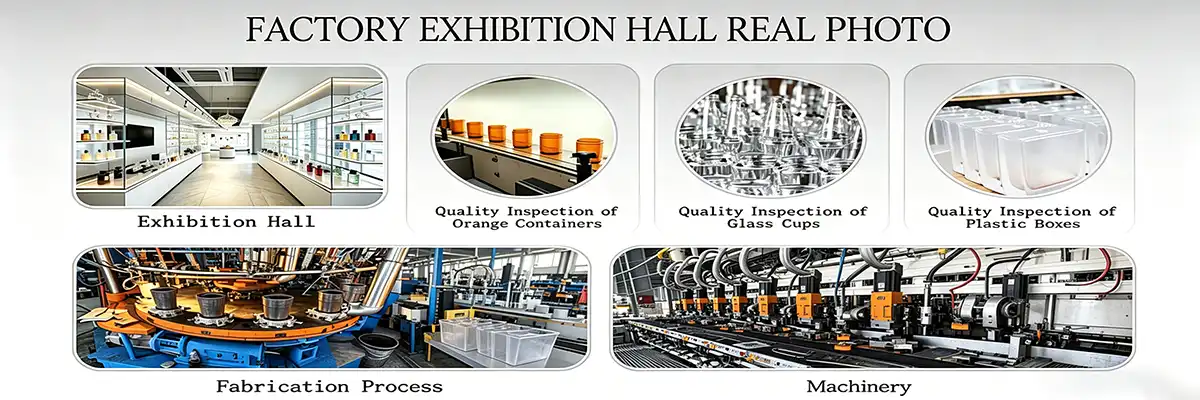
Our Jiangsu manufacturing keeps several quality records to meet overseas requirements. All production batches are tested for chemical inertness and structural integrity. This establishes audit trails that meet several market import requirements. Buyers receive full testing certificates proving the product satisfies country criteria.
Customization Potential for Branding
Custom packaging gives bulk purchasers an edge over their competitors by turning ordinary cases into branded assets. Glass can be decorated inside by hot pressing, icing, screen printing, or etching. Each strategy creates visual effects for diverse brand personas and market positioning.
Hot stamping uses luxurious metallic foils. This decorative style is ideal for business gift programs and specialist stores that need exclusive packaging. Frosting creates luxurious matte finishes that stay and feel well, making them ideal for secondary printing.
Screen printing is the most versatile branding method since it can handle complex patterns and colors. This approach produces permanent graphics that can be washed in an industrial dishwasher and handled for a long period. We offer expert account management to optimize design and ensure graphics perform well on curved glass surfaces while still having an impact as part of our customized services.
Changing bottle sizes, colors, and types lets buyers create distinctive packaging that stands out from competition. Custom packaging makes it tougher to replicate and helps people distinguish the brand on shelves. These benefits are especially valuable for private label and OEM collaborations, where packaging uniqueness determines market success.
How to Select the Right Glass Honey Jar with a Glass Stirring Stick for Your Business?
When you do strategic buying, you have to look at a lot of things that affect business fit, cost-effectiveness, and market appeal for glass honey jars with glass stirring sticks. Systematic evaluation makes sure that the goods chosen are in line with business goals and customer standards.
Evaluating Material Durability
Operational conditions determine glass specs. Food service firms that serve numerous people need dishes that can withstand repeated heating and cooling and commercial equipment stress. Annealed glass is better for these uses since it was progressively chilled to eliminate internal stress spots. Our production process checks rim finishes for smoothness and chip resistance. This prolongs product life in challenging business environments.
Retail applications should appear beautiful and last long enough for customers. Normal soda-lime glass is sturdy enough for home use and has the brightness and weight of high-quality glass. Our 350ml honey jar weighs 68.8g, which is gratifying but not too hefty to use daily.
Transportation durability influences operation costs and lost commodities. Glass breaks during shipment depending on thickness and shape. Round shapes resist touch better than complex designs with narrow protrusions. Before placing a large order, consumers should request samples under "simulated shipping conditions" to ensure proper packing.
Design Compatibility with Market Segments
Varied clients value varied style and utility. Boutique eateries with handmade breakfast menus utilize classic or basic motifs to match their decor. Honey pots that match their other serviceware are needed since these restaurants want their dining items to match.
Gift businesses need packing that can hold ready-to-present goods. Hexagonal jars or decorative cases eliminate present wrapping processes, saving manpower expenses while maintaining a high-end appeal. Wedding planners enjoy customizable favors with unique messaging or event branding.
Corporate gift programs require business-appropriate materials. Clean, modern designs with unobtrusive branding work best for customer appreciation programs and employee gratitude presents. Elegant decoration may turn functional goods into meaningful branded presents with company branding.
Cost Efficiency and Volume Requirements
Quality and money must be balanced while creating procurement budgets. The type of material, how hard it is to create, how you decorate it, and how many you buy affect glass jar prices. Request bids that break down the product's base price into customization and tooling costs.
Minimum order numbers affect unit prices through production setup amortization. For smaller orders, verify if regular stock products fulfill demands. They should wait to buy custom tools until the market demands larger commitments. Our organization stocks popular configurations for modest test sales before full manufacturing.
Planned lead times affect inventories and working capital. Standard goods arrive faster than fully bespoke designs that require new molds. Strategic sellers decide when to order to balance supply costs with the risk of running out during peak demand.
Partnering with Reliable Suppliers
A supplier's ability affects procurement success through product quality, reliable delivery, and support services. Buyers should verify the company's manufacturing experience, safety certificates, and output before partnering. Export-only companies understand international logistics and can assist with customs clearance paperwork.
Every client benefits from Muzhishi's 20 years of glassmaking experience. Our comprehensive service plan provides three- to five-day free samples so buyers can experience products before buying. Dedicated account managers answer questions and resolve issues during procurement. They're open 24/7. We control import and export permissions and customs paperwork, making international purchases easy.
Checkable testing procedures should be part of quality assurance. Trustworthy manufacturers test output groups for thermal shock resistance, chemical inertness, and size. Verify that you are following FDA and EU food contact regulations. Polarised light stress testing finds issues in items before shipping as part of our quality control procedure.
Market Trends and Future Outlook for Glass Honey Jars with Glass Stirring Sticks
Procurement experts can predict changes in the market and carefully place their products by understanding new trends. Several factors are changing how people want to buy glass honey jars with glass stirring sticks and what designs they like.
Growing Demand for Sustainable Packaging
As individuals become more ecologically conscious, they choose recyclable packaging. Glass dishes are ideal for these values because they can be recycled without losing quality. Plastics break down into lower-quality materials, but recycling glass retains its qualities, supporting the circular economy.
Zero-waste businesses increasingly sell multipurpose glass boxes. This reduces single-use packaging. Honey jars that can be reused offer value and promote sustainability. This trend benefits sellers who build designs for more than honey storage.
People who care about their carbon footprint prefer locally created glass that reduces shipping emissions. Buyers that sell to environmentally conscious customers should consider supplier proximity and shipping methods when assessing a product's sustainability. From our manufacturing in Xuzhou, Jiangsu, we can promptly export containers to major ports.
Design Innovation and Functional Enhancements
Ergonomic improvements improve honey pots. Smooth grips on new stirring sticks make them simpler to hold when wet or sticky. Some companies experiment with stick forms to simplify health portion control.
New lid technology improves sealing and makes lids easy to open for weaker hands. Different silicone gasket compositions balance closing pressure and opening force, making them suitable for many users. These accessibility issues make the market more accessible to seniors and immobile individuals.
Minimalist fashions that highlight honey are becoming popular. Transparent glass with minimal branding lets the product's quality speak for itself, which appeals to consumers who distrust advertising. This design philosophy requires higher-quality products since packaging can no longer hide low-quality contents.
Premium Experience-Driven Product Preferences
Because people are willing to pay more for better experiences, shops are always evolving. Honey wrapping makes serving easier and adds luxury to the house. Using honey in glass containers with matching stirring sticks makes daily use rituals that raise pricing.
People who want to give thoughtful gifts enjoy curated gift sets with high-quality honey and elegant wrapping. The finished goods have better profit margins than their parts and make buying easier. Procurement staff should seek entire gift solutions rather than packing bits.
In business, premium brands pay attention to every service detail. Honey in glass jars instead of plastic bags makes breakfast more lovely and memorable. Hospitality procurement teams are increasingly understanding that tabletop quality affects guest satisfaction and service.
Conclusion
To choose the right types of glass honey jars with glass stirring sticks, you need to know how the market works, how the material works, and what your business needs. Classic shapes like rounds and hexagons will always look good and be useful, while modern minimalist and retro craft styles cater to specific taste preferences. Borosilicate glass or soda-lime glass is the better choice depending on the price and the temperature needs. The built-in glass stirring stick is better for cleanliness than standard ones and also improves how people think of the brand. Customization options help premium selling strategies by turning plain containers into branding assets that commercial buyers can use. Strategic procurement looks at things like durability, design compatibility, cost-effectiveness, and the dependability of the supplier. Sustainability awareness and premiumization trends will continue to shape market demand, opening up opportunities for suppliers who can offer new, eco-friendly solutions that make the user experience better in both home and business settings.
FAQ
Why Choose Glass Stirring Sticks Over Traditional Wooden Dippers?
The non-porous surface of glass stirring sticks keeps germs from growing, making them more hygienic. Even after being washed, wood still holds germs and absorbs water, which poses a threat to food safety. Glass dippers stay clean because they can be put in the dishwasher and cleaned that way. They meet industrial hygiene standards that wooden options can't. The smooth surface totally removes honey residue, so the flavor doesn't get messed up between uses.
Can These Containers Withstand Commercial Dishwashing?
Quality honey jars made from properly annealed glass can withstand being washed in commercial dishwashers many times. When you anneal something, you get rid of the internal stress points that cause it to break when the temperature drops. Our products are tested for thermal resistance to make sure they can handle the sudden changes in temperature that happen in food service settings. The glass stirring stick is also made of solid glass, so it will last for a long time. It has been washed thousands of times without breaking.
How Does Glass Preserve Honey Quality Better Than Plastic?
Because glass is chemically neutral, it doesn't mix with honey's acidic makeup. This means that the enzymes and flavors stay the same forever. Plastic containers may leak chemicals that change the taste of food and could introduce new compounds that aren't needed. Glass doesn't let air or moisture through, so glass honey jars with glass stirring sticks stay true to their original state while it's being stored. High-quality glass is resistant to UV light, which keeps photosensitive compounds from breaking down.
What Customization Options Support Brand Differentiation?
Standard containers can be turned into unique boxes using a variety of decorating methods. For a high-end look, hot stamping uses metallic foils, frosting makes sophisticated matte finishes, and screen printing can handle complicated logos with many colors. Engraving on the inside makes a permanent mark that won't wear off when the item is handled. Custom colors, sizes, and lid styles make it possible to create totally unique packaging that helps people recognize a brand and stops others from copying it.
Source Premium Glass Honey Jars with Glass Stirring Stick from Muzhishi
Xuzhou Muzhishi Crafts Co., Ltd. combines two decades of glass manufacturing expertise with comprehensive customization capabilities to serve procurement professionals worldwide for glass honey jars with glass stirring sticks. As an established glass honey jar with glass stirring stick supplier, we understand that successful B2B relationships require more than quality products—they demand reliable service, transparent communication, and logistics support that simplifies international purchasing. Our 350 ml glass honey jars with glass stirring sticks represent the ideal intersection of functional capacity, aesthetic appeal, and commercial durability. Whether you're a hospitality buyer seeking dishwasher-safe serviceware, a retailer developing private label products, or a gift company planning seasonal campaigns, our dedicated account management ensures your specifications translate into products that exceed expectations. Contact our team at long@muzhishi.com to request free samples and discover how our manufacturing capabilities support your business objectives.
References
1. American Beekeeping Federation. (2022). Honey Packaging Standards and Best Practices for Commercial Operations. Atlanta: ABF Publications.
2. Chen, W., & Martinez, R. (2023). Glass Container Design for Food Preservation: Material Science and Consumer Preferences. Journal of Food Packaging Technology, 37(4), 156-173.
3. European Food Safety Authority. (2021). Guidelines for Food Contact Materials: Glass and Ceramic Composition Standards. Parma: EFSA Technical Report.
4. International Housewares Association. (2023). Kitchen Storage Trends Report: Consumer Preferences in Sustainable Food Containers. Rosemont: IHA Market Research Division.
5. Nakamura, H., & Thompson, K. (2022). Hospitality Serviceware Selection: Impact of Tabletop Presentation on Guest Experience. Cornell Hospitality Quarterly, 64(2), 89-107.
6. Wilson, S. (2023). Sustainable Packaging Solutions for Artisanal Food Producers: Materials, Design, and Market Positioning. New York: Specialty Food Association Press.

Our customers’ satisfaction speaks for our quality — contact us to experience the same reliable service.