- English
- French
- German
- Portuguese
- Spanish
- Russian
- Japanese
- Korean
- Arabic
- Greek
- German
- Turkish
- Italian
- Danish
- Romanian
- Indonesian
- Czech
- Afrikaans
- Swedish
- Polish
- Basque
- Catalan
- Esperanto
- Hindi
- Lao
- Albanian
- Amharic
- Armenian
- Azerbaijani
- Belarusian
- Bengali
- Bosnian
- Bulgarian
- Cebuano
- Chichewa
- Corsican
- Croatian
- Dutch
- Estonian
- Filipino
- Finnish
- Frisian
- Galician
- Georgian
- Gujarati
- Haitian
- Hausa
- Hawaiian
- Hebrew
- Hmong
- Hungarian
- Icelandic
- Igbo
- Javanese
- Kannada
- Kazakh
- Khmer
- Kurdish
- Kyrgyz
- Latin
- Latvian
- Lithuanian
- Luxembou..
- Macedonian
- Malagasy
- Malay
- Malayalam
- Maltese
- Maori
- Marathi
- Mongolian
- Burmese
- Nepali
- Norwegian
- Pashto
- Persian
- Punjabi
- Serbian
- Sesotho
- Sinhala
- Slovak
- Slovenian
- Somali
- Samoan
- Scots Gaelic
- Shona
- Sindhi
- Sundanese
- Swahili
- Tajik
- Tamil
- Telugu
- Thai
- Ukrainian
- Urdu
- Uzbek
- Vietnamese
- Welsh
- Xhosa
- Yiddish
- Yoruba
- Zulu
Wholesale 750ml Glass Wine Bottles: A Buying Guide for Businesses and Brands
If your business sources wine packaging at scale, understanding what separates a reliable wholesale partner from a risky one starts with the bottle itself. This guide covers everything procurement teams, brand managers, event planners, and importers need to know about sourcing 750ml glass wine bottles — from technical specifications and supplier screening to logistics and sustainability trends. Whether you're stocking a retail chain, planning a corporate gifting campaign, or managing hotel amenities, the right bottle choice protects your product and your brand.

Understanding 750ml Glass Wine Bottles: Specifications and Market Standards
The normal size for 750ml glass wine bottles around the world is 750ml. It makes up the vast majority of widely sold wine around the world, and most bottling equipment, shipping boxes, and store shelves are made to fit it. For B2B buyers, this uniformity means that transportation can be planned for and there are a lot of suppliers to choose from.
Bottle Shapes and Their Role in Branding
Three sizes make up most of the market. The Bordeaux bottle has straight sides and a high shoulder, making it a good choice for red wines and business gift sets that like a structured, classic look. The Burgundy bottle has shoulders that slope down and a bigger base, which is typical for Pinot Noir and Chardonnay. The Champagne bottle has thick walls and a deep punt to handle the pressure inside. This makes it suitable for sparkling wines and high-class events.
Color Options and UV Protection
The color of the glass has a direct effect on how long wine lasts. This is how each choice works:
- Amber glass blocks up to 90% of UV light in the 200–450nm range, making it the best protection against damage caused by light.
- Antique green is still the most common color used in traditional wine wrapping and provides some UV protection.
- Flint (clear/transparent) doesn't block UV rays but lets people see the wine's natural color. It's a popular choice for rosé and high-end white wines sold in places with controlled lighting.
When it comes to how and where your product is stored and sold, each color has a different effective use.
Glass vs. Plastic: Why Glass Wins for B2B Buyers
Glass stays chemically neutral. Soda-lime-silica glass has a hydrolytic resistance rating of Class HGB1, which means that minerals won't leach out over long periods of time. Plastic alternatives can change the taste and make people think less of sustainability.
| Parameter | Specification |
|---|---|
| Capacity | 750ml (0.75 liters) |
| Material | Soda-lime-silica glass |
| Height | 28.8cm |
| Diameter | 8.4cm |
| Weight | 398g |
| Pressure Rating | Up to 5 bar |
| Sealing Type | Screw Cap / Cork Compatible |
| Colors Available | Transparent, Amber, Antique Green, Custom |
Key Criteria for Selecting Wholesale 750ml Glass Wine Bottles
Picking the right source for 750ml glass wine bottles isn't just about price. Buyers can avoid mistakes that cost a lot of money by using a structured review process. This is especially important for large orders or holiday campaigns that need to be done quickly.
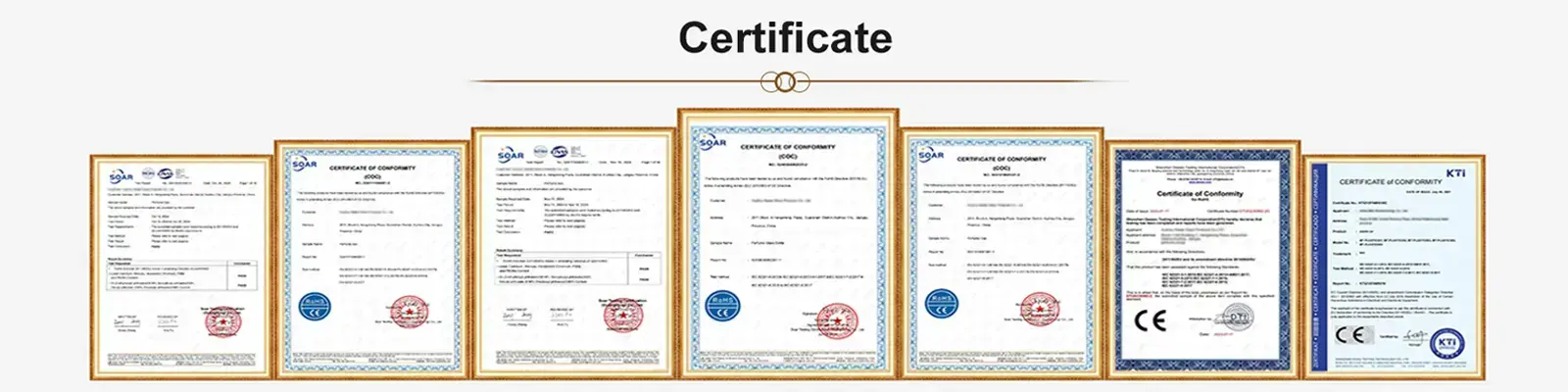
Quality Certifications and Food-Grade Compliance
Any company that sells wine bottles in bulk should have ISO 9001 certification and follow the rules in your target market for food-contact materials. As for the U.S. market, this includes glass composition that is FDA-approved. Ask suppliers for test reports that show that the dimensions are accurate to within 0.5 mm, the wall thickness is the same all the way through, and the annealing quality was checked using a polariscope.
Pricing Transparency and MOQ Flexibility
Purchasing teams should ask for prices that break down the unit cost, tooling fees, surface treatment costs, and packaging costs into different lines. It's harder to discuss or change orders with suppliers who put all costs together without breaking them down. Different businesses have very different minimum order amounts. Small wineries may only need 500 to 1,000 units, while large bottlers may need 50,000 or more per run. A trustworthy maker should be able to meet both needs with clear price ranges.
Customization Capacity as a Selection Factor
Packaging is often what sets one brand apart from another. There are many surface techniques that can be used on Muzhishi, which gives buyers a lot of visual options:
- Hot Stamping — applying high-end gold or silver foil for a high-end look
- Inside Engraving — complex drawing on the inside that can't be done on plastic
- Screen Printing — long-lasting, multicolor ink jobs for holiday or brand runs
- Heat Transfer Printing — complicated designs for gifts and promotional items
- Custom shapes, colors, logos, labels, stickers, and packing boxes are all supported
With these choices, companies that sell corporate gifts, stage events, or run hotels can make packaging that instantly reinforces their brand.
Purchasing Strategies and Logistics for Bulk Glass Wine Bottles
It takes more than just finding the right product to buy 750ml glass wine bottles in bulk. How you buy something and how it's shipped determines how well the procurement works.
Sourcing Channels and Verification
Working directly with the manufacturer usually gives you the best prices and quality control. Verified B2B sites like Alibaba can help buyers find suppliers at first, but they should always ask for samples before placing large orders. Before making a production order, buying teams can get free samples from Muzhishi that are ready in 3–5 days. This lets them check the quality, finish, and closure compatibility.
Shipping and Fragile Glass Handling
It costs a lot for glass bottles for wine to break while it's being shipped. Cold-end coating, a layer of polyethylene wax that is put on during production, lowers the friction between glass pieces on automatic moving lines and in shipping containers. Damage claims are greatly reduced when bottles are made to survive changes in air freight pressure and marine vibration. The way the boxes are packed (divider inserts, foam, and cardboard strength) is also very important for making sure the packages get delivered safely.
| Logistics Factor | What to Verify |
|---|---|
| Carton strength | Multi-layer corrugated rated for stacking |
| Inner dividers | Cardboard or foam cell protection per bottle |
| Cold-end coating | Reduces friction-related breakage |
| Documentation | Commercial invoice, packing list, certificate of origin |
| Customs support | Self-operated import/export rights preferred |
Volume Discounts and Cost Control
Instead of negotiating based on single-order quantities, agree on annual volume commitments. People who sell raw materials can pass on 10–15% of the savings they get to buyers. One example is Muzhishi's local partnerships with glass material producers in Xuzhou. Common materials that are kept in stock also cut down on lead times, which is important for retail chains that have to deal with seasonal inventory cycles.
Sustainable and Innovative Trends in 750ml Glass Wine Bottles
Most B2B buyers now have to choose to source 750ml glass wine bottles properly. Retail chains, hotel groups, and importers are under more and more pressure from their customers and government agencies to source properly.
Recyclability and Circular Economy Benefits
There is no quality loss when glass is recycled over and over again. When used in production, cullet (recycled glass) drops the amount of energy used by the furnace and the carbon footprint of the product. For brands that want to show their customers that they care about the environment, buying from makers that use recycled content is a great way to stand out.
Lightweight Glass Formulations
Modern glass engineering has made it possible for bottles to weigh a lot less than older designs without sacrificing their strength. Less heavy bottles cost less to move and produce less pollution each time. There are big cost and carbon saves for importers who bring in a lot of goods when the weight of a full container load is cut by 10%.
Smart Packaging Integration
Some makers now allow NFC chips and QR codes to be embedded directly on glass surfaces. These features help stop counterfeiting, keep customers involved, and keep track of the supply chain. This is especially helpful for high-end wine and spirits brands that are entering new markets.
Conclusion
There's more to finding 750ml glass wine bottles in bulk than just comparing prices per unit. The type of glass, UV protection, compatibility with closures, customization options, and the dependability of logistics all affect whether a purchasing decision is good or bad. The 750ml size makes it easier to plan the supply chain because it is standardized and works everyplace. B2B buyers are more likely to commit to long-term relationships with suppliers like Muzhishi that have strong quality standards, clear price, and real customization options. Be clear about what you need, ask for samples early, and build relationships with suppliers that will help your brand grow over time.
FAQ
Is 750ml truly the universal standard for wine bottles?
Yes. The 750ml glass wine bottles size is the standard for wine bottles around the world. 187ml single-serve and 1.5L magnums are popular in some regions, but 750ml bottles are the most common size for commercial wine production and retail sales around the world.
What storage conditions best protect bottled wine?
Lay wine bottles flat in a room that is 55 to 65°F (13 to 18°C) and has a humidity level of 60 to 70%. Horizontal storage keeps cork seals wet and stops them from going bad too soon. Keep bottles out of direct light, especially ones made of clear glass.
Why does dark glass matter for wine quality?
UV light breaks down amino acids and phenolic substances in wine. Amber or antique green glass blocks this light. The smell of sulfurous, unpleasant UV radiation is called "light-struck." Dark glass is strongly recommended for wines that will be stored in retail or hospitality spaces that get a lot of light.
How do I confirm closure compatibility before ordering?
Ask your provider to list the neck finish standard (like CETIE or BVS) and match it with the type of closing you want, like a cork, screwcap, or crown cap. Dimensional tolerances of ±0.5mm ensure a hermetic seal and keep the product from oxidizing while it's being stored.
Can I order a sample before committing to a production run?
Yes. Muzhishi offers free samples within 3–5 business days so that buyers can check the sizes, quality of the glass, surface finish, and fit of the closure before production starts.
Partner with Muzhishi for Your Next Wholesale Order
From its home base in Xuzhou, Jiangsu, Muzhishi has been sending glass goods to markets around the world for 20 years. As a reliable company that makes 750ml glass wine bottles, we offer free samples, OEM/ODM production, and personal account management for every order. Our self-run export team takes care of all the paperwork and processes from start to finish. You can get examples or talk about your project needs by going to mzsglass.com or emailing us at long@muzhishi.com.
References
1. Wine & Spirits Wholesalers of America (WSWA) Industry Report, 2023.
2. Glass Packaging Institute: Sustainability and Recyclability of Glass, 2022.
3. International Organization for Standardization: ISO 9001 Quality Management Systems, 2015.
4. Journal of Agricultural and Food Chemistry: Light-Induced Degradation of Wine Compounds, 2021.
5. ASTM International: Standard Test Methods for Glass Containers (ASTM C148), 2020.
6. Packaging Digest: Lightweight Glass Innovations in Beverage Packaging, 2023.

Our customers’ satisfaction speaks for our quality — contact us to experience the same reliable service.