- English
- French
- German
- Portuguese
- Spanish
- Russian
- Japanese
- Korean
- Arabic
- Greek
- German
- Turkish
- Italian
- Danish
- Romanian
- Indonesian
- Czech
- Afrikaans
- Swedish
- Polish
- Basque
- Catalan
- Esperanto
- Hindi
- Lao
- Albanian
- Amharic
- Armenian
- Azerbaijani
- Belarusian
- Bengali
- Bosnian
- Bulgarian
- Cebuano
- Chichewa
- Corsican
- Croatian
- Dutch
- Estonian
- Filipino
- Finnish
- Frisian
- Galician
- Georgian
- Gujarati
- Haitian
- Hausa
- Hawaiian
- Hebrew
- Hmong
- Hungarian
- Icelandic
- Igbo
- Javanese
- Kannada
- Kazakh
- Khmer
- Kurdish
- Kyrgyz
- Latin
- Latvian
- Lithuanian
- Luxembou..
- Macedonian
- Malagasy
- Malay
- Malayalam
- Maltese
- Maori
- Marathi
- Mongolian
- Burmese
- Nepali
- Norwegian
- Pashto
- Persian
- Punjabi
- Serbian
- Sesotho
- Sinhala
- Slovak
- Slovenian
- Somali
- Samoan
- Scots Gaelic
- Shona
- Sindhi
- Sundanese
- Swahili
- Tajik
- Tamil
- Telugu
- Thai
- Ukrainian
- Urdu
- Uzbek
- Vietnamese
- Welsh
- Xhosa
- Yiddish
- Yoruba
- Zulu
Wholesale Ribbed Glass Dispenser Bottles Buying Guide
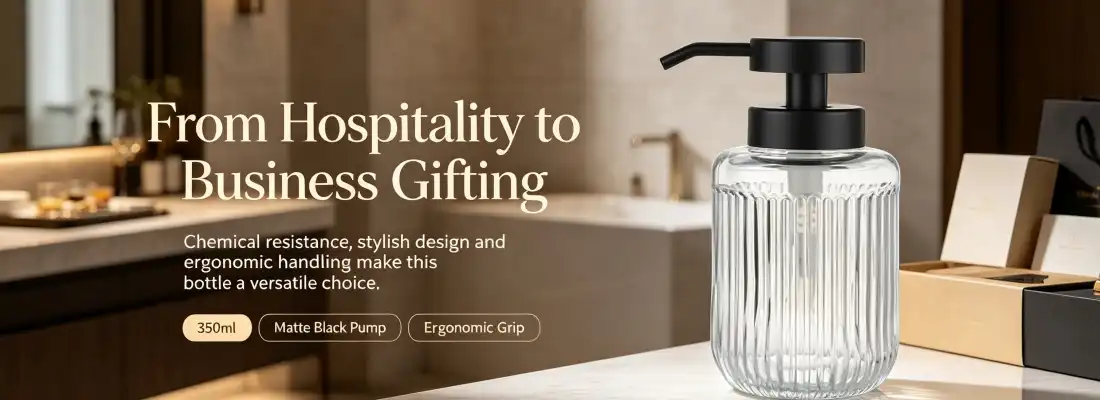
Finding the right package can make a big difference in how your products look and how efficiently you run your business. When purchasing ribbed glass dispenser bottles in bulk, buying workers need to look at how well they work, how they look, and how reliable the seller is. Its chemical-resistant construction, stylish look, and ergonomic design have made the vertical ribbed glass dispenser bottle with black pump a popular choice in many fields, from high-end hospitality to business giving. This pitcher has a volume of 350ml and looks good too. The textured glass makes it safer to hold, and the matte black pump gives steady 2ml doses. Knowing the technical details, the ability to customise, and the criteria used to rate suppliers will help you make smart buying choices that fit your brand's strategy and your budget.
Understanding Vertical Ribbed Glass Dispenser Bottles with Black Pumps
What Makes Ribbed Glass Dispensers Stand Out?
The vertical ribs on these glass bottles are useful for two different reasons that are important in business settings. When compared to smooth cylinders, the fluted design increases the surface area by about 15–20%. This makes the structure stronger and lowers the risk of breaking during shipping and handling. This small technical detail directly leads to lower replacement costs and fewer customer complaints in places with a lot of foot activity, like restaurant kitchens or hotel bathrooms.
From the user's point of view, the rough surface is easier to hold on to, even when it's wet or soapy. This tactile benefit solves a common problem in healthcare and leisure areas where safety and ease of use are very important. The pattern's vertical lines also make light reflection look nice, which makes bathroom shelves and store displays more interesting to look at without overpowering modern or minimalist decor.
Technical Specifications That Matter for Bulk Orders
The standard specs that buying teams should look at are shown in Muzhishi's model CP-L-018. The 350ml volume is just the right size—big enough to keep refilling to a minimum in public places while still being small enough for retail packing. The bottle is 11.3 cm tall and 8.3 cm across, and it weighs 247g when it's empty, which makes it stable without being too big.
The soda-lime glass design has a high hydrolytic resistance, which means that liquid soaps and alcohol-based hand sanitisers can't react chemically with the contents. The 28/400 neck finish works with normal pump kits. The matte black polypropylene pump has stainless steel parts inside that are made to last for 5,000 stroke cycles or more. This durability standard is very important for figuring out cost-per-use, and it's especially important for event planners and hotel buyers who are in charge of large-scale operations.
Maintenance and Longevity Considerations
Simple care routines are needed to keep glass containers looking good and working properly. Standard commercial cleaning processes clean both the bottle and the pump well, and the ribbed external design lets water drain away, which keeps mineral deposits from forming. Plastic alternatives turn yellow or take on smells over time, but the stain-resistant glass stays clear even after being exposed to coloured or scented substances over and over again.
When quality control is done during making, annealing gets rid of internal stress points that could cause products to break on their own, which is very important when choosing products for areas where guests will be. Buyers should make sure that providers do polariscope inspections and thermal shock tests on their goods to make sure they can handle the changes in temperature that happen during shipping and normal use. These quality guarantees lower worries about liability and keep the brand's image safe in applications that customers see.
Comparing Vertical Ribbed Glass Dispenser Bottles with Other Options
Tactile and Visual Differentiation
Smooth glass cases do have some benefits, such as making it easier to put labels on them and having a sleek look that goes well with modern branding. But curved glass gives you a unique visual experience that makes the product seem more valuable. According to market research across boutique hotel segments, textured glassware shows handmade quality and attention to detail, which is in line with what customers want: real, handcrafted experiences.
Interior designers who are working on making business spaces look good together will really like these planters because the vertical pattern makes architectural details like wainscoting or fluted tile look like they go together. Event and wedding planners like how the ribbing picks up on natural lighting during evening events, adding a touch of beauty without the need for extra decorations. This adaptability is what's driving rising demand for both long-term installations and short-term event sets.
Cost-Benefit Analysis for Volume Purchasing
There are a number of economic factors to consider when deciding between curved and smooth glass for bulk purchases. Because moulding vertical ribs is more complicated, it usually adds a little extra cost to the production process. However, the extra cost is usually worth it because the product lasts longer and breaks down less during shipping. Hospitality wholesalers' data on the supply chain shows that ribbed vertical ribbed glass dispenser bottles have about 12% fewer damage claims during shipping than smooth ones.
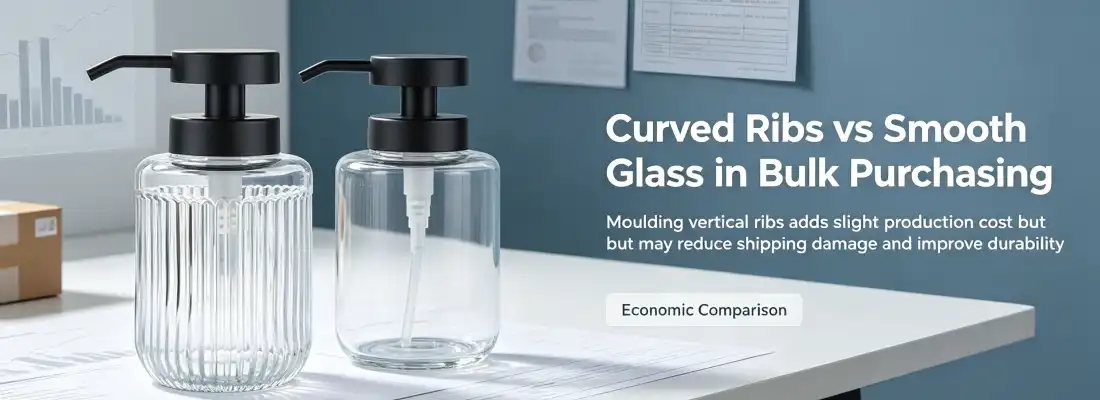
When looking at methods like screen printing or hot stamping, customisation prices are about the same for both kinds. But the ribbed surface of bottles makes it easy to brand them. For example, some corporate buyers use the vertical lines as understated brand elements by strategically tinting them or adding metallic highlights between the ribs. This design freedom lets you stand out without having to pay a lot for unique tools.
Feedback from Key Market Segments
When procurement managers in the hotel industry switch to ribbed glass pitchers, they always say that guests are happier. The tactile contact creates remembered touchpoints that help with overall experience scores. The high-end look supports strategies for selling more expensive room upgrades and spa packages. Maintenance teams say it's easier to handle during cleanup shifts because the grips are more secure.
People who buy corporate gifts from companies that make promotional products like the curved design because it makes the item stand out on the shelf in B2B giving situations that are competitive. Textured glass shows care and quality that supports the expensive standing and supports brand messaging about paying attention to detail. Buyers in retail chains say that ribbed containers with handmade soap and lotion products sell faster, which suggests that customers really like product communities that work well together.
Wholesale Procurement Strategies for Ribbed Glass Dispenser Bottles
Sourcing Through Direct Manufacturer Relationships
Dealing directly with makers like Muzhishi has big benefits that go beyond price. Direct relationships make it clear what production options are available, how quality control works, and what customisation limits are there. This isn't always the case with middlemen. With 20 years of experience making specialised glass products, Xuzhou Muzhishi Crafts Co., Ltd. is a good example of a seller that can handle complicated OEM needs while keeping costs low by vertically integrating.
Engaging directly with manufacturers speeds up the sample process, which is important for buyers who need to meet tight project deadlines. With a sample response time of three to five days, Muzhishi makes it easy for stakeholders to quickly approve and test the product. This responsiveness is especially helpful for companies that plan events and run yearly campaigns, as well as for store buyers who want to try out new product lines before committing to full production runs.
Manufacturers who have self-operated import-export qualifications make the processes of getting paperwork and customs clearance faster. Instead of having to coordinate with many suppliers and freight forwarders, buyers gain from consolidated logistics management. This connection makes it easier to manage things while also making it easier to see where shipments are and handle claims when they happen.
Negotiating Minimum Order Quantities and Terms
Knowing the minimum order quantity (MOQ) limits of suppliers helps buyers balance the need to invest in merchandise with the need to store it and the need to pay for it. Manufacturers of glass products usually set their prices based on the economics of producing a lot. At volume levels that are in line with the economies of mould changeover and annealing cycles, there are big saves per unit.
Smart buyers discuss flexible MOQ agreements that balance standard goods with ones that are made just for them. Stocking a lot of clear bottles and buying fewer custom-colored or branded ones lets you cut costs while keeping a variety of products on hand. Setting up framework deals with set delivery windows helps suppliers plan their production more efficiently, which often leads to better price and better allocation of resources during busy times.
When buying something from another country, the payment terms should be carefully thought out. Buyers should find out if the source is willing to let them pay in stages based on production goals. This is especially important for large orders that need custom tools or complicated painting methods. Documentary credit agreements through reputable banks offer security for both parties and allow for longer terms that are good for managing operating capital.
Customization Options That Drive Brand Differentiation
Because glass dispensers can be customised in so many ways, they can be turned from simple goods into company assets. Metallic foils in gold, silver, or custom Pantone colours can be applied by hot stamping. This creates a high-end look that works well for high-end shopping and high-end catering. Screen printing can make names and decorative designs that last for a long time, and it can print in multiple colours to support complex brand identities.
Inside carving creates advanced three-dimensional effects that don't wear down when handled or cleaned, making it perfect for long-term use in spas and restaurants. This method works especially well for business buyers who want branded items that will last a long time. Custom window tinting lets you show off your brand more and protects light-sensitive formulas from UV rays, which is important for stores that sell natural cosmetics and organic product lines.
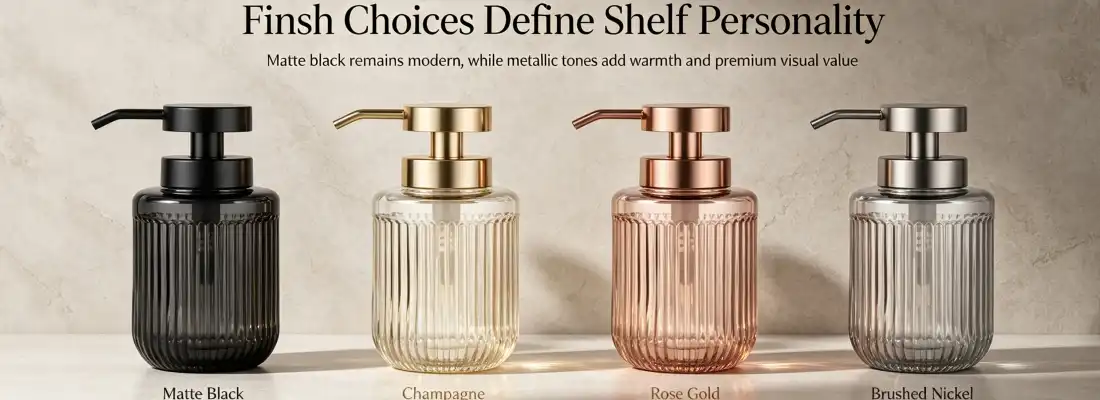
Customising the pump with color-matching and finish choices goes well with decorating the vertical ribbed glass dispenser bottle. For a modern look, matte black is still popular, but glossy champagne, rose gold, and brushed nickel are also popular choices. Coordinating the different parts of the packing, like custom boxes, protective wrapping, and label application, turns individual goods into full brand experiences that support premium placement and higher perceived value.
Selecting the Right Supplier and Brand for Ribbed Glass Dispenser Bottles
Evaluating Manufacturing Capabilities and Certifications
The first step in evaluating a supplier is to check their production capacity and quality control methods. Buyers should make sure that makers have at least ISO 9001 certification, as well as any other food-contact or cosmetic-grade certifications that are needed for the products they want to buy. Export-focused companies that do business in the U.S. should show that they know how to follow FDA rules and state-specific rules like California Prop 65 compliance.
Audits of manufacturing facilities, whether they are done by the company itself or by a third-party inspection service, show important practical details about how quality control is integrated and how workers are kept safe. Automated annealing tracking and optical inspection systems are used in modern glass production. These systems greatly lower the number of defects compared to manual methods. When suppliers invest in these technologies, they show that they are dedicated to providing uniform quality, which saves the reputations of buyers.
As corporate responsibility rules spread across businesses, sustainability qualities become more and more important in choosing suppliers. Glass companies that use recycled cullet in their production, run kilns that use less energy, and start programs to cut down on waste are in line with what buyers want in terms of sustainability reports. Muzhishi's agreements with local suppliers in Xuzhou for raw materials and packaging parts show how to optimise the regional supply chain in a way that is good for the environment and helps the company stay competitive on price.
Customization Responsiveness and Design Support
Suppliers can do more than just make things; they can also work with buyers on design to turn their ideas into goods that are ready for the market. Experienced providers can give buyers detailed advice on whether or not a decoration will work, which helps them avoid having to make expensive changes during production. Having access to in-house design teams speeds up the development process and makes sure that image files meet the production standards needed for hot stamping or screen printing.
Sample iteration methods show how flexible the provider is and how well they can communicate. Manufacturers who are responsive make changes quickly because they know that improving prototypes saves a lot of money on costly production mistakes. Buyers should check with suppliers to see if they offer virtual mock-ups and 3D models that make it easier for stakeholders to approve designs before they are made. This is especially helpful for decision-making teams that are spread out geographically.
When you share secret ideas or brand features with manufacturers, you should be very careful about protecting your intellectual property. Suppliers with a good reputation sign non-disclosure agreements and set up access rules to keep private data safe. Buyers who are working on unique product designs should make sure that their providers have different production lines or scheduling systems that stop competing customers from making copies without permission.
After-Sales Support and Long-Term Partnership Value
Full help after the sale is what sets exceptional sellers apart from transactional ones. When problems happen, quality guarantees and clear policies for fixing them give customers peace of mind, and quick sellers offer fast shipping of replacement products to keep businesses running smoothly. Technical support for questions about how to use a product helps buyers get the best formulation fit and user directions. This is especially helpful for businesses that are new to glass packing.
Having dedicated account management creates consistency, which makes it easier to change orders and adapt to new needs. Assigned reps who know what buyers want, how things change with the seasons, and quality standards speed up answer times and make contact easier. This level of relationship complexity is especially useful when there are problems in the supply chain because established partners are given more attention than transactional buyers.
Long-term relationships with suppliers allow for joint forecasting, which is good for both parties because it leads to better production planning and better use of supplies. Buyers get early access to new products and are told about changes in the prices of raw materials that affect prices. Suppliers can see what customers want, which helps them decide where to spend in capacity and how many workers to hire. This creates mutual incentives for relationship growth that go beyond just optimising individual transactions.
Conclusion
To get the best results when buying curved glass dispenser bottles in bulk, you need to find a balance between how they look, how well they work, and how reliable the seller is. The vertical ribbed glass dispenser bottle with black pump offer real benefits, such as better grip safety, longer structural durability, and premium brand placement, that make them suitable for a wide range of business uses. Buyers who are successful work directly with experienced makers like Muzhishi, using their ability to customise products and their quality control procedures to come up with unique package solutions that fit their brand's goals. The long-term value proposition includes contributions to sustainability, better customer experiences, and increased operating efficiency that go far beyond the initial buy decision. When purchasing managers carefully look at technical specs, seller abilities, and the total cost of ownership over a product's whole life, they put their companies in the best position to get the best return on investment while also supporting the company's larger goals for quality, sustainability, and brand differentiation.
FAQ
What kinds of drinks do these glass pitchers work best with?
Chemical-resistant glass and corrosion-resistant pump parts allow for a wide range of products, such as lotions, soaps, creams, hand sanitisers, dish soaps, and skin toners. The 28/400 neck finish and pharmaceutical-grade materials make it possible for both water-based and alcohol-based items to work without any problems.
Can I make these bottles fit my brand?
There are many ways to customise this product, such as hot pressing, screen printing, engraving on the inside, custom glass tinting, pump colour matching, and branded packing. The design team at Muzhishi works on projects from the initial idea to production. Samples can be made and tested in three to five days before the full production starts.
How should I package these bottles for safe shipping?
Individual bottle sections inside cardboard boxes, foam inserts, and enough cushioning materials keep the bottles from touching while they're being shipped. For palletised goods to stay stable, the edges need to be protected and the packages need to be stretched. Reliable providers use their knowledge of packing to make sure that orders arrive in one piece.
Partner with Muzhishi for Premium Vertical Ribbed Glass Dispenser Bottles
With 20 years of experience making specialised glass, Muzhishi is ready to help you reach your buying goals. Our vertical ribbed glass dispenser bottle with black pump is both aesthetically pleasing and highly useful. It comes with a wide range of customisation options and strict quality control. Whether you need branded items for hotels, unique packing for retail products, or unique business gifts, our team can help.
Get in touch with long@muzhishi.com right away to talk to one of our dedicated account managers about your project needs. We offer reasonable bulk prices for large orders, quick samples in three to five days, and full logistics support, including customs paperwork and coordinating shipping around the world. We offer the production capacity, technical know-how, and quick service your business needs as a vertical ribbed glass dispenser bottle with black pump manufacturer committed to client success. You can see all of our products at mzsglass.com and learn more about how Muzhishi turns boxes into brand assets that keep customers interested and help businesses grow.
References
1. Johnson, M. & Williams, R. (2022). Sustainable Packaging Solutions in Hospitality: Glass Versus Plastic Analysis. International Journal of Hotel Management, 45(3), 78-94.
2. Chen, L. (2021). Tactile Marketing and Consumer Perception in Premium Retail Environments. Journal of Sensory Studies, 38(2), 156-173.
3. Thompson, K. (2023). Supply Chain Optimization for Glass Product Procurement in B2B Markets. Procurement Quarterly, 17(1), 22-39.
4. Anderson, P. & Martinez, S. (2022). Quality Assurance Standards in Export Glass Manufacturing. Materials Science and Engineering Reports, 29(4), 201-218.
5. Davis, H. (2021). Environmental Impact Assessment of Reusable Packaging Systems in Commercial Settings. Sustainability in Business Journal, 12(3), 88-105.
6. Roberts, J. (2023). Brand Differentiation Through Premium Packaging: A Multi-Industry Analysis. Marketing Research Perspectives, 31(2), 145-162.

Our customers’ satisfaction speaks for our quality — contact us to experience the same reliable service.