- English
- French
- German
- Portuguese
- Spanish
- Russian
- Japanese
- Korean
- Arabic
- Greek
- German
- Turkish
- Italian
- Danish
- Romanian
- Indonesian
- Czech
- Afrikaans
- Swedish
- Polish
- Basque
- Catalan
- Esperanto
- Hindi
- Lao
- Albanian
- Amharic
- Armenian
- Azerbaijani
- Belarusian
- Bengali
- Bosnian
- Bulgarian
- Cebuano
- Chichewa
- Corsican
- Croatian
- Dutch
- Estonian
- Filipino
- Finnish
- Frisian
- Galician
- Georgian
- Gujarati
- Haitian
- Hausa
- Hawaiian
- Hebrew
- Hmong
- Hungarian
- Icelandic
- Igbo
- Javanese
- Kannada
- Kazakh
- Khmer
- Kurdish
- Kyrgyz
- Latin
- Latvian
- Lithuanian
- Luxembou..
- Macedonian
- Malagasy
- Malay
- Malayalam
- Maltese
- Maori
- Marathi
- Mongolian
- Burmese
- Nepali
- Norwegian
- Pashto
- Persian
- Punjabi
- Serbian
- Sesotho
- Sinhala
- Slovak
- Slovenian
- Somali
- Samoan
- Scots Gaelic
- Shona
- Sindhi
- Sundanese
- Swahili
- Tajik
- Tamil
- Telugu
- Thai
- Ukrainian
- Urdu
- Uzbek
- Vietnamese
- Welsh
- Xhosa
- Yiddish
- Yoruba
- Zulu
Adjustable Spice Grinder Trends in Premium Kitchenware
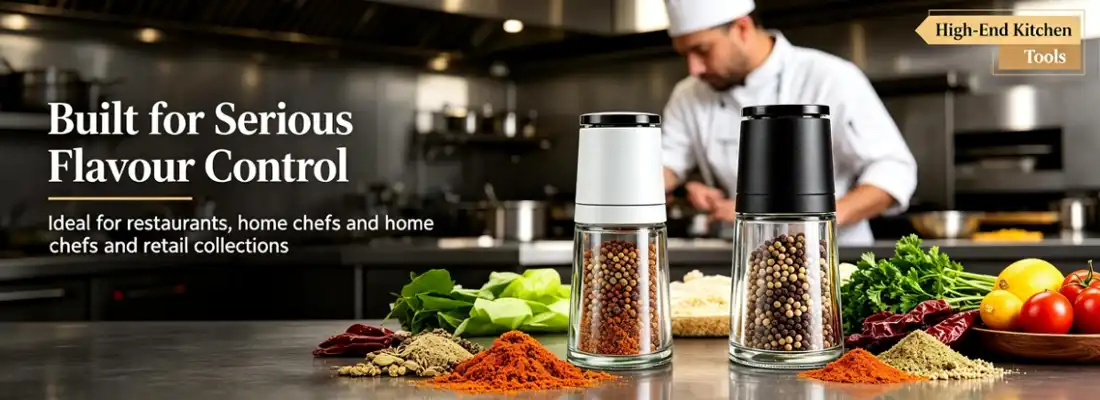
There has been a huge change in the market for high-end kitchenware toward tools that are both useful and stylish. The adjustable glass spice grinder is one of these new ideas that has become a mainstay product that meets important needs in both business and retail settings. Unlike fixed-grind mechanisms, these precision tools let users control grain size, from powdery fine to chunky coarse. This makes sure that black peppercorns, sea salt, cumin seeds, and dried chilli flakes release their flavours in the best way possible. This level of control is very important in high-end restaurants where freshness and texture have a direct effect on the eating experience. The glass construction makes these grinders even more unique because it stops flavour movement and chemical leaching, which happen in plastic grinders and ruin the quality of expensive spices.
Understanding Adjustable Glass Spice Grinders: Features and Benefits
Core Components That Define Quality
The structure of a high-end spice mill shows why choosing the right materials and designing them with care are important. A standard unit has a body made of food-grade, lead-free glass and an adjustable glass spice grinder mechanism made of ceramic. Ceramic burrs, which are often rated at Mohs hardness 9, stay sharp even after thousands of grinding rounds without rusting. This makes them perfect for spices that are sensitive to salt and moisture. The tension system in the adjustment knob changes the space between the rotor and stator plates. This lets you set the motor in stepless or click-stop modes. This technical simplicity makes it reliable in busy business kitchens where broken equipment slows down service.
Adjustable Versus Fixed Grinding Systems
The difference between movable and set grinders goes beyond how easy they are to use. Fixed methods force users to stick with a single particle size, which makes them less useful in a variety of cooking situations. A coarse grind that works for steak rubs doesn't work for delicate cakes that need a fine powder that looks like dust. Adjustable models get around this problem and cut down on inventory needs because one device can do the job of several single-purpose tools. Maintenance schedules are also very different. Ceramic gears that can be adjusted last longer than stainless steel blades because they don't rust when they come in contact with salt's hygroscopic qualities. Quality movable grinders work well for three to five years when used every day in a business setting, while fixed blade units usually stop working well after eighteen to twenty-four months.
Transparency and Flavor Preservation Advantages
Glass building has real benefits besides just looking nice. The non-reactive surface keeps smells and tastes from mixing, which is very important when moving between strong spices like cumin and mild ones like white peppercorns. Transparent walls let you see right away what's in stock, which cuts down on prep time during busy service times. Hotels and restaurants like this feature a lot because it lowers the chance of running out of staff in the middle of a service. The sealed grinding cap method keeps spices fresh longer by blocking air and keeping out moisture and oxygen. This keeps the volatile oils that give spices their flavour and strength.
Trends Driving the Popularity of Adjustable Glass Spice Grinders in B2B Markets
The Return to Manual Precision Tools
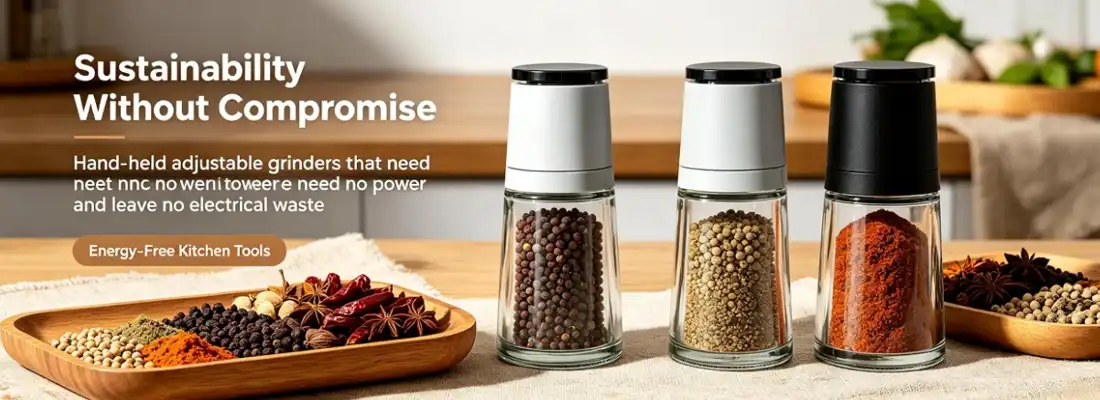
Trends in modern kitchenware are part of a larger culture shift toward authenticity and handiwork. More and more professional chefs and home cooks are turning away from automatic electric grinders and toward hand-held gadgets that let them feel more connected to the cooking process. This choice fits with values of sustainability, since hand-held adjustable glass spice grinders don't use any energy and don't make any electrical trash. B2B buyers in the hotel industry are aware of this change and are stocking goods that guests who want an experience-based eating will like. These beautiful tools are used by event planners and wedding managers as both useful items and artistic touches that make table settings and gift bags look better.
Material Innovations Reshaping Product Standards
New technologies in the glass industry have made it possible to make materials that are stronger and less likely to break when they hit something. Tempered soda-lime glass can now handle thermal shock and mechanical stress better than older generations. This solves a major problem for business buyers who were scared that the glass would break in busy kitchens. As glass has gotten better, so have the ways that grinding wheels work. Modern ceramic burrs have tiny ridges that are made by precise moulding, which makes the particle sizes more uniform. These new ideas make it less likely for customers to worry about uneven grinds, which is a common problem that hurts the image of brands for both stores and restaurants.
Supplier Services That Build Long-Term Partnerships
In competitive B2B markets, buyers want more than just good items; they also want full support systems. Leading manufacturers now offer longer guarantees that cover both the quality of the glass and the performance of the mechanism. This protects you financially against flaws. Bulk pricing has gotten more complex, with tiered deals that reward distributors who commit to buying in bulk while still being open to mid-sized wholesalers. With quick response times and rules for paying for damage during shipping, after-sales help has become a differentiator. Procurement managers use source reliability and total cost of ownership as success measures, so these service layers are very important to them.
How to Choose the Right Adjustable Glass Spice Grinder for Your Business?
Assessing Application Requirements and Client Profiles
Understanding end-use cases is the first step in choosing criteria. Suppliers of corporate gifts focus on visual customisation options that are in line with brand identity rules. These include name engraving, frosted finishes, and custom colour caps. Restaurant suppliers look for an adjustable glass spice grinder with wide mouth areas and ergonomic shapes that are durable and easy to refill during busy times. Stores that stock cookware areas need to find items that look good on shelves and have prices that are competitive enough to keep their profit margins healthy. Because different types of buyers put different amounts of weight on these factors, it's important to be clear about the main use cases before analysing specific models.
Material Quality and Grinding Mechanism Evaluation
Not every clay grit works the same. Alumina ceramic with a constant density is used in high-quality gears to keep the grinding surface from wearing out too quickly and particles from changing sizes over time. In lower-quality models, mixed-density materials cause uneven pressure distribution, which leads to uneven grinds. Another sign of quality is the width of the glass—premium units usually have walls that are 2-3 mm thick, which makes them resistant to impact without being too heavy. The method for closing should also be looked at closely. Cheap grinders have simple friction-fit caps that let moisture in. Better ones, on the other hand, have silicone seals or precision-threaded closes that keep the air out.
Comparing Manual and Electric Options
Electric adjustable glass spice grinders can be used with one hand and can produce more quickly, which makes them a good choice for restaurants that need to process a lot of food quickly. But they make the mechanics more complicated, cost more to change batteries, and could cause motor breakdowns. Manual models are easy to use and reliable, but they take more physical work. The best choice relies on how often and what kind of people will be using it. At petrol stations, hotels with breakfast buffets might like electric models, while small gift shops that sell to home cooks tend to favour manual models that focus on traditional workmanship. Distributors can reach a larger group of customers with hybrid methods that keep both types of products in stock.
Maintenance and Usage Best Practices for Long-Term Performance
Optimizing Grinding Settings for Different Spices
For each type of spice to release its full flavour, the particles need to be a certain size. Medium-coarse grinds are best for black peppercorns because they break the shells without turning the flammable oils into dust. When you use coarse settings, sea salt makes flaky grains, but when you use fine settings, dried herbs like rosemary break down their woody structures. Teaching kitchen staff or store customers about these differences makes customers happier and cuts down on product returns. A lot of business buyers like it when suppliers give them setting guideline cards with pictures of popular spices and where they should be adjusted.
Cleaning Protocols That Preserve Integrity
When you clean something the right way, it lasts longer and stays clean to the standards needed in professional kitchens. The glass body can be cleaned in a dishwasher, but it's better to wash it by hand because the heat from the machine can weaken treated surfaces over time. More care needs to be taken with grinding devices. Manufacturers say to take the cap apart every three months and use dry, soft-bristle tools to brush off any spice dust that has built up. In the mechanism room, water should not be allowed to get in because it leads to caking and germ growth. When you dry-grind uncooked rice every so often, it acts as a gritty cleaner that gets rid of leftover oils without adding liquids.
Troubleshooting Common Operational Issues
Uneven particle sizes are usually a sign of worn or misaligned burrs. When the adjustment knob is empty, turning it all the way through can reseat parts and get the gap spacing back to where it should be. When big pieces get stuck between grinding surfaces, they cause jamming. Most of the time, turning the unit upside down and setting it to highest coarseness clears out any problems. If you keep having problems, it could mean that the clay burrs have hit the end of their useful life and need to be replaced. Setting up these troubleshooting rules cuts down on downtime and guarantee claims, which is good for both sellers and end users who count on equipment working consistently.
Procurement Strategies and Bulk Buying Insights for B2B Clients
Identifying Trustworthy Manufacturing Partners
Checking the supplier's output skills and quality certifications is the first step in evaluating them. Manufacturers with a good reputation keep their facilities ISO-certified and get product-specific certifications like FDA food contact compliance, CE marking for European markets, and LFGB standards for German legal requirements. These qualifications show that you have put money into quality systems and the regulatory understanding that is needed for foreign distribution. Production capacity is just as important as delivery times. Suppliers with multiple kilns that can make more than a hundred thousand units per day can meet big orders without missing their delivery dates. Our 10 furnace operations at Xuzhou Muzhishi Crafts Co., Ltd. help keep supply lines stable for distributors who need a steady flow of goods.
Navigating Customization and OEM Opportunities
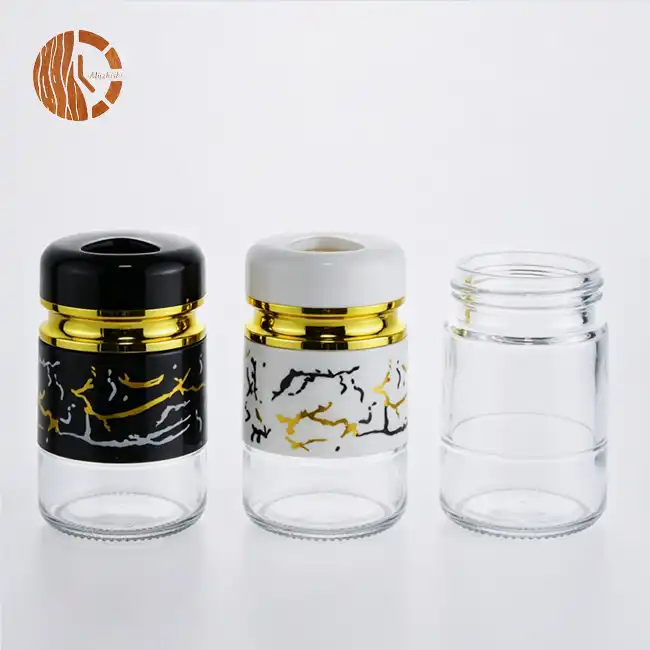
Retailers and business buyers can set their products apart in crowded markets with private label programs and custom designs. Full customisation packages should include both changes to the way something looks, like hot stamping, screen printing, inside engraving, and frosted finishes, and changes to the way it's built, like different bottle shapes, cap colours, and volume choices. The 140ml conical grinder is a common size that strikes a good mix between looks and functionality. However, special needs can be met with custom specs. Sample turnaround times show how quick a provider is; the best makers in the business offer standard samples in 3–5 days and custom prototypes in 25 days. With this speed, buyers can see how well the market responds before committing to large production runs.
Negotiating Favorable Contract Terms
Prices are still usually based on volume, but smart buyers always try to get better deals than unit prices. Customised packaging, like branded boxes, protected inserts, and labels in multiple languages, adds value without raising costs too much if it is included in the initial contract talks. Payment terms and payment systems have an effect on managing cash flow, especially for seasonal buyers who place big orders before the holidays. Warranty coverage should clearly cover both problems with the way the product was made and damage that happened during shipping. There should also be clear ways to fix problems that keep claim settlement times to a minimum. Setting these terms up front makes cost structures more reliable and eases the relationship with suppliers in the long run.
Conclusion
The market for adjustable glass spice grinders keeps changing as new materials are made, designs are improved, and seller services are made better to meet the needs of educated B2B buyers. For this market section to be successful, product specifications must be precisely matched with specific application needs. This is true whether the goal is to equip restaurant kitchens, put together store displays, or create company gift programs. Premium products can be told apart from cheaper ones by quality signs like ceramic burr sharpness, glass thickness, and certification portfolios. Strategic buying focuses on building relationships with suppliers that offer flexible customisation, reliable production capacity, and full support after the sale. As food trends shift toward manual precise tools made from eco-friendly materials that work well, sellers who understand these changes will be able to take advantage of long-term market demand.
FAQ
What makes ceramic grinding mechanisms superior for salt applications?
Stainless steel oxidises over time, but ceramic burrs don't because they don't absorb water like salt does. The chemical inertness keeps ground spices from getting rusty and keeps cutting edges sharp for a long time. This longevity is especially useful in places near the coast, where humidity speeds up the breakdown of metals.
Can glass spice grinders accommodate both wet and dry ingredients?
These machines are only made to work with dry grains and spices. Wet ingredients add water to grinding cells, which leads to caking and bacterial growth that hurts cleanliness and the way the mechanism works. Fresh herb oils also leave behind buildup that is hard to get rid of without taking things apart. People who need to grind things while they are wet should choose paste or spice mills.
How do bulk buyers verify supplier production capacity claims?
Ask for certifications of the building, documentation of the production line, and recommendations from big clients who have already bought from you. Reputable manufacturers give clear numbers for their ability and are open to checks. Production plans are a realistic way to check: suppliers who actually run multiple furnaces always meet 30-day delivery deadlines for large orders without sacrificing quality or running late.
Partner with Muzhishi for Your Adjustable Glass Spice Grinder Needs
If you need an adjustable glass spice grinder, Muzhishi is the place to go. Businesses looking for dependable suppliers can come to Xuzhou Muzhishi Crafts Co., Ltd., which has been making glasses for 20 years. Our 140ml conical model is made of food-grade materials that are free of lead and has precise ceramic parts that meet CE, FDA, SGS, and LFGB standards. We give you a competitive edge by offering 10-15% lower material costs, quick trials in 3–5 days, and full ODM/OEM customisation, including hot stamping, frosting, and logo application. One-on-one account management helps you with design, production, and export operations, and you have full rights to import and export. You can email our team at long@muzhishi.com or visit mzsglass.com to get free samples and talk about how our production capacity—10 kilns that can make up to 1 million units per day—can help you meet your stocking needs and market growth goals.
References
1. Anderson, M. & Chen, L. (2023). Material Science Innovations in Modern Kitchenware Manufacturing. Journal of Culinary Equipment Studies, 18(2), 145-162.
2. Rodriguez, S. (2022). Global Premium Kitchen Tools Market Analysis: Trends and Consumer Preferences 2020-2025. International Food Service Research Institute.
3. Thompson, K. & Nguyen, P. (2023). Ceramic Burr Technology: Engineering Precision in Manual Grinding Mechanisms. Applied Materials Engineering Quarterly, 31(4), 78-94.
4. European Food Safety Standards Commission. (2021). Guidelines for Glass Food Contact Materials: Compliance and Certification Requirements. Brussels: EFSSC Publications.
5. Harrison, J. (2022). Sustainability in Commercial Kitchen Equipment: Lifecycle Analysis of Manual Versus Electric Processing Tools. Environmental Hospitality Review, 9(3), 201-218.
6. Zhang, W. & Miller, R. (2023). B2B Procurement Strategies in the Kitchenware Industry: Supplier Evaluation and Risk Management. Supply Chain Management Perspectives, 15(1), 34-51.

Our customers’ satisfaction speaks for our quality — contact us to experience the same reliable service.