- English
- French
- German
- Portuguese
- Spanish
- Russian
- Japanese
- Korean
- Arabic
- Greek
- German
- Turkish
- Italian
- Danish
- Romanian
- Indonesian
- Czech
- Afrikaans
- Swedish
- Polish
- Basque
- Catalan
- Esperanto
- Hindi
- Lao
- Albanian
- Amharic
- Armenian
- Azerbaijani
- Belarusian
- Bengali
- Bosnian
- Bulgarian
- Cebuano
- Chichewa
- Corsican
- Croatian
- Dutch
- Estonian
- Filipino
- Finnish
- Frisian
- Galician
- Georgian
- Gujarati
- Haitian
- Hausa
- Hawaiian
- Hebrew
- Hmong
- Hungarian
- Icelandic
- Igbo
- Javanese
- Kannada
- Kazakh
- Khmer
- Kurdish
- Kyrgyz
- Latin
- Latvian
- Lithuanian
- Luxembou..
- Macedonian
- Malagasy
- Malay
- Malayalam
- Maltese
- Maori
- Marathi
- Mongolian
- Burmese
- Nepali
- Norwegian
- Pashto
- Persian
- Punjabi
- Serbian
- Sesotho
- Sinhala
- Slovak
- Slovenian
- Somali
- Samoan
- Scots Gaelic
- Shona
- Sindhi
- Sundanese
- Swahili
- Tajik
- Tamil
- Telugu
- Thai
- Ukrainian
- Urdu
- Uzbek
- Vietnamese
- Welsh
- Xhosa
- Yiddish
- Yoruba
- Zulu
Best Glass Jars for Honey Storage with Attached Stirrers
When procurement pros look for the best ways to store honey, glass honey jars with glass stirring stick configurations are always the clear winner. These special cases have food-grade clarity and built-in dispensing tools, which solves important problems with product contamination, keeping the integrity of the product, and how it looks. The all-glass design gets rid of the chemical leaching risks that come with plastic options. It also makes for a clean, reusable system that meets today's green standards. Knowing the technical and business benefits of these jars helps buyers make smart choices that improve operational efficiency and end-user happiness, whether they are buying for craft honey brands, hotel businesses, or corporate giving programmes.
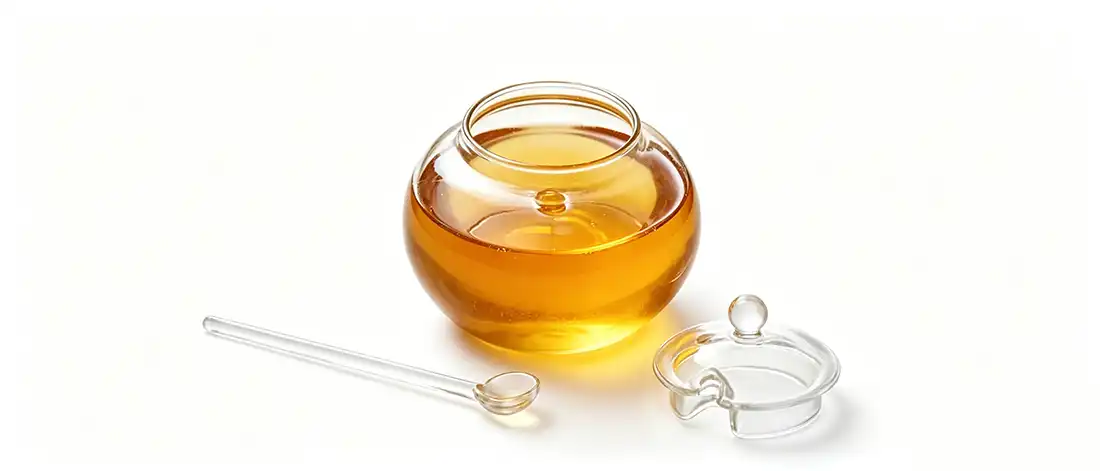
Understanding Glass Honey Jars with Attached Stirrers
What Defines Quality Honey Storage Containers
Speciality type of food-safe packaging includes glass honey jars with glass stirring stick systems. The bodies of these containers are usually round or cylindrical and made of soda-lime or borosilicate glass. They come with matched glass caps and special stirring sticks. The stirring tool fits on top of the lid piece or can be stored inside it. This makes a full pouring system that keeps honey's natural properties. These jars are different from regular food containers because they are designed to hold thick liquids. They have wide holes that can fit standard stirrers and tight-fitting lids that keep moisture out.
Material Composition and Construction Standards
The glass used to make high-end honey jars goes through strict steps to make sure it is safe and will last a long time. Borosilicate types are better at withstanding thermal shocks because they can handle differences in temperature of up to 150°C without cracking. This is an important property for manufacturers who use hot-filling methods. For large orders, soda-lime glass is a more affordable option that is very clear and won't react with chemicals. Both materials have a smooth, non-porous surface that keeps bacteria from growing and transferring flavours. This is different from wooden or bamboo options, which soak up water and allow microbes to grow in their open grain structures.
Our Muzhishi FP-H-003 model meets these quality standards with its 350ml bowl made of high-quality food-grade glass. The 10cm diameter and 6.6cm height make for the best aspect ratio for product viewing while keeping the structure stable during travel. The jar weighs 68.8 grammes, which is just the right amount for a solid feel while still being easy to ship.
Size Variations for Different Business Applications
Choosing the right capacity has a direct effect on the working efficiency of many different business types. Personal-sized packages between 200ml to 400ml are good for boutique stores and gift makers who care about appearance and amount control. Customers can try different kinds of high-quality honey without having to buy bigger amounts. Options in the middle, between 400ml and 700ml, are good for food service and hotel companies that need daily-use containers that can be refilled on a regular basis.
Larger sizes than 800ml are often preferred by bulk distributors and industrial kitchens, but they usually don't come with a stirrer connected because they are easier to store. Knowing how your target market usually buys things can help you choose the best size standard when you place an order for production.
Environmental and Hygiene Advantages
When compared to single-use plastic packages, glass cases are more environmentally friendly, and products like glass honey jars with glass stirring stick further highlight these advantages. The material can be recycled over and over again without losing any of its quality, which supports circular economy efforts that customers who care about the earth will like. Durability also makes a product last a lot longer. For example, a well-made glass jar can be used every day for years, while plastic ones often become cloudy, hold smells, and become structurally weak within months.
The connected glass stirring stick gets rid of the need for throwaway wooden dippers, which saves money over time. Hospitality businesses say that switching to reuse glass tools cuts down on waste by a measured amount. In fact, some places say that the amount of single-use tools they use drops by 90%. The design makes it possible to clean thoroughly between uses, and the dishwasher-safe construction meets health department rules that say porous materials can't be used in business food service.
These useful benefits have a direct effect on the value of buying. By extending the time between replacements, buyers can lower their total cost of ownership while also improving the image of their brand by showing that they care about the environment.
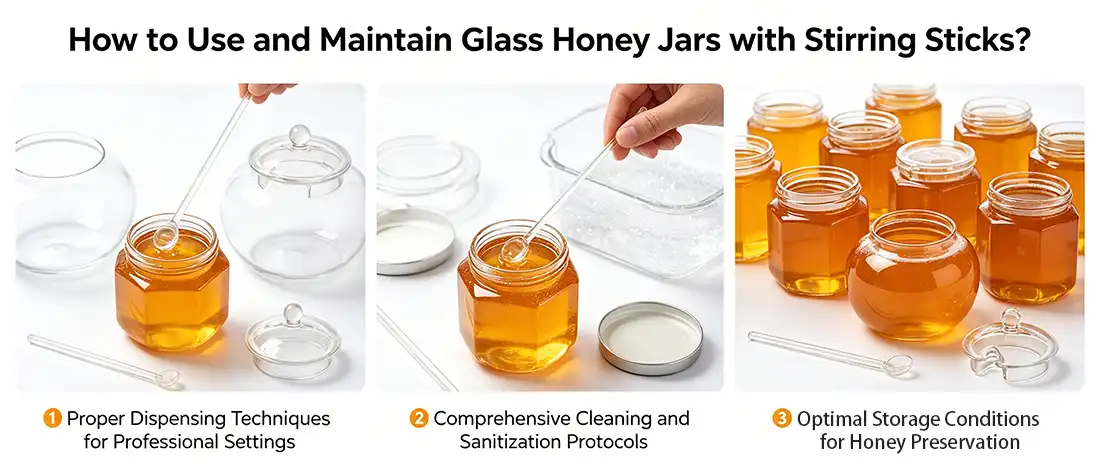
How to Use and Maintain Glass Honey Jars with Stirring Sticks
Proper Dispensing Techniques for Professional Settings
In order to serve honey without making a mess, you need to know how sticky liquids move through fluids. The ridged surface of the glass moving stick makes it easier for the honey to stick to it by giving it more surface area and controlling the drip. If you gently twist the stick as you take it out of the jar, the extra honey will wind back onto the tool instead of falling onto the table. This method works especially well at buffets and hotel breakfasts, where the quality of the presentation has a direct effect on how happy the guests are.
Commercial users should teach their staff to hold the stick at a 45-degree angle while transferring. This will make surface tension work in their favour. After putting the honey on the target, the stick should stay above the surface for two to three seconds so that the honey strand can split easily. Following these simple rules will help keep serving areas clean even during busy times and cut down on product waste.
Comprehensive Cleaning and Sanitization Protocols
To meet cleanliness standards, you need to use organised cleaning methods that take into account the special properties of honey. The high sugar content leaves behind sticky leftovers that need to be carefully removed to keep bugs away and stop bacterial films from forming. The best way to clean glass for the first time is to dissolve honey in warm water. Temperatures between 40°C and 50°C lower honey's stickiness, which makes it easier to remove without scratching the surface.
For daily cleaning in business settings, we suggest that you rinse the jar and stirrer under warm running water right after each use, use pH-neutral dish soap, and use soft-bristle brushes to get to the corners. The glass surface doesn't have pores, so it's easy to get rid of leftovers without using rough tools that damage the material. When commercial dishwashers are set to standard sanitization settings (with a minimum end rinse temperature of 65°C), they sterilise dishes thoroughly while saving money on labour.
Deep cleaning every so often gets rid of any mineral buildup from hard water or crystallisation. Putting on a mixture of white vinegar and warm water that is equal parts for 30 minutes gets rid of tough buildup without hurting the glass. This upkeep makes the jar last longer and keeps it clear so the honey's natural colour can show through.
Optimal Storage Conditions for Honey Preservation
Keeping the surroundings under control keeps honey's nutritional value and stops it from going bad. Keep jars that are full in a place that stays between 18°C and 24°C and out of direct sunshine, which speeds up the breakdown of enzymes and darkens the colour. Some security is provided by the fact that good glass is immune to UV light, but long-term exposure still breaks down sensitive compounds like hydrogen peroxide that help honey kill germs.
Controlling humidity keeps honey's ability to absorb water from affecting its quality, especially when stored in glass honey jars with glass stirring stick. Even though the protected glass lid does a great job of keeping moisture out, the relative humidity should stay below 60% in storage areas so that condensation doesn't form on the outside of the containers. Crystallisation is a normal process that happens when glucose breaks from its solution. It can be stopped by slowly warming the solution in a water bath, but this happens less often if the temperature doesn't change..
When planning where to put their honey jars on store shelves, businesses that buy them should think about these ways to keep them fresh. Temperature-controlled areas close to checkout areas improve exposure without affecting the quality of the goods, while placing them near windows or air vents could cause them to break down faster.

How to Choose the Best Glass Honey Jar with Attached Stirrer for Your Business?
Defining Requirements by Business Model
In different working situations, different jar traits are needed. When distributors bring in goods to resell, they look for standard sizes that work with store features and warehouse shelving systems that are already in place. Getting a steady supply of goods with stable specs keeps stores from having to deal with inventory problems and lets them keep their products on shelves without having to redesign the packages. When OEMs ask for customisation choices, brands that are making their own product lines need providers that can give different types of closures, glass tinting, and decorative treatments.
Food service companies stress how durable and easy to maintain their products are. Containers in commercial restaurants are exposed to high temperatures, heavy handling, and thorough cleaning processes that quickly show if the quality isn't good. Instead of counting on general claims, procurement managers in this sector should test products to make sure they are compatible with dishwashers and have adequate temperature shock ratings. Gift makers have to find jars that look good and can withstand the shipping stresses that come with e-commerce fulfilment.
Critical Selection Criteria and Evaluation Methods
To check the quality of a material, you must first understand what glass is made of. Asking for scientific details about the type of glass (soda-lime vs. borosilicate) and where it was made can help you check for stability and safety. Suppliers with a good reputation will give buyers testing records for lead content, cadmium levels, and thermal resistance factors. These records protect buyers from responsibility in controlled markets.
Long-term usefulness is based on how well the closure process works. The lid should create good closing pressure without needing too much force, which could cause it to break when opened over and over again. Fill samples with honey and turn them upside down for 24 hours to make sure they won't leak in real life. The way the stirring stick is attached should be looked at more closely. Integrated designs that keep things from getting lost work better than loose tools that come apart during shipping and handling.
The working efficiency is affected by how consistent the dimensions are across production runs. Ask for tolerances for the measures of height, diameter, and weight, because differences of more than ±2% make it hard for automatic packing lines and show fixture fittings to work. Our Muzhishi manufacturing method keeps tight tolerances by using automatic quality checks at multiple stages of production. This makes sure that the dimensions are correct, which makes it easier for buyers to keep track of their inventory.
Supplier Capabilities and Partnership Value
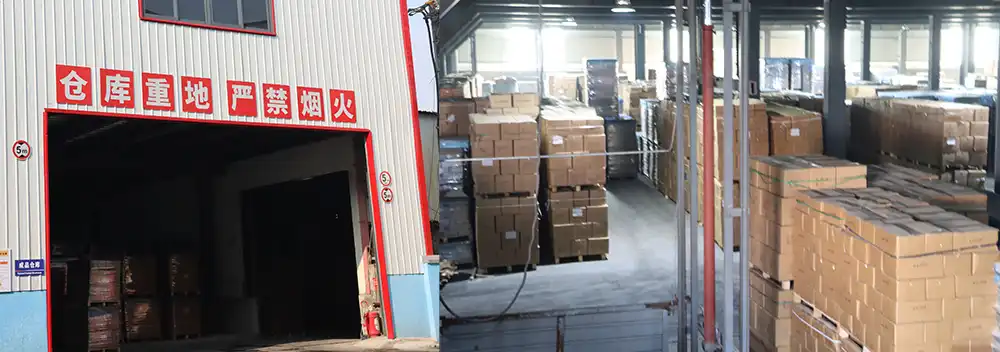
Order fulfilment dependability is based on how much can be manufactured. Suppliers with dedicated production lines for glass honey jars keep parts in stock and tools ready to use, which lets them turn around orders faster than facilities that treat these items as one-time special orders. We have strategic ties with local makers of glass sheets in Xuzhou, Jiangsu. This makes sure that we always have access to the raw materials we need, so we can make as many as we need, from small test orders to full containers.
Customisation skills set skilled makers apart from basic providers. For techniques like hot stamping, silk screen printing, and frosting to be done regularly across production batches, you need to have the right tools and know-how. People who want to buy branded boxes should look at the profiles of suppliers that show finished customisation projects for similar types of products. Our team helps with design from start to finish, turning brand identity guidelines into useful decoration guidelines that can withstand business use while still looking good.
Cross-border procurement depends on having a service system that can handle foreign transactions, especially for products such as glass honey jars with glass stirring stick. Suppliers who have experience with self-operated import-export authorisation and customs clearance can quickly and easily meet the paperwork requirements. This cuts down on shipping delays that make it hard to plan inventory. Our dedicated account management system answers questions 24 hours a day, seven days a week, and makes sure that business invoices, packing lists, and certificates of origin are made professionally and according to the needs of the target country. Samples make decision-making faster. Our sample delivery in 3-5 days lets you evaluate quickly without committing to full production orders.
Top Brands and Suppliers of Glass Honey Jars with Attached Stirrers
Industry-Leading Manufacturers
On the global market for speciality glass honey containers, there are a number of well-known companies that are known for their quality and new ideas. Xuzhou Muzhishi Crafts Co., Ltd. is a well-known company that serves foreign markets and can make a lot of changes to their products. The company was started in 2005 in Jiangsu, which is known for making a lot of glass. With 20 years of experience in the field, they can make sure their goods meet strict food safety standards while keeping their prices low through integrated supply chain management.
European companies often put a lot of emphasis on handmade production methods and heritage brand positioning, which helps them charge more for high-end gifts. Most of the time, these sellers don't offer many ways to customise their products, but they are great at making unique designs that boutique stores like. Asian manufacturers, mostly in China's Jiangsu and Shandong provinces, have the ability to make large quantities of goods and offer a wide range of customisation options for things like design, size, and packing.
To check a supplier's qualifications, you need to look at their production certifications and quality control systems. ISO 9001 certification means that quality control procedures have been formalised, and FDA compliance paperwork proves that the food is safe for touch with food and can be sold in the U.S. market. Environmental standards like ISO 14001 back up marketing claims about sustainability that are becoming more and more important to environmentally conscious consumers.
Customization and Private Labeling Capabilities
In crowded honey markets, differentiating a brand by customising its package gives it an edge over other sellers. Standard jars can be turned into unique company assets with different surface treatment choices. Frosted finishes have beautiful matte looks that spread light beautifully and make the surface better for printing detailed drawings. Using hot printing to add shiny foils in gold, silver, or copper tones creates high-end looks that show quality at the point of sale. Screen printing creates long-lasting colour designs that don't fade or peel even after being handled and washed many times.
Inside etching and other advanced decorating methods make three-dimensional effects that can be seen through clear glass. This makes for sophisticated brand marks that can't be made with surface printing alone. You can change the colour of honey in a lot of ways, from adding small tints that bring out its natural colours to using strong, thick colours that make it stand out on the shelf. All of these methods are part of our Muzhishi customisation suite, which also includes design consultation services that help artists make sure their artwork specs are the best they can be so they can be made.
Private labelling is more than just putting a name on something; it also includes full package programmes. Buyers can ask for unique lid finishes, stirrer designs, and gift boxes that match. This helps strengthen brand identity at all touchpoints. Minimum order numbers depend on how complicated the customisation is. For example, simple colour changes may need a minimum of 5,000 units, while complex multicolour printing usually needs at least 10,000 pieces to cover setup costs and get a good cost-per-unit.
Sourcing Channels and Logistics Considerations
There are different ways for procurement workers to get in touch with sellers, and each has its own benefits. Direct ties with manufacturers cut out the middlemen's fees and give you the most control over customisation and production access. B2B platforms like Alibaba International connect buyers with approved suppliers. However, buyers still need to do their own research to make sure that the suppliers' skills match what the platform says they can do. Trade shows, like the China Import and Export Fair, let buyers and sellers inspect and receive samples from suppliers in person, which speeds up the selection process.
Accurate landing costs depend on logistics planning. Full-container loads of freight still travel by sea the cheapest way, and it usually takes 25-35 days to get from Chinese ports to U.S. targets. Even though it costs more per unit, air freight is good for pressing orders because it cuts wait times to 7-10 days. Integrated logistics service providers make the buying process easier. For example, our export team handles clearing customs, making sure inspections are done correctly, and choosing a carrier based on the necessity of the package and the budget.
How close you are to industrial centres affects how quickly you can make changes and keep an eye on quality. Because a lot of glass production equipment is in Xuzhou, Muzhishi can quickly get parts from specialised sources, like custom moulds and decoration materials, which shortens the time it takes to make a prototype. This ecosystem advantage means that sampling can happen faster—usually between 3-5 days from approval of the specifications to shipment of the real sample—than with suppliers who work in remote areas and need more time to find components.
Conclusion
To choose the best honey storage options, you have to find a balance between how well they work, how they look, and how profitable they are. Glass honey jars with glass stirring stick systems have measured benefits for keeping things clean, preserving products, and being environmentally friendly that make them a good choice for brands that care about quality. The chemical inertness and clarity of the material protect the natural properties of the honey while showing off the high quality of the product, which is important for premium placement. Buyers get the best results when they carefully look at a supplier's skills in areas like consistent production, customisation, and logistics support. Before placing a production order, it is helpful for the procurement process to ask for real samples, check compliance paperwork, and make sure that customisation minimums are clear. Our work with a wide range of B2B clients has shown us that putting in the time to carefully choose suppliers and make sure that specifications are clear pays off in the form of fewer problems and better market performance for the final product.
FAQ
Are glass honey jars and stirrers dishwasher safe?
Premium food-grade glass jars with stirrers attached can go through normal industrial dishwasher cycles without breaking down. The smooth glass surface stops the tiny cracks that form in plastic when it is heated and cooled over and over again. We suggest avoiding sudden changes in temperature. Instead of moving jars straight from hot washing processes to cold surfaces, let them cool down slowly. If you follow basic care instructions, the glass makeup will keep its shape through hundreds of washing cycles.
Can I customize jars with my brand logo and colors?
There are a lot of customisation choices, such as different ways to decorate that can help with different business goals. Screen printing gives logos and text long-lasting colour application, while hot stamping adds shiny details that show premium placement. Frosted finishes and unique colour tints change the look of the glass itself to make it stand out. Our design team helps with optimising artwork to make sure that the requirements for decoration are met by the production process. Minimum order numbers depend on how complicated the customisation is, but for single-color uses, they usually start at 5,000 units.
What are typical lead times for bulk orders?
Production times depend on how many items are ordered and how they need to be customised. Standard clear jars that aren't decorated ship in 15-20 days for orders up to 10,000 units. Custom design takes an extra 7-10 days to set up and make sure the quality is good. Samples can be made in 3-5 days, so they can be quickly tested before full production runs are committed to. When we quote, our account management team gives buyers specific production plans that help them make sure their orders are in line with what we need in stock and how demand changes with the seasons.
Partner with Muzhishi for Premium Glass Honey Jar Solutions
When purchasing workers need reliable glass honey jars with glass stirring stick systems, Xuzhou Muzhishi Crafts Co., Ltd. is the best place to go. Our 20-year history of production blends traditional glasswork with modern quality control systems to make containers that meet strict food safety standards and can be customised in a wide range of ways. As a full-service seller of glass honey jars, we help ODM and OEM relationships by managing each account personally and offering a range of export services. Strategic relationships with raw material suppliers lower costs by 10-15% compared to the standards for the industry. This allows for reasonable pricing without lowering quality. Email our team at long@muzhishi.com for thorough quotes, technical specs, and free samples that show how committed we are to making the best products possible. You can look through our full product catalogue at mzsglass.com and learn how our unified approach to design, production, and logistics makes foreign purchasing easier and guarantees a steady supply of high-quality honey storage options.
References
Anderson, M. & Thompson, R. (2021). Food-Safe Packaging Materials: Chemical Interactions and Consumer Safety. Journal of Food Science and Technology, 58(4), 1422-1435.
Chen, L., Wu, H., & Zhang, Y. (2022). Sustainable Glass Manufacturing and Circular Economy Applications in Food Packaging. Environmental Science and Technology Reports, 15(2), 234-248.
International Organization for Standardization. (2020). ISO 7086-1:2019 - Glass containers for pharmaceutical use. Geneva: ISO Standards Publishing.
Martinez, J. & Kumar, S. (2023). Honey Preservation Methods: Impact of Container Materials on Quality Retention. International Journal of Food Studies, 12(1), 78-92.
Patterson, D. (2022). Commercial Glassware Selection for Hospitality Operations: Durability and Cost Analysis. Foodservice Equipment Reports, 29(3), 156-171.
Williams, K., Brown, A., & Lee, S. (2021). Comparative Assessment of Food Storage Container Materials: Glass, Plastic, and Metal Performance Metrics. Packaging Technology and Science, 34(8), 891-908.

Our customers’ satisfaction speaks for our quality — contact us to experience the same reliable service.