- English
- French
- German
- Portuguese
- Spanish
- Russian
- Japanese
- Korean
- Arabic
- Greek
- German
- Turkish
- Italian
- Danish
- Romanian
- Indonesian
- Czech
- Afrikaans
- Swedish
- Polish
- Basque
- Catalan
- Esperanto
- Hindi
- Lao
- Albanian
- Amharic
- Armenian
- Azerbaijani
- Belarusian
- Bengali
- Bosnian
- Bulgarian
- Cebuano
- Chichewa
- Corsican
- Croatian
- Dutch
- Estonian
- Filipino
- Finnish
- Frisian
- Galician
- Georgian
- Gujarati
- Haitian
- Hausa
- Hawaiian
- Hebrew
- Hmong
- Hungarian
- Icelandic
- Igbo
- Javanese
- Kannada
- Kazakh
- Khmer
- Kurdish
- Kyrgyz
- Latin
- Latvian
- Lithuanian
- Luxembou..
- Macedonian
- Malagasy
- Malay
- Malayalam
- Maltese
- Maori
- Marathi
- Mongolian
- Burmese
- Nepali
- Norwegian
- Pashto
- Persian
- Punjabi
- Serbian
- Sesotho
- Sinhala
- Slovak
- Slovenian
- Somali
- Samoan
- Scots Gaelic
- Shona
- Sindhi
- Sundanese
- Swahili
- Tajik
- Tamil
- Telugu
- Thai
- Ukrainian
- Urdu
- Uzbek
- Vietnamese
- Welsh
- Xhosa
- Yiddish
- Yoruba
- Zulu
What are the Best Heavy Base Clear Glass Candle Jars for Soy Wax?
The best heavy base clear glass candle jar for making soy candles is one that is both structurally sound and good at keeping heat in. These special containers have a strengthened bottom that makes them very stable and even out the heat, which is very important for safety reasons and also makes your candle goods look better. The weighted base acts as a thermal buffer, soaking up extra heat during long burn cycles and protecting surfaces like furniture and show areas. This is why they are essential for business candle production and retail use.
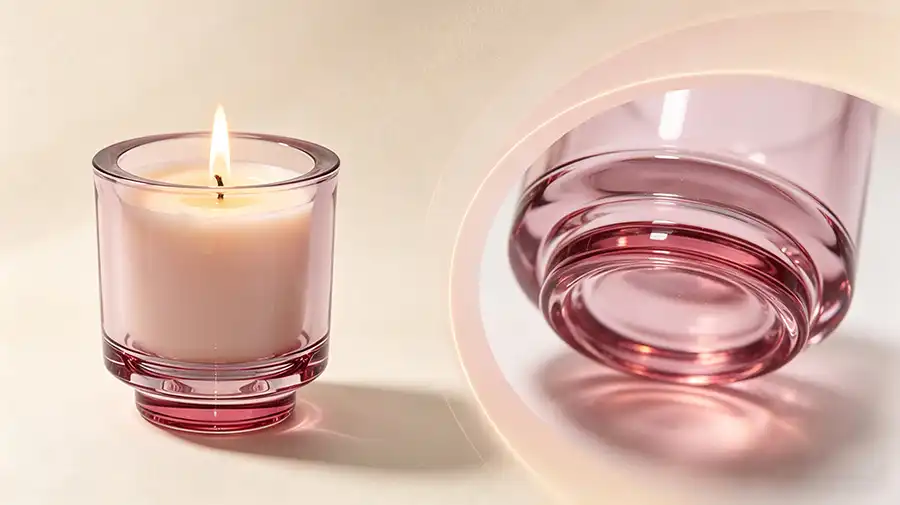
Understanding Heavy Base Clear Glass Candle Jars for Soy Wax
Structural Design and Material Composition
The bottom of weighted glass cases is thicker and stronger, which makes them stand out. Unlike most thin-walled containers, these jars have a base-to-wall width ratio that is often higher than 3:1. This makes the centre of gravity lower. These containers are made from high-quality soda-lime glass and go through controlled melting processes that get rid of internal stress points and make them more resistant to heat shock. The way the material is made makes sure that it is chemically neutral, so fragrance oils can't react with the glass surface in a way that would change the colour or lower the quality of the wax over time.
This way of engineering is shown by our 185ml cylinder form. The container's height of 8.3 cm, width of 7.7 cm, and weight of 356.9g make it perfectly stable for placing on a table. The mouth width of 6.1 cm fits common wick sizes and makes pouring easier during production. This exact control over dimensions, which is kept within ±1.5 mm, makes sure that all production runs have the same lid fit and ability to seal airtight.
Thermal Performance and Heat Management
Weighted glass jars change the way heat moves when candles are burning because they add mass. As a heat sink, the thicker base soaks up heat from the flame and spreads it out slowly across the surface of the container. This system stops localised hotspots that could cause stress cracks in the glass or high temperatures on the surface below the light. Testing shows that these containers can handle temperature differences of up to 60°C without any damage to their structure. This means they will work reliably during the long eight-hour burn events that are typical in hotel settings.
The temperature qualities are good for soy wax candles in particular. To release fragrance successfully and stop tunnelling, soy wax needs to make a full melt pool. Weighted bases even out the heat, which helps the wax melt evenly from edge to edge. This extends the burn time and spreads the scent farther. This technical edge directly leads to happier customers and fewer complains about the product, which is good for stores and brand managers.
Functional and Aesthetic Advantages
Aside from safety concerns, weighted glass cases have real business benefits. When a customer first touches your product, the solid hand-feel lets them know that it is of high quality. This tactile experience affects people's choices to buy at store sites and supports charging more than lighter options. The crystal-clear transparency shows off the complex layers of wax, plant inclusions, or coloured wax formulations, making each candle a work of art that looks great in any room.
The stable base design makes heavy base clear glass candle jar safer to use in places with a lot of foot traffic, like hotels, restaurants, and event spaces, where accidental bumps could cause safety problems. This trait of steadiness is liked by families with kids or pets, which increases the number of people who might buy from you. Because thick glass is durable, it supports sustainability efforts because containers can be easily cleaned and reused after the light goes out. This reinforces corporate social responsibility messages that appeal to buyers who care about the environment.
Top Rated Heavy Base Clear Glass Candle Jars for Soy Wax: Selection Criteria and Recommendations
Evaluation Criteria for Procurement Decisions
Several technical factors need to be taken into account when weighing weighted glass cases for bulk purchases. The thermal insulation and longevity of glass are directly related to its thickness. For normal soy candle recipes, containers with bottoms that are thicker than 5 mm work well as heat buffers. Specifications for weight show how strong a structure is—our 356.9g type shows the strong building needed for professional use.
Capacity matching is very important for making production go smoothly. The 185ml capacity can hold about 150g of soy wax, making it a great size for personal candles, business gifts, or wedding favours. This capacity strikes a good mix between expected burn time and reasonable weight for shipping. The size of the mouth affects both the production process and the fit of the wick. A 6.1cm hole makes pouring easy and supports wick sizes from #2 to #4, which is the range needed for soy wax to burn properly.
Lid compatibility is another thing to think about when buying something. For some uses, airtight packing is needed to keep the strength of the scent while it is being stored and shipped. Containers with controlled neck measurements make sure that lids fit the same way across production runs. This gets rid of the quality control problems that come up when vessel designs aren't uniform.
Comparative Analysis of Leading Products
Our CS-P-024 type from Xuzhou, Jiangsu, is the best of both speed and ease of production. The cylinder form makes it easier to make, and the clear glass makes it easy to see, which is important for showing off the beauty of soy wax. Standard filling tools used in automatic production lines can work with the products because the dimensions are kept very accurate during production.
If you look at temperature efficiency data, you can see that some things are better than others. Containers that meet the ASTM F2179 standards for annealed soda-lime-silicate glass show proper cooling and lower internal stress, which keep the glass from breaking on its own when the temperature changes. The controlled neck measurements stop the annoying differences that cause jams during production runs with a lot of parts.
Professional-grade containers are different from regular ones because they can be customised. Brand managers can give their products unique looks without having to spend a lot of money on custom mould making by using surface treatments like hot pressing, frosting, screen printing, and inside engraving. This freedom is very helpful when putting out limited-edition or seasonal sets that need to hit the market quickly.
Aligning Container Features with Market Positioning
Choosing the right package depends on who you're trying to reach. Brands of high-end home fragrances can communicate their expensive status with frosted finishes or gold stamping. Professionals who plan weddings and events like clear materials that can be customised with added finishing touches. Suppliers of corporate gifts put a lot of emphasis on customisation choices like adding logos and branding to the package.
People who care about quality and think that heavy things are more valuable like strengthened containers because they are heavy. Because of this, brands can keep their prices high so they can afford to use high-quality ingredients and make their products in a handmade way. People who buy things in boutiques and lifestyle shops like containers that can be used as decorations on their own, which makes the product seem more useful and justifies the shelf space it takes up.
Procurement Insights — Buying Heavy Base Clear Glass Candle Jars Wholesale
Sourcing Strategy and Supplier Selection
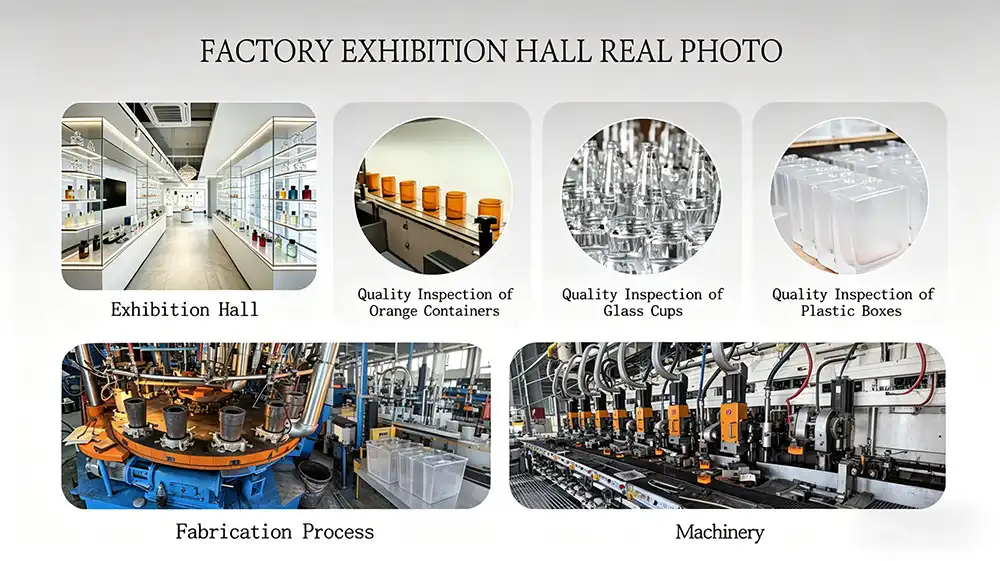
There are more operational factors than just unit price that need to be looked at when looking for trusted sources of heavy base clear glass candle jar. Xuzhou Muzhishi Crafts is a great example of a full-service strategy that helps business-to-business ties work. Established providers have been making glass for 20 years and can guarantee consistent quality and delivery, which protects production plans and brand image.
Logistics prices and wait times are affected by where things are located. Suppliers in Jiangsu, China, benefit from being close to places where they can get raw materials and specialised glass production hubs. This lowers their costs and makes them more competitive. Established sellers keep the right to import and export goods on their own, which speeds up customs clearance and makes foreign purchasing easier by helping with paperwork.
When a supplier is being vetted, their production capacity, quality control methods, and ability to make changes should all be looked at. Manufacturers with combined facilities are in charge of the whole production chain, from making the glass to finishing it. This makes sure that the quality is always the same and that custom orders are filled faster. This kind of vertical integration is especially helpful when introducing new lines of products or adapting to sudden changes in demand.
Minimum Order Quantities and Lead Times
Knowing the MOQ standards helps procurement managers make sure that buying matches up with strategies for managing supplies. Most of the time, glass containers are made in batches because setup costs are lower when there are more of them. But well-known sellers usually have flexible MOQs that can work with businesses that are growing or that buy things at different times of the year.
Lead times change based on how complicated the customisation is. Standard clear glass cases usually ship in two to three weeks, but if you want a unique finish on the outside, it could take up to six weeks. When planning holiday collections, you have to take these production processes and the time it takes to ship items internationally into account. Working with sellers who keep common-sized items in stock lets you take advantage of faster delivery choices when they come up out of the blue.
Having samples available speeds up the decision-making process and lowers the risk of buying. If a supplier gives you free samples within three to five days, you can try them out before you decide to buy in bulk. During this part of testing, things like accuracy of measurements, thermal performance, and aesthetic quality can be checked that can't be done just by looking at the standard sheets.
OEM and ODM Customization Benefits
With custom production, ordinary packages can be turned into assets that help a brand stand out. Through ODM relationships, brands can get access to design experts who can turn brand ideas into useful container specifications. This way of working together is great for companies that want to sell candles but don't have their own package design tools.
OEM agreements let well-known brands find containers that meet their exact needs. This makes sure that all production batches and supply ties are the same. Customisation goes beyond just decorating the outside. It can also include private measurements, unique forms, or special glass formulations that make it hard for competitors to copy. One-on-one account management makes the customisation process easier by giving you specialised help from coming up with ideas to production and delivery.
Customisation is an investment that pays off in many ways. Unique packaging helps customers recognise your brand at retail places of sale and supports high-priced tactics. Custom cases with logos built in cut down on the number of different labelling steps needed, which speeds up production. When you have a proprietary design, you can add value to your product that is hard for competitors to copy. This protects your market place and keeps customers coming back.
Negotiation Strategies for Bulk Purchasing
Cost optimisation, quality assurance, and service dependability must all be balanced in good procurement talks. A lot of the time, promises to buy in bulk open up tiered price systems that make per-unit costs much lower. Talking to sellers about annual buying plans lets you plan production, which is good for everyone because it lowers setup costs and makes sure that capacity is allocated.
Terms of payment affect how cash flows are managed. Established sellers may offer net-30 or net-60 terms to approved buyers, which can help with working capital needs when production spikes during busy times of the year. Knowing how the seller sets their prices can help you find deals that are good for both sides. For example, you could agree to slightly longer wait times in exchange for better prices on custom surface treatments.
Long-term business growth creates value that goes beyond the savings that come from individual transactions in products such as heavy base clear glass candle jar. Suppliers who are committed to long-term relationships give you priority access when capacity is limited, flexibility when demand changes, and open conversation about changes in the cost of raw materials or new ways to make things. When market conditions change or competitive forces rise, this relationship capital comes in very handy.
Using and Maintaining Heavy Base Clear Glass Candle Jars
Cleaning and Reuse for Sustainability
In line with the ideas of the circular economy, weighted glass cases can be used again and again after the light has burned out. To get the glass back to its original state after cleaning, any leftover wax and soot must be removed. The freezing method works well; putting dishes in the freezer for a few hours makes the wax shrink and come off the glass. Once it's frozen, the wax easily pops out without any damage.
There is another way, which is to use hot water. Putting hot water into the container melts any leftover wax. The wax floats to the top, where it hardens when it cools and can be easily pulled out. It's best to use this method for soy wax mixtures that melt at lower temperatures. After using either method, washing with warm clean water gets rid of any leftover dust and scent oils.
These reuse options help marketing stories about being environmentally friendly and sustainable. Brands can actively encourage people to reuse containers by showing creative ways to use them, like as storage for small things, planters for plants, bathroom organisers, or drinking glasses. This message really hits home with people who care about the world and keeps people interested in the brand after they buy the candle.
Best Practices for Soy Candle Production
Several production factors need to be paid attention to in order to get the best results with soy wax in weighted glass cases. Pouring warmth has a big effect on how well wax sticks to surfaces and how smooth they are. If you pour soy wax between 120°F and 140°F (49°C and 60°C), it's warm enough to keep it from setting too quickly but cool enough to keep it from shrinking and getting wet spots. Heavy-base containers need slightly different temperature changes than thin-walled vessels because their thermal mass affects how fast they cool.
The choice of wick affects how well it burns and how happy the customer is. The thick glass walls and ability of weighted containers to keep heat in affect the creation of melt pools. Testing different wick sizes makes sure that the glass melts completely from edge to edge without getting too hot or making the flame too high. Soy wax usually needs cotton or wood wicks that are the right size for the container's diameter. For example, #3 or #4 cotton wicks work well with a 7.7cm diameter.
Both smell throw and wax chemistry are affected by the quantity of the fragrance oil. Soy wax can usually handle a flavour load of 6 to 10 percent by weight, but some speciality oils need to be adjusted. Good glass doesn't react with chemicals in a way that could change the way a fragrance smells over time. When you let candles cure for 7–14 days after pouring them, the scent molecules can fully join with the wax, which improves both the cold throw and the hot throw.
Safety Considerations and Quality Control
Consistent quality control procedures protect the safety of consumers and the reputation of the company. Visual inspection can find flaws on the surface, stress cracks, or uneven glass thickness that could mean there were problems during production. Professional makers use the polariscope test to see internal stress patterns. When polarised light hits glass, properly tempered glass shows a uniform colour, but stressed glass shows halo patterns that show where it might break.
Burn testing makes sure that the performance works in real-world situations. Monitoring the formation of melt pools, the height of the flame, and the temperature of the container's surface during four-hour burn sessions finds problems before the goods reach customers. The heavy base should do a good job of letting heat escape, keeping the surface at a safe temperature that won't damage the furniture. Writing down these test results makes quality records that help with efforts to keep getting better and protect you from risk.
Labelling that is done right tells end users how to safely use the product. Labels should include information about how long to burn something, how to trim the wick, and how to protect the surface. It is both the law and the right thing to do to make it clear that you should never leave a light burning unsupervised or near something that can catch fire. Heavyweight containers offer better safety gaps because of their solid construction, but proper labelling is still needed for full risk management.
Conclusion
When choosing the right products for making soy candles, especially heavy base clear glass candle jar, you have to think about how well they will hold heat, how they look, and how they will work for your business. Weighted glass jars with reinforced bases meet the specific needs of soy wax formulas while providing the steadiness and high-end presentation that help brands stand out and customers are happy. This guide explains technical specs, customisation options, and factors that affect supplier relationships. These details help procurement professionals make smart sourcing choices that meet business needs and market positioning strategies. Investing in good containers pays off because the products work better, there are fewer safety risks, people think more highly of the brand, and the products last longer because they can be reused and have messages about sustainability.
FAQ
How do heavy base containers compare to standard glass jars for durability?
Because they are made of stronger glass and go through controlled heating processes that get rid of internal stress, weighted containers last longer. The reinforced base can handle temperature differences of up to 60°C without stress fractures, which is a lot better than thin-walled options. This makes the product last longer, so it breaks less during shipping and handling. This saves money on repair costs and protects the brand's image. The strong construction also allows for multiple reuse processes, which extends the product's lifespan and supports sustainability efforts that customers who care about the environment will like.
Does jar weight significantly impact shipping logistics and costs?
The weight of the container has a direct effect on the cost of shipping, especially for large or foreign sales. Quality weighted containers weigh 356.9 grammes, which is 40 to 60 percent more than thin-walled options. This effect can be lessened, though, by designing better packing and sending more at once. Many procurement managers think that the higher shipping costs are worth it because the products are less likely to break and are better positioned. Working with suppliers who are skilled in foreign logistics can help you find the most cost-effective ways to ship your items while minimising the weight penalty.
Can these containers accommodate wax types beyond soy formulations?
Glass pots with weights work great with different kinds of wax, like paraffin, beeswax, coconut wax, and mixed waxes. Quality glass can be used with a wide range of candle chemicals because it is resistant to heat and chemicals. When using paraffin wax, which burns at higher temperatures than soy options, the better heat control is especially helpful. Because the container can handle high temperatures, it can be used for almost any candle wax mixture. This gives brands that offer a variety of products more options.
Partner with Muzhishi for Your Heavy Base Clear Glass Candle Jar Needs
Xuzhou Muzhishi Crafts has been making glasses for 20 years and can help you with your candle-making needs. Our high-quality 185ml weighted containers offer the heat performance, precise dimensions, and customisation options that procurement pros need. We know how hard it is for candle makers, business gift sellers, and home decor brands to compete in markets that are very picky. Our full service model includes quick samples in three to five days, open ODM and OEM options that allow full customisation from surface treatments to custom designs, and dedicated account management for the whole project lifecycle. As a well-known heavy base clear glass candle jar maker that can import and export goods on its own, we take care of all the customs paperwork and transportation planning so that delivery to your facility goes smoothly. Get in touch with our team at long@muzhishi.com to talk about your unique needs and find out how our integrated production method can give your business the quality, reliability, and service excellence it deserves.
References
Jenkins, M. (2021). Glass Container Engineering for Candle Manufacturing: Thermal Performance and Safety Standards. Industrial Materials Press.
Thompson, R., & Chen, L. (2020). Soy Wax Chemistry and Container Compatibility in Commercial Candle Production. Journal of Applied Manufacturing Science, 15(3), 287-304.
American Society for Testing and Materials. (2019). ASTM F2179 Standard Specification for Annealed Soda-Lime-Silicate Glass Containers for Candle Applications. ASTM International.
Morrison, K. (2022). Sustainable Packaging Solutions in the Home Fragrance Industry. Green Business Quarterly, 28(2), 45-62.
National Candle Association. (2023). Safety Guidelines and Best Practices for Candle Container Selection. NCA Technical Standards Committee.
Wu, J., & Stevens, P. (2020). Thermal Management in Glass Containers: Engineering Principles for Heat-Intensive Applications. Materials Science and Engineering Review, 42(1), 112-135.

Our customers’ satisfaction speaks for our quality — contact us to experience the same reliable service.