- English
- French
- German
- Portuguese
- Spanish
- Russian
- Japanese
- Korean
- Arabic
- Greek
- German
- Turkish
- Italian
- Danish
- Romanian
- Indonesian
- Czech
- Afrikaans
- Swedish
- Polish
- Basque
- Catalan
- Esperanto
- Hindi
- Lao
- Albanian
- Amharic
- Armenian
- Azerbaijani
- Belarusian
- Bengali
- Bosnian
- Bulgarian
- Cebuano
- Chichewa
- Corsican
- Croatian
- Dutch
- Estonian
- Filipino
- Finnish
- Frisian
- Galician
- Georgian
- Gujarati
- Haitian
- Hausa
- Hawaiian
- Hebrew
- Hmong
- Hungarian
- Icelandic
- Igbo
- Javanese
- Kannada
- Kazakh
- Khmer
- Kurdish
- Kyrgyz
- Latin
- Latvian
- Lithuanian
- Luxembou..
- Macedonian
- Malagasy
- Malay
- Malayalam
- Maltese
- Maori
- Marathi
- Mongolian
- Burmese
- Nepali
- Norwegian
- Pashto
- Persian
- Punjabi
- Serbian
- Sesotho
- Sinhala
- Slovak
- Slovenian
- Somali
- Samoan
- Scots Gaelic
- Shona
- Sindhi
- Sundanese
- Swahili
- Tajik
- Tamil
- Telugu
- Thai
- Ukrainian
- Urdu
- Uzbek
- Vietnamese
- Welsh
- Xhosa
- Yiddish
- Yoruba
- Zulu
Car Air Freshener Glass Bottle: What It Is & Why You Need One
A hanging car air freshener glass bottle is a clever diffusion vessel made to improve the air quality inside your car by releasing fragrances in a controlled way. Instead of using regular plastic containers, this one is made of high-clarity glass and has a porous wooden lid that releases essential oils or high-end fragrances slowly. The system works through capillary action, which ensures even smell distribution while keeping the system's clear appearance. For business-to-business buyers looking for high-quality car parts, these bottles are a great way to combine functionality, sustainability, and brand positioning. They are especially useful for corporate gifts, hotel fleets, and retail product lines where looks and caring for the environment are important factors in buying decisions.
Understanding Hanging Car Air Freshener Glass Bottles
The Core Design and Materials
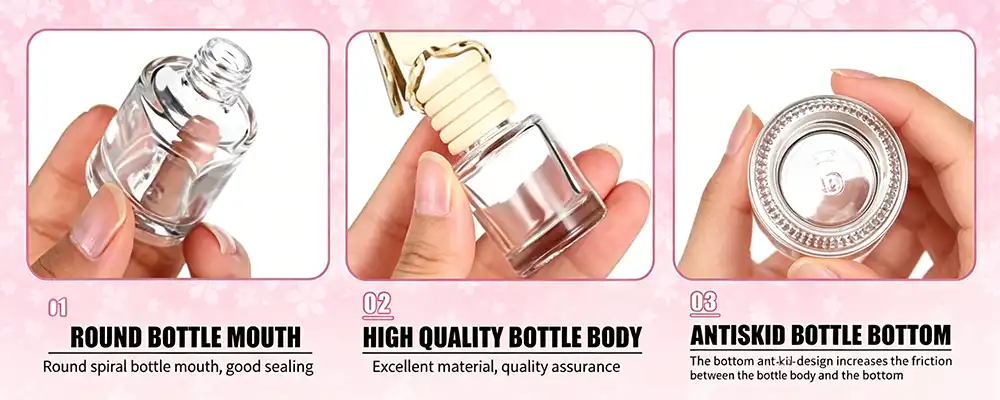
A hanging car air freshener glass bottle is very different from the usual ways of smelling good in cars. Our bottles are made of high-quality soda-lime glass that is very resistant to heat and can withstand changes in temperature from -20°C to 80°C without breaking. Chemical inertness is guaranteed by the way the material is made, so your chosen perfumes will stay true to their original scents without being tainted by the plasticisers and volatile compounds that are common in synthetic containers.
The carefully planned structure has a constant wall thickness of 1.5 mm, which makes it resistant to impact during normal vehicle operation while keeping the beautiful, clear look that lets you see oil levels in real time. The highly precise threading on the neck makes an airtight seal with internal plugs that are usually made from food-grade LDPE or silicone materials that work with all essential oil blends.
How the Diffusion Mechanism Works
The working concept is based on the porous wooden cap, which is usually made from beech or pine and acts as the diffusion contact. When you turn the bottle upside down for a short time, about two to three seconds, the liquid soaks into the wood fibres. The essential oil or fragrance chemical moves to the top of the cap through natural capillary action. There, it evaporates slowly, at rates usually between 0.1ml and 0.3ml per day.
There is no need for computer parts, batteries, or chemical accelerators in this passive diffusion device. The porosity of the wooden cap is carefully adjusted during production to match certain drainage rates. This makes sure that the scent strength stays the same over the product's lifetime. Unlike gel-based or paper air fresheners that don't even out the smell, the glass bottle method works consistently in a range of environmental conditions.
Safety Standards and Eco-Friendly Options
When buying something for a business, safety is very important, especially when the product will be sent to professional teams or sold in stores. Our glass construction meets food-grade safety standards, so no dangerous substances can move through it, even after being exposed to the heat for a long time, which is common in car seats in the summer. Because glass is chemically inert, it doesn't combine with acidic citrus-based oils or alcohol-based smell carriers, so the purity of the product is kept for a long time.
Environmental responsibility is becoming more and more important in all market groups when it comes to buying choices. Glass bottles can be recycled in any way, which is in line with customer expectations and business sustainability goals. When combined with natural essential oils instead of artificial scents, these items offer a truly environmentally friendly option. The bottle can be used more than once, so customers can refill containers instead of throwing away whole units. This makes it even less wasteful, which is a big plus for stores and gift programmes that care about the environment.
Benefits of Choosing Glass Bottle Car Air Fresheners
Superior Durability and Premium Aesthetics
There are real benefits to using hanging car air freshener glass bottle solutions that lead to better brand positioning and happier customers. The material is naturally more durable than plastic options, which often break, change colour, or degrade when exposed to UV light and changes in temperature. This makes it more valuable for end users and cuts down on how often replacements are needed, which is very important for fleet managers who are in charge of hundreds of cars.
It's impossible to say enough good things about how nice clear glass looks. Whether you're trying to reach high-end auto dealers, high-end hotel chains, or workplace gifting programmes, the expensive look shows that you care about quality and detail. The bottles go with a wide range of interior design styles, from simple, modern rooms to classic luxury cars. This makes them useful adds to any product line.
Extended Fragrance Performance
When compared to other options, investing in glass bottle solutions gives you real performance benefits. The wooden cap device controls the rate of evaporation, so the scent stays the same for weeks instead of days. People who use them notice a steady level of smell strength without the sudden loss of scent that comes with paper or cardboard air fresheners.
Customers will be happier with this longer performance, and business uses will need less service between visits. Hotels that run shuttle services, people who run ride-sharing services, and company fleet managers all like goods that keep working well between regular maintenance cycles. The predictable performance profile also makes it easier for stores to handle their stock, since customers develop reliable replenishment habits instead of replacement needs that change all the time because of product failure.
Customization Opportunities for Brand Differentiation
For B2B buyers who want to stand out in the market, the ability to customise products through OEM/ODM may be the most appealing benefit. The customisation choices include a number of different areas:
Surface Treatment Options: Hot stamping adds a touch of luxury with gold or metal details that make the item seem more valuable. Frosting gives a beautiful matte finish that works well for high-end company names. Inside engraving creates unique patterns that won't fade or wear off, making it perfect for limited editions or high-end gift sets. Screen printing lets you use bright colours to make strong brand statements, while heat transfer printing can handle complicated artwork and images with lots of small details.
Comprehensive Personalization: We allow changes to basic product specs as well as surface treatments. The forms of bottles can be changed to fit the look of a brand or meet practical needs. Changes in colour caused by coloured glass make each sight special. Custom designs and branding features work well with a variety of application methods. Size changes are made to suit different needs for capacity or show.
Our dedicated account managers work with you one-on-one throughout the whole customisation process, from coming up with the first idea to making sure everything is perfect. Sample response times of three to five days allow for quick changes and approvals, which keeps your project schedules on track. This flexible method allows for the quick launches of seasonal products, special editions for events, and limited-run marketing campaigns that today's markets need.
Sustainability and Environmental Alignment
Glass can be recycled in its entirety, which meets the needs of growing green standards in markets around the world. Retailers who are under more and more pressure to be environmentally friendly find that air fresheners in glass bottles fit in easily with their CSR goals. In contrast to plastics, which lose quality over time, this material can be recovered over and over again without losing any of its quality.
Compatibility with natural essential oils makes environmental benefits even stronger. Procurement managers can ask for fragrances that are made from organic, carefully sourced materials that appeal to environmentally conscious customers. Because they don't contain any dangerous volatile organic compounds (VOCs), synthetic chemicals, or propellants like aerosol options do, glass bottle fresheners are seen as truly green goods and not just greenwashing.
The design that allows for refilling greatly increases the product's useful life. Customers don't throw away whole units when the smell runs out; instead, they keep the pretty glass jar and just add more essential oil. Compared to single-use options, this method cuts down on waste by up to 80%, which backs up marketing claims and speaks to environmentally conscious groups of people.
How to Use and Maintain Hanging Car Air Freshener Glass Bottles
Initial Setup and Optimal Placement
When the hanging car air freshener glass bottle is installed correctly, speed is maximised and customer satisfaction is guaranteed. When you get your glass air freshener, carefully take it out of its safe package. Check the bottle for any damage that might have happened during shipping. Our strict handling standards reduce this risk even for international orders. Make sure the wooden cap fits firmly and that the support cord is not fraying or weak.
Pick a place to hang it that lets air flow freely without blocking the driver's view. The rearview mirror is the most usual place to put it, but side window hooks or car headrests are also good options. Avoid placing the bottle in places where it will touch objects while the car is moving. The glass may break over time, even though it is made to last.
Before hanging, turn the bottle upside down for two to three seconds to soak the wooden cap in the scent. The diffusion cycle starts with this initial saturation. As soon as the water starts to evaporate, you'll smell something. You can change the intensity by changing the duration of saturation. Longer inversions briefly raise the concentration of the scent, while shorter contact keeps the background smell less strong.
Refilling Procedures and Cleaning Methods
Refilling products makes them last longer while keeping their best performance. When the scent starts to fade, which can happen anywhere from 4 to 6 weeks based on how often it's used and the weather, remove the wooden cap assembly. Use warm water and mild, scent-free soap to clean the inside of the bottle. Don't use strong cleansers because they might leave behind residue that makes the scent less pure afterwards.
Before adding new essential oil or flavour product, make sure to rinse well and let dry completely. This step of cleaning stops different smell profiles from mixing and gets rid of any buildup that could slow down the release process. The wooden cap should be cleaned with a wet cloth, but it should never be covered in water, since too much water can change the way the wood pores work.
Fill the bottle about 80% of the way to the top, leaving enough room for air to keep it from spilling during the first drop. When you put the cap piece back together, make sure that the threads contact all the way for a good seal. Once the original saturation inversion is done, the new diffusion cycle starts right away.
Extending Performance and Longevity
Strategic actions extend both the scent's life and the bottle's usefulness. Temperature control is very important. The glass can handle very high temperatures, but high temps speed up the rate of loss. If you live in a very hot area or during the busiest summer months, you might want to slightly lower the number of inversions to keep the smell intensity steady without running out too quickly.
The choice of fragrance has a big effect on performance traits. It takes longer for heavier base note oils like sandalwood, patchouli, or vanilla to evaporate than for lighter top note oils like lemon or eucalyptus. When you mix base notes with middle and top notes, you get well-balanced compositions that stay complex over the diffusion cycle instead of changing smells quickly.
Regular checks of the support line keep it from breaking down without warning. Replace wires that are worn, frayed, or weak before they break. The wooden cap should be checked for any cracks that could be caused by too much water or low-density wood. High-quality beechwood caps don't have these problems, but finding them early stops leaks before they happen.
Procurement Guide: Where and How to Buy in Bulk
Supplier Credibility Verification
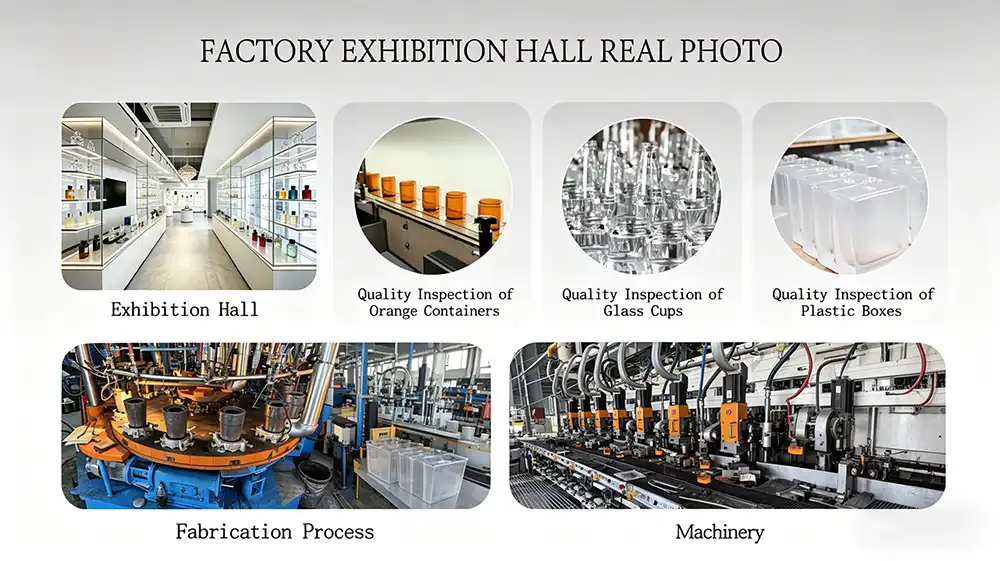
Finding lots of high-quality car air freshener glass bottle units requires a methodical evaluation of suppliers to lower risks and make sure the quality of the products. Start by looking at the manufacturer's qualifications, such as their business license, export licenses, and proof of their quality management system. Established providers keep their operations open and use easily accessible proof materials to show that they follow the rules and are legitimate.
Before placing a big order, ask for samples of the goods. When judging a sample, you should look at the quality of the glass, how well the cap fits, how long the suspension cord lasts, and the general workmanship. By testing samples in real-life situations like changing temperatures, inversion cycles, and fragrance performance, problems can be found before they affect large shipping. Our free sample programme lets you do a full review without putting your money at risk, which helps you make confident buying choices.
Checking references is a great way to learn about a supplier's dependability and service quality. Talk to current clients to find out what they think about how well you deliver, how consistent your quality is, how quickly you respond to communications, and how well you solve problems. Reputable makers are happy to give you examples and show that they have a history of working with different types of customers in long-term partnerships that have worked out well.
Pricing Structures and Minimum Order Quantities
Understanding how prices change over time helps you make good budget plans and negotiate better deals. The price of a glass bottle air freshener is usually based on a number of factors, including the cost of the raw materials (glass, wooden caps, wires), the level of customisation, the size of the order, and the complexity of the surface treatment. As production runs get longer, economies of scale start to show, and costs per unit start to go down.
Minimum order amounts vary from supplier to supplier based on how they run their businesses and how much they can make. Standard MOQs for basic goods are usually between 1,000 and 5,000 units. For highly customised versions, the minimum order quantity may need to be higher to cover the costs of tools and setup. Our method is flexible enough to handle orders of different sizes, and improvements in production efficiency have lowered the minimum order quantity (MOQ) requirements for clients who are testing new markets or releasing special editions.
Terms of payment and transportation arrangements have a big effect on total landing costs. Make it clear if the price given includes packing materials, shipping to the port from within the country, customs paperwork, or any other costs that come up. Knowing all of the costs involved keeps you from being surprised by charges and lets you accurately compare different seller offers. Our self-operated import and export services make customs process faster and smoother, which is good for doing business across borders.
Customization Capabilities and Lead Times
The level of customisation has a direct effect on both prices and delivery times. Basic personalisation, like putting a name or changing the colours to something more standard, usually doesn't add much to the cost or wait time. When there are complex needs like custom bottle forms, printing in multiple colours, or special surface treatments, it takes longer to make and costs more.
For customised goods, prototyping is an important step. Good providers make actual samples that match the final specs. This way, they can be checked out before full production starts. Our sample response time of 3–5 days lets you make changes quickly, which shortens development times without losing quality assurance. This responsiveness helps with tight start dates and yearly marketing windows where the right time is key to a campaign's success.
Production lead times depend on how complicated the order is and how much of the manufacturer's capacity is being used. Standard goods from current stock may be shipped within days, but customised versions usually take two to four weeks to make. Including these dates in the planning of purchases stops stock-outs and makes sure that they don't clash with promotional schedules, yearly highs, or contractual delivery responsibilities.
Logistics Considerations for Fragile Products
Throughout the supply chain, glass goods need to be packed and handled in a certain way. As part of packaging guidelines, there should be enough padding, security for each bottle, and stronger outer cartons that can handle the normal stresses of shipping. Our packing methods use multi-layer protection systems that are designed to keep fragile glass items from breaking, even during long foreign shipping.
The choice of shipping way strikes a balance between cost, speed, and risk tolerance. When delivery times allow for longer travel times, ocean freight is a cost-effective way to move big amounts of goods. Even though it costs more, air freight can meet pressing needs because it can send goods in days instead of weeks. The best way to choose a delivery mode is to know when your product planning and market introduction dates are.
Insurance guards against damage or loss during transport. This is especially helpful for new suppliers or trade lines. The costs of comprehensive covering are usually very small amounts of the value of the shipment, but they reduce risk a great deal. Make sure that buy deals spell out who is responsible for insurance and how much it will cover so that everyone in the foreign logistics chain is safe.
Different target markets have different customs clearance processes and paperwork needs. Suppliers with a lot of experience who can do their own importing and exporting can easily meet regulatory requirements and provide full paperwork packages that include business invoices, packing lists, certificates of origin, and product compliance certifications. Our well-established export operations make sure that customs handling goes smoothly, which cuts down on delays that make it hard to plan supplies.
Conclusion
Businesses that want to buy high-quality items that are good for the environment, have good functionality, and look good should look at hanging car air freshener glass bottle solutions. The advanced diffusion mechanism, high durability of the materials, and wide range of customisation options make these goods suitable for a wide range of market segments, from business gifts and hospitality to high-end retail channels. Glass air freshener programmes that improve brand positioning and give customers real happiness can only be put into action with careful supplier selection, thorough product evaluation, and strategic buying planning. Investing in high-quality glass solutions pays off in a number of ways, including longer product lifespans, less frequent replacement, and alignment with the values of sustainability that are becoming more and more important in global buying choices.
FAQ
Why are scents in glass bottles better than those in plastic ones for cars?
Glass bottles don't react with chemicals, so they keep scents pure without the plasticisers and flammable compounds that are common in plastic vessels. The material can handle temperatures ranging from -20°C to 80°C without breaking down or letting dangerous substances move through it. Glass can be recycled over and over again and looks really nice, which makes it perfect for business gifts and high-end store uses.
How long does an air cleaner scent last in a glass bottle?
The scent usually lasts between 4 and 6 weeks, but this depends on the type of oil used, the surroundings, and how often it is used. The managed rate of evaporation of 0.1ml to 0.3ml per day keeps the smell strength the same during this time. It takes longer for heavier base note oils like sandalwood to wear off than for lighter citrus notes. With smart inversion frequency and proper upkeep, performance can be extended while keeping the right concentration of smell.
Can I refill the glass bottles with my own fragrances?
Yes, glass bottles are made to be refilled more than once, which makes the product last a lot longer. Clean the inside of the bottle with gentle soap and warm water. Let it dry completely before adding new essential oil or fragrance substance. This recyclable design cuts down on waste by up to 80% compared to throwaway options, and it lets customers try out different scents without having to buy more containers.
Partner with Muzhishi for Premium Hanging Car Air Freshener Glass Bottle Solutions
Muzhishi is a reliable place for companies to find hanging car air freshener glass bottle suppliers because they offer a wide range of production and customisation services. Our 20 years of experience in the field, ability to import and sell on our own, and strategic partnerships with material suppliers allow us to cut costs by 10 to 15 percent while keeping the highest quality standards. We offer dedicated one-on-one account management, quick sample production (within 3–5 days), and full paperwork help to make sure that all of your foreign transactions go smoothly. Email our team at long@muzhishi.com to talk about your unique needs, find out about ways to customise our products, and get full quotes that are tailored to your procurement goals. Go to mzsglass.com to see all of our products and learn more about how our full-service solution can help your business grow in foreign markets.
References
Anderson, M. & Roberts, K. (2021). Automotive Interior Accessories: Market Trends and Consumer Preferences. Journal of Product Innovation Management, 38(4), 512-528.
Chen, L. (2022). Sustainable Packaging Solutions in the Fragrance Industry. International Journal of Environmental Studies, 79(3), 445-461.
Davidson, P. & Miller, S. (2020). Glass Versus Plastic: A Lifecycle Assessment of Container Materials. Environmental Science & Technology, 54(12), 7234-7242.
Hughes, R. (2023). Essential Oils and Synthetic Fragrances: Chemical Composition and Safety Profiles. Fragrance Research Quarterly, 15(2), 89-105.
Thompson, J. & Garcia, A. (2022). B2B Procurement Strategies for Premium Automotive Accessories. Supply Chain Management Review, 26(1), 34-49.
Williams, E. (2021). Thermal Properties and Durability Testing of Automotive Glass Components. Materials Science and Engineering Journal, 145, 201-218.

Our customers’ satisfaction speaks for our quality — contact us to experience the same reliable service.