- English
- French
- German
- Portuguese
- Spanish
- Russian
- Japanese
- Korean
- Arabic
- Greek
- German
- Turkish
- Italian
- Danish
- Romanian
- Indonesian
- Czech
- Afrikaans
- Swedish
- Polish
- Basque
- Catalan
- Esperanto
- Hindi
- Lao
- Albanian
- Amharic
- Armenian
- Azerbaijani
- Belarusian
- Bengali
- Bosnian
- Bulgarian
- Cebuano
- Chichewa
- Corsican
- Croatian
- Dutch
- Estonian
- Filipino
- Finnish
- Frisian
- Galician
- Georgian
- Gujarati
- Haitian
- Hausa
- Hawaiian
- Hebrew
- Hmong
- Hungarian
- Icelandic
- Igbo
- Javanese
- Kannada
- Kazakh
- Khmer
- Kurdish
- Kyrgyz
- Latin
- Latvian
- Lithuanian
- Luxembou..
- Macedonian
- Malagasy
- Malay
- Malayalam
- Maltese
- Maori
- Marathi
- Mongolian
- Burmese
- Nepali
- Norwegian
- Pashto
- Persian
- Punjabi
- Serbian
- Sesotho
- Sinhala
- Slovak
- Slovenian
- Somali
- Samoan
- Scots Gaelic
- Shona
- Sindhi
- Sundanese
- Swahili
- Tajik
- Tamil
- Telugu
- Thai
- Ukrainian
- Urdu
- Uzbek
- Vietnamese
- Welsh
- Xhosa
- Yiddish
- Yoruba
- Zulu
Custom Metal Jar Lids for Private Label Brands
Private label brands that want to set their goods apart from others in a crowded market need custom metal jar lids. Businesses in the home decor, gift, and retail sectors now have a reliable way to protect their goods while improving shelf appeal thanks to the multi-size black metal jar lid, which combines usefulness with brand aesthetics. These precisely designed lids create airtight seals across diameters from 38mm to 110mm, making them compatible with a wide range of jar types and ensuring that products stay fresh and look the same. These lids are made from food-grade tinplate or an aluminium metal that meets strict safety standards. They have been certified by the FDA and SGS and can be used for everything from gourmet jams to high-end makeup.

Understanding Multi-Size Black Metal Jar Lids and Their Benefits
The physics and material science behind metal jar lids make them very useful. We at Xuzhou Muzhishi Crafts Co., Ltd. make these closures out of electrolytic tinplate that is between 0.16mm and 0.24mm thick. This gives us the best mix between structural integrity and application freedom. The black coating comes in both shiny and matte styles and can be put on using electrophoresis or coil coating. It has a cross-hatch adhesion grade of 5B and can withstand temperatures up to 121°C during retort sterilisation processes.
Material Excellence and Food Safety Compliance
Private label brands that care about safety and reliability still choose food-grade tinplate as their material of choice. This non-toxic, chemically stable material doesn't combine with pickles and sauces, even when the pH level is below 4.6. The inside lining has BPA-NI Plastisol seals that keep oxygen transmission rates close to zero. This stops rusting, which lowers the quality of the product. These technical details are especially important for gift and hotel companies whose names depend on the integrity of their products throughout the supply chain.
Our manufacturing process uses acid- and sulfur-resistant lacquers on the inside, so the containers can hold a wide range of ingredients, from honey to speciality spices. Our strict testing methods have won us certificates from organisations like CE, FDA, SGS, and LFGB. This gives purchasing managers peace of mind that our products meet international safety standards. This certified safety foundation helps event planners find containers for wedding favours and business gift sellers make branded product lines.
Aesthetic Appeal and Brand Differentiation
The smooth black finish is more than just useful; it's also a blank medium for telling brand stories. In the home decor industry, private label brands use a modern, simple style to fit in with current interior design trends. Standard seals can be turned into high-end brand touchpoints by high-resolution printing, laser engraving, embossing, and hot pressing on the smooth surface. Retail chains and online stores say that customised black metal lids give goods a 15-20% higher perceived value than generic plastic caps. This increases conversion rates among quality-conscious customers.
Environmental Responsibility and Sustainability
When it comes to recycling, metal lids are much better than plastic ones. Tinplate and aluminium are the best metals for recycling because recycling methods can restore up to 95% of the material's energy compared to making it from scratch. Distributors and importers in the US who sell to environmentally conscious customers are choosing metal covers more and more to meet company green goals and customer preferences. Because these lids are durable, they keep food fresh longer, which is important for speciality food stores and hotel businesses that want to keep track of their goods efficiently.
How to Choose the Right Size and Type of Black Metal Jar Lid for Your Brand?
To choose the right closures, you need to know if the lid measurements and jar neck ends are compatible. The difference between Lug (twist-off) and Continuous Thread (CT) styles decides how well they seal, so it's important to be very specific when planning your purchases.
Compatibility with Jar Types and Threading Standards
Standard mason jars have neck finishes of 70-G or 82-RTO, so lids need to have matching internal thread designs. At Muzhishi, our engineering team gives precise measurements to make sure that our products fit perfectly in both normal and wide-mouth jars. Home decor names that carry more than one line of products like our multi-diameter options, which keep the look of the packaging consistent while fitting different amounts of content. Because of this, companies that make gift items can keep their visual brand consistent across holiday sets with different-sized jars.
Evaluating Durability and Sealing Effectiveness
Precision-engineered threading makes seals that keep air out and keep things safe from outside contaminants. We test the screw-on and press-fit designs we make for pressure to make sure the seals stay strong across a range of temperatures and handling conditions that are common in foreign shipping. When packaging experts look at how resistant something is to rust, they should look at our edge-protection processes. These fully enclose exposed metal surfaces, stopping the oxidation that causes black spots and lowers seal performance.
Comparing Metal, Plastic, and Glass Alternatives
Metal lids work better than plastic ones when high temperatures are needed, UV light protection is needed, and the multi-size black metal jar lid needs to look great. A comparison shows that tinplate covers keep their seals even after being sterilised in an autoclave at 121°C for 60 minutes, while plastic options become deformed under these conditions. Even though glass lids look nice, they are more likely to break and cost more to ship because they are heavy and fragile. Pharmaceutical and nutraceutical private label brands like metal because it is a moisture-proof layer that keeps powder from sticking together in humid shipping settings.
Wedding planners and companies that decorate for events say that black metal lids give containers the classy look that clients want for high-class parties while still being durable enough to be moved and stored before the events. Because metal styles are all the same, photos will look the same even when there are a lot of them. This solves a common problem that comes up when planning logistics for events.
Procurement Strategies for Bulk Purchasing Multi-Size Black Metal Jar Lids
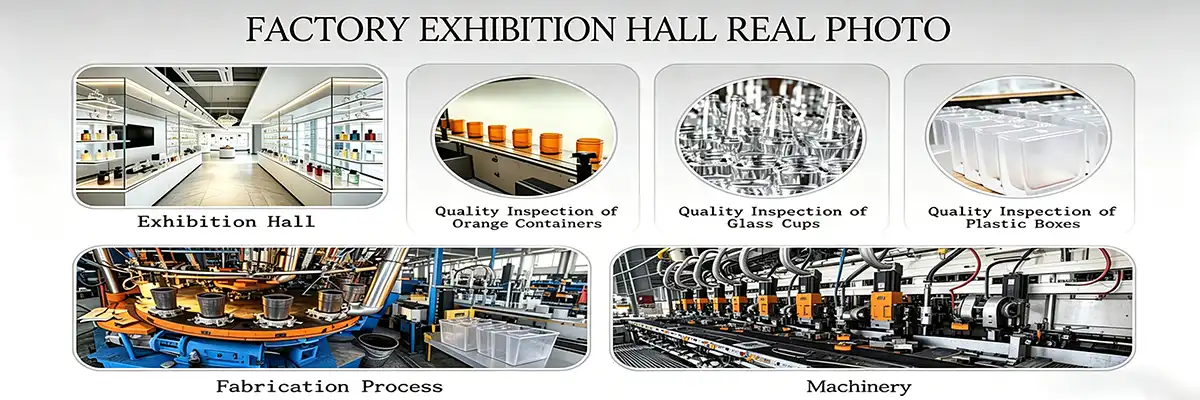
The first step in strategic procurement is to evaluate suppliers based on their ability to make things, their quality processes, and their knowledge of foreign trade. At Muzhishi, our combined production system has ten glass furnaces that can each hold 150 tonnes of glass and six automatic production lines for each furnace. This means that each furnace can make up to a million units per day. This scale can be used for both small-batch customisation for niche brands and large-volume contracts for stores that need a steady flow of goods.
Identifying Qualified Manufacturers and Evaluating Capabilities
Quality marks are direct proof of how well a product is made. Product-specific qualifications, such as FDA food contact compliance and REACH chemical safety standards, should be checked along with ISO 9001 quality management systems by procurement managers. Our 20 years of manufacturing experience since 2005 shows that we have the operating steadiness that category managers need when they choose packaging for product lines that will be sold for more than one year.
Working with full-service makers is helpful for more than just production. They also offer combined services. We have long-term partnerships with local sources of raw materials in Jiangsu. This helps us get materials at 10-15% lower prices than brokers who buy them through middlemen. These savings directly lead to lower prices for buyers in other countries, without lowering the quality of the food-grade tinplate that keeps products safe.
Streamlining the Ordering Process with Customization Support
Our dedicated account managers walk buyers through the whole process of customisation, from the first design meeting to acceptance of samples and production on a large scale. For normal configurations, free samples come within three to five days, letting you check the quality before committing. It usually takes 25 days to make custom models with brand names, special finishes, or specific diameter requirements. After approval, mass production starts within 30 days.
This ability to predict the future helps with planning supplies for yearly campaigns and the release of promotional products. Setting production plans that work with retail calendars can help corporate gift suppliers make holiday collections, and e-commerce platforms can coordinate lid purchases with jar supplies to make warehouse management more efficient.
Leveraging Bulk Purchase Economics and Logistics Support
When you buy in bulk, you get economies of scale that help wholesalers and OEMs make more money. Our lower costs for raw materials and efficient production processes allow us to offer prices that help us place ourselves in a competitive retail market. In addition to the economic benefits of buying in bulk, we offer full export support services that include clearing customs, coordinating inspections, and setting up multimodal shipping. We make paperwork packages that include business invoices, packing lists, and certificates of origin that are tailored to the needs of the target country. This makes the import process easier for people who buy things from other countries.
Customisation of packaging includes export designs, with choices for pallet arrangements and container filling patterns that make shipping as efficient as possible and reduce the risk of damage during transit. We promise to pay for any damage that happens during shipping, and we have 24-hour after-sales processes in place to protect buyers' interests.
Maintaining and Optimizing the Performance of Black Metal Jar Lids
With proper care, the lid will last longer and keep its high-end look, which supports the brand's stance. Knowing how to care for a product helps quality managers come up with dealing rules that keep the product's identity throughout the supply chain.
Cleaning and Corrosion Prevention Practices
Using mild soaps and soft cloths to clean regularly gets rid of residues without hurting protected layers. Don't use steel wool or cleaners that are too rough on surfaces because they damage the resistance to rust. The electrophoretic coatings we use make things resistant to heat, so they can be used in business dishwashers in dining settings. However, for keeping fine details in artistic printing and engraving, hand washing is still the best option.
Keeping things in places with controlled humidity stops mist from forming at cut edges, which can cause rust to form. Distributors who store goods should keep the relative humidity below 70% and make sure there is enough air flow to keep wetness from building up.
Ensuring Airtight Sealing Through Proper Application
Using the right amount of force makes seals that work without over-tightening, which can damage gaskets or threads. By teaching the people who work in packing the right way to tighten the seal, it can be kept consistent across production runs. When the lids' Plastisol liners are compressed with the right amount of torque, they form vacuum seals that turn on the safety button. This gives customers clear proof that the multi-size black metal jar lids have not been tampered with, which they value.
Periodic inspection of sealing performance through pressure testing identifies issues before products reach distribution channels. Quality managers should establish testing protocols that sample batches randomly, verifying seal integrity under temperature cycling that simulates shipping and storage conditions.
Troubleshooting Common Issues and Replacement Indicators
Dents that change the shape of the lid make it impossible to close properly and need to be replaced. These flaws are found by visual inspection before the filling process. Discolouration that looks like a covering is breaking down or rust is forming is a sign of problems with storage or normal wear and tear that comes with age. Setting replacement plans based on how long something is stored and how often it is handled upholds safety standards and the quality of how the brand looks.
Most of the time, seal failure is caused by jars and lids that don't work well together or by using too much force. Systematic fixing finds the root causes, such as source problems, equipment that needs to be calibrated, or holes in operator training. Our expert support team helps buyers figure out what's wrong with performance and fix it so that it works at its best again.
Why Custom Metal Jar Lids Are a Game-Changer for Private Label Brands?
When you customise useful covers, they become strategic brand assets. Being able to add logos, colour matching, and special finishes to packaging turns it from a basic item to an expensive brand statement that can command higher prices and keep customers coming back.
Strategic Branding Through Visual Customization
Complex names and images can be printed on curved metal surfaces with great clarity thanks to high-resolution printing technology. Laser etching makes lasting, tactile branding that can stand up to being handled and cleaned many times. Embossing and debossing add depth and interest that you can see and touch. They also make opening experiences that people will remember, which encourages sharing on social media and word-of-mouth marketing.
Scalability and Product Line Flexibility
Colour matching goes beyond just black and can include unique colours that are in line with brand rules. Accurate colour control makes sure that all parts of packaging are the same, whether it's matching company colours for marketing campaigns or coordinating with seasonal themes for gift lines. Matte finishes give off a subtle class that appeals to high-end markets, while glossy coats give off a bright energy that fits with young, trendy names.
When products come in more than one size, brands can easily switch from sample sizes to large packages while keeping the same look. This freedom is very helpful for home decor brands that want to see how people react to new goods before starting full-scale production. E-commerce platforms benefit from giving customers size choices within uniform design families. This makes it easier for customers to decide what to buy and builds brand memory.
Future Trends in Smart and Sustainable Packaging
Being able to change the sizes meets different packing needs without making compromises. Our engineering skills can turn brand ideas into specifications that can be manufactured. These specifications balance looks and usefulness, whether they're for non-standard jar volumes or making unique proportions to make a product stand out.
New technologies have the potential to make metal lids more useful than they are now. When QR codes, NFC chips, and temperature sensors are added to smart packaging, the closures become information hubs that connect real goods with digital brand experiences. These innovations make it possible to verify authentication, send usage instructions, and keep track of customer interaction, all of which give marketers useful information. Environmental traits keep getting better as covering technologies keep getting better. Volatile organic compound emissions are cut down during manufacturing with water-based coatings and powder coating systems. This makes production methods more in line with green goals. Bio-based lacquers made from renewable materials are the next generation of options that keep up performance while lowering our reliance on oil. Purchasing experts who keep an eye on these changes put their companies at the head of responsible packaging innovation.
Conclusion
In conclusion, customised metal jar lids are high-tech ways to package things that meet practical needs and are also great for setting your brand apart. Muzhishi makes a variety of multi-size black metal jar lids that are safe for food, look good, and are good for the environment. These precisely designed closures add measured value across supply lines, from keeping gourmet food products fresh to making memorable presentations for high-end gift businesses. Strategic purchasing that takes advantage of economies of scale, the ability to customise, and combined export services lowers costs while keeping the quality standards that win customers' trust and propel the market to success.
FAQ
Are black metal jar lids reusable, and what is their typical lifespan?
Good metal lids can be used many times as long as they are kept in good shape. The food-grade tinplate and long-lasting coats don't break down when washed and resealed many times. For home storage, the typical lifespan is more than 50 rounds. However, business operations should keep an eye on the gasket's compression and the coating's integrity to figure out how often to change it. Reusability increases the value of sustainability and speaks to people who care about the environment.
Can these lids accommodate non-standard jar sizes through customization?
Of course. Our mechanical skills allow us to support custom diameter specs that fit different jar designs. We make tools that make exact measurements that match your specs, whether you need large lids for speciality containers or small lids for sample-size goods. Before mass production starts, the customisation process includes checking the sizes and making sure they fit to make sure everything works together.
What certifications verify food safety compliance for metal jar lids?
Our goods have been certified by CE, FDA, SGS, and LFGB to show that they meet world standards for food contact safety. These approvals show that the materials, coats, and production methods meet strict rules for chemical movement and toxicity. Shipments come with proof of these licenses, which makes clearing customs and making sure they follow the rules easier in the places where they're going.
Partner with Muzhishi for Premium Multi-Size Black Metal Jar Lid Solutions
Xuzhou Muzhishi Crafts Co., Ltd. stands ready to support your private label packaging needs with 20 years of manufacturing excellence and comprehensive customization services. As a trusted multi-size black metal jar lid supplier, we combine enterprise-grade production capacity with personalized account management that transforms packaging visions into market-ready products. Our integrated services—from rapid sampling to international logistics—streamline procurement while our competitive pricing structures support healthy margin goals. Contact our team at long@muzhishi.com to discuss your specific requirements, request free samples, or schedule a consultation exploring how customized metal closures can elevate your brand positioning and drive customer loyalty across your product portfolio.
References
1. Johnson, M. & Williams, R. (2022). Sustainable Packaging Solutions for Food Products: Material Science and Consumer Perception. International Journal of Food Packaging Technology, 45(3), 234-251.
2. Chen, L. (2021). Metal Packaging in the Global Supply Chain: Quality Standards and Regulatory Compliance. Packaging Engineering Quarterly, 18(2), 112-128.
3. Anderson, K. (2023). Private Label Branding Through Strategic Packaging Design. Journal of Retail Marketing, 39(1), 67-85.
4. Thompson, D. & Martinez, S. (2022). Corrosion Resistance and Longevity in Tinplate Food Containers. Materials Science in Packaging, 27(4), 189-205.
5. Roberts, P. (2021). Consumer Preferences in Premium Food Packaging: The Role of Visual Aesthetics and Perceived Quality. Market Research Perspectives, 14(3), 45-62.
6. Zhang, W. & Liu, H. (2023). Emerging Technologies in Smart Packaging: Integration of Digital Features with Traditional Closures. Packaging Innovation Review, 31(2), 78-94.

Our customers’ satisfaction speaks for our quality — contact us to experience the same reliable service.