- English
- French
- German
- Portuguese
- Spanish
- Russian
- Japanese
- Korean
- Arabic
- Greek
- German
- Turkish
- Italian
- Danish
- Romanian
- Indonesian
- Czech
- Afrikaans
- Swedish
- Polish
- Basque
- Catalan
- Esperanto
- Hindi
- Lao
- Albanian
- Amharic
- Armenian
- Azerbaijani
- Belarusian
- Bengali
- Bosnian
- Bulgarian
- Cebuano
- Chichewa
- Corsican
- Croatian
- Dutch
- Estonian
- Filipino
- Finnish
- Frisian
- Galician
- Georgian
- Gujarati
- Haitian
- Hausa
- Hawaiian
- Hebrew
- Hmong
- Hungarian
- Icelandic
- Igbo
- Javanese
- Kannada
- Kazakh
- Khmer
- Kurdish
- Kyrgyz
- Latin
- Latvian
- Lithuanian
- Luxembou..
- Macedonian
- Malagasy
- Malay
- Malayalam
- Maltese
- Maori
- Marathi
- Mongolian
- Burmese
- Nepali
- Norwegian
- Pashto
- Persian
- Punjabi
- Serbian
- Sesotho
- Sinhala
- Slovak
- Slovenian
- Somali
- Samoan
- Scots Gaelic
- Shona
- Sindhi
- Sundanese
- Swahili
- Tajik
- Tamil
- Telugu
- Thai
- Ukrainian
- Urdu
- Uzbek
- Vietnamese
- Welsh
- Xhosa
- Yiddish
- Yoruba
- Zulu
How to Customize Spice Grinders for Retail Markets?
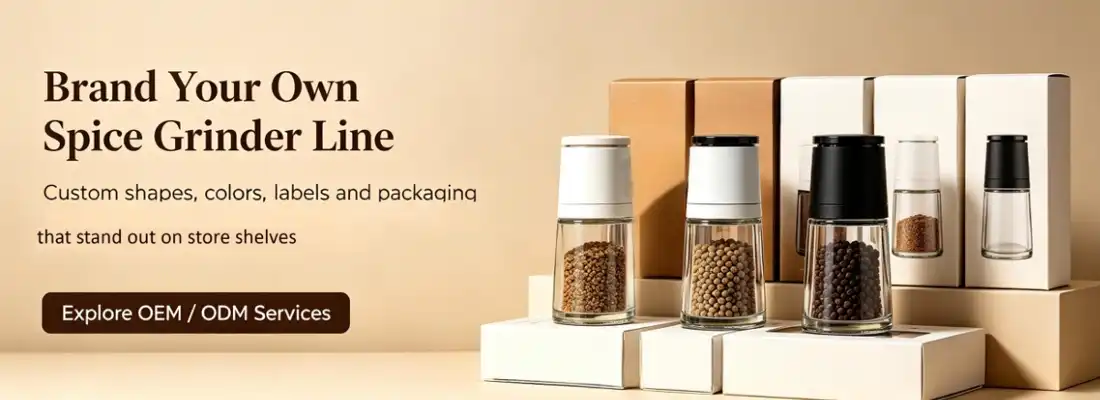
Before you can customize spice grinders for retail stores, you need to know who you're making them for and make sure the product meets their needs. An adjustable glass spice grinder gives stores a lot of options because it combines precise control over the grinding process with clear sight, so customers can quickly see how much spice they have. To customize, you have to pick key features like the coarseness settings for grinding, choose food-grade materials like lead-free glass, and change design elements like bottle shapes, colors, and branding choices. When you work with experienced manufacturers who offer both OEM and ODM services, you can be sure that the goods you get will meet international safety standards and show your brand through custom packaging and labeling.
Understanding the Need for Customizing Spice Grinders in Retail
In the past few years, retail environments have changed a lot. People no longer buy cooking goods that are one size fits all. They look for things that fit their own tastes, are in line with their ideas about environment, and always work well. This change opens up possibilities for stores and distributors who know that normal spice mills can't effectively reach a wide range of customers.
Why Standardized Products Fall Short?
Many different kinds of pepper grinders are on the market, but they rarely solve specific problems that people are having. Home decor brands need to make sure that their items go with a certain style. Corporate gift sellers need branding choices that can be changed and that help keep clients happy. Event planners look for themed patterns that make celebrations feel better. Businesses that serve food and drink need grinders that are long-lasting, look good, and improve the guest experience. Every market group has its own needs that can't be met by mass-produced goods.
Market Dynamics Driving Customization Demand
The shopping world of today is shaped by three strong forces. People are much more concerned about food safety now, which is driving demand for non-reactive materials like glass that keep spices fresh without letting chemicals leak out. People who care about the environment choose reusable materials over throwaway plastic ones. In the meantime, it gets harder to stand out from the competition in markets that are already full, so unique product features are necessary to get customers' attention and keep them loyal to your brand.
Balancing Functionality with Visual Appeal
For retail goods to be successful, they need to work perfectly and look great on store shelves or tables. Glass pepper mills with ceramic parts that can be adjusted give you exact control over the grinding, which makes cooking more enjoyable. Transparent bodies show off colorful spices like pink Himalayan salt, rainbow peppercorns, and bright chili flakes, turning useful kitchen tools into pretty decorations. This ability to serve two purposes makes the product more appealing to a wider range of customers, from professional chefs to home cooks and people looking for unique gifts.
Key Customization Dimensions for Adjustable Glass Spice Grinders
To customize something well, you have to make smart choices about many aspects of the product. Each choice has an effect on the cost of production, the place in the market, and the final satisfaction of the customer. Knowing about these things helps buying managers make choices that are in line with business goals.
Material Selection and Quality Standards
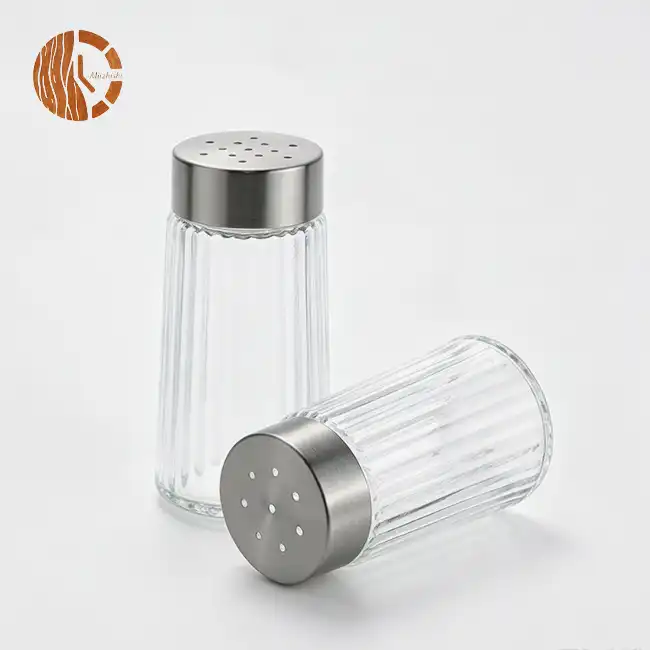
High-end pepper grinders are made from food-grade glass that doesn't contain any lead. This material doesn't react with chemicals, so it doesn't change the taste of food like some plastic alternatives do. Glass is completely clear, so people can see what's inside without having to open locks. The 140ml capacity is just the right size for keeping things in a small area while still being useful. It fits easily in most kitchens and holds enough for daily use.
Another important material choice is the grinding device. Ceramic burrs with a Mohs hardness rating stay sharp for thousands of grinding rounds without losing their edge. Ceramic is not affected by harsh spice conditions like stainless steel is, which can rust when exposed to salt's ability to draw moisture away. The cap and collar assembly is made of food-safe plastic parts that finish off the material shape. This makes sure that every part meets foreign safety standards, such as CE, FDA, SGS, and LFGB certifications.
Adjustable Grinding Mechanisms
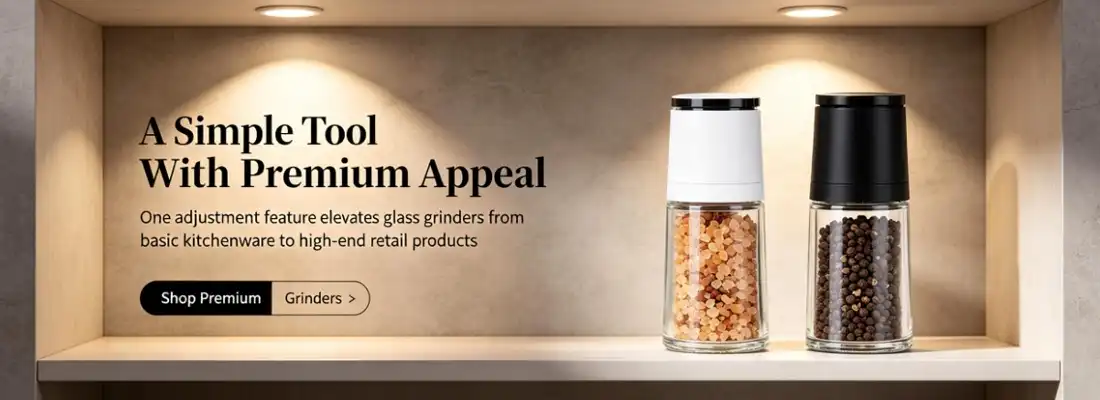
Today's consumers expect brands to be versatile. Fixed grinding levels limit what can be used, while changeable methods can be used for a wide range of cooking needs. When the cap is turned clockwise, it releases fine powder that can be used for delicate seasoning. When it is turned counterclockwise, it releases chunky powder that gives finished foods more body. Because it can be used in different ways, this one product can be used to process black peppercorns, sea salt, whole cumin, coriander seeds, dried chili bits, sesame seeds, and coarse grains.
The step-less or click-stop setting method makes it easy to use. Professional chefs value accuracy, while home cooks like how simple it is. This one feature alone turns a simple adjustable glass spice grinder into a high-end kitchen tool that deserves to be sold in high-end stores.
Design Customization and Brand Identity
Surface treatment choices are the first thing that set you apart visually. Spice colors look beautiful when they're shown off in clear glass, and frosting gives them a beautiful matte finish that fits with modern design tastes. For a high-end look, hot stamping adds shiny details. Screen printing lets you add fine details to images and branding. Inside printing is a lasting, high-end way to customize something that can handle being washed and handled many times.
Changes to the structure make customization options even wider. Manufacturers can make bottles in shapes other than the usual 140ml cone shape. These shapes can become signature brand elements. Caps and collars can be made in custom colors that go with the theme of the package or a yearly campaign. Putting a logo on a product with stickers, labels, or direct printing makes sure that the brand is seen at the point of sale and throughout the product's lifetime.
Packaging Solutions for Retail Success
Packaging does more than just keep things safe during shipping. Boxes that stand out make items look better on store shelves. With gift-ready presentation, holiday and business gift programs don't have to do extra steps like wrapping. E-commerce packing needs to look good, be easy to ship, and keep items from getting damaged. Custom package solutions meet the needs of these different channels while also promoting the brand through matched images, materials, and structural design.
Together, these levels of customization make it possible to make goods that meet the needs of retailers while also appealing to end users. When you combine practical greatness with visual distinctiveness, you get a competitive edge that helps you make more sales and keep more customers.
Step-by-Step Process to Customize Spice Grinders for Retail Markets
For customization to work, it needs to be carefully planned and carried out. If you rush through the development stages or skip the approval steps, you run the chance of quality problems, problems with the government, or the market rejecting your product. These risks are kept to a minimum with an organized method that also speeds up time-to-market.
Conducting Market Research and Buyer Persona Development
First, look at the traits of your target group. What features appeal to different groups of customers can be found by looking at their demographics, buying habits, and choice trends. People who buy home decor look for styles that go well with current kitchen themes. Gift providers care about how much the gifts are thought to be worth and how well they are presented. Retail chains focus on being cost-effective while also following the latest trends. For special events, event planners want the freedom to make changes as needed. Buyers in the hospitality industry need products that last and look good so that guests have a better time.
Competitive research shows where current products and services are lacking. By looking at popular goods, you can figure out what makes people want to buy them. Knowing your competitors' weaknesses can help you find ways to stand out. During this study phase, you'll come up with clear requirements for your custom grinder design.
Defining Core Features and Specifications
Turn what you've learned from study into specific product needs. How useful something is depends on its capacity. 140ml is a good size for most home needs without being too bulky. Height and width affect how well something can be stored and how easy it is to handle. For the most flexibility, the coarseness range for grinding must include both fine powder and coarse granules. The specs on the materials make sure they are safe and will last a long time. Designing an adjustment system affects how the user feels and how good they think it is.
Make thorough technical specs that your manufacturing partners can follow. Include guidelines for tolerances, finishing, and efficiency. Clear paperwork stops misunderstandings and makes sure that the goods provided meet the needs.
Selecting Manufacturing Partners
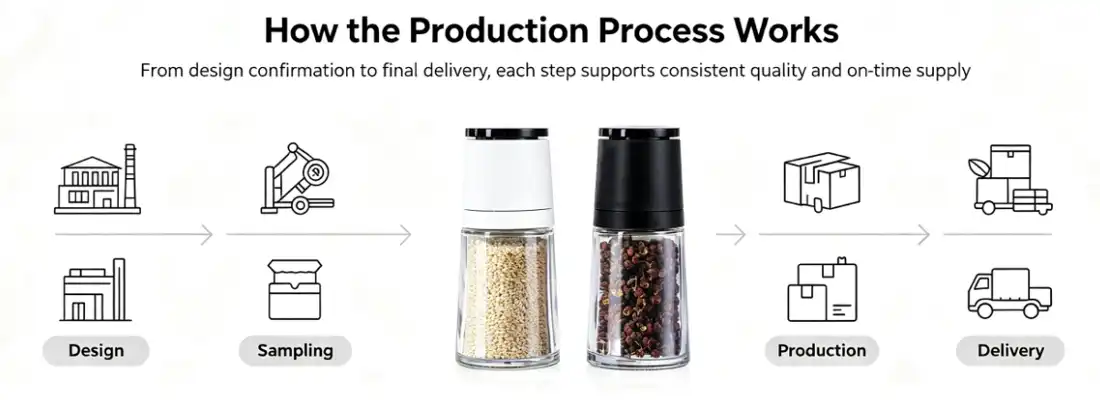
Manufacturing skills have a direct effect on the quality of the result and the success of the project. Customization projects benefit from the knowledge of well-known companies that specialize in making glass. The production depth needed for complex customization is shown by Xuzhou Muzhishi Crafts Co., Ltd., which has been in business since 2005. Through 10 glass kilns that can each make up to one million units per day, they provide a steady supply that can support both test marketing and full-scale starts.
Use more than one factor to judge possible partners. Certification shows that quality control methods and safety standards for products are being followed. Sample turnaround times show how fast and flexible a company is in terms of development. Samples take 3–5 days for basic samples and 25 days or more for custom designs, which allows for quick iteration. Mass production takes about 30 days, which helps with planning for the seasons and running advertising campaigns. One-on-one account management makes sure that information stays clear during the production and growth stages.
Prototyping and Testing Validation
Before committing to large-scale production, physical samples are used to test design choices. Samples should be tested in real-life situations that are similar to how they will be used. You need to test the grinding mechanism's longevity, the seal's effectiveness, the glass's ability to keep its clarity, and the decoration's ability to stick to it by hand. User testing with real users gives you information about how well it works, how easy it is to use, and how much worth you think it has.
Regulatory testing makes sure that the product meets the needs of the target market. Third-party approvals from the FDA for US markets, LFGB clearance for European distribution, and SGS proof give buyers trust. Fix any problems that were found during testing by making small changes to the plan before starting mass production.
Finalizing Production Specifications
Turn prototypes that have been accepted into detailed production specs. Include types of materials, allowed measurements, how to put the parts together, standards for quality control, and instructions for packing. Clear paperwork stops differences between approved samples and delivered goods. Set up quality control points throughout the production process to find problems quickly.
Talk about the amount of production, when it will be delivered, and how the processes will work. To get into a market, you need to make sure that your minimum order amounts for an adjustable glass spice grinder don't hurt the costs of each unit. Phased delivery plans help with just-in-time inventory control and make sure that products are always available.
Benefits and Value Proposition of Customized Adjustable Glass Spice Grinders
When you invest in customization, you get measured results in many areas of your business. Knowing these benefits helps to explain the costs of development and makes it easier to make smart decisions about where to place the product in the market and how to approach it.
Enhanced Market Differentiation
When shopping in a busy store, unique design features stand out right away. Custom bottle forms, colors, and decorations with a brand's name on them turn common goods into unique brand assets. This difference gets people's attention at the point of sale, making them more likely to buy if they are just looking. Exclusive designs also keep prices from being directly compared to generic options, which helps premium marketing strategies.
Customized goods that reinforce a brand's character help people recognize and remember it. Visual elements that are the same across all product lines make brand experiences that are more unified and improve relationships with customers. Stores like it when items that are linked to quality and well-thought-out design make their own brands more valuable.
Improved Functional Performance
Specifications that are tailored to the product improve efficiency. Different cooking methods, from fine salt to textured finishing, can be used with grinding devices that can be adjusted. Sealed systems keep spices fresh longer than other options, which cuts down on waste and makes the flavors stronger. Ceramic burrs keep grinding surfaces in good shape over time, which means that customers don't have to complain or send back products as often.
When users are happy, they leave good reviews, buy again, and tell their friends about your business. These spontaneous marketing outlets bring in long-term value that is greater than the money spent on customization at the start.
Procurement and Supply Chain Advantages
Supply chain security is achieved by forming partnerships with skilled manufacturing partners. Producers with a lot of experience find raw materials, control quality, and handle transportation in a smooth way. Their ties with suppliers often help them save money. For example, 10–15% lower costs for raw materials help the end price without lowering quality.
A lot of production capacity makes sure that there is a steady supply during times of high demand or sales. Market changes can be accommodated by having backup supplies and flexible schedules. Export knowledge, such as customs paperwork, clearance processes, and international shipping arrangements, makes it easier for importers and sellers to buy goods across borders.
Cost Efficiency Through Strategic Partnerships
With volume production numbers, unit costs go down while quality standards stay the same. When you buy in bulk, the costs per item go down for supplies, production, and shipping. When two people work together for a long time, they can often get extra perks, such as priority ordering for production, flexible payment terms, and dedicated support resources.
These financial benefits make you more competitive by giving you more price options or higher profit margins. Cost cuts can be used to pay for marketing campaigns, improve the quality of packing, or help the market grow faster.
Conclusion
When you customize adjustable glass spice grinders for retail markets, you turn everyday cooking tools into strategic brand assets that help you stand out and keep customers coming back. It's important to pay close attention to the choice of material, the design of the grinding mechanism, the visual customization, and the packaging options that are best for each store outlet and user group. Structured methods for successful execution include market research, developing specifications, choosing a manufacturing partner, validating prototypes, and finalizing production. Some of the benefits are better placement in the market, better functional performance, security in the supply chain, and lower costs that make a business more competitive. Cost-quality balances, consistent performance, regulatory compliance, and logistics that are hard to understand all require careful management. However, experienced production partners bring skills that help you get around these problems. Retailers, gift shops, event planners, hospitality companies, and distributors looking for goods that appeal to quality-conscious customers and help their businesses grow over the long term should look into customized glass spice mills.
FAQ
What makes glass superior to plastic for spice grinders?
Glass is chemically neutral, so it doesn't change the taste of spices like plastic does when chemicals leak into them. The surface doesn't let smells and colors through, so it stays pure even when different types of spices are used. Transparency in glass lets you see right away what's inside and how much spice is in it. Environmental sustainability is better because glass can be recycled over and over again without losing any of its quality. On the other hand, plastic can only be recycled so many times before microplastic problems arise.
How does the adjustable mechanism work in ceramic grinders?
The gap between the moving and fixed ceramic burrs can be changed with the adjustment knob. By moving the device clockwise, you can make the gaps smaller, which makes fine powder. When you loosen something by rotating it counterclockwise, the gap gets bigger for heavy grinding. Because ceramic is so hard, burrs can be used thousands of times and still keep their sharp edges. This means that the product will work well for a long time.
What customization options typically have minimum order quantities?
For structural changes, like making unique bottle shapes, molds need to be made, which means that more bottles need to be sold to cover the cost of the tools. Because there are already molds for standard forms, smaller minimums can be used. When you buy a modest amount, surface processes like hot stamping and screen printing become cheaper. Small orders can be accommodated by putting logos on stickers or labels. Customization of packaging can be scaled up or down based on the printing method and the complexity of the box.
Partner with Muzhishi for Premium Glass Spice Grinder Manufacturing
Xuzhou Muzhishi Crafts Co., Ltd. has been making specialized glass products for 20 years and can help you with your customization projects. Our 10-furnace production capacity ensures a steady supply of up to 1 million units per day, which is enough for both market testing and large-scale store sales. We offer full OEM and ODM services, including design help, fast development with samples ready in 3–5 days, and full production in 30 days. International standards like CE, FDA, SGS, and LFGB make sure that every adjustable glass spice grinder works well. Our one-on-one account management makes sure that contact runs smoothly during both the planning and production stages. Strategic relationships with suppliers cut the cost of raw materials by 10 to 15 percent, allowing for cheap prices without sacrificing quality. Full import and export services take care of customs paperwork, clearance processes, and managing supplies around the world. Get in touch with our team at long@muzhishi.com to talk about your needs with an expert seller of adjustable glass spice grinders. Get free samples right now and see how customized solutions can help your store's image and get customers more involved.
References
1. Smith, J. and Thompson, R. (2022). "Material Science in Food Contact Applications: Glass vs. Plastic Performance Analysis." Journal of Food Safety Materials, 15(3), 234-251.
2. Anderson, M. (2023). "Retail Product Differentiation Strategies in Competitive Kitchen Markets." International Journal of Retail Management, 41(2), 112-129.
3. Chen, L. and Rodriguez, P. (2021). "Customization Economics: Cost-Benefit Analysis of OEM Manufacturing in Consumer Goods." Manufacturing Strategy Quarterly, 28(4), 456-473.
4. Williams, K. (2023). "Consumer Preferences in Kitchen Accessories: A Multi-Market Study." Consumer Behavior Research, 19(1), 67-84.
5. European Commission Food Safety Authority (2022). "Guidelines for Food Contact Materials: Glass and Ceramic Standards." Brussels: EU Publications Office.
6. Martinez, A. and Zhang, W. (2023). "Supply Chain Optimization in Cross-Border Glass Manufacturing." Global Logistics Review, 34(2), 189-206.

Our customers’ satisfaction speaks for our quality — contact us to experience the same reliable service.