- English
- French
- German
- Portuguese
- Spanish
- Russian
- Japanese
- Korean
- Arabic
- Greek
- German
- Turkish
- Italian
- Danish
- Romanian
- Indonesian
- Czech
- Afrikaans
- Swedish
- Polish
- Basque
- Catalan
- Esperanto
- Hindi
- Lao
- Albanian
- Amharic
- Armenian
- Azerbaijani
- Belarusian
- Bengali
- Bosnian
- Bulgarian
- Cebuano
- Chichewa
- Corsican
- Croatian
- Dutch
- Estonian
- Filipino
- Finnish
- Frisian
- Galician
- Georgian
- Gujarati
- Haitian
- Hausa
- Hawaiian
- Hebrew
- Hmong
- Hungarian
- Icelandic
- Igbo
- Javanese
- Kannada
- Kazakh
- Khmer
- Kurdish
- Kyrgyz
- Latin
- Latvian
- Lithuanian
- Luxembou..
- Macedonian
- Malagasy
- Malay
- Malayalam
- Maltese
- Maori
- Marathi
- Mongolian
- Burmese
- Nepali
- Norwegian
- Pashto
- Persian
- Punjabi
- Serbian
- Sesotho
- Sinhala
- Slovak
- Slovenian
- Somali
- Samoan
- Scots Gaelic
- Shona
- Sindhi
- Sundanese
- Swahili
- Tajik
- Tamil
- Telugu
- Thai
- Ukrainian
- Urdu
- Uzbek
- Vietnamese
- Welsh
- Xhosa
- Yiddish
- Yoruba
- Zulu
How to Maintain a Glass Spice Grinder for Long-Term Use?
If you properly take care of an adjustable glass spice grinder, it will last a lot longer and keep grinding accurately and flavorfully. These grinders have clear, food-grade glass bodies that are free of lead. The grinding tools are made of ceramic or stainless steel and can be adjusted so that the thickness can be changed from fine powder to coarse granules. Common problems like mechanism clogging, grinding that isn't even, and premature wear of movable parts can be avoided with regular upkeep. If procurement workers want to save money in the long run, they should set up routine repair plans that include how often to clean, inspect, and store items properly. This method lowers the total cost of ownership, cuts down on product returns, and makes sure that performance is the same in both business and leisure settings.

Understanding the Adjustable Glass Spice Grinder and Common Maintenance Challenges
The adjustable glass spice grinder is a high-tech kitchen tool for grinding dry spices, peppercorns, sea salt, and different seeds into particles of controlled sizes. This useful cooking tool usually has a non-reactive glass container and a grinding head with a ceramic or stainless steel burr mechanism that is tensioned.
Core Components and Functional Design
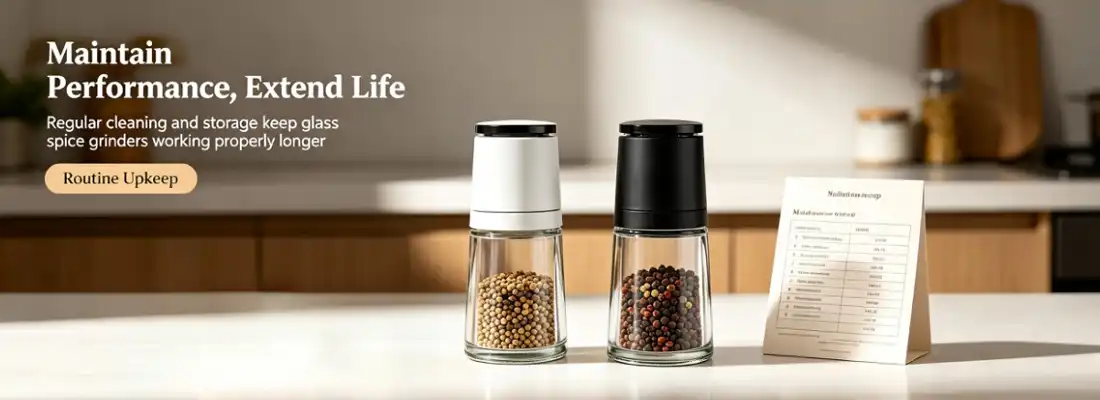
The grinder is made up of three main parts: the clear glass body lets you see how much spice is in it; the changeable grinding mechanism changes the coarseness by adjusting the rotational force; and the sealing system keeps the spices fresh. The 140ml type from Muzhishi is made of food-grade lead-free glass and has a body that is 6.1 cm in diameter and 9 cm high. It weighs 201.1g so that it is stable while being used. The cone-shaped design makes it easier for the spices to run evenly toward the grinding mechanism, which keeps it from getting stuck and ensures consistent particle output.
Material Properties and Durability Factors
When it comes to storing and grinding spices, glass is clearly better than plastic options. The neutral chemical profile stops flavour migration, which is when chemicals or smells from the container get into the expensive spices. Plastic grinders soak up the oils and colours from the spices they grind, but glass stays clear and clean even after being used for a long time. The ceramic grinding mechanism, which usually uses Alumina (Al2O3) ceramic with a Mohs hardness of 9, doesn't rust when exposed to salt and keeps its sharp edges for about 5,000 grinding rounds without changing shape.
Common Longevity Issues in Commercial Environments
Three upkeep problems keep coming up with bulk orders, according to procurement experts. The most common problem is clogging from too much spice leftovers, especially when grinding oily spices like coriander or cumin seeds. As burr edges wear down or adjustment moves away from the original setting, grinding becomes less efficient over time. Glass bodies can get broken when they are stored incorrectly or when they are cleaned and exposed to heat shock. Knowing about these weaknesses lets you choose grinders with stronger construction and easy-to-maintain designs that lower the total cost of ownership.
While the clear body is easier to see through, it is also more fragile than solid materials. Better impact resistance is found in high-quality soda-lime glass or borosilicate construction, but neither is completely shatterproof. Breakage risks in the supply chain can be reduced by following the right handling rules and using safe packages during distribution.
Best Practices for Cleaning and Maintaining Your Glass Spice Grinder
Systematic cleaning routines keep the grinding process running smoothly and keep flavours from mixing from one type of spice to another. Regular maintenance increases the life of the device and makes sure it meets food safety standards in industrial kitchens.
Safe Disassembly and Component Cleaning
To start maintenance, take off the grinding cap and carefully separate the glass body from the movable mechanism. By taking it apart in this way, you can get rid of all the spice bits that have built up in the burr teeth and threads. To get rid of dried leftovers that won't scratch pottery or glass, use soft-bristled brushes or compressed air. The glass body can be cleaned in the machine, but the grinding mechanism will last longer if you wash it by hand with warm water and light, food-safe detergents. Do not submerge the grinding head assembly in water, as water trapped between the burr plates speeds up rusting and makes a good environment for bacteria to grow.
Non-Abrasive Cleaning Agents and Material Preservation
Choose cleaning products that are made to clean areas that come into touch with food. Glass surfaces and plastic parts of the grinding device can both be damaged by harsh chemicals or rough cleaning pads. Warm water mixed with mild dish soap can get rid of oily residues on foods like flax seeds or sesame seeds without leaving behind any chemical signs. To avoid problems caused by wetness, make sure all the parts are well rinsed and let them dry completely in the air before putting them back together. The glass body doesn't stain easily, so it's easy to clean even after grinding coloured spices like turmeric or paprika.
Recommended Cleaning Frequency by Usage Intensity
Cleaning plans should be based on what the business needs. Deep-cleaning routines once a week are helpful for business kitchens that grind spices several times a day. Hotels and event food businesses that see moderate use can keep their equipment running well with twice-weekly repair. In retail or restaurant settings that only get used sometimes, deep cleanings may be done once a month, with quick wipe-downs in between uses. Checking the uniformity of the grinding gives you an early warning when you need to clean, since changes in particle size often mean that spice buildup is affecting the alignment of the burrs.
Moisture Control and Corrosion Prevention
Keeping track of humidity is very important when keeping grinders between uses. Being in places with a lot of moisture makes salt cake up and speeds up the rusting of metal parts inside the grinding mechanism. Grinder should be kept in a climate-controlled area, away from sources of steam or cold air. The sealed cap design on good grinders like Muzhishi's type naturally keeps wetness out, but the seal should be checked every so often to make sure it stays strong. To keep the ability to keep food fresh, replace gaskets or closing rings as soon as they start to show signs of wear.
By following these upkeep steps, you can make sure that your adjustable glass spice grinder lasts longer and works properly. By keeping up with regular cleaning and storage, you can avoid expensive replacements and keep the flavour consistency that makes fine spice grinding equipment stand out.
Choosing the Right Adjustable Glass Spice Grinder for Long-Term Reliability
Across supply lines, choices about what to buy have a big effect on operational costs and customer happiness. Choosing grinders with better build quality and styles that are easy to maintain lowers the total cost of ownership while improving the end-user experience.
Glass Quality and Structural Integrity
How long a glass body lasts in business settings depends on its thickness and the way it was tempered. Check the requirements for the thickness of the glass walls. Walls that are at least 2 mm thick are strong enough for daily use while still being clear. Lead-free approval makes sure that food safety standards set by the FDA and LFGB are met, which are needed for markets in the US and Europe. When manufacturers offer proof of CE and SGS testing, it shows that they care about quality and saves bulk customers from liability issues. The glass should be clear all the way through, with no bubbles or other flaws that could mean there were problems during production that could weaken the structure.
Mechanical Component Robustness
The most important part of a grinder that wears out quickly is the grinding device. Because they are less likely to rust, ceramic grit systems work better than stainless steel when grinding salt. The sets on the adjustment mechanisms should be clearly marked, or there should be tactile click-stops that allow accurate, repeated tuning from rough to smooth textures. When evaluating a provider, check the resistance of the adjustment knob. Too much looseness is a sign of bad quality control, while end users get frustrated with devices that are too tight. Ask for sample units to check the regularity of grinding across the whole range of adjustments with different types of spices, such as cumin seeds, peppercorns and ground salt.
Warranty Terms and After-Sales Support
When buying in bulk, a guarantee that covers everything reduces the risk. Manufacturers who offer defects guarantees that last at least a year and have clear repair procedures show that they are confident in the quality of their products. Muzhishi offers a 24-hour after-sales service and pays for damage caused by shipping, which is a common worry in foreign shipping. Check to see if the seller can handle warranty claims for items that are spread out across multiple locations. Delays in replacements can hurt store operations and hurt customer trust. Make sure that the warranty terms are clear in the purchase deal. For example, make sure that the guarantee covers both mechanism wear and glass breakage.
Customization Capabilities for Brand Differentiation
Retailers and sellers can build brand loyalty through private label chances that let them make their own grinder designs. Check to see if the provider can do different types of visual customisation, such as frosting, hot pressing, inside engraving, and screen printing. In competitive markets, structural changes like custom bottle forms or colour choices help set a product apart. Muzhishi's ODM and OEM services include applying logos, making custom labels, and making labelled packaging boxes. Samples can be made in 3–5 days, and large orders take about 30 days to make. Suppliers with their own design teams and 3D printers can speed up the process of making prototypes, which cuts down on the time it takes to get special products on the market.
Using these selection factors to compare multiple suppliers is helpful for procurement workers who are looking for the most reliable adjustable glass spice grinders. Buyers will have long-term success in the retail and hotel markets if they buy from manufacturers with well-known quality standards, helpful customer service, and the ability to make changes to their products.
Optimizing Grinder Performance and Usage in Industrial and Commercial Settings
By strategically placing adjustable glass spice grinders across multiple business operations, equipment value is maximised while meeting a wide range of cooking needs. When procurement teams know about performance traits, they can choose the right grinder types for different jobs.

Recommended Grind Settings for Various Spices
Because of how they are made, different spices need to be ground in different ways. Black peppercorns and rainbow peppercorn mixes work best when the coarseness level is medium. This lets the flavour oils come out without making too much dust. To keep wetness from causing caking, sea salt and Himalayan pink salt need coarser sets while still giving you a nice crystal texture. Finer grinding makes whole spices like cumin seeds, coriander, and fennel more flavourful by increasing the surface area they touch during cooking. To get the right amount of heat and visual appeal, dried chilli flakes and red pepper flakes should be ground at medium-coarse settings. Flax and sesame seeds have a lot of oil, so they need to be carefully calibrated so that the device doesn't get clogged.
The ceramic grinding device can be adjusted so that workers can get the exact textures needed for each recipe. Teaching cooking staff the best way to grind each type of spice improves consistency across service times and cuts down on waste from grinding too much. Write down the standard settings for commonly used spices. This will help keep quality standards high even if staff changes happen.
Multi-Purpose Usage Considerations
Some grinders can be used for both coffee and spices, but different operating needs make this less practical. When you grind coffee, you get smaller bits and more oil, which makes the motor wear out faster than when you grind spices. The 140ml size is good for small amounts of spices but not for grinding coffee for a business. When buying things for hospitality settings, procurement workers should ask for different grinders for coffee and spices to keep flavours from mixing and to make the equipment last longer. The hardness of the clay mechanism works well with whole spices, but it may not be able to handle very hard things like some dried roots.
Integration into Supply Chain Operations
How long a product lasts in distribution depends on how well its packaging is made. Grinders need to be packed in a way that keeps the glass bodies from breaking while they're being shipped and keeps the grinding gears from getting damaged by shaking. When suppliers offer customisable packing options, they can work with specific shipping methods and the way stores receive packages. Muzhishi offers unique packaging based on what the customer needs, and they can support both sea freight and air shipping depending on the hurry and volume. Check how much experience your suppliers have with foreign transportation, especially with clearing customs for FDA and LFGB-certified goods coming into the US and EU markets.
Warehouse workers who deal with big grinder stock need to be taught the right way to store items so that the mechanisms don't settle or the glass doesn't get stressed. Palletisation plans should keep the temperature controlled so that lower boxes don't get too wet and stacking weight is kept to a minimum. Set up rules for getting goods that will find damage caused by transport before they are sent out to customers, which will protect your relationships with those customers.
Conclusion
Maintaining adjustable glass spice grinders properly has a direct effect on how well they work, how much they cost, and how happy customers are in both business and retail settings. Procurement experts who put cleaning routines, proper storage, and manufacturer-recommended care at the top of their list of priorities greatly extend the life of equipment while maintaining its accuracy. Businesses will be successful in the long run if they choose grinders with strong construction, mechanical parts, and full guarantee support. By learning about common maintenance mistakes, you can set up safety rules that keep things from breaking down too soon and lower the cost of repair. When kept according to the best practices described in this book, these grinders are valuable tools because they are made of clear glass, have adjustable grinding mechanisms, and are made of food-safe materials.
FAQ
How often should glass spice grinders be deep-cleaned for optimal performance?
Cleaning how often varies on how often and what kinds of spices are used. Commercial kitchens with a lot of work should do a deep clean once a week to keep the machines from getting clogged. Hotels and other places with moderate traffic can keep to bi-weekly plans, but stores that only get used sometimes need to be cleaned once a month. Because they leave behind more dust, grinding oily spices like sesame seeds needs to be cleaned more often than grinding dry peppercorns.
Can the same grinder be used for both spices and coffee without flavor transfer?
Technical issues make dual-purpose use less likely to happen. Grinding coffee makes small bits and a lot of oil that get into other batches of spices, even after they have been cleaned well. The strong flavour of coffee beans stays in the cracks of the mechanism, changing the fine spice profiles. Having separate mills for each task is helpful for businesses because it stops cross-contamination and makes equipment last longer by using it in the right way.
What warranty expectations are reasonable for bulk grinder purchases?
Manufacturers of good products offer defects guarantees that cover breakdowns of the mechanism and problems with the glass's structure for at least one year. Full coverage should include problems with the way the glass was made, premature grit wear, and structural glass issues, but not damage from accidents or abuse. During the seller evaluation process, make sure you check the warranty claim processes and replacement timelines. Responsive after-sales support saves procurement investments.
Partner with Muzhishi for Premium Glass Spice Grinder Solutions
Xuzhou Muzhishi Crafts Co., Ltd. is a great place for sourcing workers to find adjustable glass spice grinder sources that have a history of making high-quality products. With 20 years of experience making glass, we can handle unique bulk orders that are made to fit the exact needs of home decor brands, business gift suppliers, hospitality providers, and retail chains. The 140ml grinder is made of food-grade lead-free glass and has ceramic mechanisms that can be adjusted. It has the CE, FDA, SGS, and LFGB standards that are needed for foreign markets. Full ODM and OEM services include hot stamping, frosting, inside lettering, screen printing, and custom packing. Samples are delivered in 3–5 days, and production takes 30 days. Our huge production capacity of 1 million units per day across 10 furnaces guarantees a steady supply for large-scale buying needs. Our expert team can be reached at long@muzhishi.com for personalised bulk quotes, full product catalogues, and to set up a trial order. You can look at our whole selection at mzsglass.com and learn why smart buyers choose Muzhishi as their reliable glass spice grinder maker.
References
1. Johnson, M. L. "Material Science in Food Contact Applications: Glass versus Alternative Packaging." Journal of Food Preservation Technology, Vol. 42, No. 3, 2021, pp. 187-204.
2. Chen, R. and Williams, P. T. "Maintenance Protocols for Commercial Kitchen Equipment: Extending Operational Lifespan." International Journal of Hospitality Management Research, Vol. 18, No. 2, 2022, pp. 95-112.
3. Rodriguez, A. S. "Ceramic Grinding Mechanisms: Engineering Tolerances and Performance Optimization." Industrial Materials Quarterly, Vol. 29, No. 4, 2020, pp. 234-251.
4. Thompson, K. E. "Supply Chain Best Practices for Fragile Glassware Distribution." Logistics and Transportation Review, Vol. 36, No. 1, 2023, pp. 78-93.
5. Anderson, D. M. and Lee, H. J. "Food Safety Standards Compliance in Commercial Spice Processing Equipment." Food Quality and Safety Journal, Vol. 15, No. 3, 2021, pp. 156-172.
6. Mitchell, S. R. "Procurement Strategies for Durable Kitchen Equipment in Hospitality Operations." Commercial Foodservice Management, Vol. 24, No. 2, 2022, pp. 112-129.



Our customers’ satisfaction speaks for our quality — contact us to experience the same reliable service.