- English
- French
- German
- Portuguese
- Spanish
- Russian
- Japanese
- Korean
- Arabic
- Greek
- German
- Turkish
- Italian
- Danish
- Romanian
- Indonesian
- Czech
- Afrikaans
- Swedish
- Polish
- Basque
- Catalan
- Esperanto
- Hindi
- Lao
- Albanian
- Amharic
- Armenian
- Azerbaijani
- Belarusian
- Bengali
- Bosnian
- Bulgarian
- Cebuano
- Chichewa
- Corsican
- Croatian
- Dutch
- Estonian
- Filipino
- Finnish
- Frisian
- Galician
- Georgian
- Gujarati
- Haitian
- Hausa
- Hawaiian
- Hebrew
- Hmong
- Hungarian
- Icelandic
- Igbo
- Javanese
- Kannada
- Kazakh
- Khmer
- Kurdish
- Kyrgyz
- Latin
- Latvian
- Lithuanian
- Luxembou..
- Macedonian
- Malagasy
- Malay
- Malayalam
- Maltese
- Maori
- Marathi
- Mongolian
- Burmese
- Nepali
- Norwegian
- Pashto
- Persian
- Punjabi
- Serbian
- Sesotho
- Sinhala
- Slovak
- Slovenian
- Somali
- Samoan
- Scots Gaelic
- Shona
- Sindhi
- Sundanese
- Swahili
- Tajik
- Tamil
- Telugu
- Thai
- Ukrainian
- Urdu
- Uzbek
- Vietnamese
- Welsh
- Xhosa
- Yiddish
- Yoruba
- Zulu
Glass vs. Plastic Honey Jars: Which Is Best?
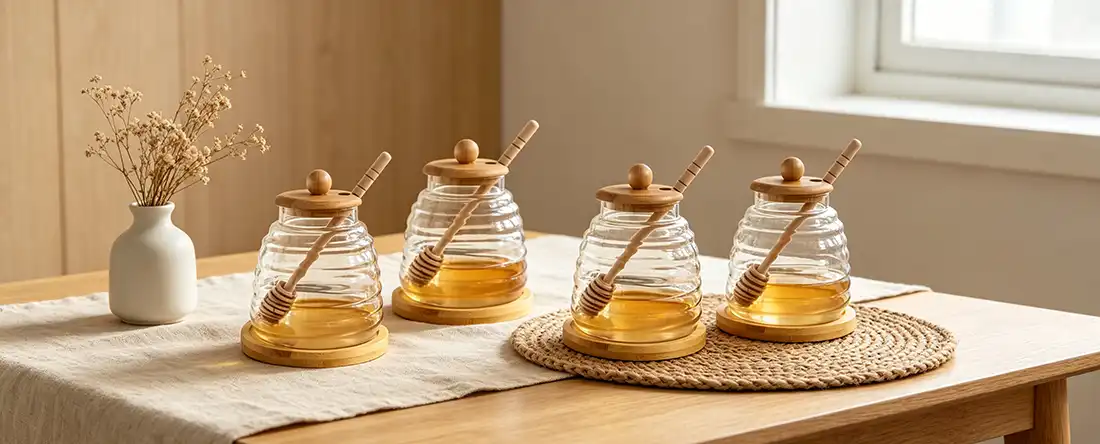
When looking for honey packaging, the choice between glass and plastic isn't just a matter of personal taste; it's a smart choice that affects how people see your brand, how safe your products are, and how much money you make. Both metal and glass have their own benefits, but round honey jars made of glass always win in premium markets because they keep honey fresh longer and look better than other materials. Glass containers keep honey's natural taste without the risk of chemical reactions, while plastic alternatives are easy to transport in large quantities because they are light. The best choice relies on your commitments to sustainability, the people you want to reach, and how easy it is to ship. When procurement managers know about these important differences, they can make packaging choices that are in line with the company's overall goals.
Understanding the Types of Honey Jars: Glass vs. Plastic
Material Composition and Manufacturing Differences
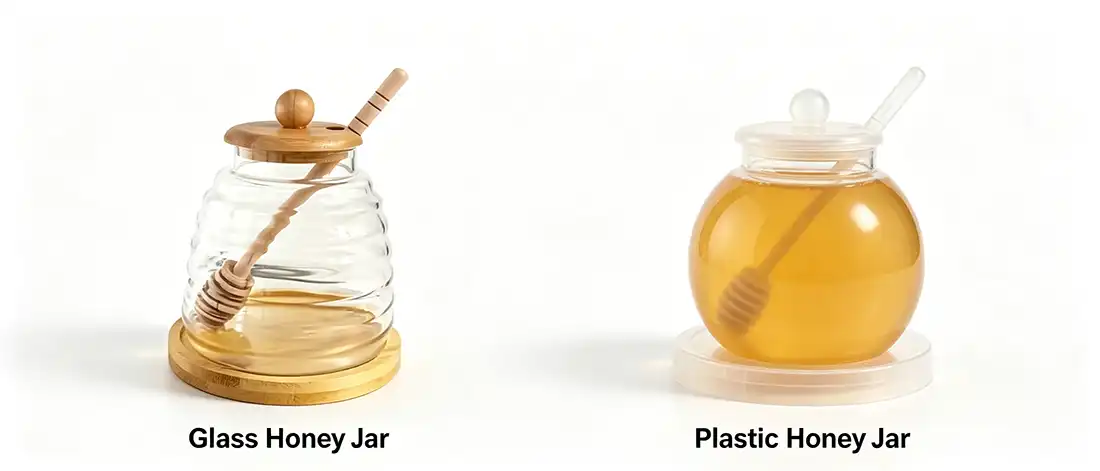
Glass honey jars are made by heating soda-lime silica mixtures to very high temperatures and shaping them into cylinder forms. This process makes a barrier that doesn't mix with acidic foods. Premium glass jars' clear walls make honey's golden color look stunning, and each jar becomes a marketing tool on store shelves. Recycled cullet is used in modern glass production, which is better for the earth and keeps the structure strong.
Plastic versions usually use PET or HDPE plastics, which are picked because they don't break easily and can be shaped. Concerns about customer health are addressed by BPA-free formulations, but material interaction is still something to think about when storing things for a long time. Making plastic uses less energy than making glass, so less carbon dioxide is released during the manufacturing process. Because polymer chemistry is so flexible, makers can add UV-blocking chemicals or make custom color schemes that set product lines apart.
Prevalence of Round Jar Designs
Because shape matters, cylindrical containers are the most common way to package honey around the world. The circle cross-section spreads the internal pressure out evenly, which keeps the structure from having weak spots that happen with angular designs. Because of this symmetry, automated filling lines can work at speeds of more than 200 units per minute, which is very important for large-scale commercial activities.
Round shapes also get rid of the "dead zones" where thick honey gets stuck in the corners. People like getting every drop of premium Manuka or wildflower types without throwing anything away. The 360-degree symmetry makes sure that labels are always placed in the same place, without the alignment problems that come with hexagonal or square shapes. Optimized palletization helps warehouse operations because cylinder-shaped jars nestle well while being moved and stored.
Impact on Honey Preservation
Material choice has a direct effect on how long a product will last and how well it works. When used with the right closure methods, glass forms an airtight hermetic seal that keeps out moisture, which starts fermentation. The smooth inside surface gets rid of nucleation sites, which are tiny scratches where crystallization starts to happen faster. Customers will be less likely to worry about hardened honey because it will stay spreadable for longer.
To get the same level of sealing effectiveness, plastic containers need special liners. Over long periods of time, polymer permeability lets very little oxygen in, which could break down delicate flavor compounds in different types of handmade honey. Food safety approvals look at the chances of contamination and make sure that materials meet FDA rules and the European Union's 1935/2004 rule for food contact substances.
Comparative Analysis of Glass and Plastic Round Honey Jars
Durability and Transportation Resilience
Logistics are hard to handle when glass is fragile, especially when foreign shipments go through a lot of different handling points. Strategic packaging options like corrugated dividers, foam inserts, and reinforced pallets successfully lower the risk of breaking. The extra weight makes freight more expensive, but the fact that glass cases can be used more than once makes up for this.
Plastic is flexible enough to handle hits that would break glass, so less product is lost during shipping. Because it's lighter, it costs less to ship and produces less carbon dioxide per unit moved. These practical savings are big for distributors who move thousands of units every week. But because plastic can change shape when it gets hot, it needs to be stored in warm places with climate control.
Environmental Footprint Considerations
The system for recycling glass works well in developed markets, and remelting cullet uses less energy than making new materials. The material can be recycled over and over again without losing any of its quality. This is a strong environmental claim for brands that care about the environment. This revolving economy feature is becoming more and more important to consumers when they are shopping.
Biodegradable plastics are becoming more popular as an option, but they aren't quite as good at handling thick substances like honey yet. When food leftovers aren't cleaned well, traditional PET recycling can become contaminated. When comparing how well lightweight plastic moves and how well glass can be recycled, the lifecycle study gets more complicated. These trade-offs must be weighed by brands against their specific commitments to sustainability and their place in the market.
Cost Analysis: Initial Investment vs. Long-Term Value
When it comes to upfront costs, plastic is much cheaper than metal, especially for big orders. The price of plastic round honey jars in bulk makes it possible for retailers to compete in price-sensitive markets. The lower shipping weight makes the cost savings even bigger all along the supply chain.
Glass cases are more expensive because they are harder to make and cost more in materials. Still, this investment pays off because customers are more likely to pay more for a brand they think is of higher quality. Reusability lets people use pretty glass jars for more than one thing, like storage or decoration, which keeps the brand visible after the initial buy. To find the real cost-per-use, you have to look at these intangible perks along with the direct costs.
Key Features to Evaluate When Choosing Between Glass and Plastic Honey Jars
Size and Shape Selection for Market Positioning
The 500 ml capacity is a good compromise between ease of use and value impression. This volume falls in the middle, which is good for home use—it's big enough to support the higher price, but small enough to fit in the fridge. Wide mouths with a width of 9.9 cm make scooping easier, which is especially important for honey that has crystals and needs to be reached with a spoon.
Customized sizes are needed for specialty markets. Decorative containers with the right ratios of height to diameter look great when used for gift wrapping. Standardized sizes are often specified by corporate gifting programs to make sure that big orders are all the same. When event planners are looking for favor jars or wedding decorations, they like small sizes that keep the presentation beautiful while cutting down on the cost per unit.

Lid Technology and Sealing Performance
Closure systems determine whether the honey you carefully chose stays fresh or goes bad too soon. Deep-lug finishes and plastisol-lined lids make gas-tight seals that stop fermentation, which is important for raw honey that still has enzymes working. Continuous thread designs make it easy for customers to reopen the package, and the seal stays intact even after multiple uses.
Wooden lids give things a rustic look that fits with handmade branding. To keep these natural materials from warping and failing to close, they need to be treated with the right moisture barrier treatments. Tamper-evident bands make stores safer by letting customers know when someone is messing with their products. The investment in the lid should be carefully thought through because a broken lid can ruin even the best quality jars.
Customization Possibilities
Standard containers can be turned into branded assets with different surface treatment choices. Metallic foils are applied with hot stamping to make high-end finishes that catch store lights in a big way. Frosting methods create surfaces that are tactile, making them easier to hold, and visually interesting. Inside engraving provides lasting branding that doesn't wear off, so the item looks good even after being washed and used many times.
Screen printing can handle gradient effects and complicated images that can't be done with simple labeling. Color customization lets you use brand-specific colors that match the standards of your company's character. The clear glass choice shows off the quality of the product directly, while the tinted options protect honey varieties that are sensitive to light. These customization options help you stand out in crowded market segments where visual differences are what make people decide to buy.
Procurement Insights: Bulk Buying and Supplier Selection for Round Honey Jars
Supplier Evaluation Criteria
Reliable manufacturers demonstrate consistent quality through certified testing protocols. ISO 9001 certification indicates systematic quality management addressing every production stage. Thermal shock resistance testing ensures containers withstand temperature fluctuations during filling and storage without structural failure. Verification of wall thickness tolerances within ±0.5mm prevents weak points causing premature breakage.
After-sales support quality reveals supplier commitment beyond initial transaction. Response times under 24 hours for technical inquiries demonstrate operational professionalism. Manufacturers providing free samples within 3-5 days enable informed decisions before committing to bulk purchases. Established export documentation capabilities—including commercial invoices, certificates of origin, and customs coordination—streamline international procurement reducing delays and compliance risks.
Cost-Effective Bulk Purchasing Strategies
Volume commitments for honey jar orders unlock tiered pricing structures offering substantial savings at scale. Strategic buyers balance these discounts against inventory carrying costs and storage space limitations. Minimum order quantities vary significantly between suppliers, with established manufacturers often requiring higher volumes reflecting production efficiency thresholds.
Domestic sourcing reduces lead times and eliminates international shipping complexities, yet global suppliers frequently offer competitive pricing offsetting logistics costs. Xuzhou, Jiangsu has emerged as a glass manufacturing hub where concentrated production infrastructure drives cost efficiencies through supplier proximity and specialized expertise. Long-term partnership agreements secure priority production slots during peak seasons when demand surges threaten supply availability.
Custom Orders and Lead Time Management
Personalized branding requires production lead times extending beyond stock item fulfillment. Surface treatments like frosting or engraving add 7-14 days to standard timelines. Custom mold development for proprietary shapes involves upfront tooling investments and extended development periods spanning weeks or months. Planning procurement cycles accounting for these timelines prevents inventory shortages during critical sales periods.
Sample approval processes precede full production runs, allowing quality verification before mass manufacturing commitments. Experienced suppliers provide digital mockups showcasing proposed customization before physical prototyping. This collaborative approach ensures final products match specifications, avoiding costly revisions or rejected shipments. Clear communication channels with dedicated account managers facilitate smooth coordination throughout complex custom projects.
Making the Final Decision: Which Jar Material Fits Your Business Best?
Matching Packaging to Business Scale
Boutique honey producers benefit from glass's premium positioning, where higher container costs align with artisanal pricing strategies. Limited production volumes make per-unit expenses manageable while brand perception justifies retail premiums. The reusability factor transforms customers into brand ambassadors when attractive containers gain second lives in homes.
Large-scale commercial operations prioritizing cost efficiency and logistics simplicity lean toward plastic solutions. The durability advantages reduce loss rates during high-speed automated packaging and extensive distribution networks. Mass-market positioning strategies emphasizing affordability find plastic's economics compelling, particularly for value-conscious retail channels where packaging costs significantly impact margin structures.
Scenario-Based Material Recommendations
Corporate gifting programs demand presentation quality where glass excels, conveying thoughtfulness and quality appreciation. The substantial feel and visual clarity create memorable unboxing experiences reinforcing positive brand associations. Custom engraving or hot-stamping adds personalization elevating perceived value beyond commodity honey products.
Export-focused businesses shipping internationally weigh glass's breakage risks against plastic's transport resilience. Air freight costs amplify weight penalties, making lightweight plastic attractive despite material compromises. Maritime shipping's longer transit times raise concerns about plastic permeability affecting product quality, particularly for premium varieties where flavor integrity justifies glass's protective benefits.
Retail chains seeking sustainable product offerings increasingly mandate recyclable packaging meeting consumer environmental expectations. Glass's infinite recyclability and premium perception address these requirements effectively. Restaurants and hotels incorporating honey into guest experiences prefer attractive glass containers that complement upscale interior aesthetics while signaling quality ingredients.
Emerging Packaging Trends
In both material groups, new products are made because people want eco-friendly options. Using advanced annealing methods to keep the structure strong while using less material, lightweight glass has less of an effect on the environment without sacrificing strength. Biodegradable plastics made from plant starches are a new option, but testing of their performance for viscous goods is still going on.
Minimalist design likes simple, clean lines and understated beauty. Instead of using lots of labels, the quality of the product should speak for itself. Trends that value authenticity and openness in food production and sources are in line with clear containers that show off honey's natural color variations. When QR codes are used in smart packaging, they connect customers to origin stories and sustainability credentials. This turns containers into digital marketing tools that keep customers engaged with a brand even after they've bought something.
Conclusion
Ultimately, the choice between glass and plastic honey jars depends on how you want to position your brand, your business's goals, and what the market expects. Glass containers are the best way to keep food fresh, look good, and be environmentally friendly, all of which explain higher prices. Because they are fragile and heavy, they need careful planning for logistics. However, brands benefit from better consumer perception and reusability, which increases brand exposure. Plastic alternatives are better for large-scale businesses that need to save money and be able to withstand transportation. Modern formulations that don't contain BPA address safety issues while keeping the lightweight convenience that is valued in mass-market distribution. Successful packaging strategies choose materials that are appropriate for the people they are trying to reach, knowing that buyers in the gift market care more about presentation than working efficiency. Both materials can be used legally in a variety of market groups.
FAQ
Do round containers provide better sealing than other shapes?
Cylindrical designs achieve superior sealing performance through geometric uniformity. The continuous circular finish interfaces consistently with lid gaskets, eliminating the corner gaps that compromise rectangular containers. This creates reliable hermetic seals preventing oxygen infiltration and moisture exchange. The structural advantage explains why automated filling operations favor round formats—consistent neck dimensions ensure reliable capping across high-speed production lines.
Can plastic honey jars match glass safety standards?
Modern food-grade plastics meeting FDA and EU regulations provide safe honey storage when properly formulated. BPA-free PET and HDPE materials undergo rigorous migration testing ensuring no chemical transfer into acidic honey environments. The critical distinction involves long-term performance, where glass's complete inertness eliminates any possibility of material interaction regardless of storage duration or temperature fluctuations.
What capacity works best for gift packaging applications?
The 500ml volume represents an ideal gift format—substantial enough to convey generosity without excessive cost. Smaller 250ml options suit favor quantities for large events where budget considerations dominate. Premium gift sets sometimes feature 750ml or larger containers emphasizing luxury positioning. Width dimensions matter equally, with 9-10cm diameters providing stable display presence and accommodating decorative ribbon or labeling without crowding visual space.
Partner with Muzhishi for Your Honey Jar Solutions
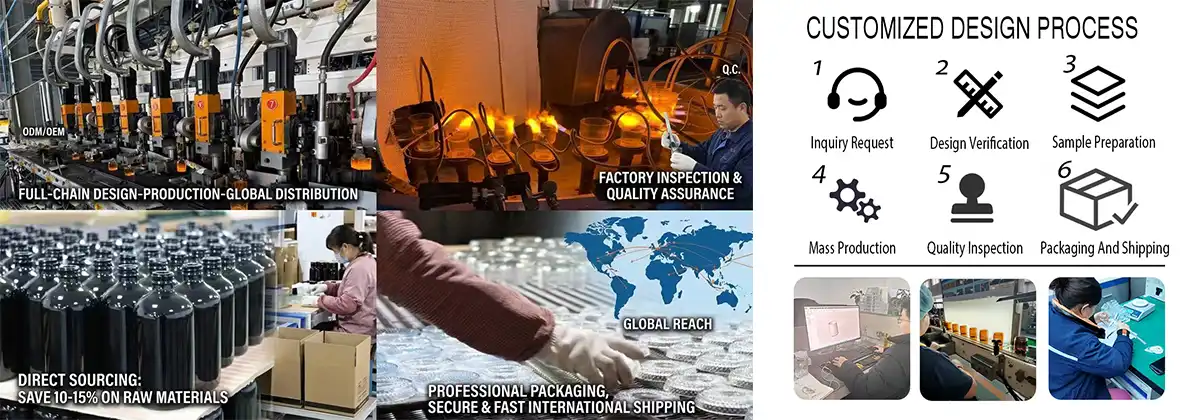
Xuzhou Muzhishi Crafts Co., Ltd. brings two decades of glassware manufacturing excellence serving procurement professionals, distributors, and brand developers worldwide. Our 500ml cylindrical glass containers combine food-grade safety with elegant design, perfect for honey packaging requiring both protection and presentation. We support full ODM/OEM customization—hot stamping, frosting, screen printing, and inside engraving—transforming standard containers into branded assets. As an experienced round honey jars supplier, we maintain competitive pricing through strategic raw material partnerships reducing costs by 10-15% while preserving quality standards. Our self-operated export capabilities handle customs documentation, international logistics, and compliance requirements seamlessly. Free samples arrive within 3-5 days, allowing quality verification before bulk commitments. Contact our dedicated team at long@muzhishi.com or visit mzsglass.com to discuss your specific packaging needs and discover how Muzhishi's comprehensive services elevate your product presentation.
References
1. Johnson, M. (2021). Food Packaging Materials: Properties and Selection Criteria for the Food Industry. Academic Press Publications.
2. Thompson, R. & Williams, K. (2020). Glass vs. Plastic: A Comprehensive Lifecycle Assessment of Food Container Materials. Journal of Sustainable Packaging, 15(3), 287-304.
3. Chen, L. (2022). Modern Glass Manufacturing: Quality Control Standards and Testing Protocols. International Society of Glass Technology Conference Proceedings.
4. Martinez, S. (2019). Consumer Perception and Willingness to Pay for Premium Food Packaging. Food Marketing Research Quarterly, 28(2), 156-173.
5. Anderson, P. & Lee, H. (2023). Emerging Trends in Honey Packaging: Material Innovation and Market Preferences. Apicultural Business Review, 41(1), 45-62.
6. National Honey Board. (2022). Honey Packaging Guidelines: Best Practices for Quality Preservation and Brand Presentation. Industry Standards Manual, 8th Edition.

Our customers’ satisfaction speaks for our quality — contact us to experience the same reliable service.