- English
- French
- German
- Portuguese
- Spanish
- Russian
- Japanese
- Korean
- Arabic
- Greek
- German
- Turkish
- Italian
- Danish
- Romanian
- Indonesian
- Czech
- Afrikaans
- Swedish
- Polish
- Basque
- Catalan
- Esperanto
- Hindi
- Lao
- Albanian
- Amharic
- Armenian
- Azerbaijani
- Belarusian
- Bengali
- Bosnian
- Bulgarian
- Cebuano
- Chichewa
- Corsican
- Croatian
- Dutch
- Estonian
- Filipino
- Finnish
- Frisian
- Galician
- Georgian
- Gujarati
- Haitian
- Hausa
- Hawaiian
- Hebrew
- Hmong
- Hungarian
- Icelandic
- Igbo
- Javanese
- Kannada
- Kazakh
- Khmer
- Kurdish
- Kyrgyz
- Latin
- Latvian
- Lithuanian
- Luxembou..
- Macedonian
- Malagasy
- Malay
- Malayalam
- Maltese
- Maori
- Marathi
- Mongolian
- Burmese
- Nepali
- Norwegian
- Pashto
- Persian
- Punjabi
- Serbian
- Sesotho
- Sinhala
- Slovak
- Slovenian
- Somali
- Samoan
- Scots Gaelic
- Shona
- Sindhi
- Sundanese
- Swahili
- Tajik
- Tamil
- Telugu
- Thai
- Ukrainian
- Urdu
- Uzbek
- Vietnamese
- Welsh
- Xhosa
- Yiddish
- Yoruba
- Zulu
Wholesale Glass Spice Grinder Procurement Guide
To find the right adjustable glass spice grinder for your business, you need to know both what the product needs and what the supplier can do. This buying guide tells you what you need to think about when you buy a lot of glass spice mills, such as checking the quality of the materials and the way the spices are ground, and finding dependable makers who can keep the quality high. If you're a buyer in the hospitality industry looking for high-end tabletop accessories or a manager of a retail chain looking for customizable gift items, these basic buying rules will help you get products that meet safety standards, work reliably, and help your brand stand out in a crowded market.
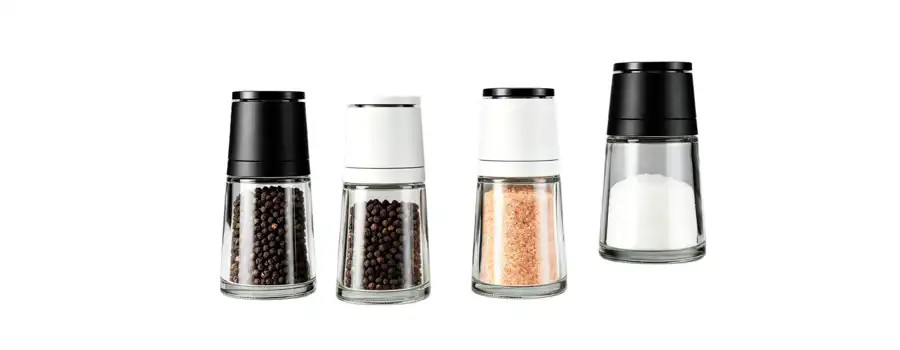
Understanding Adjustable Glass Spice Grinders: Key Features and Advantages
The modern adjustable glass spice grinder is a big step forward in the making of cooking tools. At its heart, this product has a precision ceramic or stainless steel burr device and a food-grade glass container that is free of lead. The changeable feature lets users change the particle size from fine powder to coarse granules, so it can meet the needs of both professional restaurants and home cooks.
Core Components That Define Quality
The grinding head is the most important part of a good spice mill. Premium units have alumina ceramic burrs that are ranked at 9 on the Mohs scale. This means that they stay sharp for more than 5,000 grinding rounds without changing shape. The mechanism for adjusting the gap between the rotor and stator usually has either step-less rotation or click-stop sets that keep the mesh sizes uniform between 20 and 80 mesh. This level of technical accuracy fixes a major problem in business settings where constant seasoning is important.
Building a body out of glass has clear benefits over building one out of plastic. The material doesn't react with chemicals, so it stops the flavor movement that happens when chemicals or smells leak into expensive spices from plastic containers. Transparent glass lets you see right away what's in the container without having to open it, which saves time during busy service times. The 140ml size strikes the perfect mix between taking up little space on your counter and needing to be refilled often. It's 9 cm tall and 6.1 cm wide, so it fits in most spice racks.
Performance Advantages in Commercial Settings
One big difference is how well the freshness is kept. The sealed grinding cap makes a barrier that keeps air and moisture out. This stops caking and rust, which weakens the spice. This is especially important for expensive spices like Himalayan pink salt, rainbow peppercorn blends, or unique dried chili flakes, where the strength of the flavor affects how happy the customer is.
Durability concerns go beyond the glass body and include the whole grinding system. Units that weigh about 201g show that the glass is strong enough to fight damage from thermal shock and impacts that are typical in business kitchens. Quality glass doesn't stain or smell, so even after being washed many times, the container still meets the cleanliness standards needed for health checks. FDA rules say that materials that come into touch with food must show that they do not migrate any lead, cadmium, or phthalates. Third-party tests show that reliable glass makers always meet this standard.
For business applications, maintenance routines are made up of easy steps that keep operations running smoothly. Every month, users should clean the grinding mechanism by running uncooked rice through it to get rid of any leftover oils and then wiping the parts down with a dry cloth. Do not submerge the grinding head in water, as water that gets stuck in the mechanism can rust metal parts or lock ceramic burrs in place. These simple steps make the product last a lot longer than the normal number of replacement runs for electric or fixed-blade options.
Wholesale Procurement of Adjustable Glass Spice Grinders: Process and Best Practices
When you buy adjustable glass spice grinder in bulk, you need to carefully consider your options for how to get them, what the seller can do, and how to get them to you. Because glass products are fragile, they are harder to get than plastic or metal goods.
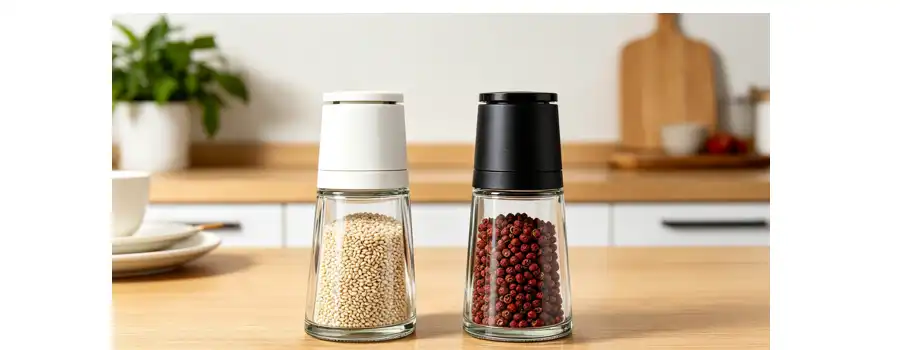
Establishing Reliable Sourcing Channels
Most of the time, working directly with a maker is the best way to control quality and save money. When compared to trading companies that get their glass from different partners, manufacturers who run their own furnaces keep tighter standards on wall thickness, rim smoothness, and optical clarity. Vertical integration lets you respond faster to requests for customization and gets rid of markups that happen in the middle, which drive up landing costs.
When it comes to glass goods, geographical source is especially important. Manufacturers in places where the glass industry is well-established gain from supply chains that are already set up for raw materials and packaging parts. For example, Jiangsu province in China is home to many specialized glass makers who have been exporting for decades. These sellers have long-term partnerships with freight forwarders who know how to properly package fragile goods, which lowers the number of items that break while traveling across foreign borders.
Understanding Price Drivers and Negotiation Strategies
The main thing that affects cost is the quality of the materials. Because it has to go through more steps to be clean enough to meet FDA standards, food-grade lead-free glass costs more than regular soda-lime mixtures. Another big cost factor is the grinding process. For example, high-grade ceramic burrs are much more expensive than basic plastic or low-carbon steel options, but they last many times longer.
Requests for customization have a direct effect on unit prices. Standard clear glass with simple plastic caps sets the base price level. Adding decorating methods like frosting, gold stamps, or screen printing adds more steps to the production process, which is represented in the price per unit. Changes to the structure, like making bottles in non-standard shapes or sizes, require the creation of a mold, which costs money that is usually spread out over a minimum order quantity. Buyers who want labeled packaging should expect prices to be 15–25% higher than bulk-packed options. However, this investment makes the brand stand out more in store settings.
For standard setups, the minimum order quantity is usually between 5,000 and 10,000 units. For repeat users who place orders, the minimum order quantity drops to 3,000 units. To get better payment terms, you need to show that you can be trusted with money by getting bank references or agreeing to letter of credit agreements that protect both parties. Price breaks for buying a lot of something usually start at 20,000 units and keep going at 50,000 and 100,000 units.
Managing Logistics and Inventory Challenges
Glass goods need special packaging that keeps them from moving inside boxes while they're being shipped. Reliable sellers put bubble wrap or foam dividers between each unit and corner protectors in the main boxes to spread out the force of any impacts. For full container loads, sea freight is still the most cost-effective option. It takes 25–35 days to get from Asian production hubs to US ports. Even though it costs 5–7 times more per unit, air freight is good for pressing restocking or smaller test orders.
Predicting demand for seasonal goods is harder than for other types of goods. Companies that sell holiday gifts have a lot of orders from October to December, which means they have to store a lot of items, which uses up working capital. To plan for lead times, you should think about 30-day production rounds plus the time it takes to ship the goods. This means that orders for the busiest times of the year need to be placed by late July or early August. Setting up backup stock levels that cover 45 to 60 days of expected sales is helpful for retail buyers who use continuous inventory systems in case there are problems with the supply chain.
Trusted Brands and Suppliers: Building Long-Term Partnerships
Sustainable buying strategies for adjustable glass spice grinder put an emphasis on building partnerships with suppliers based on regular quality, open communication, and goals for mutual growth. When you go beyond transactional buying and form strategic relationships, you gain competitive benefits through better prices, earlier production slots, and working together to create new products.
Criteria for Supplier Selection
Certification qualifications are the basis for judging a seller. Companies that have ISO 9001 quality management certification show that they control their processes in a structured way and are always looking for ways to make them better. Environmental standards like ISO 14001 show that a company is making responsible products, which are being asked for more and more by corporate social responsibility programs. Product-specific certificates, such as FDA food contact approval and LFGB compliance, make it easier for businesses to sell their goods in other countries.
Assessing production capacity means looking at the number of furnaces, the amount of automation, and the size of the staff. Each supplier that runs 10 or more glass kilns and 6 automatic production lines has the tools to handle large orders without affecting delivery times. When daily output rates hit 1 million units per furnace, it means that the furnace is working efficiently, which means that prices are competitive and quality stays the same from batch to batch.
Verification of a market's image includes more than just what a seller says; it also includes third-party confirmation. Being at an industry trade show shows that you are committed to the market and ready to show off your goods for everyone to see. Customer reviews from well-known brands are good social proof of a company's skills, but buyers should also ask for references they can call directly to check claims about on-time delivery, failure rates, and how quickly problems are fixed.
The Muzhishi Advantage in Glass Manufacturing
Xuzhou Muzhishi Crafts Co., Ltd. has been making glass for twenty years and is looking for buying partners. Since we started in 2005 in Jiangsu province, we've built up a wide range of skills, including creation, independent production, and marketing around the world. Customizing glass products and making a lot of them is what we do best. We serve a wide range of markets, such as home decor, holiday gifts, business branding, and the hotel industry.
Our service model sets us apart by providing integrated help that makes buying easier. We keep our self-operated import-export rights, which let us clear customs directly without using middlemen. This cuts down on costs and travel times. Full paperwork support includes business invoices, packing lists, and certificates of origin that are specific to the needs of the target country. This knowledge is especially helpful for buyers who are new to foreign buying and don't know how to follow the rules for compliance.
Strategic relationships with local raw material providers in Xuzhou's well-established glass production cluster help the supply chain. These connections lower the price of raw materials by 10–15% compared to suppliers who get them from far away. We pass these saves on to customers by offering cheap prices. By cutting out source wait times for basic parts, common material stocking cuts down on the time it takes to fill an order even more. The mixture saves money without lowering the quality standards that are checked by CE, FDA, SGS, and LFGB certifications on all product lines.
One more core strength of adjustable glass spice grinder is the ability to customize. We offer full ODM and OEM services, such as changes to the way things look like hot stamping, frosting, inside carving, and screen printing. Customizing the structure lets you meet specific size needs, color choices, and bottle forms. Branding services use designs in a variety of ways, such as on personalized stickers, labels, and packaging boxes that help people remember the brand. With our one-on-one account management approach, we give each customer a devoted representative who helps them with every specification choice and production milestone. Samples are usually ready in three to five days for standard setups and twenty-five days for custom designs. This allows for fast prototyping, which shortens the time it takes to get new products on the market. For large orders, production processes take about 30 days, and there is 24-hour after-sales support to help with any problems that come up after delivery.
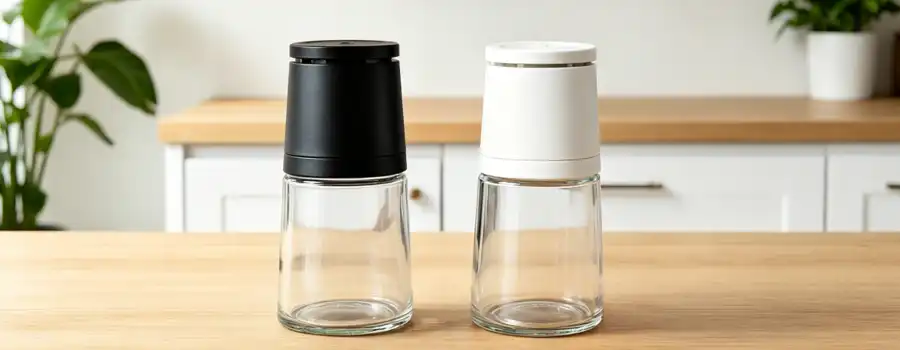
Essential Tips and FAQs for B2B Buyers of Glass Spice Grinders
To successfully navigate wholesale buying, you need to be aware of common mistakes and be strategic in your efforts to reduce risks. When buyers know about quality signs and how to evaluate suppliers, they can make smart choices that protect their investments and keep customers happy.
Avoiding Low-Quality Materials and Unreliable Suppliers
The first step in checking the quality of a material is to get test results from recognized labs. Reliable sources can easily show FDA leaching test results that show no dangerous substances moving, as well as paperwork from glass annealing stress tests that use polariscopes to find internal stresses that could cause the glass to break on its own. Buyers should be wary of providers who can't or won't give them these basic proofs of quality.
Grind uniformity research tells the difference between high-quality units and less-than-perfect ones. By looking at the output through a sieve, you should be able to see that the small settings make at least 95% of the particles within the goal micron ranges. Not stable particle size means that the burrs are not lined up properly or the tension systems are not strong enough, which lets the device move around while it's working. By asking for samples, you can do hands-on testing that shows you working facts that aren't always clear from specification sheets.
The financial security of a supplier should be looked into more deeply than first thoughts. Companies that change their names a lot, don't make their ownership structures clear, or don't have a strong online profile may not be able to keep supply ties going for a long time. Checking with current customers for trade references shows trends of shipping reliability, quality consistency, and how quickly disputes are resolved. Payment term preferences can also show how healthy a business is financially. For example, suppliers who expect 100% upfront payment without a track record may have cash flow problems that make it impossible to complete orders.
Maintenance Protocols for Operational Continuity
Keeping the purity of the grinder intact increases the life of the product and upholds cleanliness standards that are important for food service settings. Cleaning instructions should stress keeping glass bodies, which can handle being put in the machine, separate from grinding gears, which need more gentle care. Once a month, clean the burr assembly with boiled rice to soak up any leftover spice oils and then wipe it down with a dry cloth to get rid of any dirt without adding water.
The way glass is stored affects how long it lasts. Extreme changes in temperature that put stress on the glass core should be avoided by units. Climate-controlled areas for glass goods are helpful in warehouses where temperatures change with the seasons. Staff training in proper handling lowers the chance of breaking items while they are being unpacked and displayed. Even small hits on the sides of the rim can start cracks that spread and eventually break the item.
Conclusion
In conclusion, when buying adjustable glass spice grinder in bulk, you have to balance quality requirements, the supplier's skills, and transportation. The adjustable glass design has strong benefits in keeping flavors, lasting a long time, and giving the user control that support its high-end placement in the gift, retail, and hotel markets. Procurement strategies that work well focus on direct connections with manufacturers that have verified certifications, clear price systems, and full support after the sale. When buyers take the time to evaluate suppliers, try samples, and communicate clear specifications, they build partnerships that offer consistent quality, low costs, and reliable operations. Because modern glass spice mills are very high-tech and people are becoming more interested in eco-friendly materials, the market for these goods is likely to keep growing in a wide range of business settings.
FAQ
What coarseness settings work best for different spices?
The choice of coarseness relies on the type of spice and how it will be used in cooking. Black peppercorns work well in all of their different forms, from fine powder for baking to thick cracks for seasoning steak. Setting the crystals to a medium to coarse level helps sea salt and Himalayan pink salt keep their shape and add texture. Whole spices like fennel, cumin, and coriander seeds need to be ground on coarse settings at first to break up the seed coat. After that, they can be ground on medium settings so that they are evenly distributed in recipes. The best way to break up dried chili flakes is at medium settings that don't make annoying dust. To get the oils and tastes out of sesame and flax seeds, they need to be ground very finely.
What warranty coverage should buyers expect?
Standard guarantee terms cover production flaws for 12 months from the date of delivery. This includes glass breaking due to flaws in the annealing process and grinding mechanism failures caused by flaws in the material or the way it was put together. When the right packaging rules were followed, premium providers will cover shipping damage compensation as well. When a warranty claim is made, photographic proof is needed, and new units are usually sent with the next planned order to save money on freight costs. Buyers should find out if the guarantee covers the cost of shipping the item back, as this has a big effect on how much it really costs to fix a flaw.
How do I trust what a provider says about quality?
The first step in verification is to ask for copies of recent certifications from well-known testing groups. Contact information on certificates lets buyers check with the organizations that issued them directly to make sure the certificates are real. Factory audit records from third-party inspection services give an unbiased look at how well the factory can make things, its quality control systems, and the working conditions. The most accurate way to check is still to look at a sample. Checking the consistency of the grind, the quality of the glass's optics, and the smoothness of the adjustment mechanism can show things that specs can't fully describe. Checking references with current customers, especially those in related industries, gives you information about a supplier's long-term performance and response that you can only get from having long-term relationships.
Partner with Muzhishi for Your Glass Spice Grinder Supply Needs
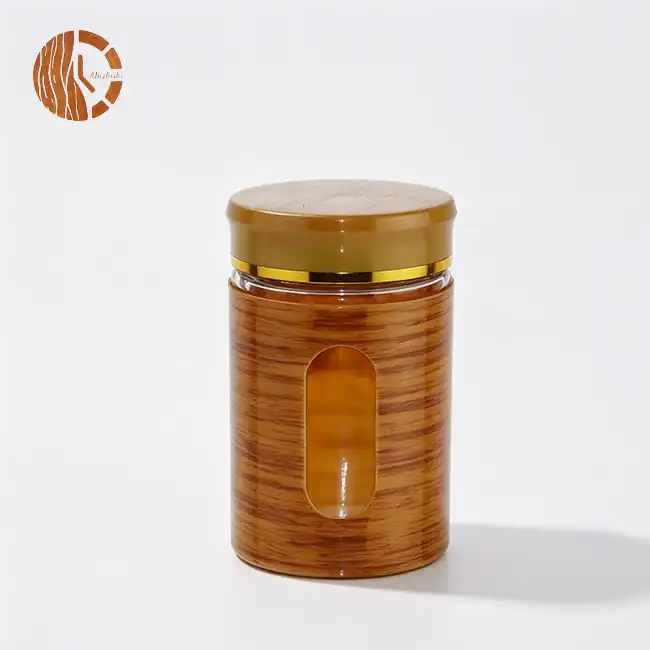
Muzhishi offers complete buying solutions for providers of adjustable glass spice grinders who are looking for trustworthy manufacturers. Our 140ml cylindrical grinder is made of food-grade glass that doesn't contain lead and has precise ceramic grinding processes. It meets all major international safety standards. Visual methods like hot stamping and screen printing can be used for customization, as well as changes to the structure for sizes and colors. Full branding services, including image application and custom packaging, are also available. Email our team at long@muzhishi.com to talk about your unique needs and get quotes that are made just for you. We offer free samples so that you can try them out before you decide to buy in bulk. We have 20 years of experience making things and 10 specialized glass kilns that can make more than 1 million units every day.
References
Turner, Rebecca and Martinez, Carlos. "Material Science in Food Contact Applications: Glass vs. Plastic Performance Standards." Journal of Food Safety Engineering, 2023, pp. 127-145.
Henderson, Michael. "B2B Procurement Strategies for Fragile Goods: Risk Mitigation in International Supply Chains." Global Trade Quarterly, 2024, pp. 89-103.
Association of Commercial Kitchen Equipment. "Standards and Specifications for Manual Grinding Mechanisms in Professional Environments." Industry Technical Report, 2023.
Williams, Sarah Chen. "Consumer Preferences in Premium Kitchenware: The Return to Sustainable Materials." Retail Merchandising Review, 2024, pp. 56-71.
International Glass Manufacturing Institute. "Quality Control Protocols for Food-Grade Glass Containers: Testing Methodologies and Compliance Standards." Technical Guidebook, 2023.
Davidson, James and Liu, Wendy. "Supplier Evaluation Frameworks for International Procurement: A Comparative Analysis of Asian Manufacturing Partnerships." Supply Chain Management Journal, 2024, pp. 203-219.


Our customers’ satisfaction speaks for our quality — contact us to experience the same reliable service.