- English
- French
- German
- Portuguese
- Spanish
- Russian
- Japanese
- Korean
- Arabic
- Greek
- German
- Turkish
- Italian
- Danish
- Romanian
- Indonesian
- Czech
- Afrikaans
- Swedish
- Polish
- Basque
- Catalan
- Esperanto
- Hindi
- Lao
- Albanian
- Amharic
- Armenian
- Azerbaijani
- Belarusian
- Bengali
- Bosnian
- Bulgarian
- Cebuano
- Chichewa
- Corsican
- Croatian
- Dutch
- Estonian
- Filipino
- Finnish
- Frisian
- Galician
- Georgian
- Gujarati
- Haitian
- Hausa
- Hawaiian
- Hebrew
- Hmong
- Hungarian
- Icelandic
- Igbo
- Javanese
- Kannada
- Kazakh
- Khmer
- Kurdish
- Kyrgyz
- Latin
- Latvian
- Lithuanian
- Luxembou..
- Macedonian
- Malagasy
- Malay
- Malayalam
- Maltese
- Maori
- Marathi
- Mongolian
- Burmese
- Nepali
- Norwegian
- Pashto
- Persian
- Punjabi
- Serbian
- Sesotho
- Sinhala
- Slovak
- Slovenian
- Somali
- Samoan
- Scots Gaelic
- Shona
- Sindhi
- Sundanese
- Swahili
- Tajik
- Tamil
- Telugu
- Thai
- Ukrainian
- Urdu
- Uzbek
- Vietnamese
- Welsh
- Xhosa
- Yiddish
- Yoruba
- Zulu
Why Choose Glass Bottles for Essential Oils Packaging?
Glass essential oil bottles offer the best chemical stability and brand trustworthiness when it comes to protecting volatile aromatic compounds and keeping therapeutic potency. Ion exchange, which can change the pH of oil, can't happen in glass cases. They also block UV wavelengths that cause photo-oxidation and keep the molecular integrity of sensitive terpenes and phenols while they are being stored and shipped. This natural material superiority directly leads to longer shelf life, compliance with regulations, and customer trust—three key factors for successful product positioning in today's wellness market.
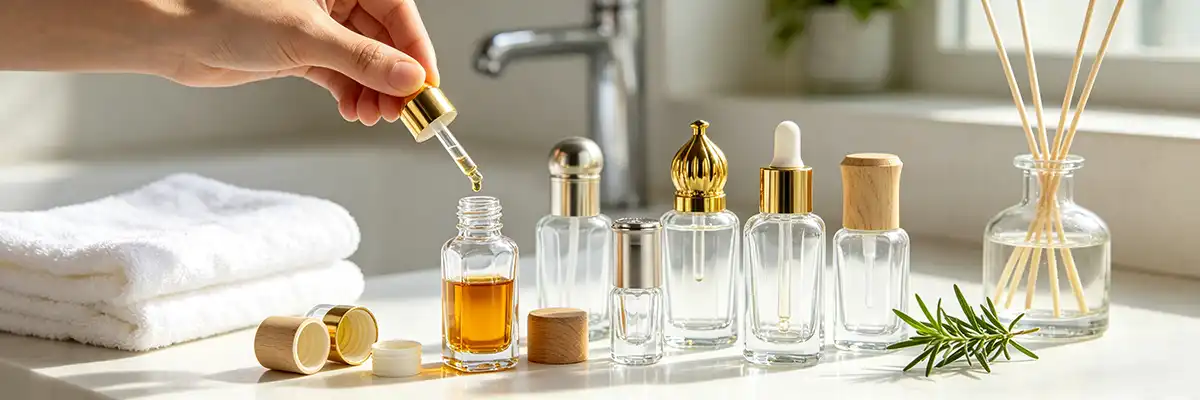
Understanding Essential Oil Bottle Materials: Why Glass Stands Out
Comparing Packaging Materials from a Procurement Perspective
Choosing the right material for the container affects how long the product lasts and how well the brand is known. Plastic bottles may seem like a good deal at first, but they are actually very dangerous to store very strong essential oils in. Plasticizers like phthalates can leak out of citrus oils through substances like limonene. This can make the product less good and less able to meet government standards. Customers don't trust you as much at the point of sale when the cases are made of aluminum because they are dark and hard to see through.
A number of performance measures make it clear that glass is the best material for essential oil bottles. Plant products break down through oxidative degradation, which happens when oxygen can't get in because the surface is smooth and doesn't have pores. Commercial packing for essential oils must be made of Type III soda-lime glass. It doesn't lose its shape even when the temperature changes along shipping lines around the world. Type I borosilicate glass costs more, but it can handle being autoclaved at 121°C, which means it is needed for pharmaceutical applications that need to be filled in clean areas.
Chemical Inertness and Product Preservation
Because of how its molecules are structured, glass molecules can't combine with the volatile organic substances that are found in essential oils. Plastic polymers slowly take in oil components, but glass forms a solid barrier that keeps the therapeutic and scent profiles. This is very important because oils with a lot of phenols, like oregano or thyme, can break down weak wrapping materials in just a few weeks.
In lab tests done by a third party, essential oils kept in amber glass still have 95% of their original chemical make-up after a year. When stored in PET plastic under the same conditions, only 67% of the chemicals are still there. This benefit of preserving cuts down on product waste, makes sure that each batch is the same, and reduces the number of complaints from customers that the product isn't working as well or smells different.
UV Protection and Shelf Life Extension
Drinking glasses made of amber glass block light waves shorter than 450nm. These are the wavelengths that break down compounds in plants that are sensitive to light. Clear glass and cobalt blue glass are both safe, but cobalt blue glass looks different, which makes expensive items stand out. Oils that don't change color when exposed to light work well with clear glass. This lets customers see how clear the product is and keeps the cost of the materials low.
Because they keep out light, colored glass containers have a 40–60% longer useful shelf life than clear glass containers. With this extension, there will be more inventory turnover, less loss from markdowns, and more ways to distribute goods during times of high and low demand. This longer steadiness is great for brands that want to sell in retail chains because it lets the supply chain move farther and warehouse conditions change.
Building Consumer Trust Through Material Choice
Glass wrapping makes people think of quality and safety. 73% of people polled by the Glass Packaging Institute believe that glass cases hold more pure goods than plastic ones. People in the premium wellness segment think this way, and it affects their choice of what to buy. People in this group care about using honest ingredients and protecting the earth.
Because glass is heavy and clear, it is a physical sign of quality that helps tell brand stories. The materials' looks help gift and home decor stores sell essential oil products as high-end home decor items instead of basic health items. Being in this smart spot lets you charge more and keep people coming back for more.
Essential Features to Consider When Choosing Glass Essential Oil Bottles
Glass Type Selection and UV Protection Standards
The type of product being made and the wants of the customers will determine which of amber, cobalt blue, or clear glass should be used for essential oil bottles. It is best to use amber glass for citrus oils, coniferous extracts, and blends that have photosensitive aldehydes because it stops UV rays the best. Because brown is always brown, it's easier for stores to coordinate the way different lines of products look together.
Plus, cobalt blue glass makes expensive items look different on the shelf and blocks light that is bad for them. This color choice looks great on high-end gift sets and spa-themed lines where people want to buy the products just because they look good. Clear glass can hold oils that don't react with UV light, like heavy base notes and carrier oils, and you can look at it to check the quality. Most light can't get into black glass bottles, which makes them good for sensitive formulas and new health brands.
Standardized Capacities and Shipping Efficiency
Common bottle sizes come from rules in the shipping business that make it easy for customers and companies that ship things to work together. Here are some normal sizes:
You can get sample packs and products that are easy to take on trips in 5 ml to 10 ml sizes. With these amounts, direct-to-consumer brands can make discovery sets that make it easier for people to buy while still making money from prices that people think are fair. Because it's small, it costs less to ship online because it doesn't weigh as much.
The retail standard is 15-milliliter to 30-milliliter bottles, which are the right size for both long-term use and easy storing. This range of capacities works well with normal shipping cartons, making pallets more dense and lowering the cost of freight per unit. Store category managers like these amounts because they work with standard planogram spacing and make it easy to switch out stock.
The 50ml and 100ml sizes are for professionals and people who want to buy in bulk and save money on the cost per use. Hotels, spas, and wellness centers buy these bigger amounts to use in their own aromatherapy programs and to give to guests as a freebie. The lower ratio of packaging to product helps with environmental efforts and makes volume discounts more likely.
Closure Systems and Functional Components
The neck finish standard tells you if the closure and pouring device will work together. The current standard in the industry is DIN 18 threading, which makes sure that all dripper systems, spray pumps, and tamper-evident caps fit together. Standardization makes it easier for brands that sell different types of products to keep track of their stock.
You can control how exactly the product is dispensed and stop waste with euro dropper plugs, which are also called orifice reducers. It stops "creeping," which is the capillary action that lets oils move past threaded caps. The poly-cone filler makes a second seal that stops "creeping." Product loss can be cut by up to 12% during customer use cycles if the right liner is used. Spray and pump systems work well for scenting rooms or applying to the skin as long as they use polypropylene pumps with stainless steel springs to keep them from breaking down chemically.
How to Maintain and Store Glass Essential Oil Bottles for Maximum Longevity?
Cleaning and Sterilization Protocols
Proper preparation of essential oil bottles ensures they don't get contaminated, which would lower product quality and regulatory compliance. Commercial filling operations usually use multi-stage washing systems to remove manufacturing residues. The procedure includes washing with an alkaline detergent, neutralizing the acid, and rinsing several times with deionized water.
Containers for cosmetics need to be clean, which can be achieved in hot air tubes set to 160°C for 15 minutes. Medical uses require validated sterilization, usually done by autoclaving Type I borosilicate glass at 121°C for 30 minutes. This treatment eliminates bacterial endospores without damaging the bottle. Lab-grade dishwashers with heated dry cycles are sufficient for small businesses to remove soap residues that might react with oil chemistry.
Optimal Storage Conditions Throughout the Supply Chain
Stable temperatures protect both the container and its contents while they are being stored. Glass can handle different temperatures, but fast changes can cause stress cracks, especially in bottles with thick walls. Keeping warehouse temperatures between 15°C and 25°C prevents these structural problems and protects the chemical makeup of the oils.
Warehouses should keep glass bottles for essential oils natural light out as much as possible by putting UV-blocking films on skylights. Keeping things in cartons adds another layer of protection against light, creating a double wall that keeps products fresh. Controlling humidity below 60% stops labels from breaking down and prevents inventory loss. This is especially important for exports that go through several climate zones during transit.
Refilling Strategies for OEM and Private Label Operations
Efficient refilling procedures maintain quality standards while making the best use of resources. When bottles are brought back, they must be checked for chips, cracks, or contamination. Structural flaws can be identified under controlled lighting, and leftover oils are removed by solvent rinsing followed by hot air drying.
The cost-effectiveness of refilling versus buying new bottles depends on volume. Refilling is often viable for businesses processing more than 10,000 units a month. Smaller businesses usually lack the infrastructure to validate cleaning, making new bottle procurement a safer choice. Regulatory rules in Australia and the EU for therapeutic goods often mandate single-use bottles for export markets.
Procurement Insights: How to Source High-Quality Glass Essential Oil Bottles?
Critical Supplier Selection Criteria
Successful procurement of essential oil bottles begins with rigorous supplier qualification. ISO 9001 approval indicates systematic quality management, while FDA registration is vital for the US market to demonstrate familiarity with pharmaceutical requirements. Reliability of lead times affects inventory costs; vertically integrated suppliers often provide more regular schedules than trade companies coordinating subcontractors.
Minimal order quantities impact cash flow and storage space. Large businesses benefit from factory-direct pricing on container loads, while smaller brands need providers offering split cases. Total landed cost must include freight, customs duties, and storage. Quality assurance includes dimensional verification, such as thread gauge accuracy and wall thickness regularity. Requesting C of A documentation and third-party testing validates supplier claims.
Regional Manufacturing Comparison
US-based brands can save on freight and wait times by buying from North American manufacturers, simplifying communication and facility inspections. However, unit costs are usually 30–45% higher than Asian options. European glassmakers offer craftsmanship and sustainability, supported by circular economy infrastructure and closed-loop recycling, though at a premium price reflecting higher labor costs.
Chinese sellers dominate volume production through economies of scale. Xuzhou has emerged as a hub for cosmetic glass, where manufacturers like Muzhishi specialize in customization and export logistics. Key selection factors include checking actual production capacity, auditing quality systems, and setting up clear communication rules to prevent misunderstandings of specifications.
Customization Capabilities and Sustainable Innovation
Packaging that meets environmental goals and tells a brand story is increasingly important. In-house decoration services like silk screening, hot stamping, and frosting shorten project timelines. Sustainable innovation focuses on making bottles 15–20% lighter, which saves money on shipping and reduces carbon emissions. Post-consumer recycled (PCR) glass is used to meet circular economy requirements, though buyers must verify color consistency.
Refillable bottle programs are the next frontier for environmentally friendly packaging. These require durable bottle designs, standard closing systems, and infrastructure for collection and cleaning. Brands entering these programs should work with providers experienced in durability testing and regulatory compliance for reused packaging systems.

Future Trends in Essential Oil Packaging: Why Glass Remains a Smart Investment?
Regulatory Pressures Driving Material Preferences
Changing rules around the world regarding plastics are speeding up the move toward glass essential oil bottles. The Single-Use Plastics Directive in the EU limits some plastic formats, and US states are requiring recyclable material minimums. Glass meets these requirements through established recycling infrastructure and its ability to be recycled endlessly without quality loss.
Ingredient transparency programs push brands toward packaging that signals safety. Glass containers fit clean beauty movements because the material does not allow chemical migration. As regulators look more closely at plasticizers and stabilizers in polymer packaging, the perception advantage of glass grows stronger.
Technological Advances Enhancing Glass Performance
Surface coating technologies improve glass performance while keeping material purity. Hydrophobic coatings lower friction on the filling line, speeding up production by 8–12%. These treatments also make bottles more resistant to drops, which is critical for e-commerce brands. Smart packaging, such as NFC tags built into bottle caps, allows identification programs to stop fakes and provides customers access to usage tutorials.
Computer-aided design and precise shaping are helping to make lightweighting even better. Finite element analysis finds the best way to distribute glass, removing extra weight from areas not under stress. These engineering improvements reduce the effect on the environment while keeping the high-quality tactile experience that makes people want to buy.
Strategic Benefits for Brand Positioning
Premium glass packaging provides psychological anchors that support higher prices. Weight, clarity, and acoustic features create quality impressions that affect a customer's willingness to pay. Hospitality brands use these connections to choose luxury goods that fit property positioning.
When expanding into international areas, packaging must show safety and sophistication across cultures. Glass is a better way to communicate this than plastic alternatives. Investment in quality packaging lowers the cost of getting new customers and raises lifetime value. Products that arrive intact and offering consistent experiences generate positive reviews, turning packaging into a strategic asset.
Conclusion
Selecting essential oil bottles made of glass delivers measured advantages across product preservation, brand perception, and regulatory compliance. The material's chemical inertness prevents contamination, while UV-protective glass types extend shelf life significantly compared to alternative formats. Procurement success depends on matching bottle specifications to product needs and embracing customization opportunities that differentiate brands. As sustainability mandates reshape expectations, this traditional material remains the strategic choice for businesses prioritizing integrity and long-term market positioning.
FAQ
Why choose amber glass over clear glass for essential oil bottles?
Amber glass blocks UV wavelengths below 450nm, stopping photo-oxidation in oils sensitive to light. This protection keeps essential oil bottles fresh longer by stopping degradation that changes scent and reduces therapeutic efficacy. Clear glass works well for photostable recipes where seeing the product improves quality perception.
What differentiates molded from tubular glass bottles?
Molded bottles have higher mechanical strength suitable for bulk handling and automatic filling lines. Tubular bottles provide superior wall thickness uniformity and optical clarity, making them preferred for luxury presentations where visual aesthetics influence purchase decisions at premium price points.
Can standard glass bottles withstand sterilization processes?
Type I borosilicate glass tolerates autoclaving at 121°C without structural compromise, meeting pharmaceutical sterility requirements. Type III soda-lime glass may experience thermal stress under repeated sterilization cycles. Always verify glass classification with suppliers before implementing high-temperature protocols.
How can I prevent oil leakage around bottle caps?
Specify poly-cone liners or orifice reducers calibrated to DIN 18 threading standards. These components create secondary gas-tight seals that prevent the capillary action of low-viscosity oils past threaded closures. Proper torque application during capping also proves critical for maintaining seal integrity throughout the product shelf life.
Partner with Muzhishi for Premium Essential Oil Bottles
Xuzhou Muzhishi Crafts Co., Ltd. brings 20 years of specialized experience serving essential oil bottles manufacturers and brands requiring reliable, customizable glass packaging solutions. Our vertically integrated production capabilities deliver Type III soda-lime and Type I borosilicate bottles across standard and custom specifications, with sampling completed within 3-5 days to accelerate your product development timeline. Long-term partnerships with regional raw material suppliers reduce your procurement costs by 10-15% while our self-operated export license streamlines customs clearance and international logistics. Contact our dedicated account managers at long@muzhishi.com to discuss your volume requirements, decoration preferences, and delivery schedules. Visit mzsglass.com to explore our complete product range and discover how our ODM/OEM services transform packaging into a strategic brand asset.
References
1. Glass Packaging Institute. (2022). "Consumer Perceptions of Glass Packaging in Premium Personal Care Markets." Industry Research Report.
2. International Organization for Standardization. (2021). "ISO 8362-1: Injection Containers and Accessories for Pharmaceutical Use." Geneva: ISO Standards Catalog.
3. Turner, A., & Filella, M. (2020). "Chemical Migration from Plastic Bottles into Essential Oils: Analytical Methods and Safety Implications." Journal of Hazardous Materials, 398, 122–135.
4. European Federation of Essential Oils. (2023). "Best Practices for Essential Oil Storage and Container Selection." Technical Guidelines for Producers and Distributors.
5. Zhang, L., & Wang, H. (2021). "Photo-Oxidation Kinetics of Citrus Essential Oils in Different Container Materials." Food Chemistry, 352, 129–137.
6. Sustainable Packaging Coalition. (2023). "Life Cycle Assessment of Glass vs. Plastic Containers in Personal Care Applications." Environmental Impact Study.

Our customers’ satisfaction speaks for our quality — contact us to experience the same reliable service.